
pickleball balls
There is a distinct sound that echoes across parks and community centers these days. It isn’t the heavy thud of a tennis ball or the sharp crack of a baseball bat. It’s a rhythmic, hollow “pop” that signifies fun, movement, and usually, a bit of friendly banter. If you are reading this, you likely know that sound well. It’s the sound of a pickleball ball meeting a paddle.
When we first pick up the sport, we tend to obsess over the paddle. We research core thickness, surface grit, and handle length. But the unsung hero of the match is the ball itself. It’s the variable that decides whether your drop shot dies perfectly in the kitchen or floats high for a smash. It’s the piece of equipment that battles the wind, the asphalt, and the temperature to keep the game going.
Whatever your skill level, understanding the nuances of your equipment can drastically improve your game. Whether you are loading up a pickleball ball machine for a solo practice session or looking for the best outdoor pickleball balls for a tournament, knowing what you are hitting is just as important as how you hit it. Let’s dive into the world of these perforated plastic spheres and uncover what makes them tick.
The Basics & distinctions
When you hold a pickleball in your hand, it feels simple. It’s light, plastic, and full of holes. However, there is a surprising amount of engineering that goes into that simplicity. The design dictates the aerodynamics, the bounce, and the overall feel of the game.
What is the difference between indoor and outdoor pickleball balls?
If you have ever played a game where the ball felt strangely heavy or, conversely, seemed to float uncontrollably, you might have been using the wrong type of ball for the environment. It is a common mix-up, but the distinction is crucial for a good game.
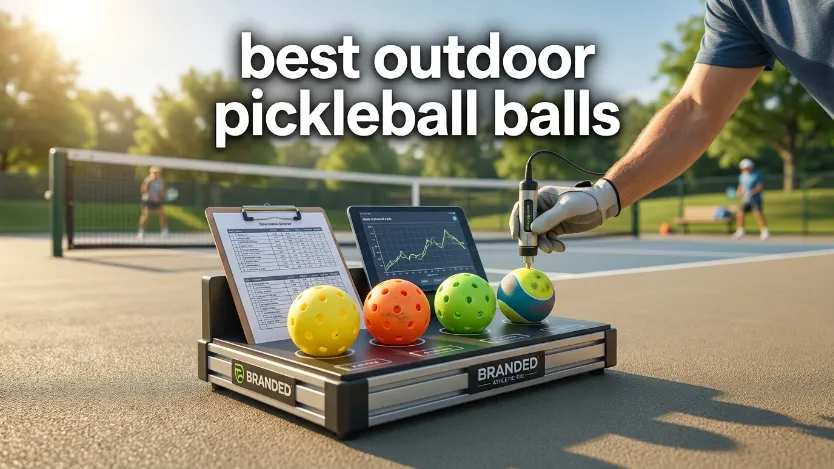
The primary differences lie in the hole pattern, weight, and material hardness. Outdoor pickleball balls are the rugged warriors of the sport. Because they have to contend with wind gusts and rough, abrasive surfaces like asphalt or tennis courts, they are designed to be heavier and made of harder plastic. Typically, an outdoor ball features 40 smaller holes. These smaller holes minimize the impact of the wind, allowing the ball to cut through the air with more precision. However, that harder plastic comes with a trade-off: it is louder and can sting a bit more if you get tagged during a fast exchange at the net.
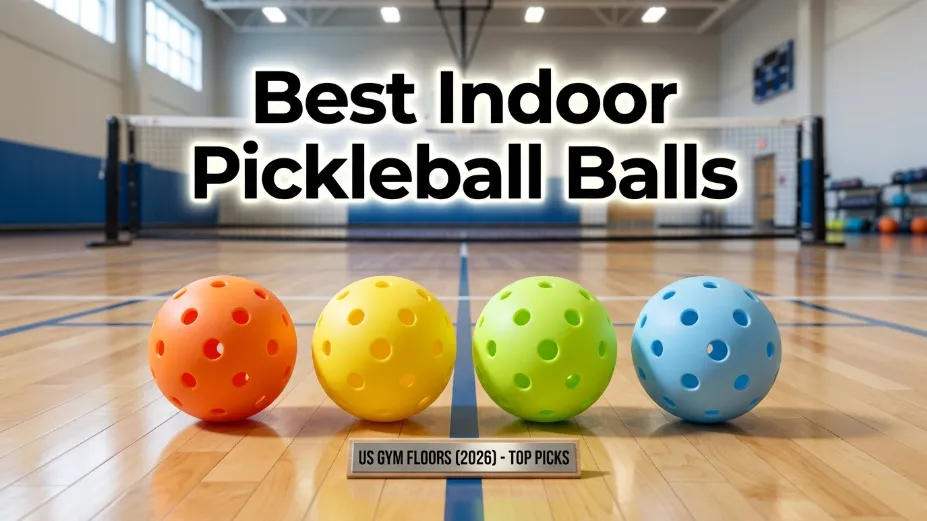
On the flip side, indoor balls are designed for control and finesse. They usually have 26 larger holes. Since indoor courts—often gym floors—are smooth and there is no wind to worry about, the balls are lighter and made of softer plastic. This softness allows for a better grip on the smooth floor, preventing the ball from skidding out. If you were to use a heavy outdoor ball on a polished wood floor, it would play incredibly fast and skip low, making rallies difficult to sustain.
For a deeper dive into the physics, aerodynamics, and exact specifications, read our comprehensive guide on the difference between indoor and outdoor pickleballs
Are pickleball balls the same as Wiffle balls?
This is the question that everyone asks when they see the sport for the first time. It is easy to see why; the visual resemblance is undeniable. Both are plastic, hollow, and perforated. However, the answer is a definitive no, though they look similar.
If you grew up playing Wiffle ball in the backyard, you remember how that ball moved—it curved wildly and dipped unpredictably. That is by design, thanks to the oblong slots on one side of the Wiffle ball. A pickleball ball, by comparison, is engineered for consistency, not erratic movement.
Pickleball balls are slightly heavier, more durable, and have a different hole configuration (circular holes vs. the oblong slots often found on Wiffle balls). In pickleball, you want a straight flight path and a reliable bounce. The round holes are spaced evenly to ensure the ball is balanced. Additionally, the weight difference is significant when it comes to paddle interaction. A Wiffle ball is too light to generate the “pop” off a pickleball paddle, and it wouldn’t carry the momentum needed for a deep serve or a drive. These differences ensure the ball bounces consistently and fits the unique dynamics of pickleball paddles.
What are pickleball balls made of?
The material science behind these balls is all about finding the “Goldilocks” zone—not too brittle, not too soft. They are manufactured from a smooth, durable thermoplastic material.
To get technical for just a moment (without being boring), the chemical composition changes based on where you play. The most common plastics used are Low-Density Polyethylene (LDPE) for indoor balls and High-Density Polyethylene (HDPE) or similar hard polymers for outdoor balls.
Think of LDPE (indoor) like a plastic bag material—it has some give and flexibility. This is what allows indoor balls to be quieter and softer. HDPE (outdoor) is more like the plastic used in hard piping or jugs—it is rigid and tough. This rigidity helps the ball bounce off rough concrete without losing energy, but it also makes the ball more prone to cracking over time.
Finding the Right Match for Your Game
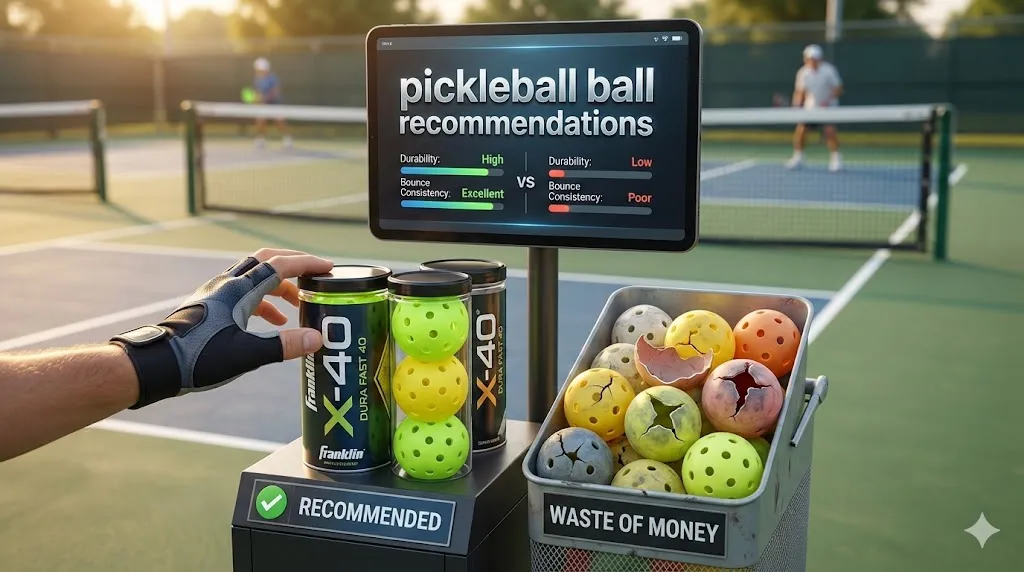
Before we talk about how long they last, it’s worth noting that finding the right ball is a personal journey. When players ask for pickleball ball recommendations, I usually tell them to look at their local climate and court surface first. If you live in a very hot area, you might want a harder outdoor ball because the heat will naturally soften it. If you play in a colder climate, a slightly softer outdoor ball might prevent cracking.
Furthermore, if you are serious about improving, consistency is key. Using the same type of ball during drills that you use in matches helps your muscle memory. If you own a pickleball ball machine, try to fill the hopper with the specific brand and model of ball you play your leagues with. Mixing different brands in a machine can lead to inconsistent feeds—one ball might shoot deep while the next one lands short, simply because of slight weight variations.
Durability & Lifespan
We have all been there. You are in the middle of an intense rally, you wind up for a put-away smash, and the ball makes a strange, flat sound. It flutters to the ground like a dying moth. The ball has cracked. It is the inevitable fate of every pickleball ball.
How long do pickleball balls last?
This is the “how long is a piece of string” question of the pickleball world. Lifespan varies significantly based on playing surface, temperature, and aggression of play.
If you are playing a gentle game of dinking with friends, a ball might last you ages. But if you are playing high-level competitive games with “bangers”—players who drive the ball with immense power—the life expectancy drops drastically. Outdoor balls used on asphalt may last anywhere from a few games to a few weeks before cracking or losing their shape (“going out of round”). The rough grit of an outdoor court acts like sandpaper, slowly thinning the plastic until it fails.
Indoor balls generally last longer because they hit smoother surfaces, but they can eventually develop soft spots. Since they don’t crack as violently as outdoor balls, they tend to die a slower death. They lose their bounce and become spongy.
How do I know when to replace a pickleball ball?
Sometimes it is obvious—the ball splits in half. But often, a ball “dies” long before it visually breaks. You should replace a ball if you see visible cracks, if it feels “mushy” (soft spots), or if it no longer bounces true (wobbles in flight).
There is nothing worse than losing a point because the ball took a weird bounce due to being warped. A common test is to squeeze the ball; if it deforms easily and doesn’t snap back to shape, or if it makes a dull thud sound when hit, it is likely dead.
Another trick seasoned players use is the spin test. Spin the ball on the ground or in your hand. If it wobbles like a bad spinning top, it is “out of round.” An out-of-round ball will veer off course in the air, making your shots less accurate. Don’t let a bad ball ruin your good aim!
Does weather affect pickleball balls?
Absolutely, and it affects them more than you might think. Plastic is highly sensitive to temperature changes.
Yes. In cold weather, the plastic becomes brittle, causing outdoor balls to crack much faster. If you are playing in temperatures below 50 degrees Fahrenheit, you might find yourself going through three or four balls in a single session. The impact of the paddle shatters the frozen polymer.
Conversely, in extreme heat, the plastic can soften, causing the ball to feel “mushy” and bounce less effectively. On a scorching summer day, a ball might feel like you are hitting a marshmallow. It moves slower and bounces lower. Some manufacturers have started creating balls specifically designed for extreme temperatures to combat this issues, so keeping an eye on pickleball ball recommendations for specific climates is a smart move.
Regulations & Specifications
You might be thinking, “I just want to play for fun, why do the specs matter?” Well, the rules ensure a level playing field. Whether you are a 3.0 player or a pro, you want to know that the equipment isn’t giving anyone an unfair advantage.
What are the official size and weight specifications for a pickleball?
The governing bodies of the sport have put a lot of thought into these numbers to keep the game balanced between power and control. According to USA Pickleball (USAPA) standards, a regulation ball must be between 2.87 to 2.97 inches in diameter and weigh between 0.78 to 0.935 ounces.
That weight range is tiny, but in a game based on touch and reaction speed, fractions of an ounce matter. The ball must also have between 26 and 40 circular holes. This range accommodates both the indoor (usually 26) and outdoor (usually 40) styles while keeping them under the same regulatory umbrella.
Can I use an outdoor ball indoors (and vice versa)?
This is a frequent scenario: you arrive at the gym, open your bag, and realize you only have the hard, yellow balls you used at the park yesterday. Can you play?
Technically yes, but it is not recommended for optimal play. Using an outdoor ball on a wooden gym floor can cause it to skid rather than bounce. Because the outdoor ball is hard and slick, it doesn’t “bite” into the wood floor. It slides low and fast, changing the pacing of the game and making it nearly impossible to hit a controlled drop shot.
Conversely, using an indoor ball outdoors will result in the wind heavily affecting its flight, and the rough asphalt will destroy the soft plastic quickly. The lighter indoor ball will get tossed around by even a gentle breeze, frustrating players. Note: If you play indoors on a concrete/tennis surface, you should use an outdoor ball. The surface texture dictates the ball choice more than the roof over your head.
Does the color of the pickleball matter?
You will see balls in yellow, orange, green, and even pink. Is this just for fashion? Not entirely.
There is no strict rule on color other than it must be a solid color that offers good contrast against the court and surroundings. Visibility is everything in a fast-paced volley battle. If you can’t pick up the ball visually the millisecond it leaves your opponent’s paddle, your reaction time suffers.
Yellow is the most popular choice for visibility, as it stands out well against blue and green courts (and the black asphalt). However, orange, neon green, and even pink are common depending on the court surface color. For example, if you are playing in a gym with light-colored wood walls and floors, a yellow ball might get lost in the background. In that case, an orange ball provides a much sharper contrast. Always choose a color that pops against the specific environment you are playing in.
The Evolution of the Ball and Your Game
As pickleball continues to explode in popularity, the technology behind the pickleball ball is evolving too. Manufacturers are constantly experimenting with new polymer blends to create balls that last longer in the cold and stay firm in the heat.
For the everyday player, the takeaway is simple: respect the ball. It is the connector between you, your partner, and your opponents. Keep a variety of balls in your bag. Rotate them out when they get tired. And if you are training with a pickleball ball machine, check those balls regularly—a cracked ball in a machine can sometimes jam the mechanism or result in weird spins.
Next time you head to the courts, take a second to look at that little plastic sphere. It’s simple, yes, but it’s built for fun. And really, isn’t that why we all play?