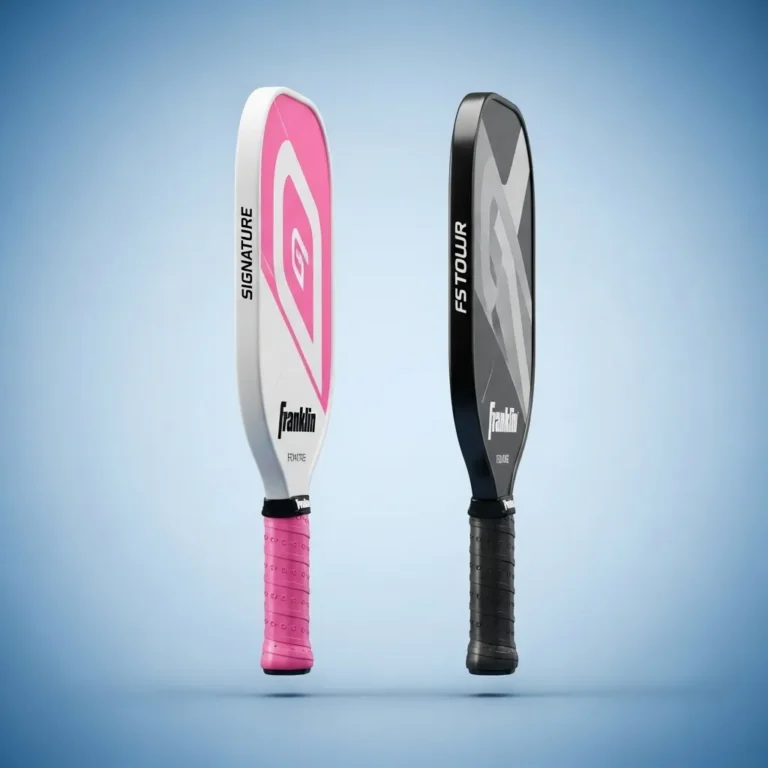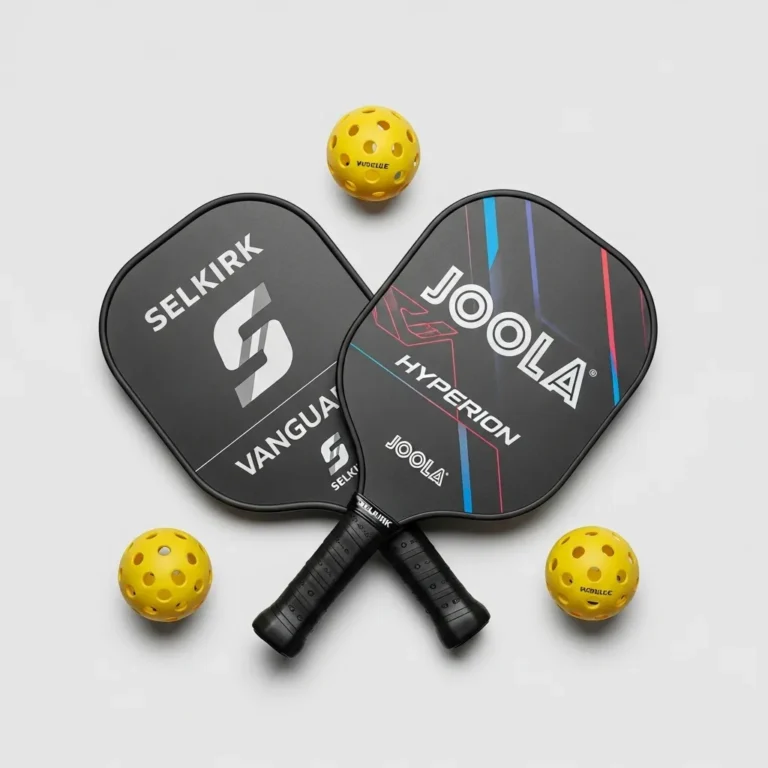

The parking lots of American country clubs and public parks tell a fascinating story: pickleball isn’t just growing; its gear ecosystem is cannibalizing traditional racquet sports. If you step onto any court from Naples to Newport, you’ll notice that winning matches is no longer just about fast hands—it’s about the composite science under your palm. Finding the most popular pickleball paddle isn’t merely a search for a trend; it’s a strategic hunt for the exact blend of grit, core thickness, and deflection power that currently dominates the USAPA circuit. Let’s bypass the marketing noise and look at what players are actually pulling out of their bags this season.
Advanced Pickleball Paddles
Core · Surface · Thickness · Playstyle · US Price
Comprehensive Analysis: Popular Pickleball Paddle Brands and Technical Anatomy
The engineering core of the popular pickleball paddle brands centers upon their non-traditional surface treatments and advanced internal structural layouts. While legacy paddles relied primarily on painted fiberglass, the modern silhouette bridges aerospace materials with the rigorous friction requirements of the professional circuit. This technical evolution is led by key brands like JOOLA, Selkirk, Franklin, Six Zero, and 11SIX24, each bringing proprietary advancements to the court.
- The Carbon Matrix: Utilizing specialized raw carbon fiber developed via high-pressure heat treatment, the primary surface offers exceptional mechanical bite. When striking the ball, the microscopic grit engages the plastic surface, allowing players to execute dipping “third shot drops” that are impossible with smooth surfaces. This technology is a signature element of the JOOLA pickleball paddle lineup, which leverages Toray T700 carbon fiber to deliver elite friction and control.
- The Thermoformed Boundary: Because traditional “sandwich” paddles are naturally prone to delamination under high loads, premium brands have moved to thermoforming. This process wraps the carbon fiber around the edges and into the handle, creating a unibody structure that locks the core into place and prevents “dead spots” after months of use. This construction has become a standard requirement for the best pickleball paddles for advanced players.
- Sweet Spot Mechanics: Modern internal geometries incorporate perimeter weighting and foam-injected edges. This allows players to execute defensive blocks near the rim without the paddle twisting in their grip, a critical factor for maintaining control during high-velocity exchanges. In the premium Selkirk pickleball paddles catalog, the implementation of their Moment of Inertia (MOI) Tuning System stabilizes the paddle face on off-center hits by strategically shifting mass to the outer perimeter.
The surface layer balances friction with structural durability. For players analyzing options across the entire market, evaluating the dedicated structural differences outlined in our analytical look at popular pickleball paddles provides clear contextual background before buying. Understanding whether a brand uses a cold-mold or thermoformed process is the “missing angle” that determines if your paddle will last a season or a month.
Check USA Pickleball Approved Paddle List
Control vs. Power: Deciding on Your Most Popular Pickleball Paddles
Navigating the product family requires a clear understanding of the mechanical differences between “Control” layouts and “Power” counterparts. Selecting your specific version of the most popular pickleball paddles dictates both your soft-game proficiency and your put-away percentage.
The Core Thickness Variance
The 16mm architecture focuses extensively on energy absorption and ball dwell time. The thicker core allows the ball to sink deeper into the paddle, providing a plush, dampened feel. Conversely, the 13mm or 14mm configurations employ a thinner, stiffer core designed for high-energy return. This gives power-focused players a sharper “pop” and faster ball exit speeds but significantly less margin for error during delicate dink rallies.
Shape and Commercial Discrepancies
The elongated shape introduces an undeniable leverage advantage, extending the reach but shifting the balance point toward the head. The standard “wide-body” shape drops this leverage in favor of a massive sweet spot, providing a forgiving sensation for baseline grinders. This variance reflects clearly across US commercial retail channels, where premium thermoformed carbon fiber paddles command a $180 to $250 MSRP, while entry-level honeycomb variants enter the market at an accessible $60 to $90 price point.
If you are a high-level competitor seeking to match advanced paddle dynamics with elite-tier footwork, exploring the definitive structural mechanics of the most popular pickleball paddle brands will ensure your entire equipment setup functions in perfect technical alignment.
The Critical Grip Guide: Why Hand Size Matters in Popular Pickleball Paddles
A major missing angle across major commercial e-commerce review spaces is the volumetric geometry of the handle. When choosing popular pickleball paddles, ordering based on face size alone can lead to severe operational issues on court, such as “pickleball elbow” (lateral epicondylitis). If the grip is too small or too large, comfort and control are severely compromised, forcing players to overcompensate by squeezing the handle with excessive force.
Most premium paddles are built around a 4.125-inch to 4.25-inch circumference. This streamlined shape is designed to allow for “wrist snap” and quick transitions between forehand and backhand, but it can be detrimental to players with larger hands. The problem is amplified by the material of the base grip itself.
Because the modern handle is often an extension of the carbon fiber face, the vibrations are transmitted directly to the palm. If the grip is too small, the player compensates by squeezing harder, which tenses the forearm and limits the fluidity of the shot. To avoid these performance limitations, players must adjust their purchasing metrics by measuring the distance from the middle crease of the palm to the tip of the ring finger. Choosing a comfortable grip prevents arm fatigue and ensures fast hands at the kitchen line during intense net exchanges.
Exposing Information Gaps: Most Popular Pickleball Paddle Brands and Durability
While mainstream marketing materials highlight the “grit” levels of new paddles, deep analysis across independent US playing groups reveals distinct manufacturing limitations and accelerated wear patterns under high-stress tournament conditions.
- The Grit Degradation Phenomenon: The specialized texture on the face of many most popular pickleball paddle brands is often a sprayed-on coating rather than an integral weave. Under the continuous friction generated by topspin, this grit frequently wears smooth within 4 to 8 weeks of regular play, leading to a “glassy” surface that cannot generate spin.
- Core Crushing and Delamination: Thermoformed paddles offer power, but the extreme pressure used in manufacturing can lead to “core crush.” This results in the paddle becoming “hot” or illegal by USAP standards, as the internal polypropylene honeycomb structure collapses and creates an illegal trampoline effect that makes the ball fly unpredictably.
- The Foam Deflation Fact: While Gen-4 full foam core paddles solve the “core crush” issue, they suffer from a silent performance drop known as foam deflation. Over months of heavy play, the foam core slowly loses its elasticity, resulting in a 10% to 30% reduction in original rebound “pop,” making the paddle feel mushy.
- Handle Snapping: In paddles that are not unibody, the junction between the face and the handle is a structural weak point. Players who utilize a heavy two-handed backhand often experience hairline fractures at the throat, causing the paddle to lose its rigidity and eventually snap during a high-power overhead.
These persistent structural concerns create a continuous cycle of replacements for dedicated club players. While the functional surface may look fine, the internal deterioration of the core is a critical factor for budget-conscious buyers to monitor closely via “knock tests” to check for hollow sounds.
Head-to-Head: Pro-Series Carbon vs. Traditional Fiberglass
For players trying to choose between the premium most popular pickleball paddles (Carbon Fiber) and traditional Fiberglass models, the choice comes down to a fundamental split in design philosophy. Both approaches dominate different segments of the US market but handle the ball completely differently.
The primary differences in on-court performance are detailed in the comparison matrix below:
- Spin and Friction: Carbon Fiber wins decisively on spin, delivering a raw, gritty surface that grabs the ball. Fiberglass is naturally smoother, making it harder to generate the heavy “dip” required for aggressive passing shots.
- Power and Pop: Fiberglass dominates the “pop” category. Because the material is less stiff than carbon, it acts like a spring, launching the ball with less effort. Carbon Fiber requires the player to generate more of their own power but offers significantly more placement accuracy.
- The Hybrid Alternative: For players seeking the ultimate compromise, hybrid woven surfaces combining Kevlar and Carbon Fiber offer a “buttery” feel with long-lasting texture. The Six Zero pickleball next-generation line features advanced models like the Double Black Diamond pickleball paddle, which merges elite raw carbon fiber with a dense core layout to bridge the gap between explosive pop and soft-touch control.
For a complete overview of the broad variety of choices currently occupying the competitive landscape across United States clubs, ensure your entire equipment setup—from your paddle to your court shoes—functions in perfect technical alignment.
Verdict: Are Popular Pickleball Paddles Worth the Investment?
The final evaluation of these high-performance tools depends entirely on your personal playing profile, your level of aggression at the net, and your financial approach to seasonal gear replacement.
- Who Should Buy: Tournament-level players who prioritize spin and placement, those suffering from joint vibration issues, and competitors who play predominantly with a “soft” third-shot drop strategy.
- Who Should Avoid: Casual players who only play once a month, budget-focused individuals who expect a paddle to last three years without loss of performance, and players who prefer the “pingy” feel of old-school wood or composite materials.
- The Smart Transition: If you are a novice or intermediate player looking to improve, starting with the best beginner pickleball paddles ensures a larger sweet spot and a forgiving face. As your skill level develops, upgrading to a high-performance Vatic Pro pickleball paddle provides premium Gen-4 foam-core attributes at an incredibly honest, budget-friendly price.
Frequently Asked Questions (FAQ)
Do popular pickleball paddle brands manufacture their equipment in the United States?
No. While many top brands are headquartered in the US and handle design and testing domestically, the vast majority of carbon fiber sourcing, thermoforming, and core assembly takes place in specialized manufacturing hubs in Asia, following standard practices in the racquet sports industry.
What are the critical rule and testing differences between USAP and UPA-A certifications?
USA Pickleball (USAP) uses surface roughness as a proxy for spin, limiting physical grit, while the United Pickleball Association of America (UPA-A) uses direct, outcome-based optical RPM testing. On court, UPA-A enforces stricter serve legality (immediate faults for ambiguity), bans drop serves for pros, and allows intensive post-match paddle testing, whereas USAP offers more flexible, corrective rulings.
How does “swing weight” differ from actual weight in these brands?
The actual weight is what you feel on a scale, but “swing weight” measures how heavy the paddle feels during motion. Most most popular pickleball paddle brands now focus on aerodynamics to keep swing weights low, allowing for faster hands at the kitchen despite a heavier static weight.