Introduction: Why Expert Pickleball Ball Recommendations Matter
You know the feeling. It’s game point, the adrenaline is pumping, you wind up for a smash, and upon contact—CRACK. The ball splits down the middle, the rally dies, and the momentum shifts. Or perhaps you’ve walked onto a new indoor court, only to find your usual ball skipping across the floor like a hockey puck, making it impossible to control.
Most players spend hundreds of dollars on paddles and shoes but treat balls as an afterthought. This is a mistake. The ball is the variable that dictates the speed, bounce, and spin of every single shot. Whether you are a recreational player tired of replacing cracked balls every week, or a tournament competitor looking for consistent flight, finding the right Pickleball ball recommendations is essential for your development.
While our main guide to pickleball balls covers the technical history and manufacturing specs, this article is different. Here, we are skipping the general definitions to dive deep into the specific problem-solving questions players actually ask—from surviving freezing temperatures to choosing the right brand for specific floor textures.
The Essentials – It’s About the Surface, Not the Roof
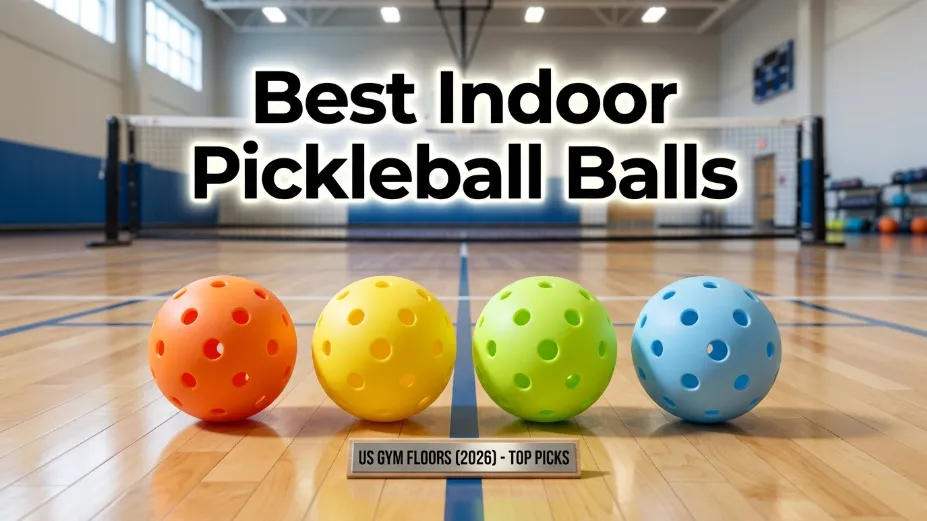
The most common source of confusion isn’t about the ball itself, but where you use it. Many players assume “Indoor Facility” automatically equals “Indoor Ball.” This is the fastest way to ruin your game.
“I play indoors but on a concrete tennis surface—should I use an indoor or outdoor ball?”
The Golden Rule: Look at the floor, not the ceiling. If you are playing indoors on a converted tennis court or a dedicated pickleball court with a gritty, acrylic surface, you MUST use an outdoor ball. Here, specific brands matter:
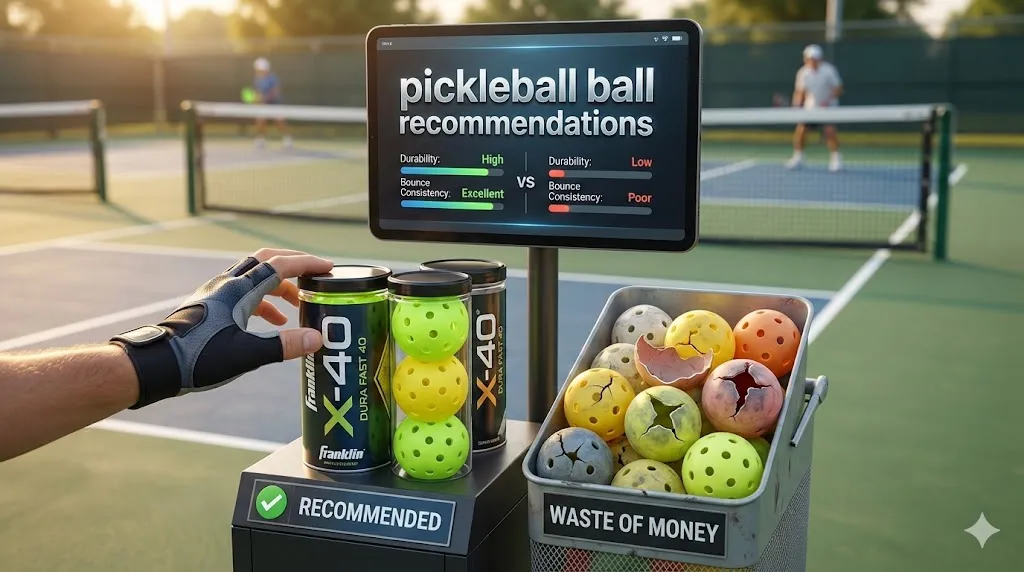
- Durability Choice: The Franklin X-40 is widely preferred for recreational play on rough concrete. Its slightly softer plastic resists the “sanding down” effect of the court surface longer than harder balls.
- Speed Choice: If you want pro-level speed, the Dura Fast 40 is the standard, but be warned: it wears down faster on gritty surfaces compared to the Franklin.
However, if you are playing on a gymnasium floor (wood) or polished tile, stick to indoor balls like the Onix Fuse Indoor or PCKL Elite to avoid the “skipping” effect.
“What happens if I use the wrong ball for the hole pattern?”
You may know that outdoor balls generally have 40 small holes and indoor balls have 26 large holes. (For a full breakdown of technical specs like weight and hole count, read our main guide here).
But practically speaking, the issue isn’t just aerodynamics—it’s skipping. If you bring a hard, 40-hole outdoor ball to a wooden gym floor to practice for a tournament, the plastic won’t “bite” into the varnish. The ball will skid low and fast, making it impossible to practice dinks effectively. If you must practice indoors for an outdoor event, try a hybrid ball that bridges the gap.
Weather Warriors – Buying for the Climate
Competitors often list “durability” generically, but seasoned players know that temperature is the real ball-killer.
“My outdoor balls crack immediately in the cold (below 50°F). What should I buy?”
Standard tournament balls (specifically the Dura Fast 40) are made from a single piece of rigid plastic. While they play fast, they have a high glass transition temperature. In the cold, they become brittle and shatter like glass.
The Solution: Stop buying pure performance balls for winter rec play. Instead, switch to cold-weather resistant brands.
- Specific Recommendations: Players often switch to the Onix Fuse G2 or Core Pickleball in winter. These balls use a proprietary polymer blend that absorbs impact rather than shattering in freezing temps.
- The Trade-off: These balls might bounce slightly lower and play a bit slower than a rock-hard Dura, but they will survive the session without splitting. Save your money and keep the Dura balls for the summer.
“Which pickleballs maintain their roundness best in extreme heat (>90°F)?”
On the flip side, extreme heat turns softer balls into mush. If you are playing in Arizona or Florida summers, you have likely experienced the “marshmallow effect.”
In high heat, you need a ball with a high durometer rating (hardness). Here, the Dura Fast 40 is the undisputed champion. Because it is the hardest ball on the market, it maintains its structural integrity even when the asphalt is frying eggs.
In contrast, softer balls (like the standard Jugs or cheaper bulk options) tend to turn into “marshmallows” in 90°F+ heat, deforming quickly and losing their bounce height after just a few intense rallies.
Performance Nuances – Speed, Spin, & Feel
For the advanced player, the ball is a tool for strategy. Here is how subtle differences change the game.
“Hard vs. Soft Balls: How does the durometer rating affect spin?”
There is a misconception that a soft ball “grabs” the paddle better. Actually, harder balls generate more spin in most scenarios.
Why? Because a harder ball retains its shape upon impact, allowing the grit of your carbon fiber paddle to friction-grab the surface. A soft ball deforms too much against the paddle face, dissipating energy and reducing the RPMs. If your game relies on heavy topspin drives, stick to harder, tournament-approved options.
“Why does my ball wobble in the air?”
You hit a perfect drive, but it veers left. This is the “Out-of-Round” issue, caused by inconsistent injection molding or cooling warping.
To test this, spin the ball on a flat surface. If it wobbles like a bad top, retire it. High-end tournament balls are inspected more rigorously for roundness, which is why they cost more than the bulk balls you find in bargain bins. If precision is your priority, avoid the “100 balls for $50” buckets.
Tip: Visibility also matters for tracking flight. On blue courts, neon yellow is standard. But on light-colored gym floors, look for orange or hot pink balls to improve contrast and reaction time.
Niche & Specific Scenarios
Sometimes standard options just don’t fit your specific needs.
“Are there specific ‘quiet’ pickleballs for HOA restrictions?”
If you live in a noise-restricted community, standard hard plastic balls might be banned. Look for foam or sound-dampening pickleballs like the Gamma Photon (often used for training) or specific “Silent” branded foam balls.
Be warned: these play very differently (slower and lower bounce) and are not suitable for tournament prep. Always check the USA Pickleball Approved Equipment List if you need a quiet ball that is still sanctioned for play.
“What is the best ball for a ball machine?”
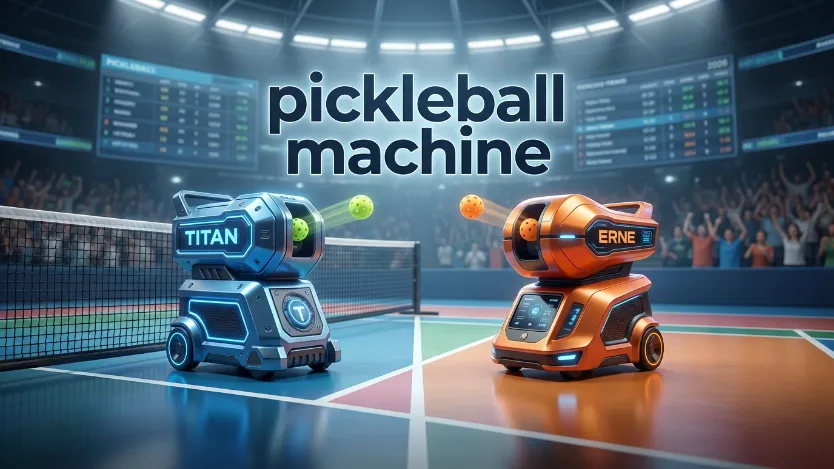
If you are investing in a machine like the Titan pickleball machine, consistency is key to preventing jams.
Recommendation: Do not mix brands in the hopper. Different brands vary slightly in diameter. Mixing them causes jams and inconsistent feed distances. Buy one specific model in bulk for your machine. Harder outdoor balls generally work better in throwing wheels than softer indoor ones, which can get chewed up over time.
“Bulk Practice Balls vs. Tournament Approved?”
Is it worth the extra cost for practice? If you are just hitting against a wall, bulk balls are fine. But for pickleball drills involving drops and resets, use the ball you compete with.
A smart strategy is to buy a Franklin pickleball set or similar tournament-grade balls, use them for matches for a week, and then retire them to your “drill bucket.” This gives you a supply of practice balls that feel real without breaking the bank on brand new ones for every drill session. You can find bulk options at Pickleball Warehouse.
Conclusion
Choosing the right ball is about matching the equipment to your specific environment. Don’t play with a cracked ball in the winter just because it’s “tournament approved,” and don’t use an indoor ball on concrete just because you have a roof over your head.
By selecting the right ball for your surface and weather, you save money and improve your consistency. Now that you have your recommendations sorted, get out there and play!