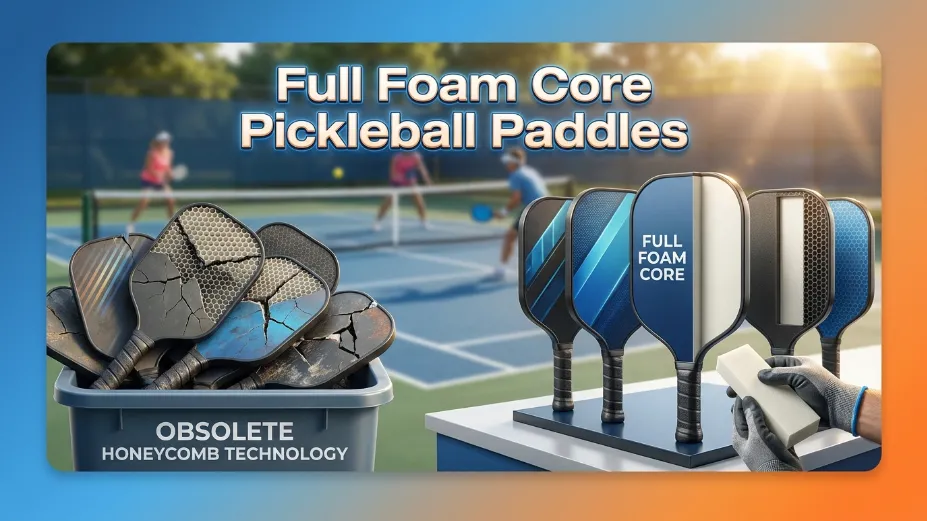
The sound of a pickleball paddle striking a ball has officially changed, and with it, the entire meta of the game. For months, the court has been divided between those chasing raw power and those desperate for soft control. Then came Full Foam Core Pickleball Paddles—a technological shift that promised to eliminate that compromise entirely by injecting edge-to-edge stability into a single mold. But as any advanced player in 2026 knows, not all thermoformed injection is created equal.
If you are looking to understand whether Gen 4 core technology actually delivers on the promise of infinite sweet spots, or if it is just another marketing buzzword masking a fragile interior, you need to look at the raw mechanics of deflection, pop, and long-term durability.
Selkirk LABS Paddle Comparison
Core Technology · Power Rating · Dampening · Price
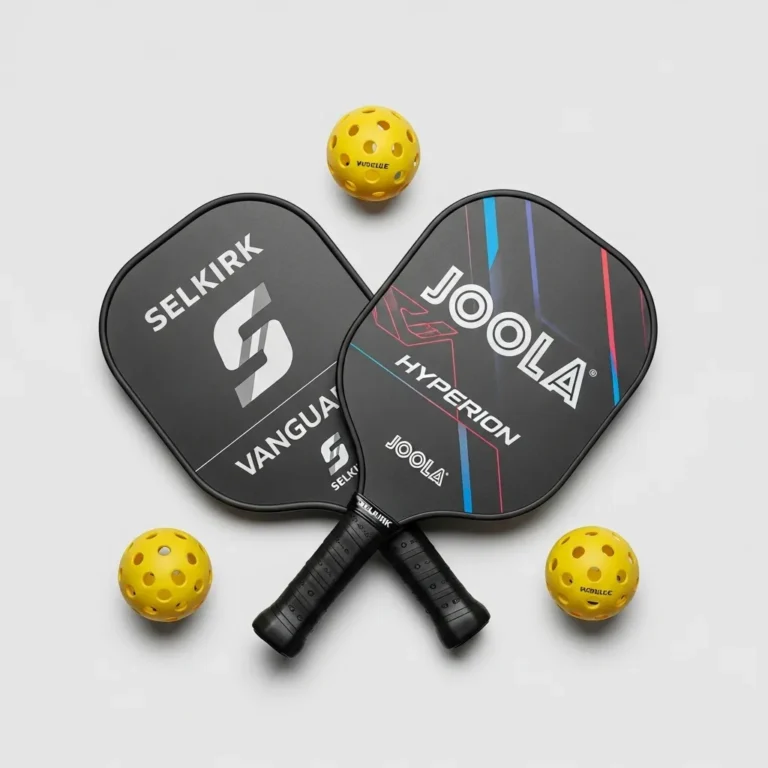
For competitive US players seeking the optimal balance of defensive stability and explosive output, the best choice depends directly on your preference for raw pace versus adaptive all-court customization. If your priority is maximum, relentless firepower out of the box, the flagship LABS Project Boomstik is the premier choice, while those who value a slightly more controllable ceiling with adjustable perimeter weights will find the Omni to be the ultimate 2026 asset. To prevent equipment overlap and explore these models in-depth, we highly encourage you to read our detailed hands-on Selkirk LABS Project Boomstik Pickleball Paddle Review and our comprehensive Selkirk OMNI Pickleball Paddle Review before buying.
The rapid expansion of the club scene across the United States has fundamentally altered player expectations regarding technical gear. Advanced competitors are discovering that standard honeycomb paddles no longer suffice in high-stakes matches where fractions of a second dictate kitchen supremacy. If you are looking to master how to play pickleball at an elite level, understanding the structural engineering of carbon fiber pickleball paddles becomes paramount to executing precise shots and avoiding chronic stress injuries. Let us dissect the physical and thermodynamic realities of this material revolution.
How Do Foam Core Pickleball Paddles Work?
To understand the mechanics of a modern paddle, you must look at how energy is transferred upon ball impact. In traditional paddles, a hollow polypropylene grid handles the impact forces, which often limits the sweet spot and leads to localized breakdown. Conversely, Gen 4 technology replaces the hollow grid entirely with a continuous, solid-state core constructed from specialized structural polymer foams. This continuous design allows for uniform energy return across the entire face, expanding the hitting zone and eliminating the erratic behavior common with older models. This shift highlights exactly How Do Foam Core Pickleball Paddles Work to redistribute impact energy through material compression rather than structural flexing.
The underlying materials science relies primarily on two formulations: Expanded Polypropylene (EPP) and Microcellular Polypropylene (MPP). EPP consists of macroscopic, highly elastic gas chambers that compress predictably under load, offering a cushioned feel and exceptional resistance to shear stress. MPP features a denser, microcellular structure that rebounds with a crisper, more polymer-like response. However, because MPP contains highly compacted micro-cells, it is prone to off-gassing under the extreme heat and pressure of the unibody thermoforming process.
This off-gassing releases trapped volatile compounds that can form microscopic voids at the adhesive boundary, compromising the bond between the face sheet and the core. Over time, these voids act as microscopic crack initiators, eventually leading to disbonding—a catastrophic structural failure where the composite face sheet separates from the solid core. Evaluating these material trade-offs is essential before choosing premium thermoformed pickleball paddles for long-term tournament use.
Foam Core vs Honeycomb Pickleball Paddles: The Material Science of Core Crushing
When contrasting Foam Core vs Honeycomb Pickleball Paddles, the fundamental difference lies in their mechanical failure modes. Traditional polypropylene honeycomb cores feature a grid of thin plastic walls arranged in a repeating hexagonal beehive pattern. While this lightweight design is highly efficient, it suffers from a fatal flaw under high-velocity impacts: cyclic fatigue. In aggressive singles and advanced doubles play, driving the ball at velocities exceeding 60 mph subjects the thin walls of the honeycomb cells to intense mechanical strain.
Over a span of 6 to 12 months, this repetitive loading leads to localized plastic deformation, where the cell walls crack, buckle, and permanently collapse inward—a phenomenon known as core crushing. Once a core collapses, it creates empty voids directly beneath the composite surface, leaving the player with sudden dead spots, unpredictable ball responses, and an annoying rattling sound.
Gen 4 Foam Core Technology entirely eliminates this cellular collapse. Because the solid foam core is continuous, it distributes the ball’s kinetic impact across thousands of microscopic, gas-filled chambers simultaneously. Instead of thin-walled buckling, the solid foam experiences bulk compressive strain, ensuring the core retains its structural shape and plays identically over hundreds of hours. This continuous support also drastically alters the sweet spot footprint. Traditional honeycomb paddles concentrate their peak energy return in the center 60% to 70% of the face, punishing off-center hits with sudden power drops and severe twisting.
Solid-state foam cores, on the other hand, provide uniform resistance across 85% to 95% of the paddle face, stabilizing off-center blocks and ensuring defensive resets clear the net with ease. Choosing the right thickness, such as evaluating a 14mm vs 16mm pickleball paddle, remains crucial to tailoring this sweet spot behavior to your baseline mechanics.
The Launch Angle Paradox and Ball Pocketing Mechanics
One of the most fascinating phenomena associated with Gen 4 cores is the shift in ball pocketing dynamics and its impact on the Pickleball Paddle Power and Pop equation. When a pickleball strikes a traditional honeycomb paddle, the high surface tension of the stiff face limits deflection, resulting in a rapid rebound and a short contact window. With a full foam core, the underlying material compresses in a linear, predictable manner.
This controlled elasticity allows the carbon fiber face sheet to deflect slightly inward, wrapping around the sphere of the ball—a highly desirable mechanical reaction known as ball pocketing. This physical integration extends the contact duration, or dwell time, by several milliseconds, giving the player more time to apply angular forces and generate massive, dipping topspin on drives and rolls.
However, this deep pocketing introduces a physical behavior known as the Launch Angle Paradox. In traditional honeycomb designs, core thickness dictates a predictable trajectory: thin cores (14mm or less) produce a flat, low launch angle for aggressive drives, while thick cores (16mm or more) produce a high, loopy trajectory for drops and resets. In Gen 4 paddles, this relationship changes. A thin 14mm foam core paddle allows the ball to sink so deeply into the face that it mimics the high, loopy launch profile of a traditional 16mm honeycomb paddle. This launch angle shift can catch players off guard during transition play.
Those accustomed to driving flat with a 14mm honeycomb model often overshoot the baseline when first using a 14mm foam model, requiring a brief adjustment period to adapt swing mechanics, paddle face angles, and roll techniques to the paddle’s natural launch profile. If you are a beginner looking for more forgiving gear, checking out our list of the best beginner pickleball paddles can help you transition into modern core designs with ease.
Head-to-Head: Selkirk LABS Project Boomstik vs. Selkirk OMNI
For US players evaluating premium equipment, comparing the Selkirk LABS Project Boomstik and the Selkirk OMNI reveals a fundamental split in core design and player feel. Both models command premium placement in the 2026 market but cater to completely different tactical roles on court.
The Core Architectures
The Selkirk LABS Project Boomstik features the heavy-hitting BoomCore™. This design surrounds a high-density PureFoam center with a thick, structural EVA Power Ring. Under high-impact drives, the EVA ring creates a springy, explosive rebound effect, yielding the highest power ratings on the market. Conversely, the Selkirk OMNI utilizes the newly engineered ReactCore™. This dual-ring system takes the EVA Power Ring and refines it with an additional, internal PureFoam Ring positioned between the center core and the EVA perimeter. This extra layer of EPP foam dampens excess energy, absorbing heavy pace on control shots while maintaining a solid rebound on full drives.
Feel and Feedback
On the court, the Boomstik delivers a loud, stiff, and hollow sensation that rewards aggressive baseline power. Ball exit is instantaneous, which is excellent for hand battles but makes soft dinks and resets difficult to control. The OMNI, by contrast, feels denser and more connected. The dual-ring ReactCore increases dwell time, providing a plush, cushioned feel that allows you to guide soft dinks and resets exactly where you want them in the pickleball dink exchanges. While the OMNI still packs a punch, its overall feel is noticeably softer and more refined than the raw power of the Boomstik.
The Tuning Systems
Weight distribution represents another major difference. The Boomstik features a semi-permanent MOI Tuning System, with precision-engineered weights clamped directly to the edge guard. While this stabilizes the paddle, removing the weights can damage the frame, limiting customization. The OMNI introduces a fully adjustable MOI Tuning System. Players can easily snap the 7.5-gram weights on and off or slide them along the edge guard to customize swing weight and hand speed. This makes the OMNI a highly versatile tool for advanced players who love to fine-tune their gear.
Exposing the Information Gaps: Real-World Longevity and Surface Grit Decay
While many competitors claim that the Best Foam Core Pickleball Paddles 2026 will last forever because they do not suffer from core crushing, advanced players must look at a critical, often-overlooked factor: the core-to-surface longevity disconnect. Under high-intensity competitive play, the micro-roughness of a standard carbon fiber face is subjected to intense, abrasive friction. Standard thermoformed paddles utilize an epoxy peel-ply texture to create surface grit.
Within 100 to 150 hours of active play, this microscopic texture wears flat, resulting in a dramatic drop-off in spin generation—long before the durable foam core shows any signs of wear. Consequently, players are often forced to replace a structurally sound paddle simply because they have lost the ability to generate competitive RPMs.
To bridge this longevity gap, cutting-edge manufacturers are introducing durable surface textures. Innovations like Spartus’s PermaGrit or 11SIX24’s HexGrit embed raw, durable textures directly into the composite layup rather than relying on thin epoxy coatings. Testing shows these advanced surfaces can maintain up to 95% of their initial spin rate (averaging over 2,000 RPM) after 300 games, helping to match the lifespan of the surface with the longevity of the foam core.
Another critical material shift is elastic softening. While solid foam cores do not experience the sudden failures of honeycomb grids, they do undergo gradual material changes. Repetitive, high-velocity ball strikes cause the micro-cellular walls of EPP and MPP cores to experience minor elastic fatigue over the first 20 to 30 hours of play. This break-in phase softens the core, increasing ball pocketing and dwell time. However, this softening also causes a gradual reduction in pop. Players must adapt to these changes as the paddle transitions from a poppy, aggressive tool out of the box to a softer, control-oriented paddle over its lifespan.
For competitive players looking for elite tools that maintain high performance over time, checking our curated list of best pickleball paddles for advanced players is essential.
Performance Customization: Tuning Your Gen 4 Chassis
Because polymer foam is a solid, continuous material, it has a higher bulk density than the empty, open-cell structure of a plastic honeycomb grid. This density difference introduces a significant engineering trade-off: the mass-maneuverability paradox. While a standard 14mm honeycomb paddle typically weighs between 7.5 and 7.8 ounces with a quick swing weight of 105 to 110, a Gen 4 foam core paddle of the same thickness carries more physical mass, often resulting in an average static weight of 8.0 to 8.2 ounces and a high swing weight of 112 to 118. This higher swing weight increases the physical effort required to maneuver the paddle, which can lead to arm fatigue and slower reaction times during rapid hand battles at the kitchen line.
To manage this mass and optimize performance, precise customization using adhesive tungsten or lead tape is highly recommended. Strategic weight placement can stabilize the paddle face, open up the sweet spot, and tailor the balance point to specific styles of play:
- Maximized Sweet Spot & High Torsional Stability: Apply 3.0 grams of weighted tape on each side at the 3 and 9 o’clock positions. This increases the paddle’s twist weight, resisting twisting on off-center hits.
- Balanced Maneuverability & Lower Swing Weight: Apply 2.5 grams of tape near the throat at the 4 and 8 o’clock positions, starting 1 inch above the handle. This keeps the balance point closer to the hand, protecting hand speed.
- Enhanced Plow-Through & Baseline Drive Power: Apply 1.5 to 2.0 grams at the 12 o’clock position on the head. This shifts the balance point higher, increasing kinetic energy transfer on full drives.
The 2026 Regulatory Landscape: Navigation of the USAP and UPA-A Standards
As paddle power has increased, governing bodies have established strict equipment standards to preserve the strategic, rally-based nature of the sport. In the 2026 landscape, manufacturers must navigate two distinct regulatory frameworks: USA Pickleball (USAP) and the United Pickleball Association of America (UPA-A).
The primary regulatory metric for power output is the Paddle/Ball Coefficient of Restitution (PBCoR). The test uses a high-speed pneumatic cannon to fire an official tournament ball at a clamped, static paddle at an inbound velocity (V_inbound) of 60 mph. High-speed cameras measure the rebound velocity (V_rebound):
USA Pickleball enforces this limit through a two-phase schedule:
- Phase I (November 1, 2024): Established a maximum PBCoR limit of 0.44 for all new paddle certifications.
- Phase II (November 1, 2025): Tightened the maximum PBCoR threshold to 0.43 for all new paddle submissions.
- The May 1, 2026 Mandate: This represents a major enforcement milestone. As of May 1, 2026, all paddles used in USAP-sanctioned tournaments must carry the official “USA Pickleball Approved” certification seal verifying compliance with the strict 0.43 PBCoR standard. Legacy paddles certified under the older 0.44 threshold, or those that manufacturers elected not to re-submit for 0.43 certification testing, are banned from sanctioned competition.
Professional players must also comply with the UPA-A standards, which govern the PPA Tour and Major League Pickleball. The UPA-A uses a different metric, the Paddle Elasticity Factor (PEF), which caps power output at a strict 0.385 for new paddles and 0.405 after a designated break-in period. To prevent players from using altered or degrading paddles on court, the UPA-A utilizes destructive “ABI” testing to simulate extended wear. The organization also conducts on-site testing and can enforce fines of up to $50,000 for players using non-compliant equipment.
Because of these differing rules, a paddle that is legal for USAP amateur events may not be approved for UPA-A professional competition. This requires players to carefully verify the compliance status of their equipment before entering sanctioned events. If you want to learn more about the differences between these sports, explore our article on what is pickleball.
Full Foam Core Pickleball Paddles – FAQ
Are Gen 4 full foam core paddles manufactured entirely within the United States?
No. While conceptual design, precision engineering, and specialized surface testing are conducted at corporate headquarters within the United States, primary manufacturing of the raw polymer core sheets and structural carbon layups takes place in high-tech facilities in Asia to maintain manufacturing tolerances, followed by final assembly and quality control before retail shipping.
Can I safely use a standard paddle eraser or liquid cleaner on a Gen 4 foam core surface?
Yes, you can use a rubber paddle eraser to remove plastic ball residue from raw carbon fiber surfaces; however, you must avoid using liquid cleaners or solvent-based sprays on the face. Liquid solvents can seep through microscopic seams along the edge guard, degrading the internal adhesive layers and accelerating disbonding between the composite face and the solid EPP/MPP core.
How does the increased stack height of a 16mm foam core impact hand speed compared to a 14mm version?
A 16mm core thickness carries a slightly higher bulk density due to the larger volume of solid foam, increasing the paddle’s overall weight and swing weight. During rapid hand battles at the kitchen line, this extra mass can make the paddle feel slightly more sluggish compared to a highly maneuverable 14mm version, which trades away a small amount of impact cushioning to prioritize lightning-fast reaction times.