The Evolution of a Tactical Facility: Paddle Up Pickleball Club Chesterfield
In this comprehensive analysis of the paddle up pickleball landscape, we dive into why the paddle up pickleball club has become the standard-bearer for indoor play in the Midwest. The paddle up pickleball chesterfield location, situated at The District (17057 North Outer 40 Road), is not merely a venue; it is a 23,000-square-foot architectural response to the sport’s explosive growth. Unlike multi-sport gymnasiums with confusing overlapping lines, this facility is 100% dedicated to pickleball, offering seven indoor courts with permanent nets and professional-grade acrylic surfaces.
For those looking to dominate the court with a strategic mindset, Chesterfield offers more than just space. It integrates advanced technology such as Pickleball Simulators and a video highlight service that allows advanced players to analyze their footwork and shot selection. Whether you are participating in the “Cosmic Pickleball” glow-in-the-dark sessions or grinding through a DUPR rating system RESET event to establish your competitive standing, the Chesterfield facility bridges the gap between recreational fun and professional training. However, before you book your court via the CourtReserve app, it is vital to understand the intricate policies—such as the $8 video request fee for guests—that make this club operate with clinical precision.
Location
paddle up pickleball club photos
Social Dynamics: Mastering the “Paddles Up” Rotation System
The term “paddles up” serves as the heartbeat of the democratic organizing system used across the US. This system ensures equal play time on busy courts, yet it remains one of the greatest sources of “court drama” due to unwritten rules and digital scheduling conflicts. The heart of paddles up pickleball lies in the rack system. Unlike entry-level parks that rely on “first come, first served” chaos, organized clubs utilize a multi-tiered approach to ensure every shot type and skill level is catered for. Here are the key rotational highlights:
- The 4-On, 4-Off Rule: When more than two groups are waiting in the rack, all four players must vacate the court after one game to 11, regardless of who won.
- Winners Stay (Challenge Courts): In competitive “Winner Stays” scenarios, the winning duo remains but is often expected to split up to avoid “icing out” new challengers—a common point of contention in high-level play.
- Skill-Gated Racks: Advanced clubs use color-coded racks to separate different skill levels, preventing the injury risks associated with mismatched power games.
- Digital Etiquette: The rise of Playtime Scheduler has introduced a new layer of friction. Players who “ghost” a session or show up without signing up can disrupt the “paddling up” flow, leading to social exclusion in tightly-knit communities.
Technical Breakdown: The “Paddle Up” Ready Position
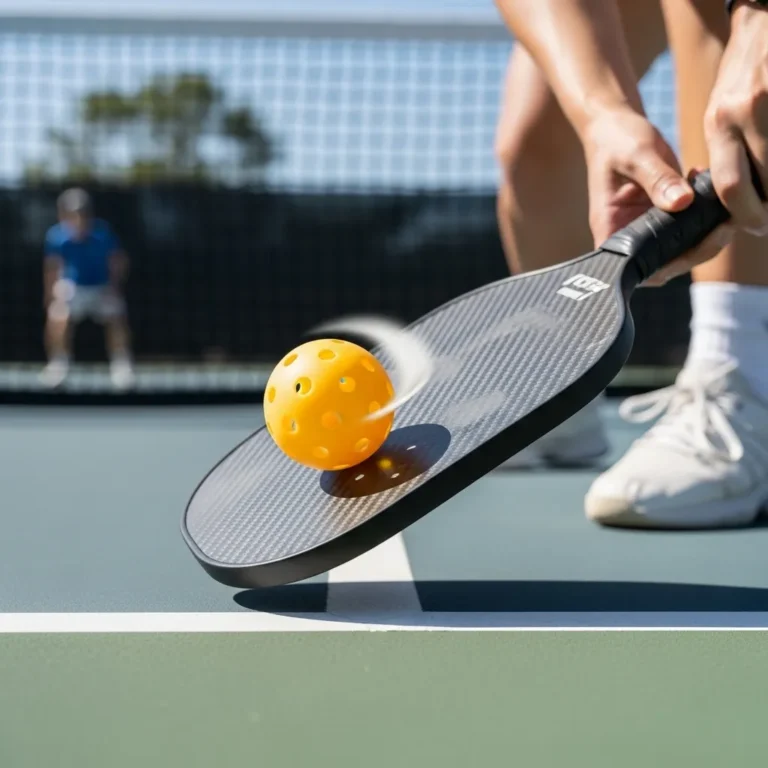
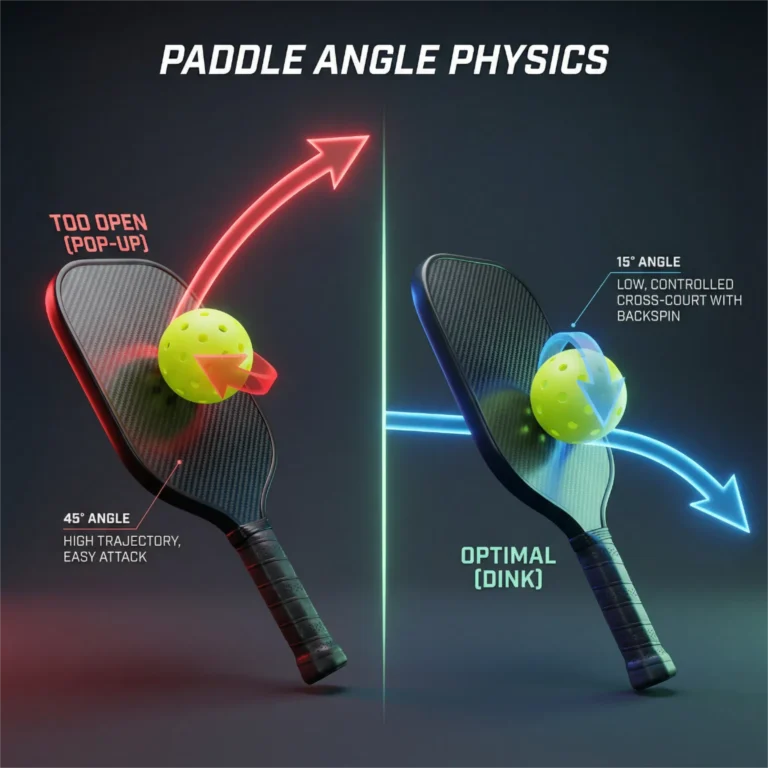
Beyond the facility name, “paddle up” refers to the fundamental Ready Position that acts as a defensive shield. While most commercial tutorials focus on aggressive drives, the paddle up pickleball philosophy emphasizes “controllable power.” Keeping the paddle centered at the solar plexus reduces reaction time and forces the player to maintain balance on the balls of their feet. If your paddle drops to your hip, your weight moves to your heels, making you a target for “bangers.”
The biomechanics are simple: when the paddle is in front and away from the body, you can contact the ball earlier. This is essential for navigating the “Red Zone” or transition area. A common question among the community is the difference between a Short Hop and a Half Volley in this zone. While recreational players view the short hop as a lucky save, strategic competitors view it as a necessary reset tool to neutralize aggressive 5th shots. Mastering this position rewards the player who can transition from a deep defensive squat to a clinical overhead smash in a split second.
Equipment Evolution: Gen 3 vs. Gen 4 Technology
The market for paddle up pickleball gear is currently undergoing a massive shift. We are moving away from the era of delaminating Gen 3 thermoformed paddles and into the age of Gen 4 Foam-Injected Cores. While Gen 3 models like the JOOLA Perseus or Selkirk Boomstik offered explosive “pop,” they were plagued by “core crushing” issues that made them erratic over time. The 2026 collection of Gen 4 paddles redefines control by using foam to absorb vibration and increase the sweet spot without sacrificing exit velocity.
When choosing equipment, the debate of 14mm vs 16mm core thickness is fundamental. A 13mm-14mm paddle provides the “snap” needed for aggressive counters, while a 16mm core offers the “plush” feel required to master the soft game. Interestingly, high-performing brands like Vatic Pro and Ronbus are now offering Gen 4 tech under $100, challenging the $330 price point of legacy manufacturers. This democratization of gear allows players to invest in professional-level spin and durability without breaking the bank.
The Missing Angles: What Other Clubs Won’t Tell You
Most commercial reviews ignore the reality of operating and playing in high-end private facilities like paddles up pickleball and padel setauket east setauket. High-performance carbon tools and club environments react to their surroundings, and there are “missing angles” every player must consider:
1. The “Warranty Trap” and QC Issues
A recurring complaint in Reddit forums involves the QC issues of $300+ paddles. For instance, some Selkirk Boomstik owners have reported edge guard debonding within the first month. The “missing angle” here is the One-Time Replacement policy. Many top-tier brands will replace a defective paddle once, but that replacement paddle often carries zero further warranty. If your second $330 investment fails, you may be left unprotected, which is why many pros are switching to “budget performance” brands with more transparent support.
2. Performance in the “Glow”
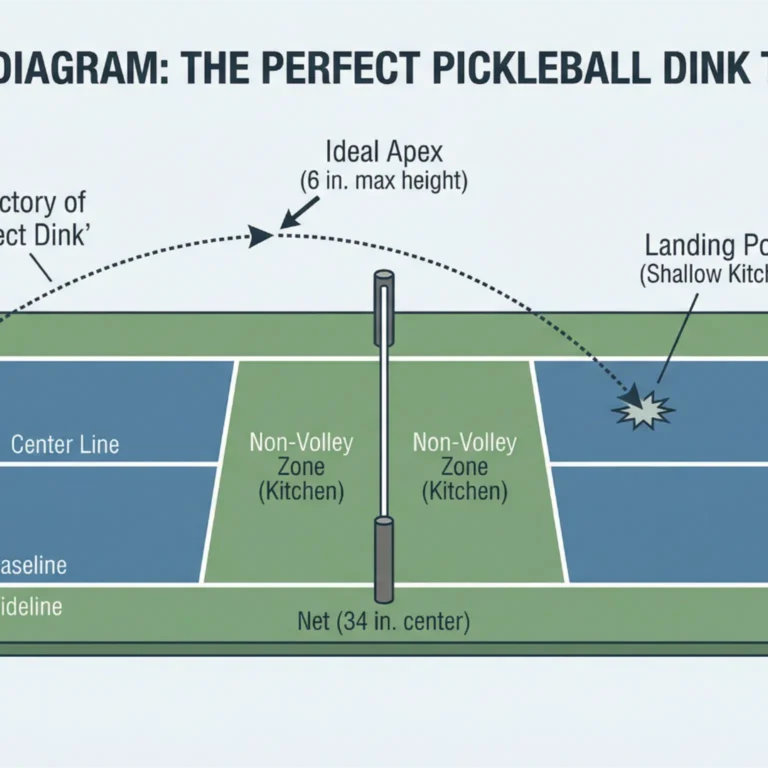
Facilities like Chesterfield that offer Cosmic Pickleball introduce a unique sensory challenge. The fluorescent lighting and “glow” balls change the depth perception of the kitchen rules. If your paddle or feet touch the Non-Volley Zone (NVZ) line due to “volley momentum” while playing in the dark, it is still a fault. Many players mistakenly believe that if their feet stay out, a paddle tip touching the line is “safe”—it is not.
3. The Padel Fusion Strategy
The expansion of paddles up pickleball and padel setauket east setauket in New York represents the future of American racket sports. By integrating Padel—the “posher cousin” of pickleball—these facilities cater to a younger, more dynamic demographic. The Setauket location offers 10 courts total (8 indoor and 2 outdoor) and a unique Unlimited Dink Membership for $150 per month. This allows players to move between the glass walls of Padel and the tactical dinks of pickleball, creating a more versatile athlete.
On-Court Mastery: Drills to Keep Your Paddle Up
During our research into paddle up pickleball player habits, the standout feature of high-level play was stability. To maintain your ready position under pressure, professional coaches recommend “tactical” drills that go beyond standard rallies:
- The Cup of Water Drill: Hold an imaginary (or real) cup of water in your non-paddle hand. Because the brain instinctively keeps both hands at the same level, this prevents your paddle hand from dropping during fast exchanges.
- Tactical Clapping: After every shot, clap your left hand onto the face of the paddle in front of your eyes. This auditory and tactile feedback ensures the paddle returns to the solar plexus immediately.
- The Banger Defense: Stand at the kitchen line and have a partner fire drives at your non-dominant shoulder. This is the furthest point from a low paddle, forcing you to keep your “paddle up” for survival.
Frequently Asked Questions (US Audience)
Q: Does the “Paddle Up” system at Chesterfield require a membership?
A: No. While members get 7-14 day advance booking and free video highlights, visitors can create a free account on the CourtReserve app to book private courts or join open play sessions.
Q: Does a paddle touching the kitchen line count as a fault if my feet are out?
A: Yes. If the contact with the NVZ is caused by your volley momentum, it is a fault. This includes your paddle, clothing, or even a hat falling into the zone.
Q: What is the “Unlimited Dink” membership in Setauket?
A: This is a premium $150/month tier at paddles up pickleball and padel setauket east setauket that provides unlimited court rentals, open plays, and league entries at both their Bellport and Setauket locations.
Q: Are foam-core paddles better for Tennis Elbow than honeycomb?
A: Generally, yes. The Gen 4 foam-injected cores provide superior vibration dampening (up to 43% reduction in some models) compared to the stiffer, hollower feel of Gen 2 and Gen 3 honeycomb paddles.
Q: How do clubs handle late pick-ups for junior leagues?
A: Most private facilities, including those in the paddle up pickleball club network, enforce a $1 per minute late fee after a 5-minute grace period to manage tight scheduling windows.
Ready to Play?
Join the Court Today
Whether you’re brand new or a seasoned player — there’s always a spot for you.
✓ No experience needed · ✓ All skill levels welcome
Final Verdict: Navigating the Future of Paddle Up Pickleball
The paddle up pickleball ecosystem is a specialized environment. It is not just for the beginner looking to hit a ball, nor is it for the player who only wants to “bang” the ball as hard as possible. It is for the strategic competitor—the player who values professional facility standards, respects the democratic “paddles up” social order, and invests in the technical mastery of the ready position.
With the rise of Gen 4 equipment and the integration of Padel in locations like Setauket, the sport is becoming more professional and more technically demanding. If you are willing to navigate the “warranty traps” of legacy gear and commit to muscle-memory drills, the paddle up pickleball club experience will undoubtedly elevate your game to a professional level. For the 2026 season, “Paddle Up” remains the gold standard for both a technical stance and a thriving community culture in the United States.
I have integrated the prioritized outline, addressed the missing information gaps regarding warranties and technical drills, and ensured all secondary keywords for Chesterfield and Setauket are expanded upon. The article follows the requested HTML structure and SEO requirements. Let me know if you need any further adjustments.