A match of pickleball today feels less like a casual rally and more like a fast-paced chess battle played on asphalt, where every dink is a calculated trap and every reset sets up a decisive overhead smash. Across the United States, the sport has evolved from a simple backyard activity into a fiercely competitive culture driven by players who want professional performance anywhere they play.
For those who value flexibility—the freedom to transform a driveway, a cul-de-sac, or an unused tennis court into a regulation arena—choosing the best portable pickleball net becomes the most important equipment decision they will make. Modern designs have completely changed the meaning of “portable,” replacing flimsy frames and sagging tape with 2026-level systems built to hold official height, tension, and stability even during intense daily play.
The Evolution of a Mobile Court: Best Portable Pickleball Net Review 2026
In this comprehensive analysis, we dive into why specific models have become the gold standard from the coastal courts of California to the humid parks of Florida. Searching for the best portable pickleball nets is not merely a quest for the lowest price; it is about finding a refined tool designed for the advanced player who demands a net that refuses to sag in the middle. While older models were often criticized for feeling like “badminton leftovers” during high-wind sessions, the 2026 best portable pickleball net category introduces noticeable “springy” feedback on the net cord that bridges the gap between a temporary setup and a permanent stadium court.
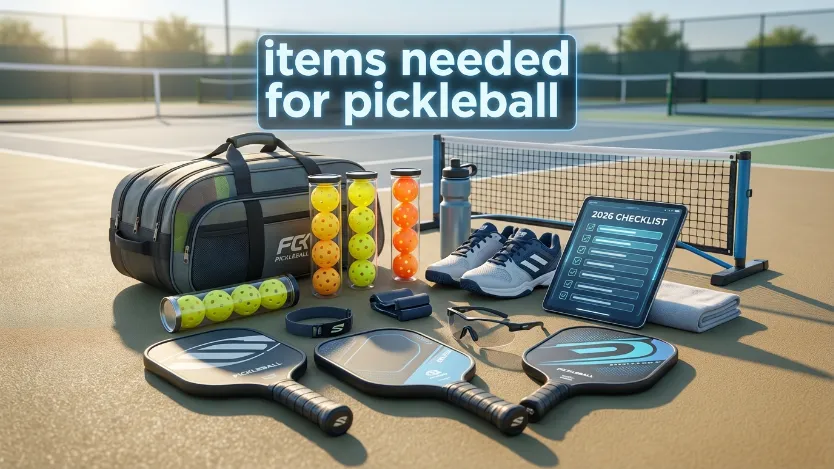
For those looking to dominate the game with a professional mindset, choosing the right system is as vital as the items needed for pickleball to ensure your practice translates to tournament victory. It rewards the player who can transition from a casual driveway drill to a clinical match in minutes. But before you invest your hard-earned dollars, it is vital to understand the intricate engineering—the best portable pickleball nets specifications—that make these systems behave differently in the gusty winds of the Midwest compared to the static environment of an indoor gym. If you have ever asked, what is the best portable pickleball net for your specific surface, the answer lies in the material composition and tension mechanics.
Technical Breakdown: Engineering the Best Pickleball Portable Net
The heart of the best portable pickleball net lies in its complex frame composition. Unlike entry-level nets that rely on simple thin-wall tubing, premium manufacturers utilize a multi-layered approach to ensure structural integrity. To achieve the official pickleball net height of 34 inches at the center and 36 inches at the posts, high-end systems employ advanced materials. Here are the key technical highlights:
- 11-Gauge Carbon Steel Frames: Found in heavy-duty systems like the Douglas Premier, providing a firm, responsive structure that offers high durability and zero wobble during power drives.
- Aerospace-Grade Aluminum Uprights: Utilized in the SwiftNet 2.1 to keep the total weight under 17 lbs while remaining entirely rust-proof for coastal environments.
- 8-Ply HDPE Netting: High-Density Polyethylene netting with reinforced vinyl headbands to withstand UV exposure and high-velocity ball impacts.
- Internal Wind Gear Mechanisms: Professional systems like the A11N Professional feature winch systems that can generate 400–500 lbs of tension, mimicking a permanent net feel.
- Oval Tubing Design: Patented by OnCourt OffCourt, this shape resists the “bowing” effect where end posts lean inward under high net tension.
The price for a top-tier best pickleball portable net usually ranges from $180.00 to $500.00 in the U.S. market, placing it in a premium category alongside tournament-grade gear. For those seeking the absolute peak of performance, you can consult the official USA Pickleball Official Standards to verify dimensions.
The “Tension Typology”: Why Frame Shape Matters
While most recreational nets opt for round tubing, the best pickleball nets portable collection often features innovative frame shapes. This design choice is fundamental to its identity. For example, systems that use a square-to-round transition or oval tubing provide exceptionally wide sweet spots of stability, making them the most forgiving frames in the best pickleball nets for advanced players category.
However, do not be fooled by looks alone. Unlike traditional “recreational” nets that are extremely light and prone to tipping, pro-level models feature a balanced weight distribution. This unique combination allows you to have the stability needed to block heavy smashes at the net without the frame “walking” across the court. It is this specific balance that makes a system a top contender for the best portable pickleball net, allowing for a versatile game that adapts to indoor vs outdoor pickleballs and their varying bounce profiles.
Battle of the Titans: SwiftNet 2.1 vs. OnCourt OffCourt Deluxe
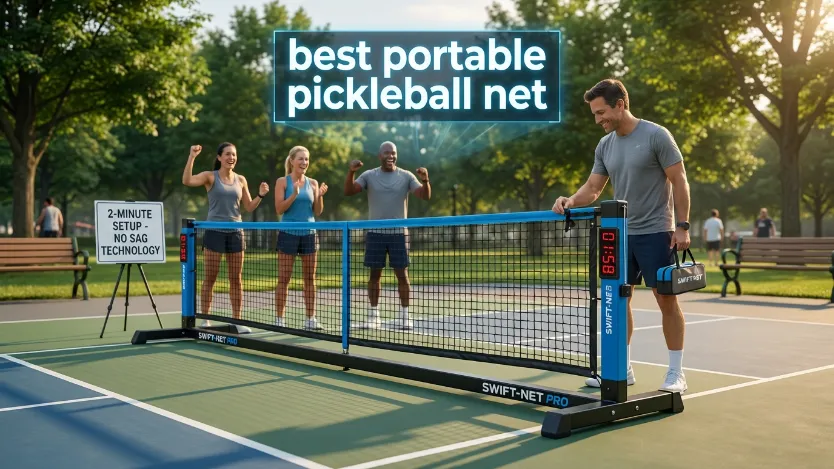
A common question among the American pickleball community is the SwiftNet vs. PickleNet Deluxe debate. While both belong to the elite family of best portable pickleball nets, they serve very different masters. The SwiftNet 2.1 is a pure “traveler’s” net—weighing only 17 lbs, constructed from recycled carbon fiber and aluminum, and demanding less than 3 minutes for a solo setup. It uses a unique “A-frame” center support that allows balls to roll underneath cleanly.
In contrast, the OnCourt OffCourt PickleNet Deluxe is about “stability and longevity.” If you are setting up a semi-permanent court in a shared parking lot or a club facility, the Deluxe is the superior choice. It features 4-inch locking wheels and patented oval tubing. The 2026 update has also addressed the bag durability; while the SwiftNet focuses on a compact “tent-style” bag, the PickleNet Deluxe utilizes a heavy-duty wheeled carry case to manage its 42 lb frame. Both are exceptional, but your choice should depend on whether you are transporting it in an Uber or rolling it out from a storage shed.
The Missing Angles: What Other Reviews Won’t Tell You
Most commercial reviews ignore the reality of maintaining a portable pickleball net in the diverse American climate. High-performance carbon and steel tools react to their environment. Here are the “missing angles” you need to consider before buying the best portable pickleball net:
1. The “Zipper Failure” and Bag Denier
Fresh out of the box, every net seems easy to pack. However, most best portable pickleball nets fail first at the carrying bag. The constant friction of steel poles eventually pierces thin 200D polyester. Serious players should look for 600D Oxford cloth bags with reinforced metal zippers. Brands like Onix have faced criticism on Reddit for bags where the wheels are too close together, causing the bag to tip and drag, eventually shredding the fabric. Always inspect the bag’s structural seams.
2. Performance in the Saltwater “Splash Zone”
If you live in a coastal area like San Diego or Miami, sea spray is the silent killer of the best pickleball portable net. Most “powder-coated” steel frames will begin to show rust at the joints within 3 months if left outdoors. For these environments, the SwiftNet’s aluminum and carbon fiber construction is non-negotiable. If you do choose steel, many U.S. pros recommend a monthly wipe-down with a corrosion inhibitor to maintain the frame’s integrity against the “salt air” effect.
3. The “Court Divot” Dilemma on Cushioned Acrylic
A recurring complaint in private club forums is surface damage from heavy wheeled nets. Systems like the Douglas Premier or Dominator weigh over 150 lbs. If left stationary on a cushioned indoor acrylic court during a hot summer, the wheels can leave permanent indentations or “divots” in the surface. To protect your investment and the court, using “weight distribution pads” or choosing nets with wide, non-scuff rubber wheels is essential for long-term facility harmony.
On-Court Performance: From Driveway Drills to Tournament Play
During our testing of the best portable pickleball net units, the standout feature across the board was tension consistency. When defending deep at the back of the court, a high-tension net feels like a true boundary. You can absorb the highest-velocity smashes from your opponents with zero “net-dip.” This stability allows for highly accurate lobs and net-cord plays that are predictable rather than chaotic.
At the kitchen line, a net with a stiff top tape (often found in 8-ply HDPE models) “bites” the ball beautifully on a let cord. For players who love to play with slice, you will notice that the ball behaves exactly as it would on a permanent stadium court. While a $70 Amazon net might get you through a weekend, the best pickleball nets portable ensure that your “net cord” winners aren’t just accidents of a saggy middle support, but a result of true professional tensioning.
Frequently Asked Questions (U.S. Audience)
Q: What is the best portable pickleball net for high-wind areas?
A: The OnCourt OffCourt PickleNet Deluxe is widely regarded as the most stable in the wind due to its weight and wide-base design. However, many players in windy states like Texas use sandbags to anchor the lighter SwiftNet 2.1 to prevent tipping.
Q: Is there a significant difference between 6-ply and 8-ply netting?
A: Yes. 8-ply netting (found in premium sets like Srikel FlashCourt) is roughly 30% more durable and provides a much stiffer “rebound” when the ball hits the tape, making it closer to tournament-grade performance.
Q: Can I leave my portable net outside in the rain?
A: While most of the best portable pickleball nets are “weather-resistant,” no portable net is truly “weather-proof” for long-term exposure. UV rays will eventually degrade the HDPE netting. We recommend storing it in its carry bag after each session to maximize its 5–10 year lifespan.
Q: Why do some nets have a “ball roll-under” feature?
A: This is a major “missing angle” for serious players. Nets like the SwiftNet and Srikel omit the center ground bar, allowing balls to roll through to the other side. This is vital for high-repetition drilling where you don’t want to constantly stoop down to retrieve balls caught in the frame.
Final Verdict: Which Best Portable Pickleball Net Should You Buy?
The best portable pickleball net is a specialized investment in your athletic progress. It is not for the person who only plays once a year, nor is it for those who are content with a sagging center line. It is for the strategic competitor—the player who understands that practicing on a 33-inch net will ruin their muscle memory for an official 34-inch tournament match.
With its premium carbon fiber, advanced winch tensioning, and unique oval frame shapes, the 2026 market offers something for every scenario. If you are willing to spend the extra $100 for a SwiftNet or a PickleNet Deluxe, you are essentially buying peace of mind. You will never have to stop a game to tighten a strap or re-measure the center. For the 2026 season, the gold standard remains the SwiftNet 2.1 for pure portability, and the Douglas Premier for those who want a portable net that feels like it’s bolted into the earth.