You walk onto the court, paddle in hand, ready to play. A friendly local approaches you and asks, “What’s your rating? Are you a 3.5 or a 4.0?” If you hesitate or don’t know the answer, you aren’t alone. This is the single most common confusion for new and improving players.
Understanding Pickleball Skill Levels is crucial not just for bragging rights, but for ensuring you have fun. If you enter a tournament bracket that is too high, you’ll get crushed. If you enter one that is too low, you’ll be accused of “sandbagging.” Your rating is the passport to fair, competitive, and enjoyable play.
By the end of this guide, you will understand exactly where you fit on the pickleball skill levels chart, how to self-rate accurately without playing a tournament, and how to bridge the gap between being a “banger” and a master of the soft game.
The Basics: How Pickleball Ratings Work
Before we dive into the specific numbers, it helps to understand the scale. Pickleball ratings generally range from 1.0 to 5.5+. Unlike tennis, where physical athleticism can often carry a player to a decent level, pickleball heavily rewards strategy, patience, and hand speed.
There are two main ways your pickleball skill level is determined:
- Subjective (Self-Rating): You assess your own skills against a standard chart. This is how 90% of recreational players start.
- Objective (Tournament Rating): Algorithms like UTPR or DUPR calculate your rating based on actual match results.
For a deep dive into how these algorithms calculate your score, check out our guide on pickleball ratings.
Detailed Pickleball Skill Levels Chart
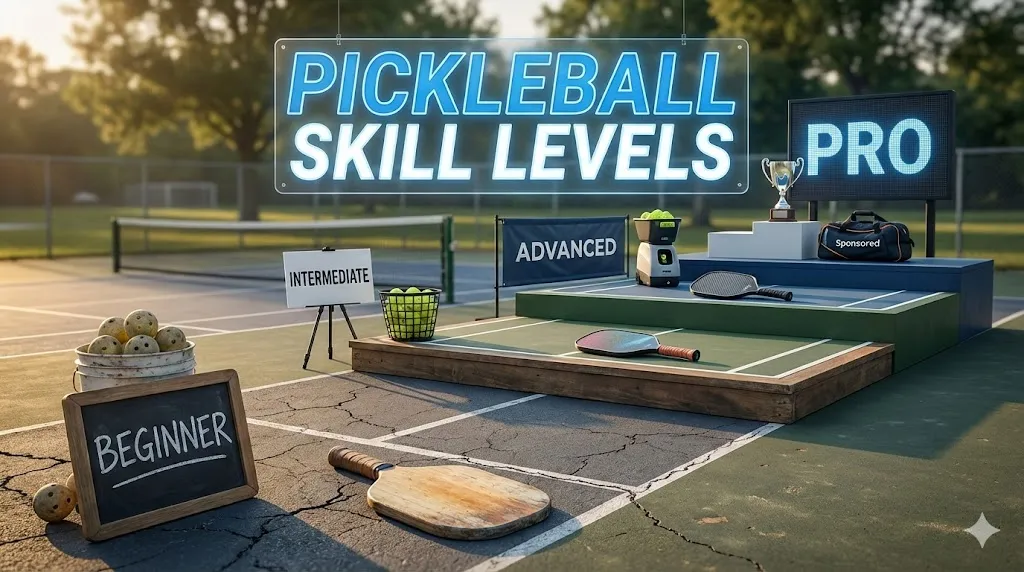
Below is a comprehensive pickleball skill levels chart. This breakdown is designed to help you identify exactly where your game stands today. Note that the jump from 3.5 to 4.0 is often considered the hardest transition in the sport.
Pickleball player rating levels from 1.0 to 5.0 plus: category and key characteristics and skills at each level
Pickleball Player Rating Levels
Category & key characteristics at each skill level
Level 1.0 – 2.5: The Beginner Phase
At this stage, you are primarily focused on hand-eye coordination. You might struggle to keep score or remember which side of the court to stand on. This is where everyone starts. The main goal here is simply keeping the ball in play.
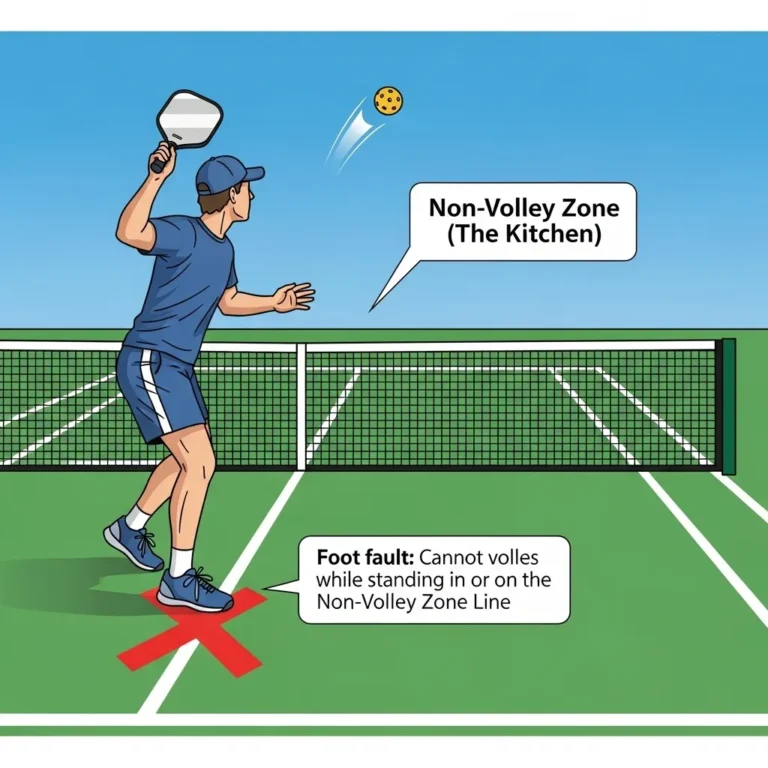
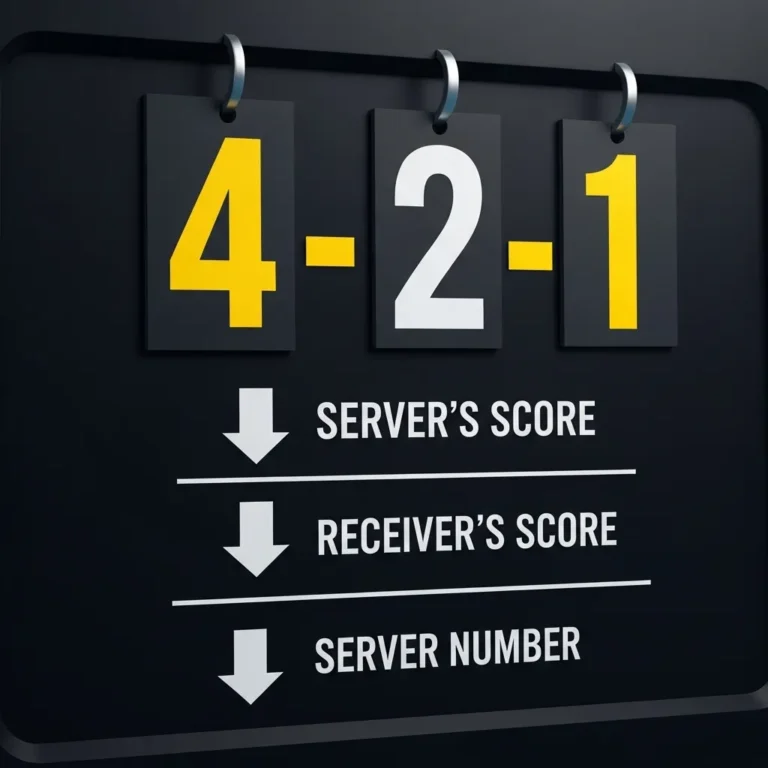
If you are still confused about the Non-Volley Zone or scoring, you should review the basic pickleball rules before worrying about your rating.
Level 3.0: The Recreational Player
A 3.0 player understands the fundamentals. You can hit a forehand drive consistently, and your serves are reliable. However, 3.0s often lack directional control—you hit the ball “to” the opponent rather than to the open space. You likely panic when at the net and avoid your backhand at all costs.
Level 3.5: The “Banger” / Intermediate
This is the most common rating in pickleball. A 3.5 player has good reactions and decent power. They often rely on hard drives (“banging”) to win points because their soft game isn’t developed yet. They know what a “dink” is, but they get impatient during dink rallies and try to speed the ball up too early. To understand the terminology used at this level, check our guide on pickleball terms.
Level 4.0: The Advanced Strategist
The jump to 4.0 is significant. A 4.0 player has mastered patience. They don’t just hit the ball hard; they construct the point. They can successfully execute a 3rd shot drop into the kitchen 7 out of 10 times. They are comfortable playing at the Non-Volley Zone line and can reset a hard ball into the kitchen to neutralize the opponent.
Level 4.5 – 5.0+: The Expert
At this level, unforced errors almost disappear. The difference between a 4.5 and a 5.0 often comes down to footwork efficiency and mental toughness. These players anticipate shots before they happen. For insights into how top-tier players think, you can study Ben Johns strategy.
Self-Assessment: How to Find Your Rating Without a Tournament
If you haven’t played a sanctioned tournament, getting an official number is impossible. However, you can use pickleball skill levels explained through self-assessment to find a very close estimate.
The Tennis to Pickleball Conversion
Many players come from a tennis background. While the skills don’t translate perfectly (especially the dink), there is a general correlation:
- Tennis NTRP 3.0 ≈ Pickleball 3.0
- Tennis NTRP 3.5 ≈ Pickleball 3.5 (often with a strong drive but weak soft game)
- Tennis NTRP 4.0 ≈ Pickleball 3.5 – 4.0 (depending on touch)
- Tennis NTRP 4.5+ ≈ Pickleball 4.0+ (rapid progression expected)
The “Can I?” Checklist
Ask yourself these honest questions to determine if you are ready to call yourself a 4.0:
- Can I hit a 3rd shot drop into the kitchen consistently, even when under pressure?
- Can I dink patiently for 10+ shots without speeding up the ball or hitting it into the net?
- Do I stop and reset the ball when my opponent drives it at my feet, or do I blindly swing back?
If you answered “No” to any of these, you are likely still in the 3.0–3.5 range. This is nothing to be ashamed of; it simply highlights what you need to work on. For official verification criteria, you can always refer to the USA Pickleball Official Definitions.
Understanding Rating Systems: DUPR, UTPR, and WPR
Once you start playing competitively, you will encounter different acronyms.
DUPR (Dreamland Universal Pickleball Rating)
This is quickly becoming the gold standard globally. DUPR is unique because it can include recreational matches (if both parties agree) and is algorithm-neutral across different tours. It rates all players on a scale of 2.0 to 8.0. To learn how to get rated, read our article on the DUPR rating.
UTPR (USA Pickleball Tournament Player Ratings)
This rating is strictly for USA Pickleball sanctioned tournaments. It is highly accurate but only accounts for official tournament play. If you improve rapidly in practice but don’t play a tournament for 6 months, your UTPR will be outdated.
The “Sandbagging” Phenomenon
If you browse Reddit or pickleball forums, you will see constant complaints about “Sandbagging.” This occurs when a player enters a tournament bracket lower than their actual skill level to win a medal easily. For example, a 4.0 skill level player entering a 3.5 bracket.
The 3.5 Bracket Paradox
Ironically, the 3.5 bracket is often the wildest and most difficult bracket in tournaments. It is filled with:
- True 3.5s.
- Athletic tennis converts who are technically 3.5s but have 5.0 power.
- “Sandbaggers” who are actually 4.0s but want gold.
Strategy Tip: Ideally, you should play at your level or slightly above. Playing “up” (e.g., entering a 4.0 bracket when you are a strong 3.5) is the fastest way to improve, even if you lose. Playing “down” might win you a plastic medal, but it won’t help your game.
How to Level Up: Bridging the Gap
Stuck at a plateau? Here is how to move to the next level.
From 3.0 to 3.5: Consistency is King
Stop trying to hit winners. At the 3.0 level, the player who makes the fewest mistakes wins. Focus on keeping your serve deep and your return of serve deep.
From 3.5 to 4.0: Master the Soft Game
This is the hardest leap. You must stop “banging” every ball. You need to develop a soft touch. Drill your 3rd shot drops and resets until they are automatic. If you need specific exercises, try these pickleball drills designed for transition zones.
From 4.0 to 4.5: Offensive Dinking
At 4.0, you dink to stay alive. At 4.5, you dink to apply pressure. You are moving your opponent around the kitchen line, waiting for them to pop the ball up just two inches too high so you can attack.
Frequently Asked Questions
“`
Is a 3.5 pickleball rating good?
Yes! A 3.5 rating indicates you are an intermediate player. You understand the strategy, can sustain rallies, and play competitively. It is considered the average skill level for active recreational players who play regularly.
How do I know if I am a 3.5 or 4.0?
The biggest difference is unforced errors and the “soft game.” A 3.5 player often speeds up the ball when they get nervous or impatient. A 4.0 player is comfortable dinking patiently and can reset a hard shot into the kitchen (the “reset”). If you panic in the transition zone, you are likely a 3.5.
What is the average pickleball skill level?
The vast majority of pickleball players fall into the 3.0 to 3.5 range. This is the “sweet spot” for recreational play where games are fun, rallies are long, but the intensity isn’t at a professional level.
Can I rate myself, or do I need a certified rater?
For recreational play and local leagues, self-rating is perfectly acceptable. However, for sanctioned tournaments, having a dynamic rating like DUPR or UTPR (acquired by playing matches) is preferred to ensure fair seeding.
“`
Conclusion
Your pickleball skill level is just a number, but it is a useful tool. It helps you find fair matches, set personal goals, and measure your progress. Whether you are a 2.5 just learning the ropes or a 4.0 grinding to reach 4.5, the journey is the most fun part.
Don’t get too hung up on the label. Use the pickleball skill levels chart as a map, identify your weaknesses, and get out on the court to practice. The only way to turn a 3.5 into a 4.0 is one dink at a time.