is padel the same as pickleball
It’s the question sparking debates in sports clubs, retirement communities, and public parks worldwide. You see a smaller court, a perforated racket, and a net, and you wonder: Is Padel the same as Pickleball?
While both sports are currently exploding in popularity and are often grouped together as “tennis alternatives,” the short answer is no. They are cousins, not twins. They have different roots, different rules, different equipment, and a completely different vibe.
If you are trying to decide which sport to pick up, or you’re just confused about why your local park is full of people hitting plastic balls, you’ve come to the right place. In this guide, we will break down exactly is pickleball the same as padel, covering everything from the walls and the “kitchen” to the cost of playing.
If you are starting from square one, you might want to first check out our guide on what is pickleball to get the basics down before diving into this comparison.
The Visual Difference: Courts & Equipment
The easiest way to tell the two sports apart is by looking at the “hardware”—the court you stand on and the gear you hold.
The Enclosure: Caged Heat vs. Open Air
The most obvious difference is the court structure.
- Padel is played in an enclosed court (10m x 20m) surrounded by glass walls and metal mesh. It looks like a mix of squash and tennis. The walls are an active part of the game; the ball can bounce off the back glass and remain in play.
- Pickleball is played on an open court (20ft x 44ft) with no walls. If the ball goes past the baseline, the point is over.
Because of the enclosure, you simply cannot play Padel on a Pickleball court. You need the glass structure to make the game work. However, if you are wondering about court adaptability, many communities are converting tennis surfaces. You can learn more about where you can play in our guide: can you play pickleball on a tennis court.
The Gear: Foam vs. Honeycomb
Can I use a Padel racket to play Pickleball?
Technically, you could physically hit the ball, but it is illegal in tournament play and functionally terrible.
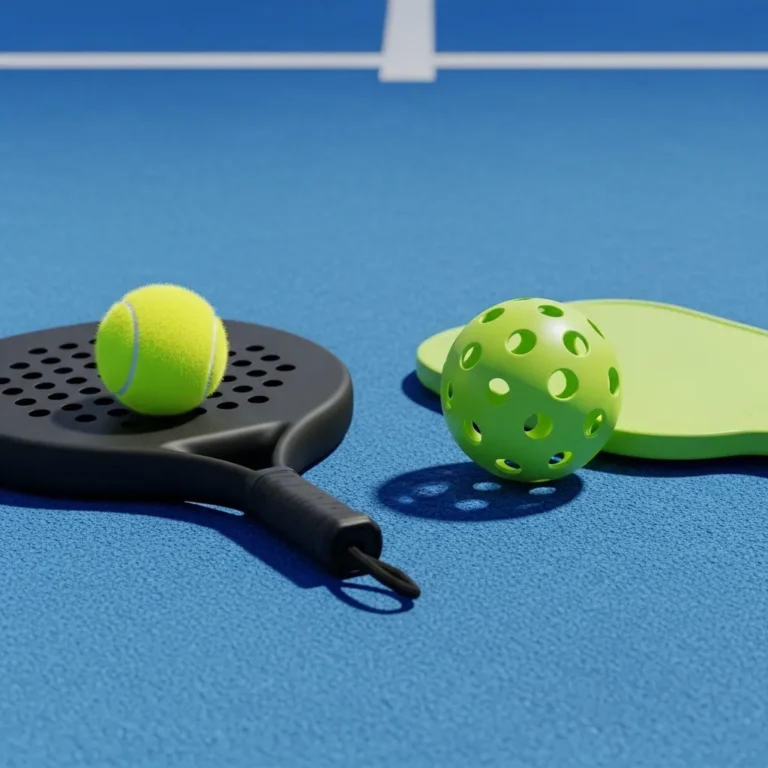
- Padel Rackets: These are thick (up to 38mm), made of perforated foam or EVA rubber, and do not have strings. They are designed to absorb the shock of a pressurized ball.
- Pickleball Paddles: These are thinner and usually feature a honeycomb core (polymer or aluminum) with a face made of fiberglass, carbon fiber, or graphite.
If you are looking for the right gear for the American favorite, knowing how to pick a pickleball paddle is essential to your game, as the sweet spot and pop are totally different from a Padel racket.
The Ball: Pressurized vs. Plastic
Another common query is: is pickleball the same as padel ball?
Absolutely not.
- Padel Ball: Looks almost identical to a tennis ball. It is made of rubber and felt and is pressurized (though slightly less pressure than a tennis ball). It bounces high.
- Pickleball: It is a hard plastic ball with holes (similar to a wiffle ball). It doesn’t bounce as high and travels through the air much slower.
For a deep dive into the specific aerodynamics of the wiffle-style ball, check out our resource on pickleball balls.
Gameplay Mechanics: Walls vs. The Kitchen
Once the game starts, the strategies diverge wildly. The biggest tactical difference comes down to two unique rules: The Walls (Padel) and The Kitchen (Pickleball).
The NVZ (Kitchen) vs. Free Volleying
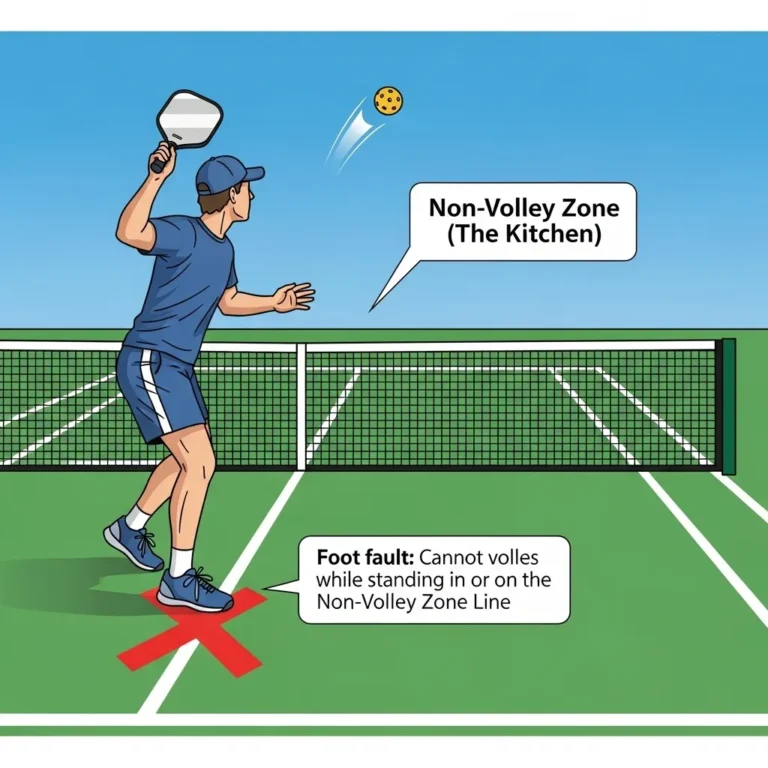
In Pickleball, the defining rule is the Non-Volley Zone (NVZ), affectionately known as the Kitchen. You cannot hit the ball out of the air while standing in the 7-foot zone near the net. This prevents players from just smashing every ball and forces a strategic “dinking” game.
Is the “Kitchen” rule applicable in Padel?
No. In Padel, there is no kitchen. You can stand as close to the net as you dare and smash the ball. However, the strategy in Padel is dictated by the walls. If you smash too hard, the ball hits the back glass and bounces forward, setting up an easy counter-attack for your opponents.
If you are transitioning to the court and want to avoid faults, you need to master the pickleball kitchen rules.
Scoring: Tennis vs. Points
- Padel: Uses the exact same scoring system as tennis (15, 30, 40, Game, Deuce, Advantage). Matches are usually played in sets (best of 3).
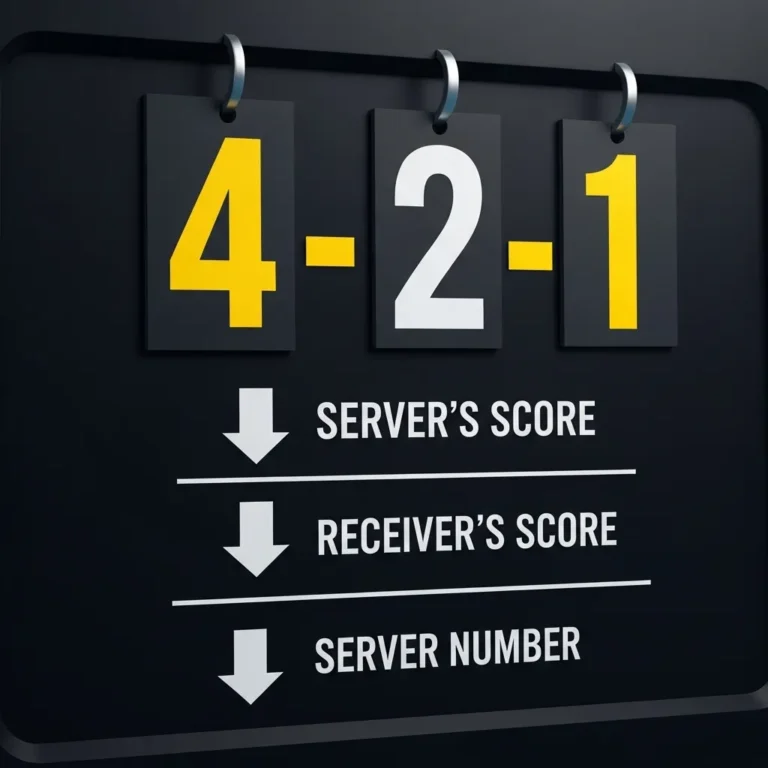
- Pickleball: Usually played to 11, 15, or 21 points. In traditional scoring, you can only win a point when you are serving.
For the official breakdown of Padel rules, including the intricacies of the serve, the International Padel Federation (FIP) is the global authority.
Difficulty & Skill Transfer: The Tennis Player’s Dilemma
Many players come from a tennis background and ask: is padel tennis the same as pickleball regarding skill transfer? Both are easier to learn than tennis, but they challenge you differently.
Which sport ruins your Tennis technique more?
This is a hot topic.
- Pickleball: Is often accused of “ruining” tennis strokes because it encourages a wristy, short swing rather than a long, flowing follow-through. The court is small, so big swings send the ball out.
- Padel: Is closer to tennis mechanics (overhead smashes, volleys, slice). However, the hardest habit to break is the “tennis instinct” to hit the ball immediately. In Padel, you often have to let the ball pass you, hit the glass, and then hit it.
The Learning Curve
- Pickleball: Has a lower barrier to entry. You can be having a fun, competitive game within 20 minutes of stepping on the court.
- Padel: Slightly steeper learning curve due to the walls. Learning to judge the rebound off the glass takes time and spatial awareness.
For a full breakdown of how these sports compare to their grandfather sport, read our analysis on pickleball vs tennis.
Physicality: Sweat, Speed, and Movement
If you are in it for the workout, you might wonder which sport burns more calories.
Vertical vs. Lateral
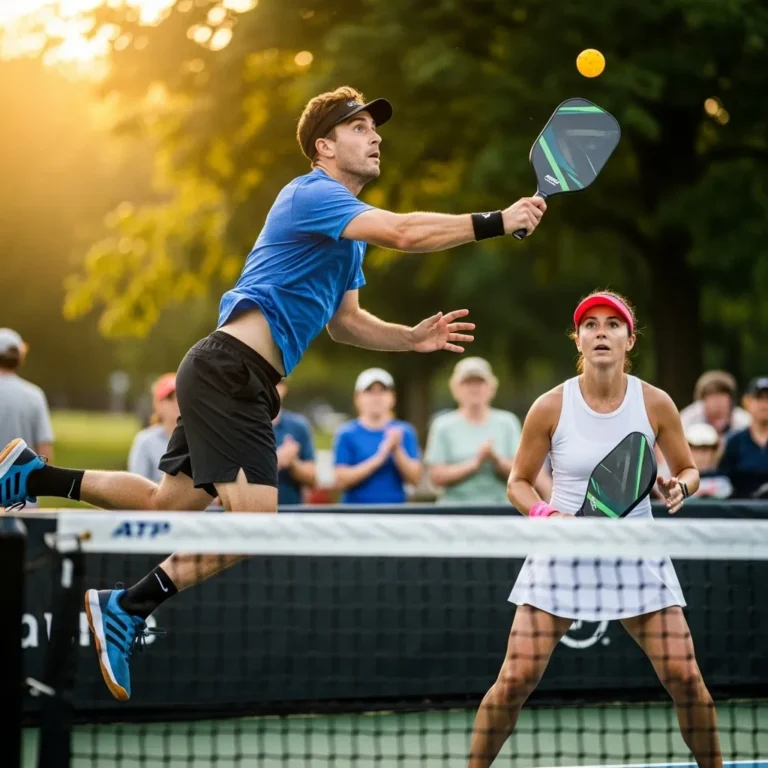
- Padel: Generally considered physically more demanding. It involves more sprinting (forward and back) and significant vertical movement (jumping for smashes). The points can be longer, and the ball stays alive even after it passes you.
- Pickleball: Focuses on lateral (side-to-side) movement and intense hand-eye reflexes at the net. While singles Pickleball is a cardio beast, doubles can be less aerobic than Padel.
Which burns more calories?
On average, an hour of intense Padel will likely burn more calories than an hour of doubles Pickleball, simply due to the court size and the amount of running required to defend the corners.
The Vibe: Culture, Cost, and Geography
Finally, is pickleball the same as padel culturally? The “vibe” is distinct.
Noise Complaints
- Pickleball: The hard plastic ball hitting the honeycomb paddle creates a sharp, high-pitched “POP” sound. This has led to numerous neighborhood disputes and noise complaints.
- Padel: The pressurized ball and foam racket create a lower-frequency “thud,” which travels less distance and is generally perceived as less annoying by neighbors.
Cost and Accessibility
Building a Padel court requires heavy steel beams and tempered glass, costing upwards of $30,000 − $50,000. Consequently, Padel is often found in private clubs with “pay-to-play” models.
Pickleball, conversely, can be played on a driveway or a converted tennis court with a portable net. It is the “people’s sport”—accessible, cheap, and often free at public parks.
Conclusion: Which One is For You?
So, is padel the same as pickleball? Definitely not.
- Choose Pickleball if: You want a highly social, accessible game that is easy to learn, easy on the joints, and has a massive community in the US.
- Choose Padel if: You want a high-octane workout, you enjoy the tactical complexity of using walls (like squash), or you want a sport that feels physically closer to tennis.
Both sports are fantastic ways to stay active. Our advice? Grab a paddle (or a racket) and try them both. You might just find yourself addicted to both!