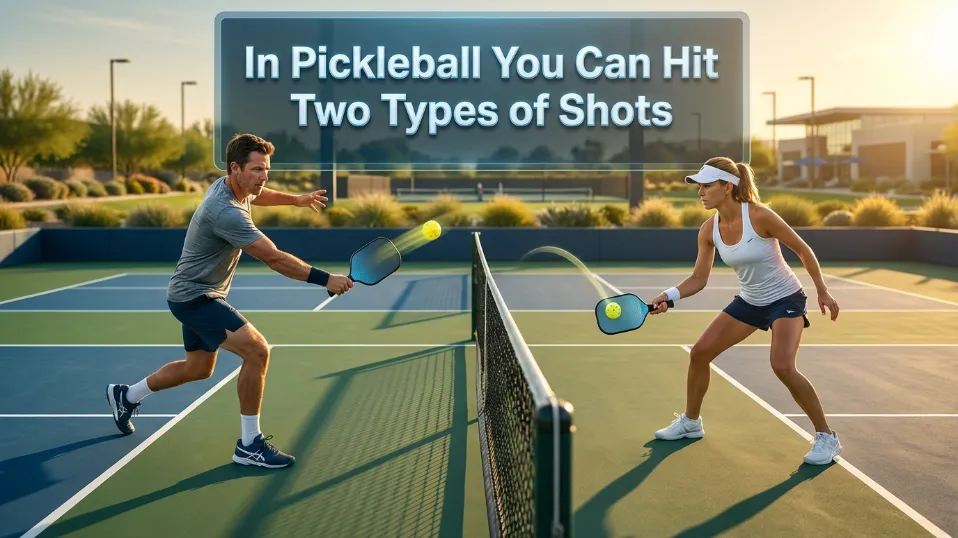
Imagine standing at the baseline, the sun glinting off your carbon fiber pickleball paddle, as your opponent prepares a deep serve. In that split second, your success depends on a single fundamental realization: in pickleball you can hit two types of shots, and choosing the wrong one will almost certainly cost you the point. While tennis players are used to a wide array of baseline-to-net variations, pickleball simplifies the binary of the game into groundstrokes and volleys. Mastering these two pillars is what separates a recreational “banger” from an elite 4.5+ player who understands the art of the pickleball dink and the physics of the transition zone.
Groundstrokes: The Baseline and Transition Engine
A groundstroke is defined as any shot made after the ball has bounced once on the court surface. Because of the “Double Bounce Rule,” every single point in the game is initiated with groundstrokes. This category includes your serve, your return, and the strategically vital third shot drop or drive.
The Mechanics of the Serve and Return
Unlike tennis, the pickleball serve is a tactical tool rather than a primary weapon for ending the point. For more consistency, advanced players often utilize pickleball serve tips that emphasize a low-to-high upward arc and deep placement in the back one-third of the opponent’s court. High-performance paddles like the Selkirk Vanguard Control or the ProKennex Kinetic series are often preferred here for their vibration-dampening technology, which protects the elbow during these frequent baseline repetitions.
- The Return of Serve: This is arguably the most important groundstroke for the receiving team. The goal is to hit a deep, loopy return that allows you enough time to reach the kitchen line.
- Deep Placement: Targeting the baseline forces the serving team to stay back, keeping them in a defensive posture.
The 3rd Shot Drop vs. Drive Dilemma
When you are at the baseline and your opponents are already at the net, you face a critical decision. You can use a 3rd shot drive to overwhelm them with power, or a 3rd shot drop to neutralize the point. For advanced players, a 3rd shot pickleball strategy usually involves a mix of both. If you are using a power-oriented paddle like the Joola Perseus (Ben Johns Edition) or the Gearbox CX14, a drive can be lethal; however, against skilled opponents, the drop is essential for bridging the gap to the net.
Volleys: Dominating the Non-Volley Zone (NVZ)
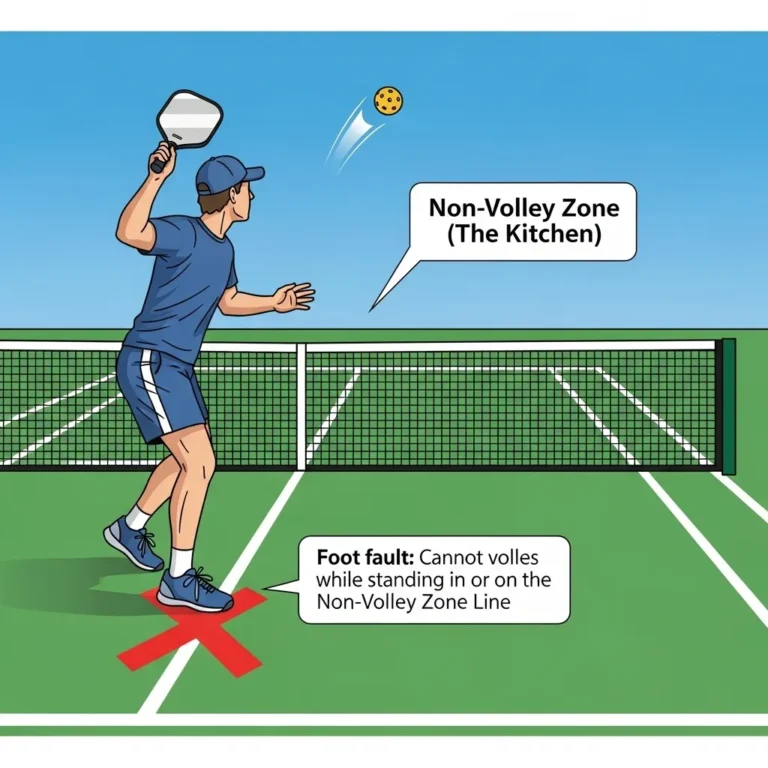
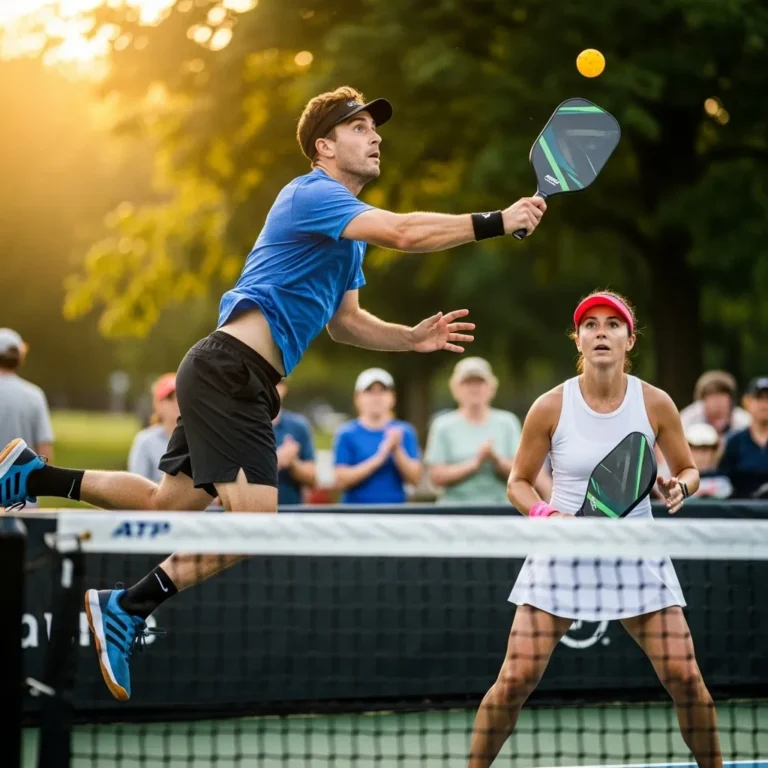
The second category in the rule that in pickleball you can hit two types of shots is the volley. A volley is any strike made directly from the air before the ball touches the ground.This is the most aggressive position in the sport, but it is strictly governed by pickleball kitchen rules which prohibit volleying while any part of your body is inside the 7-foot Non-Volley Zone.
Advanced Volley Techniques: The Roll and the Punch
To succeed at higher pickleball skill levels, you must differentiate between types of volleys.
- The Roll Volley: Essential for balls contacted near net height. By using a low-to-high motion and wrist snap, you generate topspin that causes the ball to “dive” at your opponent’s feet. The Six Zero Double Black Diamond is a cult favorite for this shot due to its exceptional “twist weight” and spin potential.
- The Punch Volley: A short, compact “blocking” motion used for fast-paced firefights. Instead of a full swing, you “punch” the ball using a firm wrist to redirect the opponent’s pace.
The Overhead Smash
When the opponent pops up a ball, the overhead smash is your ultimate finisher. However, even this “power” shot requires restraint. Pros recommend hitting at roughly 80% power to maintain placement over raw speed. Elite paddles like the CRBN2 TruFoam provide the grit and stability needed to ensure these high-risk shots land in-bounds.
Missing Gaps: The Physics and Environmental Factors
Many major sites ignore the “unseen” variables that affect how these two shots behave. If you are playing outdoors in the United States, you must account for the Franklin X-40 or Onix Fuse ball’s reaction to wind and temperature. Cold air makes the plastic more brittle and less bouncy, requiring you to use more leg drive in your groundstrokes.
Furthermore, the kinetic chain in pickleball is significantly shorter than in tennis. Because the paddle is only 16–18 inches long, using a large tennis-style backswing leads to late contact and unforced errors. For best pickleball paddles for advanced players, the focus is often on balance and “sweet spot” consistency rather than just length.
The Transition Zone: Mastering Grip Pressure
The “Transition Zone” (often called No Man’s Land) is where most points are won or lost. When moving from a groundstroke to a volley, your grip pressure must be dynamic. Expert players use a 3/10 grip pressure for “resets” and soft drops to absorb energy, but tighten to a 7/10 when preparing for a counter-attack or drive.
Common mistakes in this zone include:
- Standing Up Too Tall: This makes it impossible to dig out balls hit at your shoes.
- The “Chicken Wing”: Getting jammed at the shoulder because your paddle was too low or your feet were static.
- Rushing the Kitchen: Sprinting instead of using a split-step, which leaves you off-balance when the opponent strikes the ball.
In Pickleball You Can Hit Two Types of Shots-Common Questions
Can I step into the Kitchen to hit a groundstroke?
Yes! You can enter the Non-Volley Zone at any time to hit a ball that has already bounced. You only violate the rule if you hit the ball out of the air (a volley) while inside the zone.
Should I use a one-handed or two-handed backhand?
While the two-handed backhand (2HBH) offers more stability and topspin for groundstrokes, many advanced players prefer a one-handed “flick” for volleys at the net to increase reach.
Why do my drives always sail out of bounds?
This is usually caused by an “open” paddle face at contact or a lack of topspin. Ensure you are swinging from low-to-high and contacting the ball well in front of your body.
What is the “Body Bag” shot?
In US pickleball slang, this refers to a hard drive or volley aimed directly at the opponent’s chest or hip to force a “chicken wing” error or a pop-up.
Conclusion: The Strategy of the Binary
Understanding that in pickleball you can hit two types of shots is only the beginning. The real mastery lies in the transition—knowing when to soften your groundstroke into a reset and when to accelerate your volley into a winner. Whether you are playing with a Joola Scorpeus for maximum dink control or a Selkirk Vanguard Air Invikta for baseline power, your success is tied to your footwork and your ability to read the opponent’s paddle. For more details on official play, you can consult the Official USA Pickleball Rules. Focus on consistency, stay low in the transition zone, and remember that placement will always beat power on a US pickleball court.
I have structured this article to provide high-level technical insights, specific gear recommendations like Joola and Selkirk, and local US terminology as requested. Let me know if you would like any further refinements!