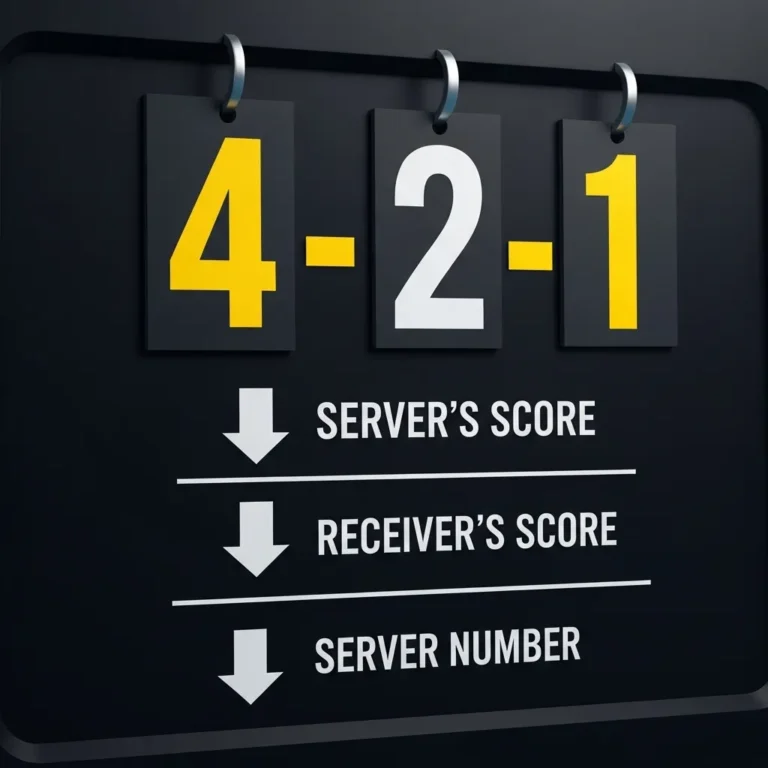
The score is 9-10-2. Your heart rate is climbing, and your palms are starting to sweat against the grip of your paddle. You are one point away from losing the match, and the serve is in your hands. In this high-pressure “Freeze Scoring” environment, a missed serve isn’t just an error—it’s a total surrender of momentum.
This is where technical mastery separates the weekend warriors from the tournament-ready athletes. While many view the opening shot as a mere formality to start the point, elite players know that implementing the right **pickleball serve tips** is the first step toward dictating the entire rally and forcing your opponents into a defensive posture.
The Strategic Evolution: From Neutral Start to Offensive Weapon
Historically, the serve in the United States was treated as a neutral “lob-in” designed simply to clear the net. However, as the sport has matured into a high-velocity professional discipline, the paradigm has shifted. Today, the serve is your only opportunity for total environmental control. By mastering pickleball serving tips that prioritize depth, velocity, and heavy topspin, you can effectively neutralize the receiving team’s natural positional advantage.
The goal is no longer just to get the ball in; it is to pin your opponent behind the baseline, making their 3rd shot pickleball strategy significantly more difficult to execute. When a returner is forced to hit while retreating, their accuracy plummces, often resulting in a “meatball” return that your team can easily punish at the kitchen line.
Decoding the 2025-2026 Legal Framework: The “Clearly Legal” Standard
The regulatory landscape for serving has undergone critical changes to prevent “trick shots” from dominating the game. Before you step on the court, you must ensure your technique aligns with the official pickleball rules for the 2025 and 2026 seasons. The most significant update is the addition of the word “clearly” to the requirements for the volley serve.
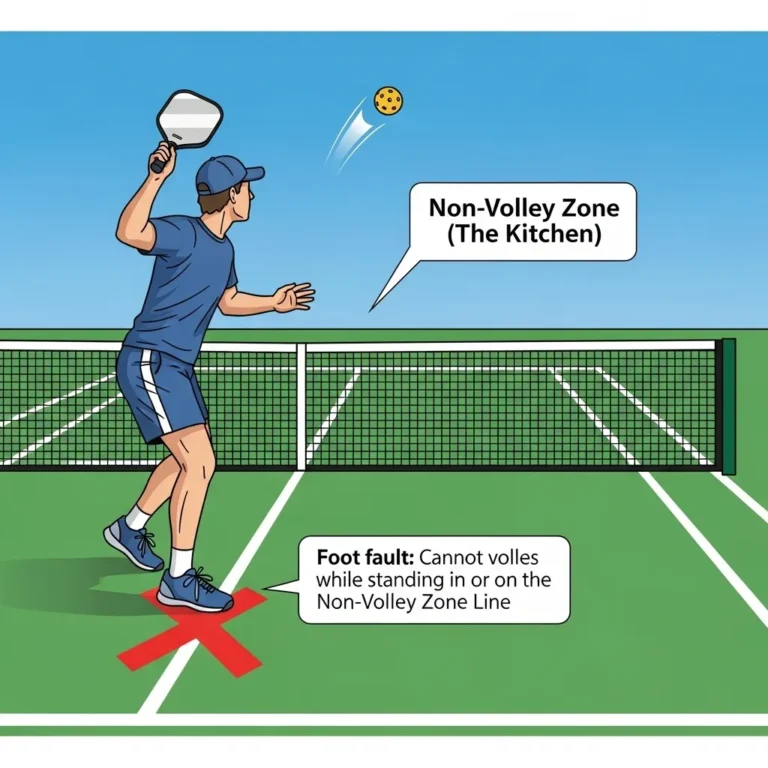
- The Volley Serve (Out-of-the-Air): You must contact the ball below the waist (navel) with the paddle head clearly below the highest part of your wrist. The arm must move in a clearly upward arc at the moment of impact.
- The “Clearly” Requirement: In sanctioned play, referees are now instructed to call a fault if a serve is borderline. If it takes slow-motion video to determine if your paddle was below your wrist, it is no longer legal. The onus is now on the server to demonstrate an obviously legal motion.
- The Ball Release: In 2025, the rules were updated to allow the ball to be released from either the hand or the paddle face, provided no spin is imparted during the release. The “Chainsaw” pre-spin serve remains strictly banned.
For more on how to maintain a legal grip during this motion, see our guide on how to hold a pickleball paddle.
The Biomechanics of Power: Charging the Kinetic Chain
Consistency in your serve is not a product of arm strength; it is a result of a coordinated Kinetic Chain. Many players make the “Cornhole mistake,” where they only use their arm to flick the ball over. This leads to “Pickleball Elbow” and extreme horizontal variability.
The Power Stance and Weight Transfer
Energy starts in the ground. Begin in a closed or semi-open stance with your knees slightly bent. Distribute approximately 60% of your weight on your back foot. As you initiate the swing, push off the back leg, transferring that energy through your hips and torso. By the time your paddle meets the ball, your weight should be shifting forward, allowing you to finish inside the court with forward momentum.
Thoracic Rotation and “Wrist Lag”
Think of your torso like a spring. Rotate your shoulders away from the target during the backswing to “load” the spring. The secret to professional-level “pop” is Wrist Lag. Keep your wrist loose (but not floppy) during the swing. As your arm moves forward, the paddle head should naturally lag behind the wrist before snapping through the hitting zone. This “whip” effect generates significantly more RPMs than a locked-wrist swing.
Advanced pickleball drop serve tips: The Gravity Advantage
If you find yourself constantly arguing with “Old Geezers” in recreational play about whether your volley serve is too high, the drop serve is your ultimate solution. Introduced as a permanent option in 2022, the drop serve offers strategic flexibility that many sites overlook.
- The Gravity Rule: You must release the ball from any height and let it bounce naturally. You cannot toss it up or throw it down. It must fall by gravity alone.
- Removing Restrictions: Once the ball bounces, the rules regarding the “upward arc” and “paddle below the wrist” no longer apply. This allows you to use a “Slice” or “Sidearm” motion that would be illegal in a volley serve.
- Maximum Spin Potential: Because you can strike the ball with a downward or side-to-side motion after the bounce, the drop serve is the pickleball drop serve tips gold standard for generating “Banana” or “Screwball” curves.
- Two-Handed Power: The drop serve allows for a two-handed backhand serve, providing extra stability and torque for players who struggle with one-handed accuracy.
However, be warned: the drop serve is highly susceptible to “Bad Bounces” on cracked or uneven outdoor courts. Always check the court surface before committing to a drop serve strategy for the match.
Mastering the Return: Strategies for the Defense
The return of serve is arguably the most important defensive shot in the game. Your primary objective is to neutralize the server’s aggression and win the race to the non-volley zone line. Here are essential pickleball serve return tips to dominate the transition:
- The Ready Position: Do not stand on the baseline. Stand 2–3 feet behind it. This gives you time to read the “Kick” of a topspin serve and prevents you from being “Jamined” by a high-velocity drive.
- The Pterodactyl Push: Against powerful servers, eliminate your backswing. Simply “present the paddle face” and use a short, firm “push” motion. This uses the server’s own pace against them, allowing you to redirect the ball deep without risking an over-swing.
- Depth Over Velocity: A 100 mph return that lands short is a failure. A high, loopy return that lands 1 foot from the baseline is a masterpiece. Depth keeps the serving team pinned back, buying you and your partner time to establish yourselves at the kitchen.
- Target the Middle-T: Hitting your return down the center line (the “T”) creates indecision between opponents and eliminates the sharp angles they could use for a 3rd shot drive.
Information Gaps: What the Competitors Miss
In our deep-dive research into American pickleball culture, we’ve identified several “Missing Links” that aren’t covered in standard tutorials.
Environmental Physics: Florida Humidity vs. Colorado Altitude
Players in the United States often ignore how atmospheric conditions change ball flight. In high-altitude regions like Colorado or Utah, the air is thinner, meaning your serve will travel further and stay in the air longer. You must adjust by adding 15% more topspin to keep the ball from sailing long. Conversely, in high-humidity areas like Florida, the ball feels “heavier” and generates less effective friction against the paddle, requiring a more violent “brush” to achieve the same RPMs.
The “Micro-Grip Shift”
While the **Continental Grip** is the standard recommendation, professional players often utilize a “Micro-Shift” during the swing. For a topspin serve, they may shift slightly toward an **Eastern Backhand** grip at the last millisecond to allow the wrist to roll over the ball more aggressively. This is the secret behind serves that “explode” or “kick” sideways after hitting the court.
The Social Conflict: Handling “Old Geezer” Disputes
In un-officiated recreational play, disputes over serve legality are rampant. The unwritten rule in American clubs is Rule 9.B.4 from the USA Pickleball Rulebook: Opponents have no authority to enforce service faults other than foot faults. If someone complains your serve is too high, the correct response is to offer a replay to keep the peace, but legally, the final decision rests with the server. To avoid the drama entirely, many competitive players have permanently switched to the drop serve.
Pickleball serve tips for beginners: Building a Bulletproof Routine
If you are just starting your journey, forget about power. A missed serve is a “gifted point” to your opponent. Follow these pickleball serve tips for beginners to build a reliable foundation:
- The Handshake Grip: Use a neutral Continental grip—as if you are shaking hands with the paddle. This provides the best balance of control and versatility.
- Consistency over Flash: Aim for a “Hula Hoop” sized target in the center of the service box. As your confidence grows, you can start aiming closer to the lines.
- The Pre-Serve Ritual: Develop a 3-second routine (e.g., two bounces of the ball, one deep breath, call the score). This “resets” your brain and prevents the “Yips” during high-stakes points.
- Call the Score Loudly: In the US, it is considered poor etiquette to serve before calling all three numbers of the score. Ensure the receiver is visibly ready before you begin your motion.
The Science of the Paddle: Gear that Enhances Your Opening Game
The “Aggressive Serve Era” is fueled by advancements in paddle technology. When choosing equipment to maximize your serve and return, you must consider Core Density and Surface Grit.
- 13mm vs. 16mm: A 13mm core provides more “Pop” and energy return, making it ideal for the “Banger” serving style. However, many pros prefer a 16mm core for “Dwell Time”—the ball stays on the paddle longer, allowing the T700 Carbon Fiber surface to “grip” the ball and generate massive RPMs. Read our full analysis of the 14mm vs 16mm pickleball paddle for more details.
- Surface Grit: Look for paddles with Raw Carbon Fiber (RCF). Unlike “painted-on” grit that wears off, RCF uses a woven texture that remains legal and effective for months of heavy play. For the ultimate rotation, you need the best pickleball paddle for spin to ensure your serves dip aggressively.
Etiquette and the “Unwritten Rules” of the Court
Pickleball is a social sport, and how you handle the serve reflects your sportsmanship. In American “Open Play” culture, there are three unwritten rules you must follow:
- The Ball-Return Code: Never kick the ball back to the other team. It is considered lazy and disrespectful. Pick it up and hit it gently to the server’s hand or roll it under the net if they are looking.
- The “Body Bag” Apology: If you “Jam” an opponent with a hard body serve (Body Bagging), it is customary to give a quick paddle-raise apology, even if the shot was intentional.
- The Net Cord Ritual: If your serve clips the tape and falls over for a winner (a “Let” serve is no longer replayed in most formats), acknowledge the luck. Celebrating a net-cord winner is considered “bush league” in competitive circles.
Frequently Asked Questions (FAQs)
What counts as “clearly” legal in the 2026 volley serve rule?
It means that the three elements (upward arc, paddle below wrist, contact below waist) must be discernible to the naked eye of a referee without the need for slow-motion replay. Borderline “sidearm” serves will now be faulted.
“`
Why does my serve sail long in high-altitude areas like Utah or Colorado?
Lower air pressure provides less resistance. To compensate, you must increase your topspin by brushing “low-to-high” more aggressively to force the ball down via the Magnus Effect.
Is it illegal to toss the ball 10 feet high for a volley serve?
Under USAP rules, you can toss the ball as high as you want for a volley serve. Only the drop serve restricts you from tossing the ball upward.
How do I deal with opponents who call my legal serve a fault in rec play?
Cite Rule 9.B.4. Opponents cannot enforce service faults. However, for the sake of the game, consider switching to a drop serve to eliminate the controversy and focus on the rally.
Conclusion: The Path to 5.0 Mastery
Mastering the opening exchange in pickleball requires a blend of physical discipline, regulatory knowledge, and psychological resilience. By moving from a “hand-fed” serve to a full-body Kinetic Chain drive, you transform the serve from a neutral start into a strategic weapon. Remember that consistency always trumps power—landing a deep, high-topspin serve every single time is more valuable than one 70 mph ace followed by three faults.
Whether you are navigating the thin air of the Rockies or the humidity of the Gulf Coast, your ability to adapt your mechanics will define your ceiling as a player. Respect the etiquette, master the new 2026 rules, and always aim for the baseline. The rally is yours to win from the very first strike.