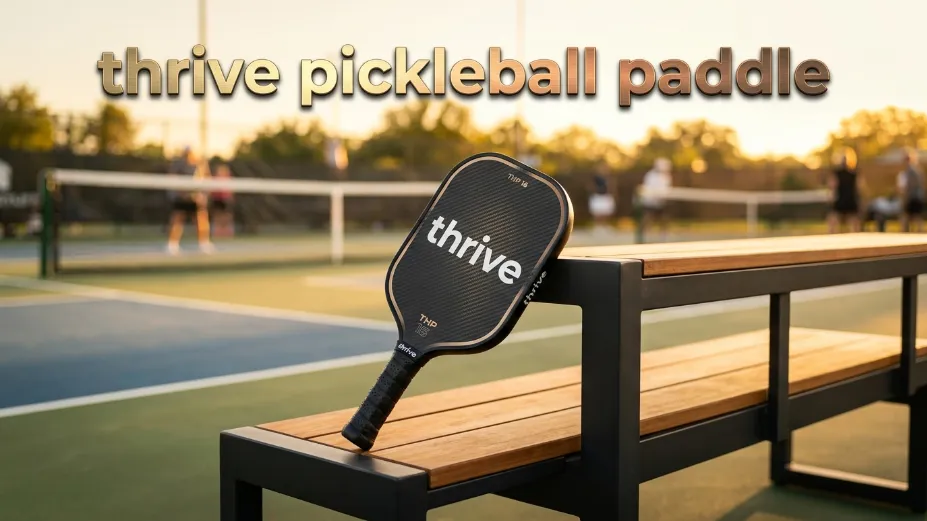
When carbon fiber hit the pickleball world, every brand promised the same thing: ultimate spin and unyielding power. Yet, most paddles on the court either feel like a dead wooden board or a trampoline you can’t control. That is exactly why the thrive pickleball paddle lineup has been quietly disrupting the US competitive scene. It doesn’t just promise raw grit; it reengineers how the ball compresses against the face for players who refuse to compromise between a soft third-shot drop and a devastating overhead slam.
Thrive pickleball paddle series comparison: core and face material, key performance focus, average price, and best suited player profile
Thrive Pickleball Paddle Series
Core & Face · Performance Focus · Price · Best Suited For
For players in the United States navigating competitive tournament schedules, the best option depends strictly on your history with joint stress and your typical court matchups. If you prioritize pristine shock absorption, a soft dense contact, and long-term grit longevity, the flagship Ignite Hybrid Foam is the superior choice. However, players seeking maximum physical baseline power or those operating on fast-paced singles courts will find higher long-term value in the Fury Elongated, while doubles specialist bangers should opt for the lightning-fast hand speed of the Fury Hybrid.
The rapid expansion of the competitive pickleball scene across the United States has fundamentally altered player expectations regarding specialized gear. Off-the-shelf, non-customized paddles no longer suffice for advanced players operating under highly volatile court conditions. With specialized premium footprints arriving on the market, understanding the engineering beneath your grip is paramount to maintaining technical execution and avoiding injury.
thrive pickleball paddle review
The engineering core of the thrive pickleball paddle review centers upon its non-traditional quality control and customization ecosystem. While legacy paddle manufacturers ship products with a massive factory variance—often deviating up to 0.4 ounces in static weight—Thrive has completely rewritten the manufacturing playbook from their headquarters in Las Vegas, Nevada. They are the first paddle company in the world to hand-weigh and test each individual unit across five critical performance metrics: static weight, swing weight, twist weight, balance point, and head heaviness.
This unprecedented level of quality control ensures that when you purchase a paddle, you are not buying a mystery balance. Instead, you receive an officially printed custom weight card containing the exact physical properties of your specific unit. This diagnostic card allows competitive players to strategically apply weighted lead tape to precise points of the paddle face to maximize stability and plow-through without the frustrating guesswork that usually ruins a player’s muscle memory. By focusing heavily on swing weight rather than simple, misleading static weight, Thrive has established a new benchmark for consumer trust and technological transparency.
For players who have grown tired of the hollow, flimsy, and vibrations-heavy feedback of basic paddles, stepping onto the court with a thrive paddle pickleball provides a highly stable, dense, and unified response. Whether driving from the baseline or resetting a heavy drive, the energy transfer remains perfectly linear. To truly appreciate how this technical customization disrupts the market, we must analyze the physics of swing weight, core mechanics, and surface wear under a micro-analytical lens.
Technical Anatomy: The Science of Paddle Inertia & Grip Dynamics
The performance of a paddle is not merely a product of its raw materials, but a direct consequence of its rotational inertia. Most players focus exclusively on the physical weight on a scale (static weight), yet static weight is the least important number when evaluating how a paddle swings through space. Instead, the true measure of a paddle’s maneuverability and power output lies in its swing weight and twist weight.
- Swing Weight Dynamics: Swing weight measures how heavy the paddle feels when in motion. A high swing weight provides immense plow-through and effortless power on deep drives, but slows down your reaction speed during rapid kitchen firefights. Conversely, a low swing weight allows you to dominate fast exchanges at the net but requires you to swing much harder to generate baseline pace.
- Twist Weight Dynamics: Twist weight measures the paddle’s resistance to rotational twisting when the ball is struck off-center. A high twist weight directly expands the horizontal sweet spot, preventing the paddle from twisting in your hand on mis-hits. This structural stability minimizes the loss of pace and directional control, allowing you to salvage defensive blocks.
- The 1-Centimeter Grip Displacement Formula: A major missing angle in mainstream reviews is that swing weight is not a static property—it changes dynamically based on your hand positioning. Because swing weight is calculated from a pivot point, shifting your grip up or down the handle by a mere 1 cm radically transforms the paddle’s rotational inertia.
For example, if your Thrive Azul possesses a factory-measured swing weight of 116 measured at the standard pivot point, choking up on the handle by just 1 cm decreases the active swing weight to a lightning-fast 107. This modification immediately enhances hand speed when defending against quick drives, keeping you fully compliant with pickleball kitchen rules. Conversely, shifting your grip 1 cm lower to the very bottom of the handle increases the swing weight to 125, maximizing torque and raw speed for aggressive serves and overhead slams.
Precision Customization: The Official Lead Tape Blueprint
Because every Thrive paddle ships with an exact measurement card, players can customize their equipment with surgical precision. Applying lead tape blindly to the edges of a paddle often ruins the balance, shifts the sweet spot to dead zones, and can even trigger joint strain and tennis elbow due to uneven torque distribution. To prevent these physical limitations, players should follow Thrive’s calculated customization blueprint to achieve predictable on-court results.
- The Stability Setup (Handle Base): Adding 3 grams of weight starting directly from the base of the handle increases the swing weight by +0.65 and the twist weight by +0.13. This low-profile setup adds minimal head-heaviness while stabilizing the hand, giving the paddle a highly controlled, solid feel during delicate, soft-game pickleball dink battles.
- The Sweet Spot Expansion Setup (1 Inch Above Handle): Adding 6 grams of weight starting 1 inch above the handle increases the swing weight by +2.51 and elevates the twist weight by a massive +0.79 (an 11% increase in rotational stability). This is the most effective setup for expanding the sweet spot to the outer edges of the face, heavily dampening vibration, and keeping off-center resets from popping up high.
- The Lateral Defensive Block Setup (3 & 9 O’clock): Applying 3 grams of weight at the 3 and 9 o’clock positions on the lateral edges increases swing weight by +3.67 and twist weight by +0.73. This setup is specifically engineered for players who prioritize defensive blocks against aggressive bangers, though it makes rotational wrist rolls at the net slightly more demanding.
- The Aggressive Power Setup (10 & 2 O’clock): Placing 3 grams of weight at the 10 and 2 o’clock positions increases the swing weight by a massive +7.87, while only shifting twist weight by +0.32. This head-heavy setup maximizes raw plow-through, serve velocity, and passing shot power. However, players must exercise extreme caution, as this heavy setup puts significant stress on the wrist and elbow tendons, increasing the risk of joint injuries.
By using the diagnostic values on your custom weight card, you can perfectly offset any added weight. For instance, if you add a thick overgrip that weighs 0.5 ounces, you can calculate the exact counter-balancing weight required on the head to maintain your preferred balance point without turning your paddle into an unmanageable truck.
Core Mechanics: Preventing “Core Crushing” and “Hot Spots”
The standard pickleball industry has been plagued by structural failures in high-performance thermoformed paddles. Many generation-3 and generation-4 paddles from competing brands suffer from catastrophic “core crushing” or delamination within a few months of intense play. This occurs when the internal polypropylene honeycomb walls collapse under high thermoforming heat and pressure, leaving hollow, unsupported cavities inside the paddle.
When a ball strikes these collapsed areas, it triggers an unpredictable “trampoline effect,” generating illegal, ultra-poppy “hot spots” that ruin your soft game and cause simple dinks to sail long past the baseline.
Thrive has completely bypassed this structural flaw by developing two distinct, highly resilient internal core architectures designed to prevent cell collapse, eliminate erratic pop-ups, and isolate vibrations.
The EPP Core and EVA Foam Ring (The Ignite Hybrid)
At the center of the Ignite Hybrid is an Expanded Polypropylene (EPP) core, reinforced by a strategically positioned Thermoplastic Elastomer (TPE) foam ring along the perimeter. Unlike standard polypropylene, EPP is a highly resilient, flexible material that naturally compresses under impact and snaps back into its original shape without structural cell degradation. This resilient construction completely eliminates core crushing and provides a incredibly soft, dense feel that keeps you deeply connected to the ball. This unique foam core matrix makes the Ignite one of the most comfortable, joint-friendly foam pickleball paddles on the market.
The 8mm Flex Force Core & TPE Ring (The Fury Series)
For the aggressive power series, the thrive fury pickleball paddle implements an ultra-thin 8mm Flex Force polymer core, suspended within a highly flexible thermoplastic elastomer (TPE) perimeter ring. Most thin-core power paddles on the market feel hollow, harsh, and transmit jarring, high-frequency vibrations straight down the handle into your elbow.
Thrive’s TPE perimeter ring acts as an internal shock-absorbing gasket, isolating the impact force of the ball and absorbing harmful vibrations while maximizing raw energy return. This allows the 8mm core to deliver elite-tier ball velocity (clocking in serves at a blistering 61 MPH) while maintaining a smooth, comfortable feel that protects your joints during long sessions.
Surface Innovations: Clear Fusion Spray vs. Raw Carbon Fiber
Any seasoned tournament player knows that standard raw carbon fiber peel-ply faces suffer from rapid texture decay. The microscopic carbon peaks that grab the plastic ball and generate heavy spin typically wear down within 2 to 3 months of regular play, leaving a slick surface that can no longer shape baseline drives. This forced obsolescence requires players to constantly replace their gear just to maintain their spin rates.
To combat this, Thrive developed “Clear Fusion Spray Grit” and applied it directly to the Ignite Hybrid. This technology applies a highly durable, light single-layer polymer coating over the premium raw carbon fiber peel-ply surface. This clear polymer coating acts as a microscopic shield, protecting the structural carbon fibers from direct abrasive contact with the ball.
In independent accelerated wear testing, this specialized application retained a remarkable 90% of its Ra roughness (average grit level) and 88% of its Rz peak roughness after prolonged, high-stress play. This allows the Ignite to generate a highly consistent, legal spin rate averaging 2,088 RPM (placing it in the 92nd percentile) that actually lasts for months of daily competitive play, making it one of the best pickleball paddles for spin.
For the Azul 16mm, Thrive introduced a highly specialized carbon-kevlar hybrid face. The physical integration of Kevlar provides a highly elastic, tactile surface that increases ball dwell time. When executing roll shots, the Kevlar-carbon hybrid weave grips the ball exceptionally well, delivering a crisp, lively feedback that allows players to shape their shots with absolute confidence.
This surface design is paired with a unique 4-layer face on the Ignite, which stacks three layers of Toray T700 carbon fiber over a carefully placed internal fiberglass layer. This composite layout produces an “Activated Power” profile. On slow, defensive shots, the fiberglass layer dampens the ball’s kinetic energy, behaving like a plush, forgiving pickleball paddle for control. However, when you accelerate your swing on aggressive drives or overhead slams, the internal layers stiffen dynamically to unlock explosive, deep court power. This progressive power response prevents the paddle from feeling like a wild, uncontrollable trampoline during delicate kitchen exchanges.
Head-to-Head: Thrive Fury Hybrid vs. JOOLA Pro IV Hyperion
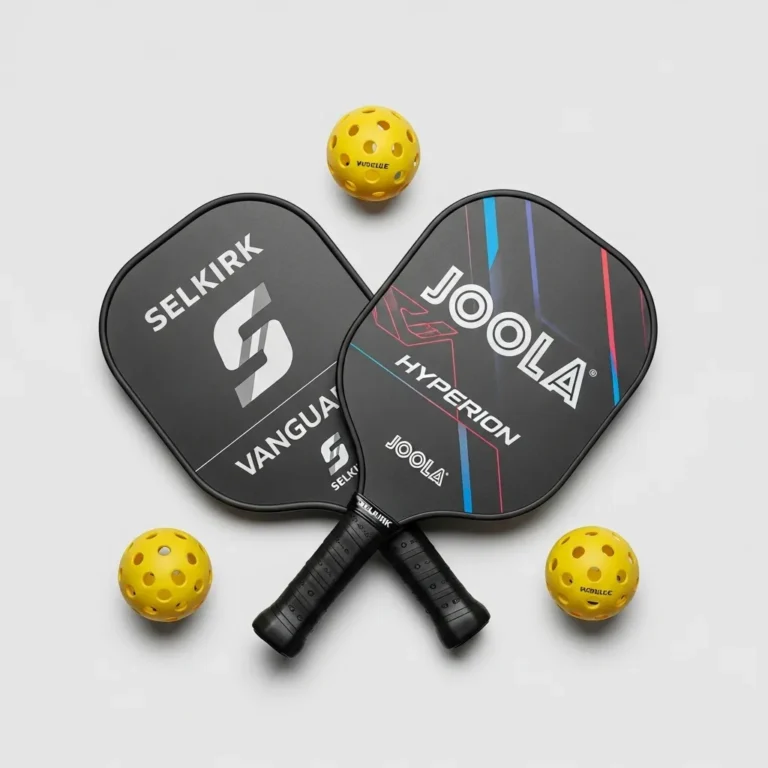
For competitive players choosing between thrive pickleball paddles and legendary market options like the JOOLA Pro IV Hyperion, the decision comes down to a fundamental split in custom design philosophy, hand speed, and long-term durability.
The primary performance and structural differences are outlined below:
- Hand Speed and Maneuverability: The Thrive Fury Hybrid is built with a highly responsive, low swing weight of 111.8, making it feel incredibly light and fast during fast kitchen hand battles. The JOOLA Pro IV Hyperion plays with a significantly higher, head-heavy swing weight that can feel sluggish and slow your reaction time during rapid net volleys.
- Vibration Damping and Comfort: The Fury Hybrid features an innovative TPE perimeter ring and internal throat weights that successfully eliminate harsh vibrations, delivering a highly comfortable playing experience. The JOOLA Pro IV relies on a rigid, traditional thermoformed edge that feels stiff and can transmit sharp shocks down the forearm, making it less ideal for players recovering from tendonitis.
- Price and Overall Value: Priced at a premium $199.99 RRP (with a standard 10% discount available using community codes), the Fury Hybrid out-values the JOOLA Pro IV, which commands a steep $250+ retail price. Thrive delivers an identical tier of raw power (60.7 MPH serves) and elite-level spin (2,203 RPM) at a highly competitive price point, solidifying its place among the best pickleball paddles on the market.
Warranty and Consumer Trust: The Core Lifecycle
Thrive’s confidence in their core engineering is reflected directly in their official warranties. They are one of the few brands to offer a full 1-Year Limited Warranty (valid for the original U.S. purchaser) on the Ignite Hybrid, covering manufacturing defects such as edge guard separation, structural handle failure, and face cracking. In contrast, they cover the Power Series (including the Fury, Azul, Threat, and Smoke) with a standard 180-day (6-month) limited warranty.
This warranty discrepancy reveals a critical structural truth about paddle lifecycles. Traditional thin polymer honeycomb cores are highly susceptible to fatigue under continuous heavy impact. The localized stress of constant sweet-spot contact slowly weakens the polymer walls over time. However, the EPP core and EVA foam perimeter used in the Ignite are physically designed to withstand continuous compression without material fatigue. By utilizing these elastic, automotive-grade materials, Thrive can confidently back the Ignite with a full year of coverage, giving players peace of mind and long-term structural durability.
Buying Advice in the US: Sizing, Specs, and Custom Ordering
To purchase a genuine Thrive paddle in the United States, you should order directly through the official brand channels. When ordering, you have the option to choose your preferred swing weight range. If you have a highly specific swing weight in mind (such as a light 110 or a medium-heavy 113 for the Fury Hybrid), you can request it during checkout, and the warehouse team will hand-select a matching unit from their inventory using their precise hand-weighing system.
The handles across all flagship Thrive models are built with a comfortable 5.5-inch length. This extended handle is highly recommended for players transitioning from tennis, as it provides ample room for two-handed backhands. It also moves the paddle’s pivot point further from your hand, allowing you to generate massive torque and whip on baseline drives. The grip circumference is a standard 4.125 to 4.25 inches, which can be easily built up using thick overgrips or a specialized hex grip to perfectly fit your hand profile.
Verdict: Is a Thrive Pickleball Paddle Worth Your Money?
The final evaluation of the Thrive lineup depends entirely on your personal playing profile, your DUPR rating, and your approach to physical joint protection.
- Who Should Buy: Players who want to eliminate the risk of receiving a poorly balanced paddle with high factory weight variance; competitors who demand elite-tier baseline power and spin but want to protect their elbow from harsh vibrations; and advanced players who want to strategically customize their paddle’s swing weight with lead tape.
- Who Should Avoid: Beginners who are still developing their basic coordination and require a highly forgiving, slow widebody paddle; and players who prefer an ultra-soft, extremely muted “pillow” feel that prioritizes touch over offensive pop and ball speed.
Ultimately, if you are looking to take your game to the next level and want to match your equipment to your exact mechanical needs, the Thrive lineup delivers a level of custom performance and structural engineering that standard mass-produced paddles simply cannot match.
Frequently Asked Questions (FAQ)
Are Thrive pickleball paddles constructed entirely within the United States?
No. While all core design, conceptual engineering, prototyping, and final precision hand-weighing quality control are managed at Thrive’s headquarters in Las Vegas, Nevada, the physical assembly of the carbon fiber, Kevlar, and polymer components is handled by specialized manufacturing partners in Asia, matching standard practices across the athletic industry.
Can I safely use a standard liquid glass cleaner or solvents to clean the paddle face?
It is highly discouraged. Using harsh chemical solvents or glass cleaners will slowly degrade the specialized Clear Fusion Spray Grit coating on the Ignite, accelerating the texture decay of the carbon fiber face. To safely clean your paddle and maintain legal friction limits, we highly recommend using a standard rubber paddle eraser.
How does the thicker 15.5mm core of the Fury compare to generic 14mm power paddles?
The 15.5mm core thickness, combined with the 8mm Flex Force polymer and TPE perimeter, allows the Fury to deliver the raw power of a thin 14mm paddle while maintaining the stable sweet spot and vibration damping of a control-oriented 16mm model. This unique design provides a balanced, solid feel that does not flutter or twist under heavy impact.
What is my DUPR rating, and how does a customizable paddle help me level up?
Your DUPR pickleball rating measures your competitive skill level. Transitioning to a customizable Thrive paddle allows you to fine-tune your equipment to match your rating’s demands. As you advance to higher levels where the pace accelerates, being able to adjust your paddle’s swing weight and sweet spot allows you to handle big serves and execute precise resets with absolute consistency.