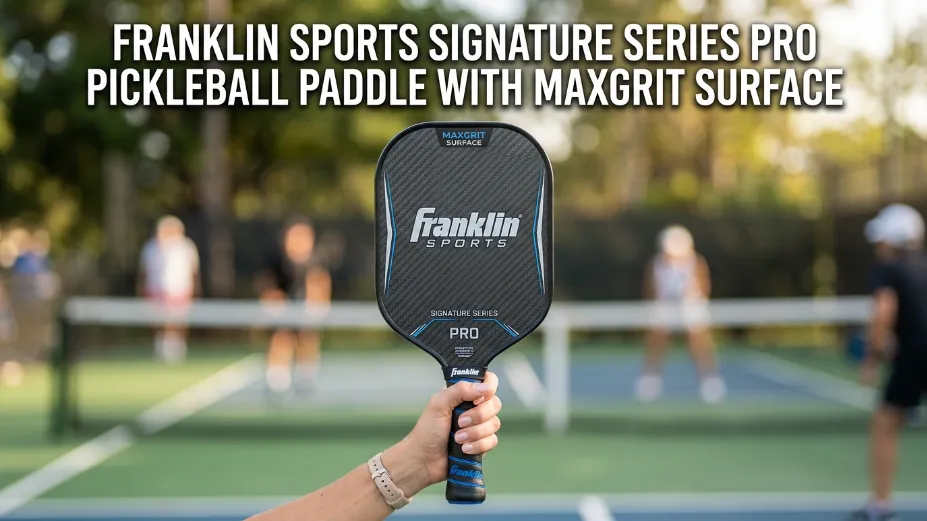
When Top-10 PPA touring pros step onto the kitchen line, they aren’t just relying on fast reflexes—they are banking on friction. In a game where a single millimeter of ball deflection dictates the podium, the franklin sports signature series pro pickleball paddle with maxgrit surface has quietly shifted from a court luxury to a competitive necessity. It is not just about hitting the ball; it is about rewriting the physics of your spin.
13mm vs 16mm core pickleball paddle specification comparison: surface technology, core material, weight, grip circumference, handle length, and USAPA tournament status
13mm vs 16mm Core — Paddle Specs
Surface · Core · Weight · Grip · Handle · USAPA Status
For US club players navigating intensive court schedules, the best option depends strictly on your history with joint stress and your typical play style. If you prioritize quick kitchen hand battles and a faster paddle face, the 13mm version is the superior choice despite its slightly higher vibration feedback ; however, players seeking maximum physical shock absorption, plush resets, or those recovering from tennis elbow will find more stable long-term value in the 16mm configuration.
The rapid expansion of the competitive court scene across the United States has fundamentally altered player expectations regarding specialized gear. Generic tennis rackets or cheap, outdated paddle models no longer suffice on highly abrasive asphalt surfaces where premium court balls are pushed to their limits. With specialized footprints arriving on the market daily, understanding the engineering beneath your grip is paramount to maintaining technical execution and avoiding injury.
The Global Phenomenon of Pickleball: Rules, Growth, and American Court Culture
To truly understand the performance of premium gear, one must appreciate how pickleball has evolved from a backyard pastime into the fastest-growing sport in America. This athletic explosion has united players across all generations, establishing dedicated municipal facilities and massive professional leagues like the PPA Tour and Major League Pickleball. As the sport continues to mature, understanding the foundational pickleball rules and tactical dynamics is crucial for any player looking to transition from recreational courts to sanctioned tournament brackets.
The beauty of the game lies in its unique blend of fast-paced physical tennis exchanges, the strategic patience of table tennis, and the precise angles of badminton. Unlike tennis, the service in this sport is strictly underhand and must be struck below the waist, emphasizing placement over raw velocity. Players must master specialized concepts like the “two-bounce rule”—which dictates that the ball must bounce once on each side of the court before anyone can execute a volley—making rush-and-volley strategies more complex. Knowing what is pickleball on a strategic level means realizing that the game is won at the non-volley zone, commonly referred to as the “kitchen.”
American court culture has embraced this sport not just as a physical hobby, but as a lifestyle. From local parks in Florida to indoor warehouse clubs in Chicago, communities are investing heavily in dedicated asphalt courts. However, playing outdoors introduces harsh environmental variables. High-velocity winds can easily deflect lightweight plastic balls, requiring players to choose equipment that offers exceptional aerodynamic stability. Furthermore, the constant impact on hard court surfaces makes physical wear a major factor, cementing the need for highly durable, specialized sports gear that can withstand intensive daily use.
Comprehensive Franklin Signature Pro Review: Technical Anatomy
The engineering core of the franklin sports signature series pro pickleball paddle with maxgrit surface centers upon its classic, non-thermoformed composite setup. While modern Gen-3 power paddles rely on heavy carbon-fiber walls, this legendary model bridges traditional touch mechanics with an aggressive, elongated physical footprint.
- The Core Matrix: Utilizing a lightweight 13mm or 16mm polypropylene honeycomb core, the primary engine offers exceptional mechanical feedback. When absorbing hard drives, the polymer cells bend slightly, dampening the vibration before returning a predictable energy response that keeps your placement consistent.
- The Fiberglass Surface Layer: Unlike raw carbon fiber which dampens pop, the engineered fiberglass face provides outstanding flex and elastic deformation. This allows the ball to compress deeply into the surface, delivering a lively, poppy response that is perfect for aggressive drives and fast-paced hand battles.
- Aerodynamic Elongated Shape: Measuring 16.5 inches in length and 7.5 inches in width, the paddle features a streamlined profile. This structural stretch moves the center of gravity higher up the face, generating a whippy swing weight (116 kg/cm²) that produces massive leverage on baseline groundstrokes.
The handle assembly is designed with a generous 5.6-inch length, providing ample room for players transitioning from tennis who utilize a two-handed backhand. This extended handle is paired with a perforated, cushioned wrap that manages sweat effectively during intense summer tournaments. For players analyzing options across the entire brand matrix, evaluating the dedicated structural differences outlined in our analytical look at fiberglass pickleball paddles provides clear contextual background before buying.
13mm vs. 16mm Core: Deciding on Your Franklin Signature Setup
Navigating the product family requires a clear understanding of the mechanical differences between the 13mm and 16mm core variations. Selecting your specific model thickness dictates both your physical recovery cycles and your kinetic velocity on the court. Understanding these technical dynamics is crucial, especially when comparing standard core setups to modern 14mm vs 16mm pickleball paddle options.
The Cushioning and Control Variance
The 16mm core architecture focuses extensively on energy absorption and physical stability. The thicker polypropylene honeycomb layout disperses impact energy over a wider surface area, reducing the vibration that travels up the arm. This creates a remarkably plush, soft feel that makes resetting fast drives into the kitchen feel effortless. Conversely, the 13mm configuration employs a thinner, denser honeycomb core designed for maximum speed and raw feedback. This gives aggressive players a sharper sense of ball contact but significantly less vertical dampening during heavy, high-velocity rallies.
Swing Weight and Dynamic Discrepancies
The extra density of the thicker 16mm model introduces a slight weight penalty, pushing the static weight of the paddle to an average of 8.10 ounces. This added mass raises the paddle’s twist weight, ensuring that the face resists turning in your hand on off-center hits. The 13mm model drops this weight signature to a nimble range of 7.5 to 8.0 ounces, providing a floating, highly maneuverable sensation for fast hands at the kitchen line. This weight variance reflects clearly across retail channels, making the 13mm a popular choice for doubles players who value lightning-fast hand speed over heavy plow-through power.
If you are a high-level competitor seeking to match advanced court dynamics with elite-tier control tools, exploring the definitive structural mechanics detailed in our guide to the Franklin Signature pickleball paddle will ensure your entire equipment setup functions in perfect technical alignment.
The Critical Grip Guide: Why You Must Monitor Your Handle Circumference
A major missing angle across major commercial e-commerce review spaces is the highly specific relationship between core thickness and grip geometry. When choosing this paddle, failing to consider your hand size can lead to severe operational issues and physical joint fatigue during extended play sessions.
The 13mm model features a standard 4.25-inch medium grip, which fits comfortably in the hands of the majority of intermediate players. However, because the polypropylene honeycomb core extends all the way down through the grip handle, the 16mm model naturally features a much bulkier 4.50-inch grip circumference. This structural thickness is compounded by the pre-applied cushioned wrap, creating a highly rounded, thick handle profile that can feel unwieldy for players with smaller hands.
If the grip is too thick for your hand profile, your muscles are forced to squeeze harder to maintain control of the paddle on impact. This excessive muscular tension travels up your forearm, frequently causing painful muscle fatigue and accelerating the onset of tennis elbow. To mitigate this issue, wide-handed players or those coming from tennis who prefer a thinner grip should opt for the 13mm model, or utilize a thin replacement overgrip to customize the handle profile to their exact physical preferences.
Exposing the Information Gaps: Real-World Durability Under the Microscope
While mainstream marketing materials highlight the premium aesthetic choices and pro endorsements of this paddle, deep analysis across independent playing groups reveals distinct manufacturing limitations and accelerated wear patterns under high-stress tournament conditions.
- The MaxGrit Wear Phenomenon: The proprietary MaxGrit surface is manufactured by spraying a thin, textured polyurethane or epoxy coating embedded with fine silica particles over the fiberglass face. Under the aggressive shear forces generated by hitting hard outdoor balls, these superficial particles are quickly sheared away, leaving the sweet spot completely smooth within 10 to 30 hours of intensive play.
- The Handle Connection Defect: Because this model is not a unibody thermoformed design, the handle is attached to the main face utilizing standard adhesive bonding at the throat. Under the continuous torsional stress of off-center hits and two-handed drives, this glue joint frequently breaks down, leading to a loose handle and an annoying clicking noise.
- Polypropylene Core Crushing: Under high-velocity, repetitive impacts, the individual honeycomb cells in the sweet spot can lose their structural rigidity and collapse inward. This “core crushing” creates soft, dead spots on the face that absorb ball energy rather than bouncing it back, completely killing your shots.
These persistent structural concerns make this paddle a high-consumption item for competitive players rating 4.0 or higher. While the physical core remains safe and playable for recreational matches, players who rely on extreme topspin to keep their aggressive drives within the court lines must be prepared to replace this paddle periodically once the superficial grit layer wears smooth. To protect your investment, explore the benefits of using specialized pickleball paddle covers to shield the delicate fiberglass face during transport.
How to Diagnose a Dying Paddle: The Three Essential Field Tests
Since internal structural failures like core crushing and adhesive disbonding are completely invisible to the naked eye, players must learn how to diagnose their equipment using three simple, field-proven diagnostic tests before heading out to tournament matches.
The first diagnostic is the Tap Test. Hold the paddle by the handle and tap the face gently with a pickleball ball or your fingers, moving systematically from the outer edges into the center sweet spot. A healthy paddle will produce a crisp, uniform, metallic “thwack” across the entire surface. If you encounter a localized zone that produces a dull, muted, hollow thud, you have discovered a dead spot where the internal honeycomb cells have collapsed. The second diagnostic is the Bounce Test. Drop a pickleball ball from a height of two feet onto different areas of the paddle face.
A compromised core will produce an inconsistent, low bounce in the crushed zone, showing a severe drop-off in energy transfer. Finally, execute the Crunch Test by applying moderate, steady thumb pressure directly to the center of the sweet spot. If you hear a subtle cracking sound or feel the fiberglass face give inward without rebounding immediately, the internal adhesive layers have delaminated from the core, indicating that the paddle is structurally dead.
Advanced Customization: The Lead and Tungsten Tape Playbook
Because this fiberglass model features a exceptionally low stock weight (especially in the 13mm version), it serves as the ultimate “tinker’s canvas” for players who love to customize their gear. Adding specialized adhesive tape allows you to dramatically alter the swing weight, stability, and power of the paddle to match your exact dynamic needs.
While many players utilize traditional lead tape, modern competitors are increasingly transitioning to tungsten tape due to environmental and toxicity concerns. Tungsten is non-toxic, highly dense, and offers a cleaner aesthetic look when applied along the edge guard. When customizing, tape placement is everything. Placing 3-gram weight strips along the sides of the paddle at the 3 and 9 o’clock positions is the most effective way to raise the paddle’s twist weight. This structural change expands the sweet spot horizontally, preventing the paddle face from twisting on off-center blocks and dinks.
To stabilize the throat and prevent neck breakage without slowing down your hand speed during fast volleys, place 2-gram strips at the 4 and 8 o’clock positions. For power-hungry baseline players, applying weight to the very top at the 12 o’clock position maximizes plow-through power, though players must proceed with caution as head-heavy setups place extra stress on the elbow and wrist joints.
Performance on American Courts: Asphalt, Wind, and the X-40 Factor
Evaluating this fiberglass footprint requires analyzing the highly variable outdoor court environments found throughout the United States. The behavior of the MaxGrit surface changes dramatically based on temperature, court dust, and the specific balls used at your local club.
On traditional outdoor asphalt courts, wind management is a primary concern. The elongated, streamlined profile of the paddle helps cut through heavy crosswinds, allowing for clean, confident drives. When paired with the standard Franklin X-40—the official outdoor ball of USA Pickleball—the paddle delivers a highly responsive, loud “pop” on contact. The hard plastic shell of the X-40 ball bites beautifully into the MaxGrit texture, producing outstanding topspin that dips sharply over the net. However, because fiberglass does not naturally repel water, playing on damp, un-swept outdoor courts can cause moisture and fine asphalt dust to coat the face, temporarily neutralizing the grit’s traction and causing your drives to sail long past the baseline.
Head-to-Head: Franklin Signature Pro vs. SLK Halo Control
For intermediate players trying to decide between the fiberglass Franklin Signature Pro and the highly popular SLK Halo Control, the choice comes down to a fundamental split in surface technology and material feel.
The primary differences in on-court performance are outlined in the comparison matrix below:
- Surface Feel and Feedback: The Franklin’s fiberglass face delivers a crisp, highly energetic “pop” that rewards active, aggressive wrist snaps. The SLK Halo utilizes a Raw T700 Carbon Fiber surface, providing a much softer, muted “dwell time” where the ball feels like it sinks into the paddle face before rebounding. This makes the SLK Halo superior for soft control but lacking in raw power.
- Spin Longevity: The SLK Halo wins the durability battle decisively. Because its grit is a natural result of the carbon fiber weave imprint (peel-ply), its spin potential remains consistent for months. The Franklin’s sprayed-on MaxGrit wears smooth rapidly, resulting in a dramatic drop-off in ball RPM once the superficial coating is gone.
- Sweet Spot Forgiveness: The SLK Halo features a more uniform, forgiving sweet spot across the entire face, making off-center hits highly predictable. The Franklin Signature Pro possesses a localized, highly concentrated sweet spot ; hits near the outer edge guard will experience a severe drop in power and can produce an unpleasant vibrating sensation.
For a complete, comprehensive overview of the broad variety of gear options currently occupying the competitive landscape across US clubs, take a moment to read our detailed analysis of the premier best pickleball paddle for spin alongside our independent evaluation of alternative premium models to select your ideal structural fit.
Buying Advice in the US: Prices, Retailers, and Colorways
Sourcing this classic model across the United States involves navigating a mix of traditional sporting goods giants and specialized online court retailers. The standard retail price hovers consistently around the $99.99 threshold, making it one of the most accessible pro-endorsed paddles on the market.
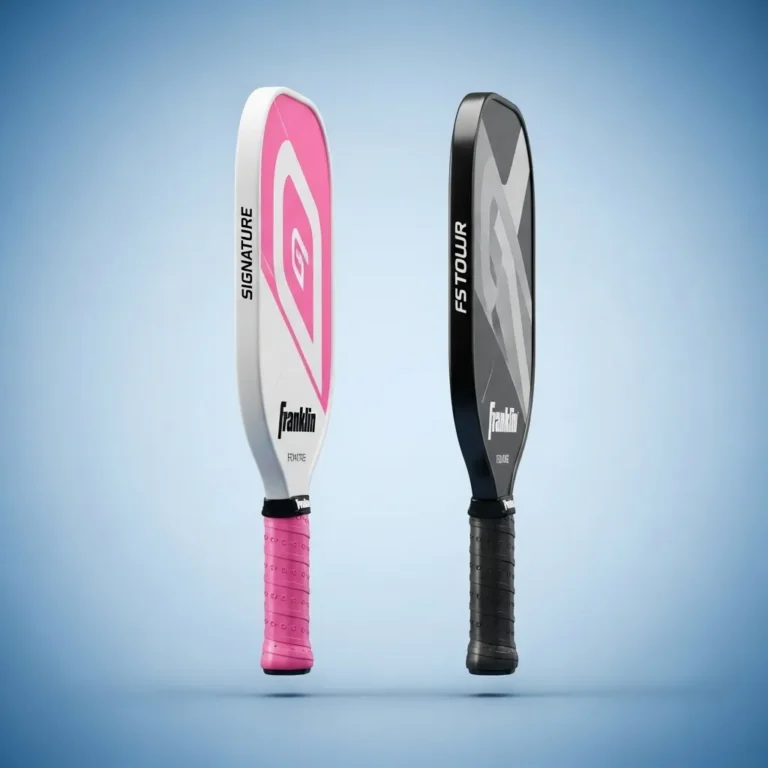
National retailers like Dick’s Sporting Goods keep steady stock of the standard colorways, including the highly popular neon yellow and pink variations. For those looking for competitive pricing, online specialty stores regularly offer promotional discounts, while the Franklin Sports Official Store remains the premier destination to explore their full, updated catalog. Sizing selection is highly accessible, running from the lightweight 13mm medium-grip model to the heavier, large-grip 16mm version, allowing players to match the paddle to their exact anatomical requirements.
Verdict: Is the Franklin Signature Pro Worth Your Money?
The final evaluation of this iconic fiberglass paddle depends entirely on your personal playing profile, physical health history, and financial approach to seasonal gear replacement.
- Who Should Buy: Intermediate players transitioning from tennis who utilize a two-handed backhand , budget-conscious competitors looking for a premium elongated shape under $100 , and players who love customizing their gear with tungsten tape.
- Who Should Avoid: 4.5+ advanced players who refuse to replace smooth paddles , individuals with chronic tennis elbow who need maximum vibration dampening , and players who dislike rapid cosmetic wear on their gear.
FAQs
- Q1: What is the actual lifespan of the MaxGrit texture under daily outdoor play, and does the warranty cover it?
Answer: detailing the 90-day limited warranty vs. the rapid smoothing. - Q2: Why does my handle make a clicking noise after a few weeks of play?
Answer : detailing core neck failure and warning against DIY liquid epoxies. - Q3: What is the exact tungsten setup to stabilize the 13mm’s small sweet spot?
Answer : Provide precise weights and placements. - Q4: Is it legal to use aftermarket paddle skins to restore spin on the court?
Answer : Detail tournament legality rules.