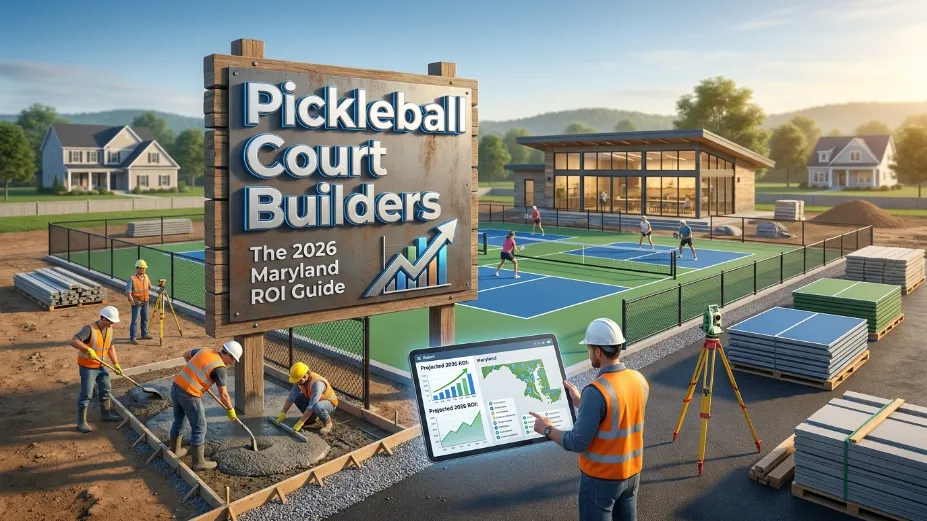
Converting an underutilized space into a high-performance sports hub demands more than just asphalt and paint; it requires the specialized engineering that professional pickleball court builders bring to the table to ensure tournament-grade durability and precision.
2026 Industry Benchmarks for Professional Pickleball Construction Services in Maryland.
| Installation Category | Target Location | Core Deliverables | Estimated Completion (Q2 2026) |
|---|---|---|---|
| Post-Tensioned (PT) Concrete | Millersville / Annapolis | Soil compaction, rebar #5, PT cable tensioning, 100% acrylic finish. | 4–6 Weeks |
| B2B Commercial Complexes | Baltimore / Maryland Urban Centers | Mass grading, high-intensity LED systems, perimeter fencing, sound barriers. | 12–16 Weeks |
| Asphalt Conversion & Overlay | Anne Arundel County (Residential) | Crack suppression membranes, dual-lift asphalt, professional surfacing. | 3–5 Weeks |
| Municipal Sports Hubs | Maryland Statewide | Multi-court layout, ADA compliance, parking logistics, LUN system permits. | 20–24 Weeks |
For investors and homeowners seeking pickleball court builders, the priority is finding a partner capable of navigating Maryland’s unique soil conditions and strict Anne Arundel County zoning laws. Whether you are searching for commercial pickleball court builders to launch a 12-court indoor facility or need a residential specialist in Millersville, the decision rests on structural integrity. In 2026, the standard has shifted toward Post-Tensioned Concrete and advanced acoustic mitigation, ensuring that your investment stands up to the high-frequency “pop” of the game and the shifting clay-heavy soils of the Mid-Atlantic region.
Engineering the Perfect Foundation: Beyond the Surface Mix
The longevity of a sports court is determined months before the first layer of paint is applied. In the United States, and specifically within the humid climate of Maryland, pickleball court builders must account for thermal expansion and the “frost heave” cycle. Standard asphalt, while cost-effective, is a flexible pavement that oxidizes and becomes brittle, leading to the massive 2-to-4-inch cracks often seen in older tennis courts. To combat this, the industry’s gold standard is now Post-Tensioned (PT) Concrete.
PT concrete utilizes high-strength steel cables that are tensioned after the pour, keeping the slab in a state of permanent compression. This structural logic is critical because it prevents cracks from widening, which is the primary cause of surface delamination. Furthermore, a precise 1% slope engineering (approximately 1/8 inch per foot) is required for effective water runoff. Without this precision, “birdbaths” or standing water will form, making it impossible to play pickleball on a wet court safely and significantly shortening the lifespan of the acrylic coating.
Subbase Compaction and Soil Stabilization
Maryland’s soil, particularly in Millersville and Baltimore, often contains a mix of silt and clay loam. Professional pickleball court builders Maryland experts know that 95% compaction density (Modified Proctor) is non-negotiable. Before pouring the slab, the subgrade must be treated with herbicides and reinforced with a stone base (typically 6–8 inches of 21A stone) to ensure a “firm and unyielding” foundation. This prevents the “dead bounce” syndrome that plagues DIY or general contractor builds.
Pickleball Court Builders Near Me: Why Local Proximity Matters
When searching for pickleball court builders near me, the “local” factor isn’t just about convenience; it’s about staging and mobilization costs. Large-scale commercial pickleball court builders require heavy machinery—excavators, laser-guided graders, and concrete pump trucks. Hiring a firm with a local footprint in Maryland reduces the “mobilization fee,” which can otherwise add $5,000 to $10,000 to the total budget.
Furthermore, local builders have established relationships with the Anne Arundel County Department of Inspections and Permits. In 2026, all projects in this region must be submitted through the Land Use Navigator (LUN) System. A builder unfamiliar with the LUN digital pipeline can face weeks of bureaucratic delays, whereas a local Millersville specialist can navigate the “Grading Permits” and “Zoning Setbacks” efficiently.
Pickleball Court Builders Maryland: Navigating the 1250 Hz Acoustic Challenge
One of the “missing angles” in generic construction blogs is the engineering of acoustics. The sound of a pickleball impact is centered around 1250 Hertz (Hz), a frequency that is particularly sensitive to the human ear. In Maryland, where residential developments are often densely packed, noise complaints are the number one cause of legal injunctions against new courts.
To mitigate this, pickleball court builders Maryland firms now offer “Acoustic Engineering” as a core service. This includes:
- Acoustifence Barriers: Specialized sound-absorbing fabrics that can reduce noise levels by up to 10–15 decibels.
- Strategic Buffer Zones: Implementing the 100-foot distance rule from the baseline to the nearest residential property line.
- Quiet Technology: Recommending equipment from the USA Pickleball “Quiet Category” to ensure community harmony.
If you are still wondering what is pickleball and why it’s so loud, it’s due to the impulsive nature of the paddle-ball impact. Professional builders solve this by using sound-absorbing panels and reorienting the court to direct sound away from neighbors.
Commercial Pickleball Court Builders: Scaling for B2B Success
For investors, commercial pickleball court builders provide more than just construction; they provide a revenue-generating asset. The B2B model in 2026 focuses on “Eatertainment”—the fusion of sports, food, and beverage. In Maryland, Senate Bill 0441 has revolutionized this by allowing sports activity venues to obtain a Beer, Wine, and Liquor License for on-premises consumption.
Commercial builds require a higher level of complexity:
- Tournament-Grade Lighting: Using diffused LED systems that point upward or are shielded to prevent glare, ensuring visibility for high lobs without blinding players.
- Player Flow and Spacing: While the pickleball court dimensions are 20′ x 44′, a commercial facility requires a total playing area of at least 34′ x 64′ to allow for advanced “Around the Post” (ATP) shots.
- Advanced Booking Integration: Modern facilities are built around software like Anolla or CourtReserve, using AI to optimize court occupancy and dynamic pricing based on peak hours.
B2B builders also prioritize durability. A commercial court may see 12 hours of play per day, 7 days a week. This requires 100% acrylic coatings reinforced with silica sand to maintain the coefficient of friction needed for consistent ball grip.
Pickleball Court Builders Millersville: Hyper-Local Zoning and Setbacks
Focusing specifically on pickleball court builders millersville, the construction landscape is dominated by the need to respect “Critical Area” regulations. Millersville, being part of the Chesapeake Bay watershed, has strict rules regarding “impervious surfaces.” Building a new court often requires mitigation, such as installing rain gardens or pervious pavement around the perimeter to manage stormwater.
Builders in this niche must ensure that the pickleball net height is set exactly to 34 inches at the center and 36 inches at the sidelines, but more importantly, they must ensure the court is oriented North-South. An East-West orientation in the Maryland sun creates a safety hazard, as players are blinded during morning and evening matches. This level of local knowledge is what separates a specialized sports contractor from a general paving company.
Vetting Your Builder: The 2026 Professional Checklist
To avoid project failure, every stakeholder should verify their contractor against the standards set by the American Sports Builders Association (ASBA). A qualified builder should provide:
- Certification: ASBA Certified Tennis or Pickleball Court Builder status.
- References: At least five professional references for commercial pickleball court builders projects completed within the last 24 months.
- Warranty: A multi-year structural warranty on PT concrete slabs, rather than a simple one-year “paving” warranty.
- Insurance: A minimum of $1,000,000 per accident in liability coverage, specifically naming the client as a secondary insured.
Whether you are visiting a Baltimore Pickleball Club for inspiration or starting a fresh build in Millersville, the foundation is everything. Cutting corners on the subsurface prep leads to “bubbling” paint and shifting tiles, which are the most expensive mistakes in sports construction.
Frequently Asked Questions (FAQ)
1. How much does it cost to build a professional pickleball court in Maryland in 2026?
The cost ranges from $35,000 to $80,000 for a high-quality residential court. Commercial complexes can exceed $150,000 per court when including tournament-grade lighting, sound mitigation, and premium PT concrete slabs.
2. Can I convert my existing Millersville tennis court into pickleball courts?
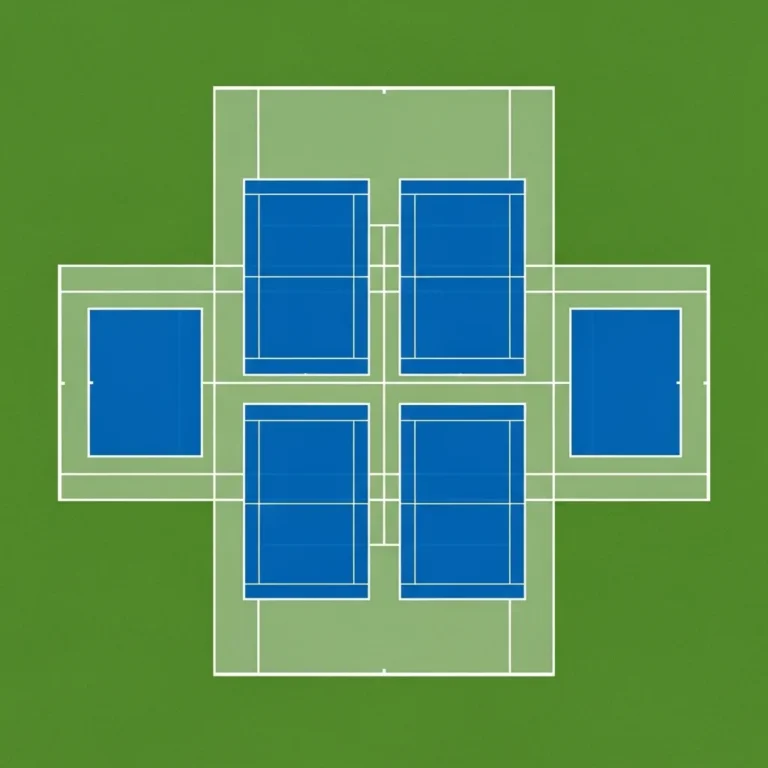
Yes. You can fit up to four pickleball courts on one standard tennis court (60′ x 120′). However, most pickleball court builders near me recommend a two-court layout to ensure adequate safety margins and prevent “ball interference” between games.
3. What is the best court surface for the Maryland climate?
Post-Tensioned Concrete is the superior choice for Maryland. It resists the “freeze-thaw” cycles better than asphalt and prevents the soil’s clay content from causing structural cracks. For the top layer, a 100% acrylic coating with UV-resistant pigments is essential for color longevity.
4. Do I need a permit for a residential court in Anne Arundel County?
Yes. Most projects in Millersville require a Grading Permit and must comply with zoning setbacks (often 10–30 feet from property lines). All applications must be submitted through the LUN System digital portal.
5. Why is acoustic engineering becoming a standard requirement for commercial pickleball court builders?
Due to the 1250 Hz impact frequency, noise is the leading cause of lawsuits. Commercial builders now integrate Acoustifence and “Quiet Category” equipment into their facility designs to protect the owner from public nuisance claims and ensure long-term operational legality.
You May Also Like