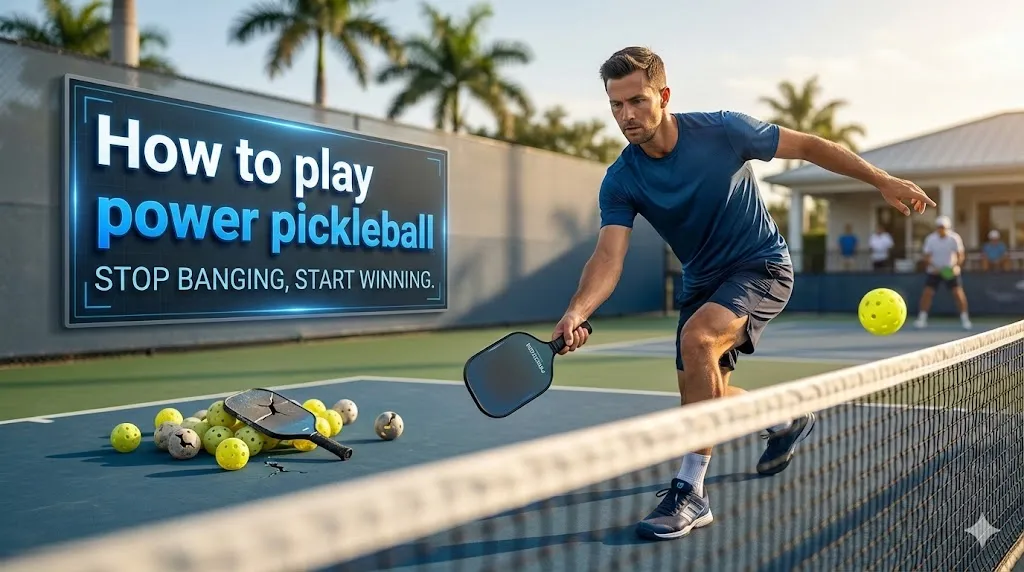
Gone are the days when pickleball was strictly a game of patience, soft dinks, and waiting for mistakes. The modern game has evolved rapidly. Today, if you want to climb the competitive ladder, mastering how to play power pickleball is no longer optional—it is a necessity. While the “soft game” remains the heart of high-level play, the ability to unleash controlled aggression is what separates 4.0 players from the pros.
Many players mistake “power” for simply swinging harder. This is a trap. True power in pickleball is about calculated aggression, kinetic efficiency, and knowing exactly when to pull the trigger. In this comprehensive guide, we will break down the mechanics of the drive, the essential power pickleball strategy you need to dominate the court, and the equipment that supports this style of play.
The Strategic Foundation: When to Use Power in Pickleball
Before we discuss how to hit the ball hard, we must understand when to do it. Indiscriminate banging is the fastest way to lose points against skilled opponents who can block and reset. The most critical decision you will make in a rally concerns your third shot.
The 3rd Shot Decision: Drive vs. Drop
The “Third Shot Drop” is the holy grail of pickleball strategy, designed to neutralize the serving team’s disadvantage. However, a well-timed drive can be just as effective. You should choose to drive the ball when:
- The Return is Short: If your opponent’s return lands mid-court, they haven’t established their position at the Kitchen line yet. A hard drive to their feet can result in a weak pop-up or an outright winner.
- The Opponent is Moving: If you catch an opponent rushing forward, a drive aimed at their body can jam them, making it difficult to execute a controlled volley.
- You Want to Set Up a “Shake and Bake”: This is a classic aggressive play where one partner drives the ball hard (the Shake) while the other partner sprints to the net to clean up the pop-up volley (the Bake).
However, if the return is deep and the opponents are firmly planted at the Non-Volley Zone (NVZ), a 3rd shot pickleball strategy focusing on a soft drop is usually the smarter play to neutralize their advantage.
Kitchen Line Aggression
Once you are at the NVZ, when to use power in pickleball becomes a game of discipline. You are looking for the “Green Light.”
- Red Light (Don’t Attack): The ball is below the net height (your ankles or shins). Attacking here usually results in the ball hitting the net or sailing long.
- Yellow Light (Caution): The ball is near waist height. You can speed this up, but be prepared for a fast counter-attack.
- Green Light (Attack): A “dead dink” or a pop-up that sits above the net level. This is your moment to use a wrist snap or a backhand roll to put the ball away.
Mechanics & Technique: Generating Controlled Power
If you watch top pros like Ben Johns’ strategy, you will notice they generate immense power without looking like they are swinging wildly. This is because power comes from the kinetic chain, not just the arm.
The Kinetic Chain: Legs and Core
The biggest misconception in power pickleball is that arm strength equals ball speed. In reality, your arm is just the delivery system; the engine is your lower body.
To hit a powerful drive:
- Load the Legs: Bend your knees and load your weight onto your back foot.
- Rotate the Hips: Uncoil your hips toward the target. This rotation generates torque.
- Contact Point: Meet the ball out in front of your body. If you catch the ball late (behind your hip), you lose all leverage.
This technique allows you to hit heavy balls that push your opponent back, rather than light, slap-happy shots that are easily blocked.
Topspin: The Secret to Keeping it In
Power without control is useless. If you hit a ball flat and hard, gravity often won’t pull it down fast enough to land in the court. This is where topspin becomes essential. By brushing up the back of the ball with a “low-to-high” swing path, you create the Magnus effect, which forces the ball to dip sharply into the court.
Mastering the topspin drive allows you to aim higher over the net (reducing unforced errors) while still keeping the ball in bounds. For those looking to refine this motion, practicing specific pickleball drills focused on the windshield-wiper forehand motion is highly recommended.
Gear Guide: Equipment for the Power Player
While technique is 90% of the game, your equipment choices can significantly enhance your power potential. Manufacturers are constantly pushing the limits of paddle technology.
Paddle Selection: Thickness Matters
When you are learning how to pick a pickleball paddle for a power game, the core thickness is the first spec to check.
- 13mm – 14mm Cores: These are generally thinner and stiffer. The ball spends less time on the face (less dwell time) and rebounds faster, providing immediate “pop.” This is preferred by aggressive bangers.
- 16mm Cores: These are thicker and softer. They absorb more energy, offering better control and reset blocking but slightly less inherent power.
For a direct comparison of top-tier paddles often used by power players, look at the difference between the JOOLA Perseus vs Selkirk LUXX. The Perseus is known for its thermoformed pop, while the Luxx focuses on control.
Customization with Lead Tape
Many pros add lead tape to their paddles to alter the swing weight. Placing lead tape at the top of the paddle (the 12 o’clock position) increases the “plow through” ability, making the paddle feel heavier but delivering significantly more force on contact.
Counter-Play: Defending Against the Banger
To fully understand power pickleball, you must also know how to defeat it. If you face a “banger” who drives every shot:
- Block and Reset: Do not swing back. Hold your paddle firm but with a soft grip pressure. Absorb the pace and let the ball drop softly into the kitchen.
- Dodge Out Balls: Hard drives often sail long. If the ball is shoulder-high and you are at the kitchen line, let it go. It is likely going out.
- Hold the Line: Don’t retreat. Stepping back opens up angles for your opponent. Stand your ground at the NVZ line and trust your pickleball kitchen rules knowledge to avoid stepping in during a volley.
Visual Guide: Improving Your Drive Mechanics
For a visual breakdown of how to engage your hips and legs for maximum power, watch this excellent tutorial:
Frequently Asked Questions About Power Pickleball
Does a heavier paddle give you more power?
Generally, yes. A heavier paddle has more mass, which translates to more force behind the ball (F=ma). However, a heavier paddle is also slower to move. The key is finding a weight that allows you to maintain a fast swing speed. If the paddle is too heavy, your hand speed slows down, and you lose power.
Can you play power pickleball with a control paddle?
Absolutely. In fact, many players prefer using a control paddle (like a 16mm carbon fiber paddle) and generating their own power through superior body mechanics. This offers the best of both worlds: the touch required for dinking and the stability to hit hard drives when the opportunity arises.
How do I stop popping up the ball when hitting hard?
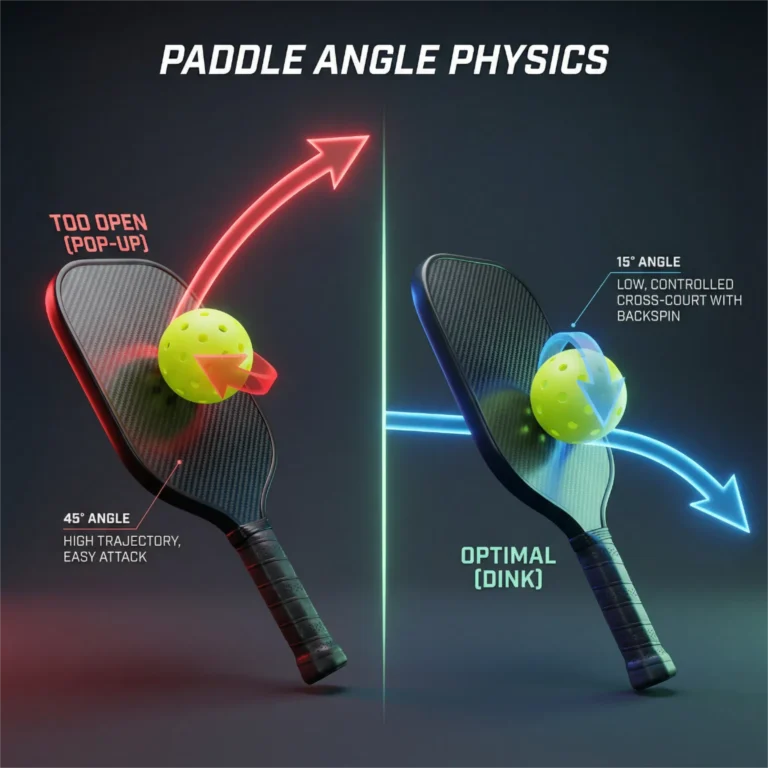
Pop-ups usually occur because the paddle face is too open (pointing up) at contact. To fix this, focus on keeping your paddle face closed or perpendicular to the ground and swing through the ball rather than under it. Adding topspin also helps keep the trajectory lower.
Is “banging” a viable strategy at higher levels?
At the 3.0 level, driving every ball works well. However, at 4.0 and above, “banging” without strategy is easily punished. Advanced players are experts at blocking hard shots. To succeed at higher levels, you must mix your power with soft drops and dinks to keep your opponents guessing.
Conclusion
Mastering how to play power pickleball is about adding a new dimension to your game, not replacing the fundamentals. The best players in the world are masters of the “soft game” who use power surgically to punish mistakes and finish points.
Start by incorporating the “Shake and Bake” into your doubles matches and practice your topspin drives against a wall or ball machine. Remember, power is a privilege, not a right—earn the opportunity to hit hard by constructing the point patiently. See you on the courts!
For more official information on rules and regulations, visit the USA Pickleball Official Rules page.