top pickleball paddles
If you’ve walked past a local park anytime in the last year, you’ve heard it. That distinct pop-pop-pop that signals a game of pickleball is in full swing. It’s infectious, isn’t it? Whether you are just discovering the joy of the game or you’re a seasoned regular at your local courts, there is one piece of gear that becomes an extension of your arm: the paddle.
Heading into 2025, the technology behind these paddles has moved at light speed. Gone are the days when a simple wooden slab would suffice. Today, we are looking at aerospace-grade materials, thermoformed edges, and surface textures that look more like sandpaper than sports equipment. But with all this innovation comes a bit of “analysis paralysis.” You search for the top pickleball paddles, and suddenly you’re drowning in terms like “swing weight,” “dwell time,” and “polymer honeycomb.”
I’ve been there. You just want something that feels good in your hand and helps you keep the ball in play—or maybe smash a winner past your buddies. That’s what this guide is for. We’re going to cut through the marketing noise and have a real conversation about what matters. We will look at the top pickleball paddles 2025 has to offer, not just by listing models, but by understanding the mechanics behind them. We’ll explore the top pickleball paddle brands and figure out if you really need to spend top dollar or if a budget-friendly gem is hiding in plain sight.
Let’s grab a Gatorade, take a seat on the bench, and figure out exactly which paddle deserves a spot in your bag.
related:
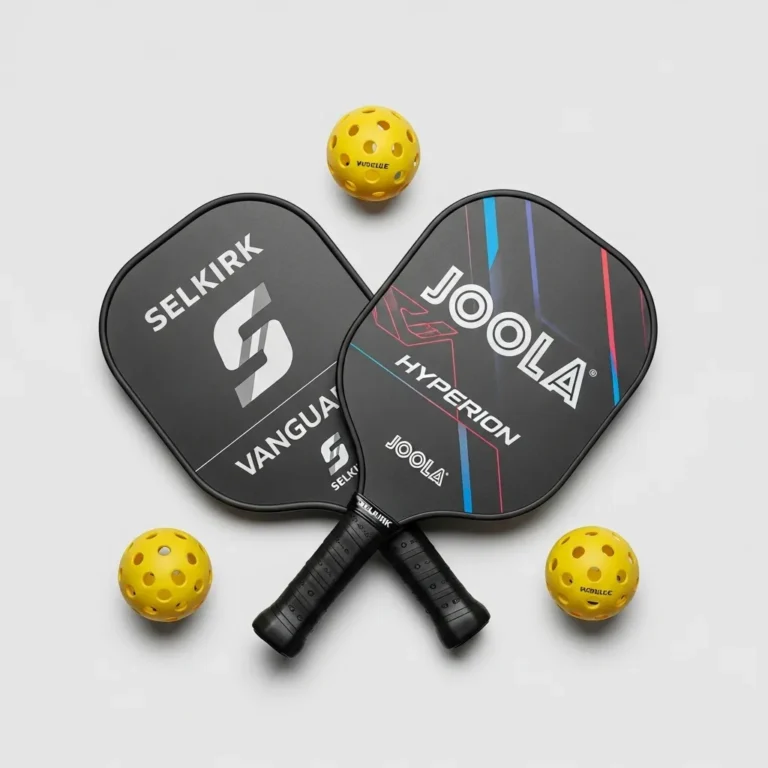
The Honest Truth: Selkirk Vanguard vs Joola Hyperion
DGYGQ Pickleball Paddle Review: The Hidden Gem
The Essentials – Choosing the Right Paddle
Before diving into complex technical specifications, let’s focus on the essentials. These are the core questions to consider when facing a wide selection of paddles, helping you understand what distinguishes an entry-level model from professional-grade equipment.
How do I choose the best pickleball paddle for my skill level (Beginner vs. Pro)?
This is the starting line. If you are just starting out, your priority is forgiveness. In pickleball terms, forgiveness means a large sweet spot. When you don’t hit the ball perfectly in the center (which happens to all of us), a forgiving paddle ensures the ball still goes over the net rather than dying on your side.
For beginners, I usually recommend looking for a standard shape—something balanced. You don’t need the high-powered weapons that the pros use just yet. Pro-level paddles often sacrifice that sweet spot for raw power or extreme spin, which can be unruly if your mechanics aren’t dialed in.
However, if you are an intermediate player looking to break into the advanced ranks, your needs shift. You might start looking for top rated pickleball paddles that specialize in one area, like spin or pop, to complement your specific playstyle. The “best” paddle is subjective; it’s about matching the gear to where your hands and feet currently are.
What is the difference between “Power” and “Control” paddles?
Think of this distinction like the suspension on a car.
A “Power” paddle is like a sports car with stiff suspension. When the ball hits the face, it rebounds instantly and explosively. The ball spends very little time on the paddle face. These paddles often have thinner cores or harder surfaces (like fiberglass). If you struggle to put away shots or feel like you have to swing incredibly hard to get depth, a power paddle can help.
A “Control” paddle is like a luxury sedan. It absorbs the impact. When the ball hits, it feels like it sinks into the paddle for a fraction of a second longer. This is often called “dwell time.” This allows you to place dinks softly into the kitchen or reset a hard drive from your opponent. If you find your shots are constantly sailing long or popping up too high, a control paddle—usually one with a thicker core—is likely the remedy.
Understanding Pickleball Paddle Pricing in 2025
“Determining the budget for a pickleball paddle depends largely on personal goals and playstyle. In 2025, while market prices have stabilized, there remains a significant variety of options.
Entry-Level ($50 – $80):
Paddles in this range are typically composite models. They are often viewed as suitable options for recreational use or casual weekend games.
Mid-Range ($130 – $180):
Many frequent players find this price bracket to be a balance between performance and cost. At this level, equipment generally features carbon fiber faces and durable cores, offering upgraded materials without necessarily reaching top-tier pricing.
Premium ($200+):
This tier generally includes equipment similar to that used in professional matches. While these models offer high-performance specs, the difference is often described as nuanced rather than a drastic leap in basic function. While a beginner might not notice a significant difference compared to budget options, competitive players may find that the specific technical attributes in this range align with their performance needs.”
Are expensive “pro” paddles worth the investment for recreational players?
I’ll be honest with you: sometimes, yes, but often, no.
If you are a recreational player who plays for fun and socialization, a high-end “pro” paddle might actually hurt your game. Professional paddles can be heavier, have smaller sweet spots, and require precise timing. It’s like buying a Formula 1 car to drive to the grocery store—it’s powerful, sure, but it’s going to be a bumpy ride.
However, if you are competitive, obsessed with improvement, and play tournaments, then yes, the investment makes sense. The consistency and spin capability of a top-tier paddle allow you to execute shots that cheaper paddles simply cannot physically perform.
Technical Specs – Core & Thickness (Trending Topic)
If you hang around the courts long enough, you’ll hear people debating numbers: “Is that a 16?” “No, I switched to a 14.” They aren’t talking about jersey numbers; they are talking about core thickness. This has become the single most discussed technical spec in the last two years.
13mm vs. 16mm Core: Which thickness is right for my game?
Let’s simplify the physics. The core of almost all modern paddles is made of a polymer honeycomb (basically plastic hexagons). The thickness of this honeycomb changes the feel dramatically.
A 16mm core is thick. It absorbs energy. When the ball hits it, the paddle doesn’t vibrate as much, and the ball leaves the face slower. This makes it the king of control. If you love the soft game—dinking, blocking, and resetting—you want a 16mm paddle.
A 13mm (or 14mm) core is thin. It’s rigid. The ball bounces off it much faster. This gives you immediate power and “pop.” If you like to drive the ball hard from the baseline or have quick hands battles at the net where speed wins, a thinner core is your friend.
Does a thicker core reduce vibration and improve stability?
Absolutely. One of the major advantages of the trend toward 16mm (and even 20mm) paddles is the enhanced playing experience. A thicker core helps manage impact vibration effectively. When contact is made outside the sweet spot, a thinner paddle can produce harsh feedback, whereas a thicker profile tends to soften that sensation.
For avid players or those prioritizing a forgiving feel, a thicker core delivers a much smoother and more consistent response. It offers greater stability by resisting torque in your hand when blocking power shots, providing a solid connection that inspires confidence.
What is a “Thermoformed” paddle, and does it actually add more power?
Thermoforming is the buzzword of 2024 and 2025. In traditional paddle manufacturing, the layers were essentially sandwiched together cold or with low heat. In thermoforming, the entire paddle—core, edge, and face—is sealed under intense heat and pressure. The edge is often encased in carbon fiber as well.
Does it add power? Yes. Because the perimeter of the paddle is stiffer and fused to the core, the “trampoline effect” is enhanced across the entire face. The ball explodes off a thermoformed paddle. However, be warned: these paddles can feel stiff. They offer incredible performance, but they require you to have “soft hands” to control that extra pop.
What is the “sweet spot,” and which paddle shapes offer the largest one?
The sweet spot is the area on the paddle face where, if you hit the ball, you get maximum power and accuracy with zero vibration.
If your main goal is the largest possible sweet spot, look for a “Standard” or “Wide-body” shape. These paddles are shorter and wider (closer to a square). This distribution of surface area makes the paddle incredibly forgiving. Elongated paddles (which we will discuss later) stretch the sweet spot out, but they often narrow it, making them less forgiving on off-center hits.
Materials & Surface Technology
Now that we’ve looked at the inside of the paddle, let’s look at the outside—the part that actually touches the ball. This is where the magic of spin happens.
Carbon Fiber vs. Fiberglass vs. Graphite: Which face material is best?
These are the “Big Three” materials, and they behave very differently.
- Fiberglass (Composite): This is the most common material on entry-to-mid-level paddles. It is flexible. When the ball hits, the face flexes and snaps back, generating a lot of power (pop). However, it usually has a smaller sweet spot and less consistency than carbon.
- Graphite: Historically very popular, graphite is thin and rigid. It provides great “feel” and touch, but it can be brittle and lacks the power of fiberglass or the spin of carbon fiber. It’s falling out of favor slightly in the high-end market.
- Carbon Fiber: This is the gold standard for top pickleball paddles 2025. It is stiff, durable, and lightweight. It offers the best blend of control and consistency. The ball feels “true” coming off the face.
What is “Raw Carbon Fiber” (T700), and how does it affect spin?
If you see a paddle that looks like a dark grey matte fabric, that’s likely Raw Carbon Fiber (often referring to the T700 grade). Unlike traditional surfaces that have a glossy paint or clear coat over them, raw carbon relies on the natural texture of the fibers and a peel-ply resin texture.
This material is a game-changer for spin. The gritty texture “bites” the ball. It creates high friction, allowing you to curve the ball with topspin or slice it with backspin. If you want to see your serves kick sideways or your drives dip at the baseline, T700 raw carbon is currently the best technology available.
Does the grit or texture on a paddle face wear off over time?
Unfortunately, yes. Nothing lasts forever.
There are two types of texture. “Spray-on” grit is like sandblasting paint onto the paddle. This wears off relatively quickly—sometimes within a few months of heavy play. Once it creates a smooth patch in the center, your spin potential drops.
“Raw Carbon” texture lasts significantly longer because the texture is part of the material weave itself, not just sprayed on top. However, even raw carbon will eventually smooth out over a year or two of intense play. Dirt and ball residue can also clog the weave, making it feel smooth, which is why cleaning is vital.
Which paddle surface provides the most spin potential?
Hands down, raw carbon fiber creates the most spin. The combination of the friction from the surface and the dwell time from the polymer core allows the paddle to “grab” the ball and rotate it. If you look at the top 10 pickleball paddles used by pros today, almost all of them feature some variation of a raw carbon face.
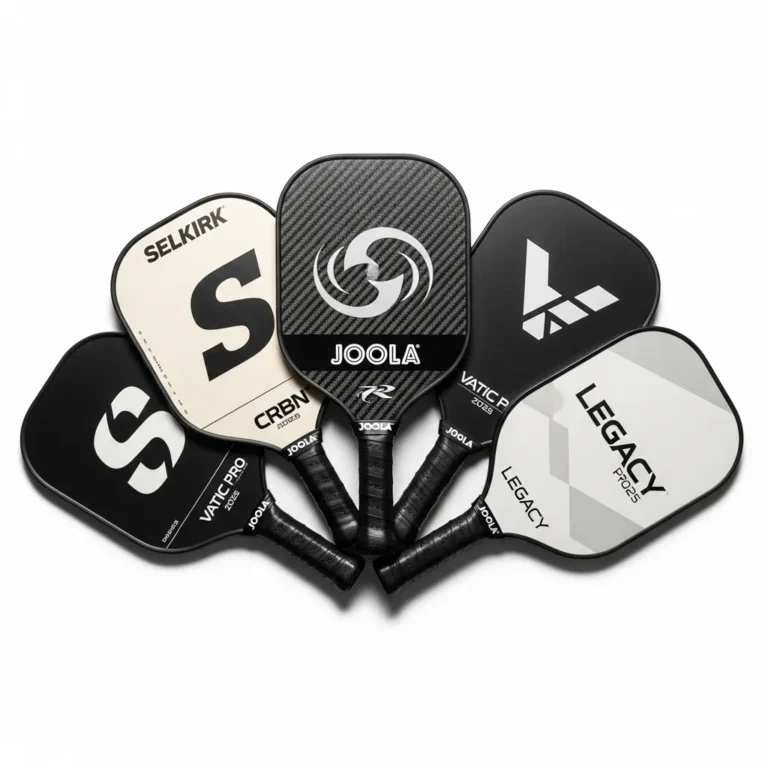
One of the pioneers in maximizing this spin technology is CRBN. If you are serious about grit and control, don’t miss our detailed breakdown of the CRBN Pickleball Paddle lineup.
Shape, Weight, and Ergonomics
A paddle can have the best technology in the world, but if it feels clunky in your hand, you’re going to hate it. The ergonomics determine how the paddle moves through the air.
Elongated vs. Standard vs. Wide-body: How does paddle shape affect reach and speed?
- Elongated: These paddles are longer (usually 16.5 inches) and narrower. They are the favorites of singles players and aggressive doubles players. The extra length gives you more reach for overheads and slightly more leverage for power. However, because the weight is further from your hand, they have a higher “swing weight,” meaning they feel heavier to swing.
- Standard: The classic shape. It offers a great balance of reach and hand speed.
- Wide-body: These are shorter and wider. They are incredibly maneuverable at the net because the weight is closer to your hand. They are defensive walls, great for blocking, but you lose a bit of reach and power.
What is the ideal paddle weight (Lightweight vs. Midweight vs. Heavyweight)?
Weight is personal, but here is the general breakdown:
- Lightweight (under 7.3 oz): Very fast hands at the net. Great for avoiding fatigue. However, the paddle gets pushed around by hard shots, meaning you have to swing harder to generate power.
- Midweight (7.3 – 8.3 oz): The vast majority of players should be here. It’s the perfect compromise between stability and speed.
- Heavyweight (over 8.3 oz): These act like sledgehammers. They generate incredible power with very little swing effort. However, the extra weight can reduce your hand speed during fast volleys and may cause arm fatigue during long matches.
How do I measure my grip size correctly?
Choosing the right grip size helps improve comfort and enhances overall handling.
The standard grip is usually around 4.25 inches. To measure, hold your paddle with a standard handshake grip. Check the space between the tip of your ring finger and the fleshy part of your palm; you should be able to fit your other index finger snugly in that gap.
If there is no gap, the grip is too small, forcing you to squeeze harder than necessary. If the gap is wide, it’s too big. When in doubt, opt for a smaller grip—you can easily add overgrip tape to increase the size, but you cannot reduce the handle size.
Should I use a longer handle for a two-handed backhand?
If you come from a tennis background and use a two-handed backhand, you absolutely need a longer handle (5.5 inches or more). Standard handles (5 inches) will leave your top hand hanging off the butt cap, which feels unstable. Many of the top pickleball paddle brands now offer “hybrid” or specific elongated handle models specifically for this reason.
Care & Durability
You’ve done the research, you’ve spent the money, and now you have a shiny new paddle. Let’s make sure it lasts.
How long do top-tier pickleball paddles typically last?
This depends on how often you play. For a casual player (once a week), a high-quality paddle can last 2 to 3 years easily.
However, for a “power user” playing 3 to 5 times a week, a paddle typically maintains peak performance for about 6 to 9 months. The core eventually softens (dead spots), and the face loses its grit. It doesn’t mean the paddle is broken, but it won’t have the same pop or spin it did on day one.
What is the best way to clean and maintain a carbon fiber paddle?
This is the best $10 investment you will make: a rubber abrasive stick (often sold as a “paddle eraser” or grip tape cleaner).
As you play, plastic from the ball gets ground into the microscopic grooves of your carbon fiber paddle. This fills the gaps and reduces spin. Simply rub the rubber eraser over the face of the paddle after every few sessions. It pulls the plastic dust out and restores the grit. Avoid using water or household cleaners on the face, as liquids can seep into the core if the edge seal isn’t perfect.
What are the signs that my paddle has “dead spots” or needs replacing?
There are two main signs. First, the sound. If you tap the paddle with your knuckles or a ball and hear a hollow “thud” in certain spots rather than a crisp “pop,” the honeycomb core may be crushed in that area.
Second, the edge guard. If the plastic guard around the edge comes loose, it will rattle. While this can sometimes be glued, it’s often a sign that the structural integrity of the paddle is compromised. If you hit a perfect center-face shot and the ball just dies and falls into the net, it’s time to say goodbye and start looking for the next top paddle.
Conclusion
Finding the right paddle is a journey. It’s about being honest with your skill level and understanding what you need to enjoy the game more. Whether you go for a thick core for control or a raw carbon face for spin, the “best” paddle is the one that gives you confidence. The technology in 2025 is incredible, and there has never been a better time to upgrade your gear. See you on the courts!
you may like it