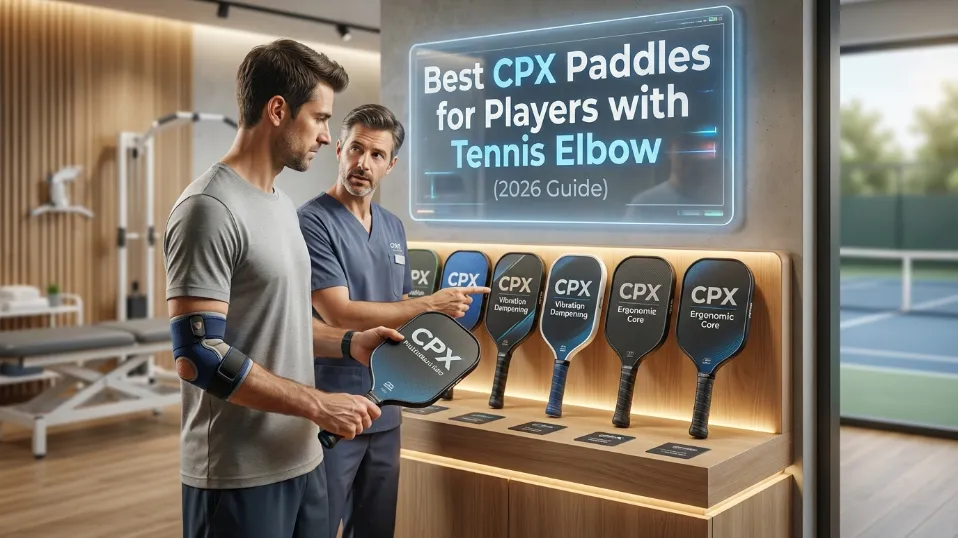
Every strike of a hard plastic ball sends micro-vibrations straight down the shaft of your paddle and directly into your forearm. For players battling lateral epicondylitis, wielding a stiff, thin-core paddle is the quickest way to guarantee an agonizing recovery day. Securing the best CPX paddles for players with tennis elbow requires a fundamental shift in priorities: swapping raw, jarring pop for extreme shock absorption, plush core thickness, and a balanced swing weight. By analyzing the structural design of real CPX models, we can pinpoint exactly which paddles absorb the brunt of the impact so your tendons do not have to.
CPX Models for Elbow Comfort:
| CPX Model | Core Thickness & Build | Why It Helps Relieve Tennis Elbow |
|---|---|---|
| CPX Pro Series | 19mm Honeycomb Core | The massive 19mm core offers elite vibration dampening, acting as a cushion to absorb shock before it reaches your arm. |
| CPX Air Series | Standard Core / Lightweight | Drastically reduces the overall swing weight, preventing the muscle strain caused by dragging a heavy paddle through the air. |
| CPX MAX Series | Plush Core / Carbon Surface | Expands the sweet spot significantly, minimizing the harsh, jarring vibrations caused by off-center mishits. |
| CPX Ultra | Premium Multi-layer / Titanium elements | Offers high-end structural stability that cuts down on paddle torque and twisting when returning fast, heavy drives. |
The Short Answer: If you are actively managing tennis elbow, the CPX Pro Series is your absolute best defense. Featuring a uniquely thick 19mm honeycomb core, this paddle acts like a physical shock absorber for your arm, muting vibrations far better than standard 14mm or 16mm models. Alternatively, if sheer paddle weight is the primary cause of your arm fatigue, the CPX Air Series provides a lighter swing profile that reduces the torque on your elbow during repetitive kitchen exchanges and overhead smashes.
The Biomechanics of “Pickleball Elbow” in the US Circuit
To understand why specific equipment matters, we must first address the biological reality of Lateral Epicondylitis, commonly referred to in the United States as “tennis elbow.” This condition is not actually an inflammatory “itis” in its chronic stage, but rather a degenerative process affecting the extensor carpi radialis brevis (ECRB) tendon. In pickleball, the “pop” of the ball is essentially a miniature explosion of kinetic energy. When your paddle is too thin or too stiff, that energy has nowhere to go but up the handle and into your lateral epicondyle.
For American club players, the danger increases as game speeds rise. Modern thermoformed paddles have revolutionized power, but many have also increased the “stiffness” coefficient. High stiffness equals high vibration frequency. If you are already experiencing a burning sensation on the outside of your elbow, your current gear might be a primary contributor. Arm friendly CPX pickleball paddles are specifically engineered to lower this vibration frequency, shifting the impact energy from a “sharp” shock to a “dull” thud that the body can handle more effectively.
Best CPX Paddles for Players with Tennis Elbow
When selecting the most comfortable CPX paddle, the flagship choice is undoubtedly the CPX Pro 19mm. While the industry standard has long hovered around 16mm for “control” paddles, CPX broke the mold by introducing a 19mm polypropylene honeycomb core. This 3mm difference is statistically significant for joint health.
CPX Pro 19mm Vibration Dampening
The CPX Pro 19mm vibration dampening capability stems from the volume of material. A thicker core allows for a greater “dwell time”—the millisecond-long window where the ball is compressed against the paddle face. By increasing this time, the peak force of the impact is spread out over a longer duration, reducing the instantaneous “jolt” felt in the forearm. This is why many US players describe the 19mm Pro as having a “buttery” feel; it mutes the mechanical feedback that typically triggers tendon pain.
- Surface: Raw 3K Carbon Fiber provides a soft, non-metallic response.
- Core: 19mm Polypropylene Honeycomb for maximum energy dispersal.
- Edge: Foam-injected walls expand the sweet spot to prevent jarring off-center hits.
While comfort is crucial, if you want to explore the overall performance metrics and durability of this brand, read our complete CPX Pickleball Paddle Reviews: Don’t Buy Before Reading!
Core Thickness vs. Impact Energy: The Physics of 19mm
Many players ask if they should choose 14mm vs 16mm core thickness when dealing with joint pain. The answer is usually “the thicker, the better.” However, the 19mm CPX Pro goes a step further. In physics, a thicker material generally has a lower resonant frequency. For someone with a sensitive elbow, high-pitched, high-frequency vibrations are the most damaging. The 19mm core acts as a low-pass filter, absorbing those high-frequency shocks before they reach your wrist.
Furthermore, CPX paddles for elbow pain relief utilize a specialized 6mm honeycomb cell size. This specific geometry is designed to balance structural integrity with flexibility. When the ball strikes the face, the honeycomb cells compress slightly, acting like thousands of tiny springs that dampen the blow. If you are coming from a traditional “Gen 1” paddle or a budget aluminum core, the transition to 19mm honeycomb will feel like moving from a wooden bench to a premium mattress.
Advanced Materials: The Kevlar-Carbon Hybrid of the CPX Ultra
While the Pro Series focuses on core thickness, the CPX Ultra attacks the problem through material science. The Ultra features a hybrid face made of DuPont Kevlar and raw carbon fiber. If you’ve researched Kevlar vs Carbon fiber, you know that Kevlar is renowned for its toughness and vibration-filtering properties. It is the same material used in bulletproof vests, and its ability to absorb impact is unparalleled in the composite world.
The CPX Ultra is a 16mm paddle, but the inclusion of Kevlar provides a “soft” feel that mimics a much thicker core. This makes it an excellent lightweight CPX paddle for joint pain for those who find the 19mm Pro too heavy or bulky. The Kevlar weave naturally filters out the “harshness” of carbon fiber while retaining the high spin rates required for modern competitive play.
Information Gaps: What Most Reviewers Miss
Most gear reviews focus on RPMs and exit velocity, but for the injured player, there are three “hidden” factors that determine whether a paddle is arm-friendly.
1. The Cold Weather Effect
In Northern US states, winter pickleball is a different beast. Plastic balls harden in temperatures below 50°F, becoming essentially “rocks.” When a hard ball hits a cold, stiff paddle, the vibration levels can double. The 19mm CPX Pro is particularly effective here; its thick core acts as a thermal and mechanical buffer, keeping the paddle’s response consistent even when the ball is at its most unforgiving.
2. Acoustic Psychology and Muscle Tension
There is a documented link between sound and muscle reflex. High-pitched, “clacky” paddles often cause a player to subconsciously tighten their grip (the “death grip”) in anticipation of impact. Arm friendly CPX pickleball paddles are designed with a “muted” sound profile. This lower decibel, deeper tone encourages a more relaxed grip, which is the single most important factor in preventing tennis elbow flare-ups.
3. The Weight Paradox
Many beginners seek the lightest paddle possible to “save” their arm. However, a paddle that is too light (under 7.5 oz) lacks “plow-through.” Without mass, the paddle will bounce backward upon ball impact, forcing your forearm muscles to do all the work to stabilize the shot. CPX balances their models in the 8.0–8.4 oz “mid-weight” range, which provides enough mass to let the paddle handle the ball’s momentum, reducing the workload on your tendons.
Comparison Section: CPX vs. Joola and Selkirk for Arm Comfort
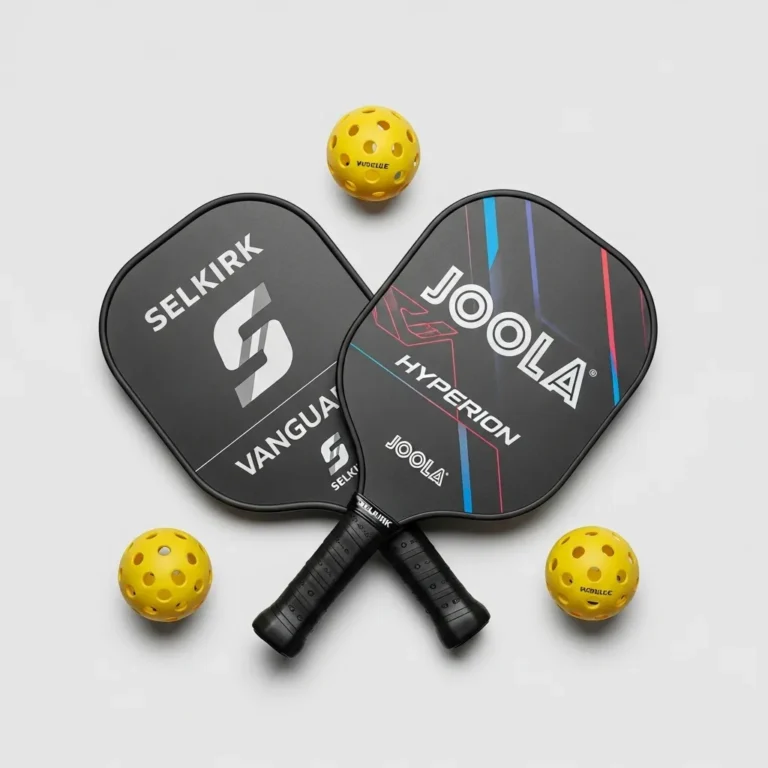
How does CPX stack up against the industry giants in the “comfort” category? When comparing CPX vs JOOLA, the difference lies in the core philosophy. JOOLA’s Gen 3 “Propulsion Core” is built for explosive pop, which can sometimes feel “hollow” or “stiff” to players with sensitive elbows. CPX, specifically the Pro 19mm, offers a more solid, dampened feel that prioritizes the “plush” sensation over raw speed.
Against Selkirk’s “Luxx” line, which also targets control and comfort, CPX provides a more affordable entry point without sacrificing the raw carbon fiber surface. While Selkirk uses a 20mm core in some “Labs” models, the CPX Pro 19mm is often preferred by those who want a lightweight CPX paddle for joint pain that doesn’t feel like a heavy “club” in fast hand battles at the kitchen.
Ergonomic Customization for Pain-Free Play
No matter how arm-friendly your paddle is, improper grip size will sabotage your recovery. Most thermoformed paddles come with a standard grip circumference of 4.125 to 4.25 inches. If your grip is too small, you will over-compress your forearm muscles to keep the paddle from twisting. If it’s too large, you lose maneuverability.
The Index Finger Rule
When holding your CPX paddle with a natural grip, there should be enough space between your fingertips and the palm of your hand to fit the index finger of your other hand. If your fingers are touching your palm, your grip is too small. CPX handles are designed to be “customization-friendly,” allowing you to build up the circumference with overgrips to find your perfect ergonomic fit.
Many US players are also turning to “Hesacore” or specialized gel under-grips. These honeycomb-patterned grips replace the stock grip and further isolate the hand from the paddle’s internal vibrations. Combining a CPX 19mm core with a vibration-dampening grip is the “gold standard” setup for chronic sufferers.
Technique and Maintenance: Protecting the Lateral Epicondyle
Even the best CPX paddles for players with tennis elbow require proper technique to be effective. Relying solely on wrist “flicks” for power is a recipe for injury. Instead, focus on using your core and shoulders to drive the paddle through the ball. The elongated handles on models like the CPX Ultra also facilitate a two-handed backhand, which is highly recommended for reducing the load on the dominant elbow.
Finally, monitor your paddle’s health. Over time, honeycomb cores can suffer from “core crush”—a breakdown of the internal cells. When this happens, the paddle loses its dampening ability and starts to vibrate inconsistently. If your CPX paddle starts sounding more “metallic” or you feel a sudden increase in feedback, it may be time to replace it to ensure your arm remains protected.
Frequently Asked Questions About CPX and Tennis Elbow
Is the 19mm CPX Pro too slow for high-level play?
While the 19mm core is thicker, the CPX Pro uses a streamlined edgeless design to maintain aerodynamics. It is slower than a 14mm power paddle, but it offers elite “reset” capabilities that allow you to survive fast rallies until you can take control with a well-placed dink.
Can I use lead tape on an arm-friendly paddle?
Yes, but be strategic. Adding lead tape to the “throat” (near the handle) can increase stability and twist weight without significantly increasing the swing weight. This can actually help with tennis elbow by making the paddle more resistant to twisting on off-center hits.
Does the CPX Ultra Kevlar face actually feel different?
Absolutely. Most players notice a “softer” impact compared to pure T700 carbon fiber. The Kevlar dampens the “ringing” sensation that often follows a hard drive, making it a top contender for the most comfortable CPX paddle title.
How often should I replace my paddle to prevent elbow pain?
For players playing 3–4 times a week, we recommend inspecting your paddle every 6–8 months. Once the internal core begins to degrade, the vibration dispersal becomes less efficient, which can lead to a return of elbow symptoms.
In conclusion, managing arm health in pickleball is a combination of choosing the right technology and maintaining proper ergonomics. By prioritizing vibration dampening, shock absorption, and the unique 19mm core of the CPX Pro Series, you can significantly reduce the physical toll of the game. Don’t let tennis elbow sideline you—switch to gear that works as hard for your tendons as it does for your game.