Most court shoes feel like medieval torture devices for anyone with a foot wider than a pencil. If your pinky toe is currently screaming for mercy against a rigid synthetic upper, you’re not just looking for footwear—you’re looking for a performance upgrade that doesn’t end in a post-match ice bath. Finding the right wide width pickleball shoes is the difference between dominant lateral movement and a distracting, blister-filled afternoon. Whether you’re managing bunions or simply need that extra 2E breathing room, the right fit changes how you own the kitchen line.
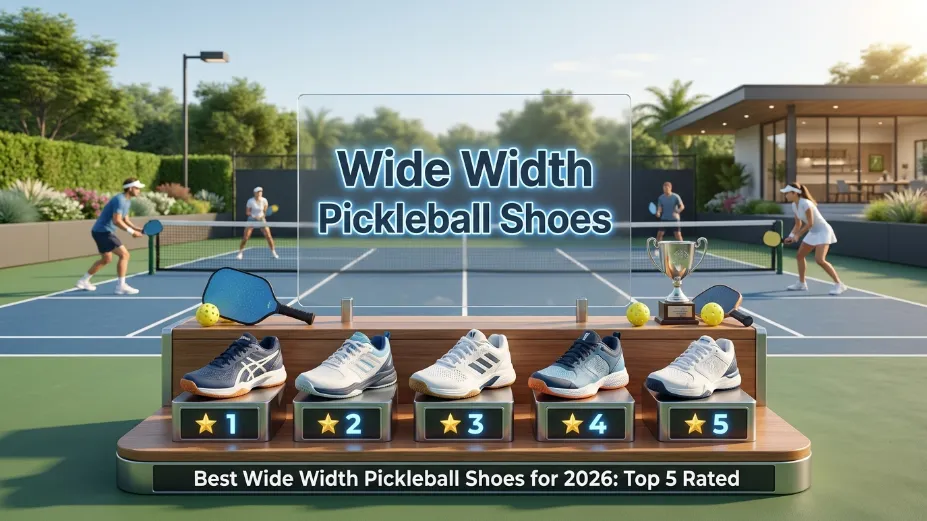
Wide toe box pickleball shoes comparison: width profile, toe box space, primary benefit, and MSRP in USD
Wide Toe Box Pickleball Shoes
Width profile · Toe box space · Primary benefit · MSRP (USD)
The Biomechanics of Wide Feet at the Kitchen Line
Pickleball is a game of millimeters, especially when you are engaged in a dink battle at the non-volley zone. Unlike running, which is a linear sport, pickleball demands that 50% of your movements be lateral. For players with wide feet, a standard “D” width shoe causes the foot to overhang the midsole. This creates a “rolling” sensation that significantly increases the risk of acute ankle sprains.
The wide width pickleball shoes on the market today are designed to solve this by providing a wider “outrigger” or base. This ensures that when you split-step, your weight is distributed across a broader surface area, providing the stability needed for aggressive pivots. If your feet are improperly contained, you lose the “court feel” necessary to react to speed-ups.
Decoding the Label: 2E vs. Wide Toe Box
One of the biggest frustrations for US players is the industry’s lack of standardized sizing. You might purchase 2E pickleball shoes only to find that the heel and midfoot are wide, but the front of the shoe tapers into a sharp point. This is the difference between “High Volume” and “Anatomical Shape.”
For many players, the search for wide toe box court shoes is more important than the “2E” label itself. If you have “duck feet” (narrow heels but wide forefeet), buying a 2E shoe might result in annoying heel slip, whereas a standard shoe with an anatomical toe box would fit perfectly.
Case Study: The Wilson Rush Pro Ace Sizing Mystery
Wilson is a titan in the industry, and for those looking for the best Wilson shoes for wide feet, the Rush Pro Ace is the definitive answer. However, there is a “hidden” manufacturing gap that major review sites often ignore: manufacturing inconsistency between regions.
The Vietnam vs. Cambodia Discrepancy
Deep dives into user reports and Reddit communities have revealed that Wilson Rush Pro Ace sizing can vary depending on where the shoe was manufactured.
When shopping for the best Wilson shoes for wide feet, always check the label inside the tongue. If you find your toes going numb, you likely have the “Comfort Fit” version rather than the true “Wide” variant. Despite this, the Rush Pro Ace remains a top contender due to its 4D Support Chassis, which manages supination—a common issue for wide-footed players who tend to put heavy pressure on the outside of their feet.
Head-to-Head: K-Swiss Hypercourt Express 2 vs. Wilson Rush Pro Ace
This is the most common comparison requested by US pickleball enthusiasts. Both are marketed as “comfortable” and “wide,” but they serve different foot profiles.
K-Swiss Hypercourt Express 2 (2E)
Wilson Rush Pro Ace
If you prioritize a locked-in, athletic feel, go with Wilson. If you want to feel like you are playing in slippers that happen to have a court sole, K-Swiss is the winner.
The Bunion-Friendly Solution: Material Science
If you are searching for comfortable pickleball shoes for bunions, the material of the upper is more important than the width of the sole. Many high-stability shoes use “TPU Cages” or plastic overlays to prevent the shoe from stretching. For a bunion sufferer, this is a recipe for disaster. The plastic will not give, leading to inflammation and sharp pain during lateral lunges.
We recommend looking for shoes with engineered mesh uppers. The skechers-viper-court-pro-pickleball-shoes are an industry leader here. Skechers uses a flexible mesh that allows the bunion to “poke out” slightly without the material digging into the bone. Additionally, the Babolat SFX3/SFX4 line features “Active Flexion” technology, which reduces pressure points specifically in the forefoot area.
Managing Performance Gaps: Heel Slip and Durability
A common problem with 2E pickleball shoes is that once you get the width you need in the front, the heel becomes too loose. This leads to “Heel Slip,” which can cause painful blisters on your Achilles tendon.
The “Heel Lock” Lacing Hack
To solve this, use the extra eyelet at the top of your shoe to create a “Runner’s Knot” or “Heel Lock.” This allows you to keep the forefoot laces loose (to accommodate your wide feet or bunions) while cranking the top tight to anchor your heel into the cup. This is essential for maintaining safety during the high-speed lateral moves required in what-is-pickleball.
Outsole Warranties: The Gold Standard
Pickleball is notoriously hard on outsoles due to the “sandpaper” effect of outdoor hard courts. Many wide-width options from smaller brands lack durability. However, brands like New Balance (with the 996v6) and Selkirk offer a 6-month outsole guarantee. If you play more than three times a week, these are the most cost-effective choices, as you will likely burn through the tread in 3-4 months.
Final Recommendations for US Players
Based on our 2026 technical analysis and podiatric guidelines from the American Podiatric Medical Association (APMA), here is how to choose:
Wide Width Pickleball Shoes – FAQ
Can I use a shoe stretcher on synthetic pickleball shoes?
Yes, but with caveats. Synthetic materials (like those in most wide toe box court shoes) have a “memory” and will shrink back. To get a permanent stretch, you must use a professional stretcher along with a hair dryer to gently heat the material while it is under tension.
Why do my toes go numb in my “wide” Wilson shoes?
This is often due to the “Cambodia vs. Vietnam” issue mentioned above, or because the Wilson Rush Pro Ace sizing is actually closer to a “D+” than a true 2E. If your feet are truly wide, you may need to jump to a New Balance or K-Swiss model.
Is there a difference between 2E and a “duck foot” shape?
Absolutely. A 2E shoe is wide everywhere. A “duck foot” shape means you have a wide forefoot but a narrow heel. If you have this profile, look for shoes with a wide toe box but a standard heel cup, or use the “Heel Lock” lacing technique.
What is the best time of day to buy pickleball shoes?
Always shop after 4:00 PM. Your feet naturally swell throughout the day and during physical activity. A shoe that feels “just right” in the morning will likely cause “toe jam” and pain during a two-hour afternoon pickleball session.
Conclusion: Invest in Your Longevity
Choosing the right wide width pickleball shoes is not just about comfort—it’s about injury prevention. Whether you settle on the generous k-swiss-express-light-pickleball-shoes or the high-performance babolat-pickleball-shoes, ensure you have at least a thumb’s width of space in the toe box. Don’t let a narrow shoe be the reason your season ends early. For more tips on gear, check out our comprehensive guide on the best-shoes-for-pickleball.
By prioritizing comfortable pickleball shoes for bunions and anatomical support, you ensure that you can stay on the court for years to come. Own the kitchen line with confidence, knowing your foundation is as solid as your game.
You May Also Like