Introduction
You’ve just finished an intense match at your local court. You won 11-9, but there’s a lingering question: Did that win actually make you a better player on paper? For years, pickleball players have struggled with fragmented systems—using spreadsheets for leagues, text messages for scheduling, and guessing their skill levels. This is where the global pickleball network steps in.
Unlike basic court finders, the Global Pickleball Network (GPN) is a robust ecosystem designed to professionalize your recreational play. Whether you are a solo player looking to establish a verified handicap or an organizer trying to manage a 100-person ladder league, understanding this platform is essential in 2026. In this guide, we will dive deep into how the GPN algorithm works, how it stacks up against competitors, and how to master its tools.
What is the Global Pickleball Network?
At its core, the pickleball global network is a dual-purpose platform: it is a social network for players to find courts and opponents, and a statistical engine for tracking performance. While many users initially stumble upon it while searching for local courts, the real power lies in its organized play features.
Is There a Global Pickleball Network App?
One of the most common questions new users ask is about mobile accessibility. While you might be searching the app store for a dedicated “global pickleball network app,” GPN primarily functions as a highly responsive mobile web application. This means you can access all features—entering scores, checking ladders, and updating profiles—directly through your phone’s browser without needing a standalone download. This ensures that the platform works seamlessly across all devices, keeping various global pickleball networks connected regardless of hardware.
Free Membership vs. Premium: What Do You Need?
Before you commit, it is crucial to understand the cost structure. GPN operates on a “Freemium” model, which is generous enough for most casual players but offers specific advantages for power users.
The Free Tier
For the average player, the free version is surprisingly robust. It allows you to:
- Create a player profile.
- Find locations for pickleball open play.
- Join existing networks and leagues.
- Submit match scores (if the league allows).
The Premium Benefits
Upgrading to Premium is often a decision made by league managers or stats nerds. Premium features include an ad-free experience, advanced player statistics (like head-to-head analysis), and priority support. Occasionally, you might find a global pickleball network promo code through partner newsletters or large tournament sponsorships, which can reduce the annual cost. However, even at full price, the value for organizers running complex brackets is undeniable.
Mastering the GPN Rating System
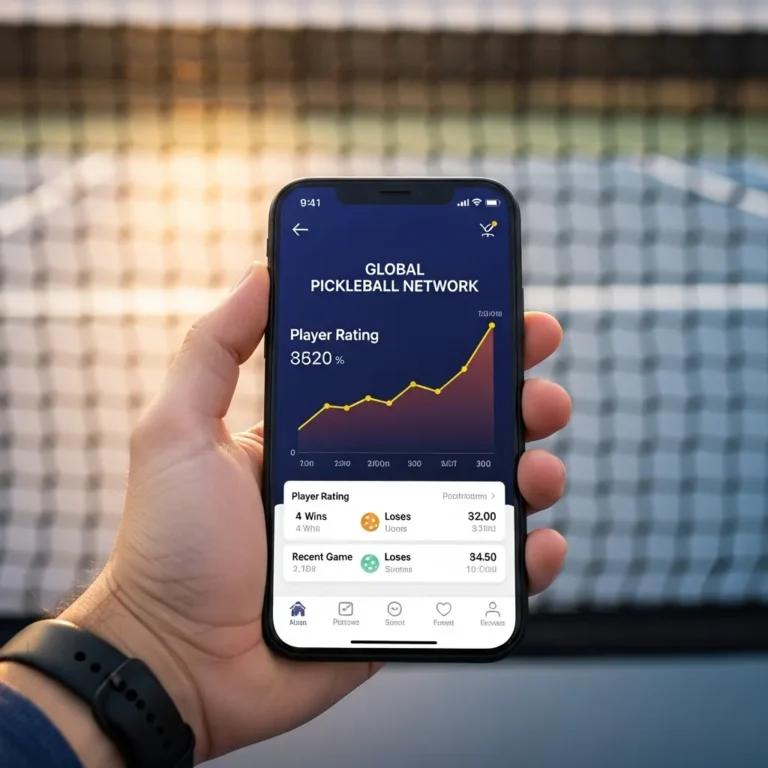
This is the most critical part of the platform. Unlike a subjective self-rating, the global pickleball network uses a proprietary algorithm to calculate your skill level. Understanding this can explain why your rating moves up or down.
Calculated Rating vs. Self-Rating
When you first join, you assign yourself a skill level (e.g., 3.5). This is your “Self-Rating.” However, once you start playing recorded matches, GPN generates a “Calculated Rating.” This number is dynamic. It analyzes who you played, their rating confidence, and the match outcome.
Crucially, the GPN algorithm focuses heavily on wins and losses relative to the opponent’s strength. Unlike some systems that might over-index on point differential, GPN prioritizes the “W.” This prevents players from running up the score on weaker opponents just to boost their decimal points.
GPN vs. DUPR vs. UTPR
Players often get confused when their GPN rating differs from their DUPR pickleball rating. Here is why discrepancies happen:
- Data Silos: A match recorded on GPN does not automatically sync to DUPR unless an organizer manually imports it.
- Algorithm Sensitivity: GPN ratings can be highly volatile initially (moving 0.5 points in a week) until the system has enough data to “stabilize” your confidence factor.
- Pool of Players: Your rating is relative to the pool you play in. If your local GPN league is very competitive, your 3.5 GPN rating might be a 4.0 elsewhere.
For a deeper understanding of how these numbers define your level, check out our guide on pickleball ratings.
Why Did My Rating Change Without Playing?
A frequent frustration involves logging in to see your rating dropped overnight, even though you haven’t touched your pickleball balls in a week. This occurs because the rating of an opponent you played previously has changed. If you beat a player who was rated 4.0, and they proceed to lose their next ten matches and drop to 3.5, the algorithm retroactively adjusts the “value” of your win against them.
Running Leagues and Tournaments
If you are an organizer, GPN offers tools that rival expensive tournament software. Whether you are running a casual round-robin or a competitive ladder, the automation here is a lifesaver.
Setting Up Ladder Leagues
Ladder leagues are notoriously difficult to manage manually. GPN automates the movement. You can set rules so that the top two players on a court move up, and the bottom two move down, automatically generating the matchups for the next week. This ensures that players are always competing against others of a similar skill level, which is fundamental to how to play pickleball effectively and enjoyably.
Ranked vs. Unranked Matches
Sometimes, you want to host a fun event that doesn’t ruin people’s stats. GPN allows organizers to toggle matches as “Unranked.” This is vital for “Beer Leagues” or beginner clinics where strictly enforcing pickleball rules and ratings might discourage new players.
Troubleshooting & FAQ
Even the best platforms have quirks. Here are solutions to the specific issues users encounter on the global pickleball network.
Merging Duplicate Profiles
It happens often: you forget your password, create a new account, and now you have two profiles splitting your match history. GPN allows for profile merging, but it usually requires admin intervention. You must contact the support team or the network administrator to fuse the data. Do not continue playing on two accounts, as this constitutes “sandbagging” and violates fair play policies.
Correcting Wrong Scores
Did you accidentally enter 11-2 instead of 11-12? Once a match is verified by the opponent, it is locked. To fix this, you cannot simply “edit” the score. You must request the network administrator to “un-verify” or delete the match so it can be re-entered correctly. Speed is key here; fix it before the rating recalculation runs overnight.
Conclusion
The global pickleball network is more than just a website; it is a digital infrastructure for the sport’s grassroots growth. While it faces stiff competition from other rating agencies, its integrated approach to league management makes it indispensable for local clubs.
Whether you are chasing that elusive 5.0 rating or just trying to organize a Friday night mixer, GPN provides the tools to make it happen. So, grab your paddle, claim your profile, and start making your matches count.
Ready to start your own network? Visit the official Global Pickleball Network to register your court today.
You May Also Like