Public parks across the United States are experiencing an unprecedented athletic shift, driven by a paddle sport that has captured millions of players overnight. Unlocking how to play pickleball for beginners is the ultimate gateway to joining this cultural phenomenon with absolute confidence from your very first rally. Whether you are mapping out a How to play pickleball for beginners step by step progression, learning how to play pickleball doubles for beginners, or even figuring out how to play pickleball for beginners at home in your driveway, mastering the foundational mechanics separates casual players from lifelong enthusiasts. Scroll down to explore the essential rules, court guidelines, and strategic breakdown designed specifically for the American player.
Pickleball Rules & Court Guide
Verified Regulations · Official rules & beginner tips · 2026
How to play pickleball for beginners step by step
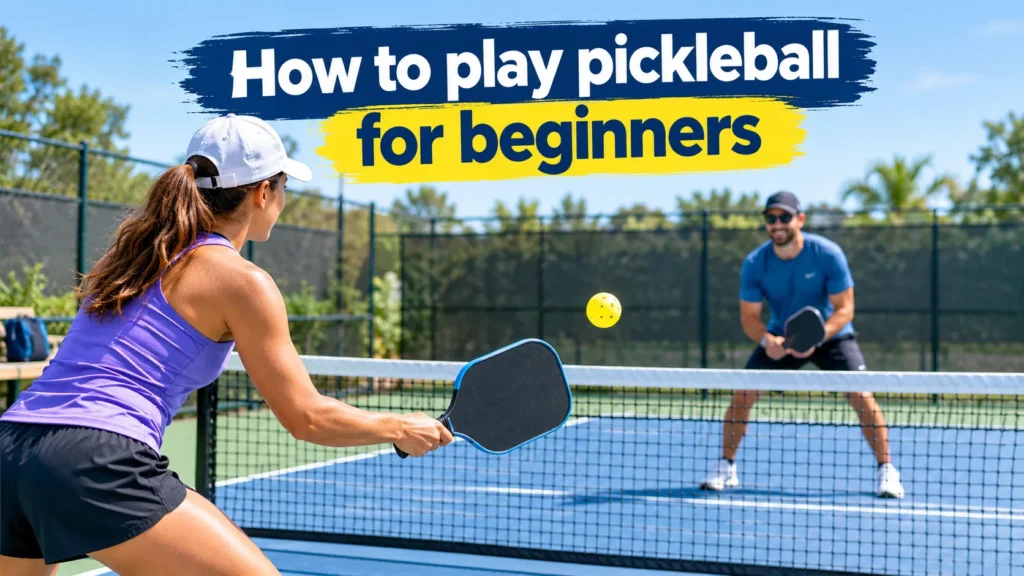
The core methodology behind learning How to play pickleball for beginners step by step centers upon breaking the game down into digestible, mechanical phases. While legacy racquet sports rely heavily on overpowering the opponent, this modern framework bridges strategic positioning with rigorous lateral constraints.
- The Serving Phase: Utilizing the updated 2026 parameters, the serve must be executed diagonally across the net, landing beyond the opponent’s Kitchen line. The drop serve remains the most reliable entry point; simply drop the ball from a natural height without adding spin, let it bounce, and strike it smoothly over the net.
- The Return and the Two-Bounce Mechanic: Because the receiving team must let the serve bounce, and the serving team must let the return bounce, the initial stage of every rally demands patience. Deep, high-arching returns push the serving team backward, buying the receiving team precious time to sprint to the edge of the Non-Volley Zone.
- Mastering the Kitchen Dynamics: The 7-foot zone dictates the entire flow of the game. Hitting a volley (striking the ball out of the air) while any part of your foot touches this zone is an immediate fault. Furthermore, momentum has no timer; if your forward motion carries you into the Kitchen after a legal volley, you still lose the point. Reviewing the complete pickleball kitchen rules is critical for avoiding these common beginner penalties.
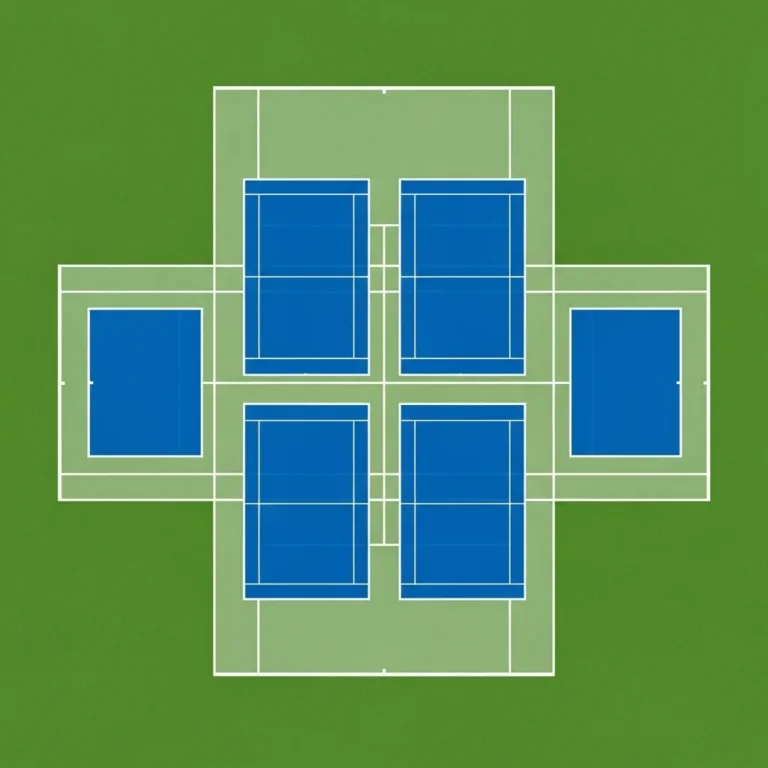
The spatial awareness required balances ultra-precise dink shots with aggressive baseline drives. For players analyzing their movement across the court, evaluating the dedicated structural dimensions outlined in our analytical look at pickleball court dimensions provides clear contextual background before stepping onto the concrete.
Decoding the Court: How to play pickleball doubles for beginners
Navigating the team dynamic requires a clear understanding of the mechanical differences between singles positioning and the complex collaborative layout of doubles. Mastering how to play pickleball doubles for beginners dictates both your offensive capabilities and your defensive rotation on court.
The 0-0-2 Scoring Enigma
The traditional side-out scoring architecture focuses extensively on three distinct numbers: the serving team’s score, the receiving team’s score, and the server number (1 or 2). At the very start of a match, the serving team only gets one fault before the ball turns over, which is why the opening call is always “0-0-2.” This unique framework ensures a balanced start and prevents the first serving team from gaining an insurmountable early lead. Grasping the nuances of pickleball scoring is essential for maintaining tournament-level etiquette.
Positioning and the “No Man’s Land” Trap
The extreme tactical disadvantage of standing in the transition zone—the space between the baseline and the Kitchen line—introduces an undeniable vulnerability, pushing players to face fast balls directly at their feet. The optimal strategy dictates that both partners must advance to the Kitchen line together in a synchronized wall. When caught in transition, executing a soft, unattackable third-shot drop is the superior choice, allowing you and your partner to safely move forward and establish absolute dominance at the net.
If you are a competitive beginner seeking to match advanced tactical dynamics with a flawless understanding of the rulebook, exploring the definitive structural mechanics detailed in our guide to pickleball rules will ensure your entire game functions in perfect technical alignment.
Head-to-Head: Fiberglass vs. Carbon Fiber Beginner Paddles
For players trying to choose between an entry-level composite surface and premium woven textures, the choice comes down to a fundamental split in design philosophy. Both models command significant placement across US retail outlets but approach court performance from completely opposing angles.
The primary differences in on-court performance are detailed in the comparison matrix below:
- Power and Pop: Fiberglass surfaces win decisively on instant energy return, delivering a plush, energetic feel that effortlessly propels the ball deep into the opponent’s court. Carbon fiber features a remarkably stiff, heavy-duty structural layout that absorbs energy, requiring players to generate their own power through superior mechanics.
- Control and Spin Generation: Carbon fiber dominates the control category through its rigid, highly textured woven sidewall, which grips the plastic ball completely for massive topspin. The smoother composite system used by fiberglass provides excellent fluid pop but yields slightly more unpredictable trajectories under extreme, high-velocity drives.
- Lifespan and Sweet Spot: The dense carbon reinforcements easily deliver prolonged structural integrity under harsh competitive conditions, featuring a massive sweet spot. The lighter, highly responsive face of a fiberglass model generally exhibits a smaller sweet spot, requiring more precise contact to maintain ball trajectory.
For a complete, comprehensive overview of the broad variety of choices currently occupying the competitive landscape, take a moment to consult the official USA Pickleball equipment standards alongside our independent evaluation of the difference between indoor and outdoor pickleballs to select your ideal structural fit.
How to play pickleball for beginners at home: Wall Drills and Mechanics
Building elite hand-eye coordination does not strictly require access to a public court. Discovering How to play pickleball for beginners at home relies on transforming a standard garage wall or driveway into a high-repetition training environment, focusing strictly on muscle memory and paddle face angle control.
Using painter’s tape, mark a horizontal line at 34 inches on a solid wall to simulate the center net height, and map out a 7-foot marker on the floor to represent the Kitchen. Executing continuous rapid-fire wall volleys forces players to keep their paddle elevated above chest level, training the brain to eliminate unnecessary backswings. Transitioning to soft dink shots against the wall perfects the gentle, lifting motion required for unattackable drops, ensuring you arrive at your local park mechanically prepared to dominate the transition zone.
Frequently Asked Questions (FAQ)
Can I legally hit the ball with two hands on the paddle during a match?
Yes. The official rules permit utilizing a two-handed grip, commonly deployed for stable backhand drives or defensive resets, provided the paddle meets all size and dimension regulations.
What is the standard solution for the loud acoustic pop in residential neighborhoods?
The sharp 1,000 Hz sound profile of traditional strikes has led to zoning disputes. The industry solution involves USA Pickleball’s new “Quiet Category” certification, which utilizes specialized acoustic-dampening core materials to reduce the decibel output by over 50 percent.
Does the ball have to bounce in the Kitchen on a serve to be considered legal?
No. A legal serve must completely clear the entire Non-Volley Zone, including the line itself. If the served ball clips the net and lands inside the Kitchen, it is immediately ruled a fault against the serving team.