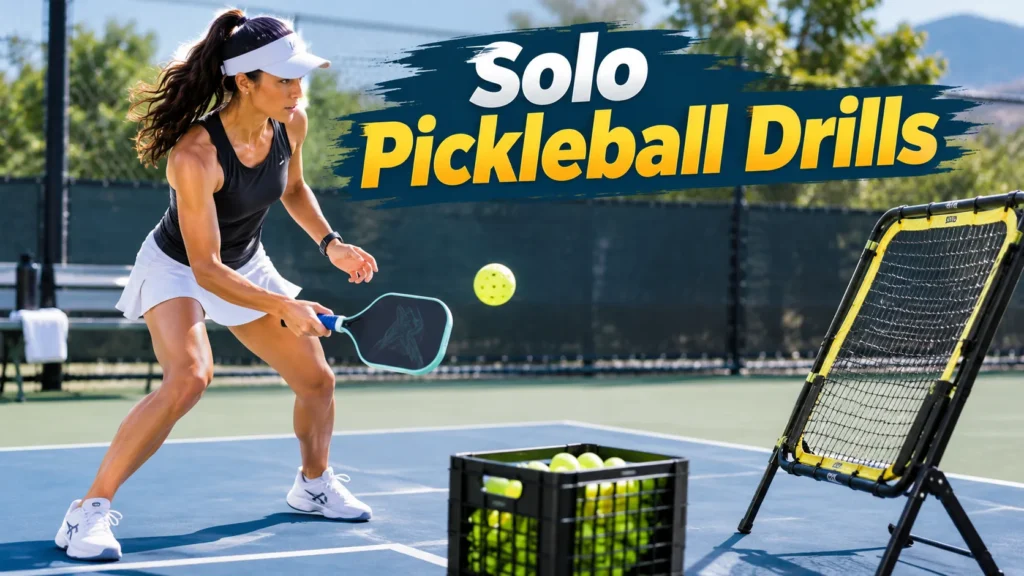
The fastest way to elevate your game isn’t waiting for an open court or a drilling partner; it is embracing the solitary grind. Elite players know that solo pickleball drills bridge the gap between intermediate consistency and tournament-level mastery. By incorporating structured pickleball solo drills and targeted pickleball solo wall drills into your weekly routine—drawing from proven frameworks like comprehensive 31 solo pickleball drills guides—you build the bulletproof muscle memory required to outlast any opponent. Your breakthrough starts the moment you face the wall alone, turning every solo session into a masterclass of precision and relentless performance enhancement.
Best Solo Pickleball Drills
Verified setup & training data (2026) · By difficulty level
Solo Pickleball Drills : The Missing Angles
The engineering core of effective pickleball solo wall drills centers upon non-traditional spatial awareness. While generic advice suggests simply hitting against a backboard, top-tier frameworks—like those detailed in elite 31 solo pickleball drills circuits—bridge physical court dimensions with the rigorous lateral constraints of an indoor practice space.
- The Net Matrix: Utilizing official dimensions set by USA Pickleball, you must tape a horizontal line exactly 34 inches high to mimic the center net constraint. Striking above this line, while keeping the ball below a 50-inch upper boundary, ensures you are practicing unattackable trajectories rather than feeding high pop-ups.
- The NVZ Boundary: Because wall rebound physics create artificial acceleration, mapping a 7-foot Non-Volley Zone (Kitchen) line on your floor is non-negotiable. This visual perimeter forces honest footwork, preventing you from creeping forward and developing a faulty split-step rhythm.
- Rebound Mechanics: The concrete formulation of a standard garage wall possesses a much higher coefficient of restitution than a human opponent. This means the ball returns faster, actively compressing your reaction time and reprogramming your central nervous system to handle high-velocity firefights effortlessly.
The upper echelon of solo practice balances this high-speed wall work with precise shadow drilling. By executing dry swings without a ball, you isolate the kinetic chain, ensuring your paddle face remains neutral. For players analyzing options to structure these routines, evaluating dedicated guides on pickleball drills provides clear contextual background before stepping onto the court.
Translating Mechanics: Deciding on your Pickleball Solo Drills Strategy
Navigating your weekly routine requires a clear understanding of the mechanical differences between chaotic live play and highly controlled pickleball drills solo. Selecting your specific drill focus dictates both your biomechanical longevity and your kinetic velocity on the actual court.
The Kinetic Chain Variance
The pickleball solo drills architecture focuses extensively on volume and physical discipline. Practicing the pendulum drop against a wall resists structural breakdown over months of intense court play. Conversely, random open play employs an unpredictable shot sequence that forces speed but gives players significantly less time to correct a flared elbow or an overactive wrist during heavy backhand sequences.
Repetition and Spatial Discrepancies
The extreme density of wall reps introduces an undeniable efficiency advantage, pushing a standard 15-minute session to roughly 400 clean contacts. Open play drops this volume noticeably, providing a disjointed sensation for players trying to lock in a new grip. This volume variance reflects clearly in match performance, where players who drill independently command a higher reset success rate.
If you are a high-level competitor seeking to match advanced footwork dynamics with elite-tier control tools, exploring the definitive structural mechanics detailed in our guide to 3rd shot pickleball will ensure your entire physical setup functions in perfect technical alignment.
Head-to-Head: Sweet Spot Training Paddles vs. Standard Paddles in Wall Drills
For players trying to choose between miniaturized training tools and standard equipment during their pickleball solo wall drills, the choice comes down to a fundamental split in design philosophy. Both options command top-tier placement across US practice routines but approach biomechanical stability from completely opposing angles.
The primary differences in on-court performance are detailed in the comparison matrix below:
- Precision and Visual Tracking: The sweet spot trainer wins decisively on forcing focus, delivering immediate, harsh feedback if you miss the dead center. A standard paddle features a remarkably forgiving structural layout that allows sloppy footwork to go unpunished during casual dinking.
- Weight Lock-down and Biomechanics: A standard paddle dominates the swing-weight category, locking your shoulder rotation into its natural rhythm. To match this, sweet spot trainers require the addition of dense tungsten tape around the perimeter; otherwise, the lighter frame yields slightly more under extreme, high-velocity wrist extensions, throwing off your natural timing.
- Acoustic and Environment Value: Using standard hard paddles indoors easily delivers noise complaints under residential conditions. Many solo practitioners pair their trainers with specialized quiet foam balls (like the Ninja Ball), creating an ultra-light, stealthy profile that allows for late-night use without acoustic disruption.
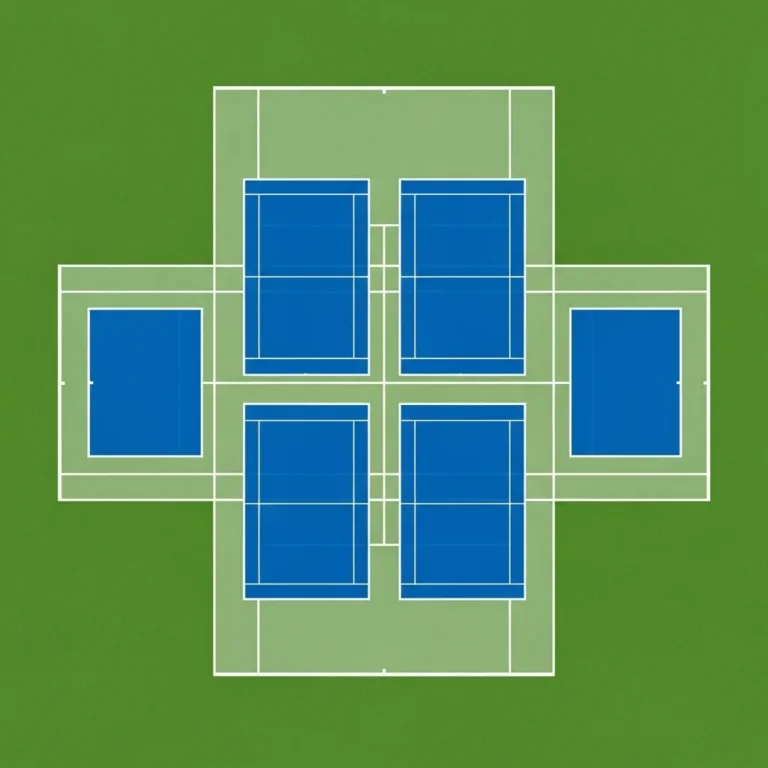
For a complete, comprehensive overview of the broad variety of spatial constraints currently occupying the competitive landscape across US courts, take a moment to read our detailed breakdown of pickleball court dimensions alongside our independent evaluation on how to play pickleball singles to select your ideal structural fit.
Frequently Asked Questions (FAQ)
Do I need a large space to perform the 31 solo pickleball drills effectively?
No. While official court dimensions require significant acreage, most solo wall routines only demand a flat 10-foot wide wall and about 10 to 12 feet of backing distance. Driveways, basements, and standard garages are perfectly engineered for this type of compact biomechanical repetition.
Can I safely utilize standard outdoor balls against indoor drywall?
It is highly discouraged. The intense kinetic impact of a standard seamless plastic ball will damage delicate drywall and generate deafening acoustic frequencies. Foam-based, USAP-approved quiet balls are recommended to protect the physical perimeter and maintain residential peace.
How does wall rebound speed impact my reaction time compared to generic open play?
The inclusion of a dense concrete backboard raises the coefficient of restitution slightly over a standard paddle face. While this adds unmatched rebound velocity, it trains your central nervous system to process high-speed firefights much faster, making live opponents feel like they are playing in slow motion.