Imagine standing on the court, ball in hand, feeling the adrenaline of your first serve, only to realize your paddle feels like a heavy piece of plywood or a hollow toy. The best beginner pickleball paddles can be the difference between falling in love with the game and quitting due to frustration or wrist pain. As the sport explodes in popularity in 2026, the market is flooded with options, but choosing the right tool is about more than just a pretty design; it’s about finding the perfect balance of control, weight, and technology.
Whether you are a complete novice or a seasoned athlete transitioning from the tennis courts, understanding pickleball paddles for beginners is your first step toward mastery. In this guide, we will break down everything from core materials to the “sweet spot,” ensuring your first investment is one that lasts. Before diving into the technicalities, if you are still wondering what is pickleball exactly, we recommend starting with our foundational guide.
The Price Spectrum: Is a $150 Paddle Worth It for a Beginner?
One of the most common questions new players ask is whether they should spend $50 or $150. For best pickleball paddles for beginners, the price usually reflects the internal core and surface grit.
- The Budget Tier ($40 – $70): Usually features a honeycomb polymer core but might have a cheaper fiberglass face. Great for casual weekend play.
- The Mid-Tier ($80 – $130): This is the “sweet spot” for serious beginners. You get better vibration dampening, which helps prevent pickleball injuries like tennis elbow.
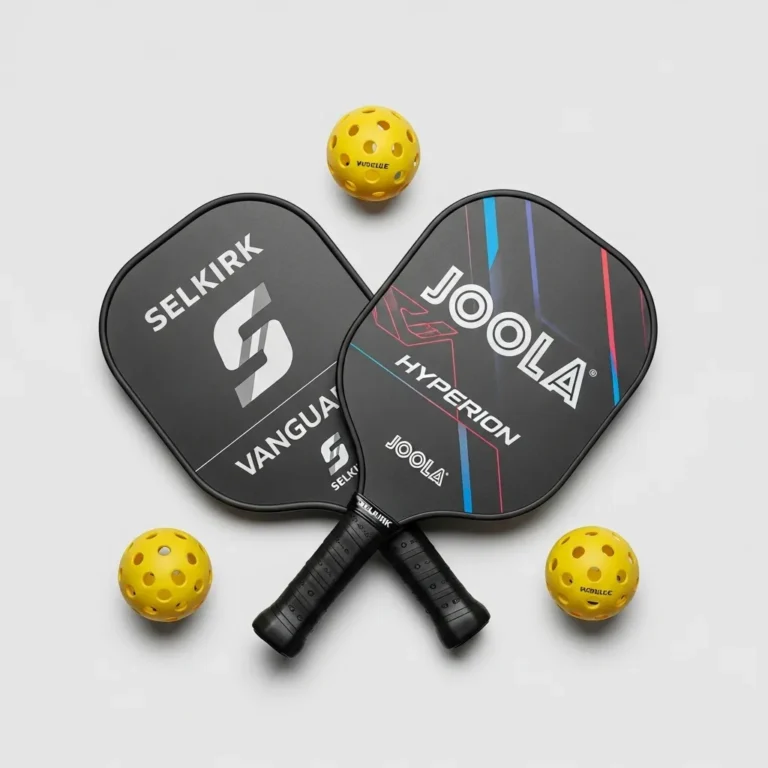
- The Premium Tier ($150+): While tempting, many of these are designed for pros and have a smaller sweet spot. However, brands like Selkirk and JOOLA now offer beginner-friendly premium lines that are worth the investment if you plan to play 3+ times a week.
Avoid the trap of buying a wooden pickleball paddle; they are heavy, lack “pop,” and are largely considered obsolete in modern play.
Top Brand Reviews: Honest Ratings for 2026
1. Selkirk (SLK Line) – Rating: 9.5/10
Selkirk is the “Apple” of pickleball. Their SLK Latitude and SLK Nexus models are specifically engineered for the best beginner pickleball paddles category.
Pros: Incredible warranty, huge sweet spot, and very stylish.
Cons: Slightly higher price point than “no-name” Amazon brands.
Verdict: Best for the beginner who wants a paddle that will still be relevant at an intermediate level.
2. JOOLA (Essential Series) – Rating: 9/10
Since Ben Johns joined JOOLA, they have become a powerhouse. Their beginner series offers a “pro feel” at a fraction of the cost.
Pros: Excellent grip texture for learning spin.
Cons: The handle can feel a bit thin for those with very large hands.
Verdict: Perfect for younger players or those with a background in table tennis.
3. Friday Pickleball – Rating: 8.5/10
A disruptor brand in 2026, Friday offers high-end carbon fiber technology at beginner prices.
Pros: Exceptional value; often sold in 2-for-1 deals.
Cons: Less “forgiving” than a standard wide-body paddle.
Verdict: The best choice for the “aggressive” beginner who wants to hit hard from day one.
Weight and Maneuverability: The “Goldilocks” Zone
When searching for pickleball paddles for beginners, weight is the most critical spec. Most experts recommend a Midweight paddle (7.8 to 8.2 ounces).
- Lightweight (< 7.5 oz): Easy to swing but requires more arm strength to generate power, which can lead to strain.
- Heavyweight (> 8.5 oz): Great for power, but slow at the “kitchen” line and can aggravate the wrist.
A midweight paddle offers enough mass to absorb the ball’s energy while remaining fast enough for quick volleys.
The Anatomy of Your Paddle: Cores and Surfaces
Don’t get blinded by the graphics. Focus on what’s inside. Most best pickleball paddles for beginners use a Polymer Honeycomb Core. This plastic blend is durable and provides a quiet, consistent bounce. For the surface, Carbon Fiber is now becoming affordable for beginners, offering superior “feel” and control compared to basic fiberglass.
Grip Size and Handle Length
Choosing the wrong grip is a fast track to discomfort. You should check out our detailed guide on pickleball grips to learn the “index finger rule.”
Handle Length: If you are coming from tennis, look for a handle longer than 5 inches to accommodate a two-handed backhand. If not, a shorter handle provides a larger hitting surface (face), which is more forgiving for new players.
Transition Guide: From Other Sports to Pickleball
Your previous sporting life dictates your best pickleball paddles for beginners choice:
- Tennis Players: You’ll want an Elongated Paddle. It mimics the reach and swing weight of a tennis racquet.
- Ping Pong Players: Look for a Lightweight, Circular Paddle. You likely rely on wrist flicking, and a heavy paddle will hinder your natural style.
- No Sports Background: Stick to a Wide-Body Paddle. It has the largest sweet spot, making it easier to actually hit the ball.
If you are still confused about the selection process, read our expert tips on how to pick a pickleball paddle.
Longevity: When Should You Upgrade?
A quality beginner paddle should last you 12 to 18 months of regular play. You’ll know it’s time to upgrade when:
- The “pop” feels dead (core compression).
- You find yourself wanting more spin to keep the ball in.
- You start competing in tournaments that require specific USA Pickleball official standards.
Frequently Asked Questions (FAQ)
1. Is there a real difference between a $50 and $150 beginner paddle?
Yes. A $150 paddle usually features Toray T700 Carbon Fiber and better vibration dampening. While a $50 paddle is fine for learning, the $150 option protects your joints and offers more “forgiveness” on bad hits.
2. Should I start with a wood paddle?
No. Unless you are playing a one-time backyard game, avoid wood. They are heavy and lack the technology needed to learn the “soft game” of pickleball.
3. How does weight affect “Pickleball Elbow”?
Paddles that are too heavy strain the tendons, while paddles that are too light force you to swing harder. A midweight (8.0 oz) paddle is the safest bet for new players.
4. Does the surface texture actually help a beginner?
Absolutely. A textured surface helps the ball “grip” the paddle, allowing you to hit lobs and drives that stay inside the court lines more consistently.
5. How do I know if my paddle is tournament legal?
Look for the “USA Pickleball Approved” seal printed on the face of the paddle near the handle. This ensures it meets all surface and bounce regulations.
Final Thoughts
The journey to finding the best beginner pickleball paddles doesn’t have to be overwhelming. Focus on a midweight polymer core paddle from a reputable brand like Selkirk, JOOLA, or Friday. By prioritizing control and comfort over raw power, you’ll develop better habits and enjoy the game for years to come. Now that you’ve got the gear, it’s time to hit the court and start dinking!