You’re standing at the kitchen line, your heart racing as the ball zips across the net. The score is tied at 10-10, and suddenly, that basic question—how many points do u need to win in pickleball—feels like a high-stakes psychological puzzle. In most sports, reaching the target number means the game is over. In pickleball, however, reaching 11 is just the beginning of a mental battle. Whether you are navigating a local municipal league in Irvine or watching the PPA Tour, understanding the “why” behind the numbers is what separates a novice from a seasoned player.
This guide dives deep into the architecture of pickleball scoring, covering everything from the standard win-by-2 mandate to the obscure “Hard Cap” rules and the 3rd Shot Rule for score correction that most major sites completely ignore. If you’re looking to master how to play pickleball at a competitive level, you need to know more than just the final number.
The Golden Rule: 11 Points and the Margin of Victory
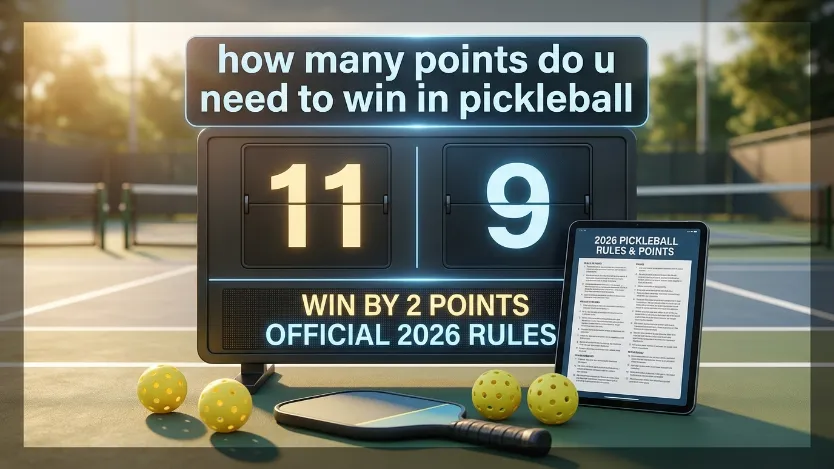
In standard recreational and USA Pickleball sanctioned play, a game is typically played to 11 points. However, the most critical nuance is the win-by-2 margin. This means if the score reaches 10-10, the game does not end at 11; it continues until one side gains a two-point advantage (e.g., 12-10, 15-13, or even 20-18).
- Standard Game: Played to 11, win by 2.
- Tournament Format: Often played to 15 or 21, win by 2.
- Best of Three: Most matches consist of a best-of-three series to determine the ultimate winner.
This rule ensures that a single lucky shot doesn’t decide a closely contested match. For those diving into pickleball scoring, it’s important to remember that the “infinite game” potential is real—as long as the teams remain within one point of each other, the play continues.
Traditional Side-Out Scoring: The “At Bat” Philosophy
One of the biggest hurdles for beginners is the side-out scoring system. Unlike tennis, where either player can score at any time, traditional pickleball only allows the serving team to put points on the board. Think of it like being “at bat” in baseball; if you win the rally but you weren’t the one serving, you don’t get a point—you simply earn the right to serve (or move closer to it).
The “0-0-2” Paradox
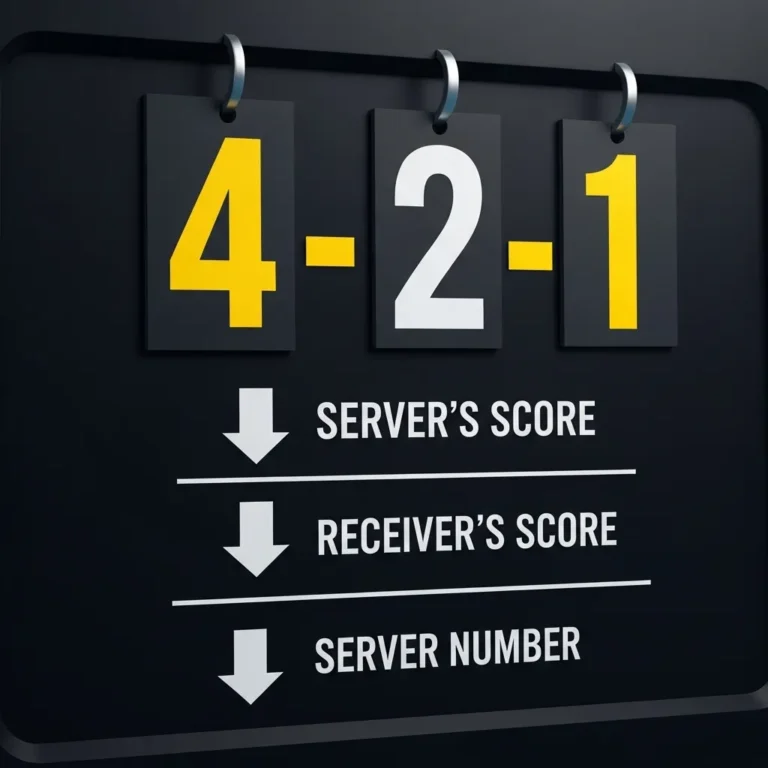
Why does every doubles game start with the score “Zero-Zero-Two”? This is the First Server Exception. To prevent the starting team from having an unfair statistical advantage, only one player from the initial serving team is allowed to serve. Once they lose the rally, the serve goes to the opponents. The “2” indicates that the team is already on its “second” service turn for that rotation only.
The Missing Angles: What Other Sites Won’t Tell You
While most articles give you the basic 11-point rule, they often fail to address the specific “on-court” disputes that happen in real American pickleball communities. Here are the technical gaps identified by professional players:
1. The 3rd Shot Correction Rule
Did the server call the wrong score? According to the 3rd shot pickleball regulations, you have a very limited window to fix it. Any player can stop play to correct an incorrect score call *before* the third shot of the rally is hit. If you wait until after the 3rd shot, the score stands as called, and stopping play to argue will actually result in a fault against you.
2. The “Points Against” Tie-Breaker
In a Round Robin tournament, teams often end up with the same number of match wins. Most sites say the tie is broken by head-to-head results. However, the deeper truth is that many US tournaments use cumulative points scored against as a secondary tie-breaker. This means fighting for every single point even when you are losing 10-0 is vital—it could be the difference between advancing to the playoffs or going home.
3. The “Skunk Rule” Etiquette
The Skunk Rule (or mercy rule) is an unofficial but widely respected “House Rule” in the US. If a team leads 7-0 or 11-0 in recreational play, the game may be ended early to allow for court rotation. This is common in busy public parks where a 20-minute wait for a court is the norm.
Rally Scoring and the MLP Evolution (2024-2025)
The world of professional pickleball is currently in a state of flux. Major League Pickleball (MLP) popularized rally scoring, where a point is awarded at the end of every single rally, regardless of who served. This makes games faster and more predictable for television broadcasts.
However, for the 2025 season, the PPA Tour and MLP have seen a shift back toward traditional scoring for doubles, while keeping rally scoring for tie-breakers like the DreamBreaker.
- The Freeze Rule: In rally scoring, when a team reaches 14 (in a game to 15) or 20 (in a game to 21), their score “freezes.” They can then only win the final point on their own serve. This prevents a game from ending on a service error by the opponent.
- Fixed Positions: Rally scoring often eliminates the need for players to switch sides of the court, simplifying the pickleball kitchen rules regarding positioning.
Municipal “House Rules”: When 11 Isn’t Enough
In many US cities, the sheer popularity of the sport has led to modified scoring to ensure “court churn.” If you play in a league in places like Minneapolis or Charlotte, you might encounter the Hard Cap.
A “Hard Cap” means the game ends exactly at a certain number, such as 13 or 15, regardless of the two-point margin. For example, if a game is “11 with a cap at 13,” and the score hits 12-12, the very next point wins. This is a crucial distinction for players who are used to the “infinite” nature of sanctioned rules.
Technical Faults: How You Lose Points Without Noticing
Knowing how many points do u need to win in pickleball is useless if you are giving points away through technicalities. Beyond the ball hitting the net, here are the USAP-mandated faults that often cause scoring disputes:
- Service Motion: The paddle must move in an upward arc and contact must be below the waist. Starting in 2026, these rules will be applied even more strictly in refereed matches.
- The “Nasty Nelson”: This is a legal but controversial move where the server intentionally hits the opponent standing at the kitchen with the ball before it bounces. It results in an immediate point for the server.
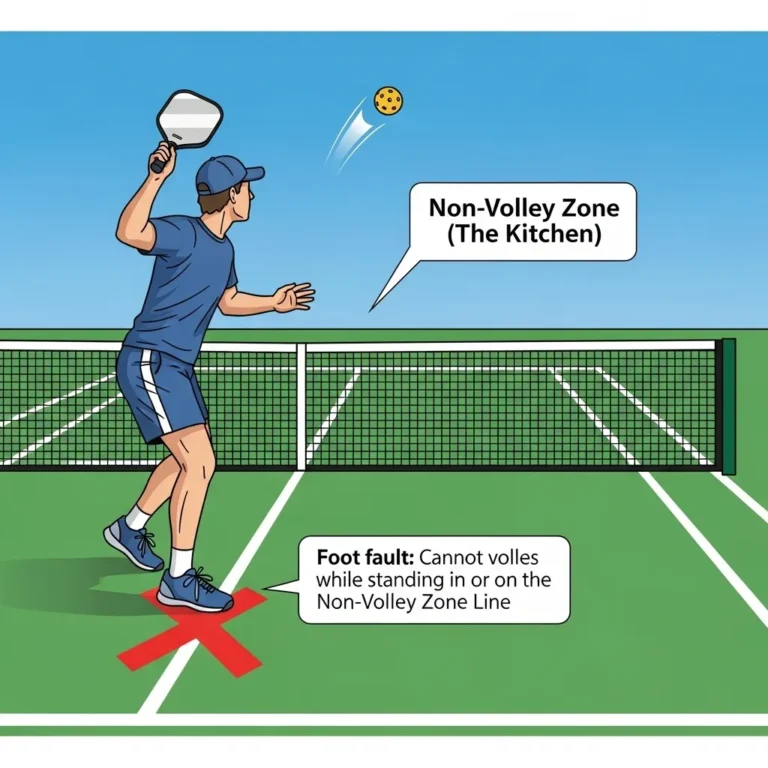
- Kitchen Momentum: You can lose a point even *after* the rally is technically over if your momentum carries you into the non-volley zone after a volley.
To ensure your equipment is not the cause of a forfeit, always check the USA Pickleball approved paddle list before entering a sanctioned event.
Frequently Asked Questions
Everything you need to know about pickleball scoring — from side-out rules to rally scoring and more.
01
Why is the first server of the game called “Server 2”?
This is to offset the advantage of serving first. Only one player on the starting team gets to serve in the first rotation, so they are designated as the second server to signal that the next loss results in a “side-out.”
02
Can a pickleball game end in a tie?
No. Standard rules require a win-by-2 margin. However, some timed league formats may allow a tie or use a Sudden Death rally to determine a winner if the clock expires.
03
What happens if I forget the score?
Use the Even/Odd side logic. If you started the game on the right side and your team’s score is an even number (0, 2, 4…), you should be standing on the right side of the court. If the score is odd, you should be on the left.
04
Is rally scoring becoming the new official standard?
Not yet. As of the Official USA Pickleball Rulebook, rally scoring is a provisional option for tournament directors, but traditional side-out scoring remains the requirement for “Golden Ticket” and National Championship events.
05
How many points are needed in “Skinny Singles”?
Skinny singles follows the same 11-point, win-by-2 rule, but you only use half the court width. It’s an excellent way to practice placement without the physical demand of full-court singles.
Conclusion: Strategy Over Numbers
Understanding how many points do u need to win in pickleball is about more than just counting to 11. It’s about recognizing the shifting tides of momentum, the nuances of the 3rd shot rule, and the etiquette of the American public court system. Whether you are aiming for a DUPR rating or just looking to win a “friendly” match at your local club, mastering these rules gives you a competitive edge that no amount of power-hitting can replace. Keep your margin high, stay out of the kitchen, and always call your score loud and clear.