Head Pickleball Paddles
You know the logo. It has been emblazoned on the strings of tennis legends like Novak Djokovic and Andre Agassi for decades, symbolizing Austrian engineering precision. But how does that pedigree translate when you trade the clay of Roland Garros for the hard court of the pickleball kitchen? For many athletes, the transition is tricky, but if you are looking for equipment that prioritizes ergonomics and “feel” over flashy marketing, head pickleball paddles might just be the industry’s best-kept secret.
While boutique pickleball brands pop up daily, Head has quietly applied decades of kinetic science to their pickleball lineup. For players asking if a tennis giant can really understand the nuances of the soft game, the answer is a resounding yes. However, with a confusing array of options ranging from the entry-level Head Radical Elite pickleball paddle to the tour-ready Gravity models, choosing the right tool is essential.
In this comprehensive guide, we dive deep into the technology, compare the specific models, and answer the niche questions that most reviews ignore. Whether you are a banger or a dinker, here is why head paddles pickleball veterans swear by are worth your attention.
The “Head” Difference: Why Tennis Tech Matters in Pickleball
Head entered the pickleball market with a distinct advantage: they already mastered the science of the handle. One of the biggest complaints from players coming from a pickleball vs tennis background is that standard honeycomb paddles feel “blocky” or foreign in the hand. Head solved this by importing their proprietary racquet technology.
The Pallet Handle System vs. Standard Honeycomb
Most pickleball paddles are cut from a single sheet of honeycomb core, resulting in a handle that is essentially a rectangular block with two pieces of foam glued to the sides. It works, but it lacks refinement.
In contrast, Head utilizes their famous Pallet Handle System. This involves a distinct pallet shape that mimics a real tennis racquet handle. For players who use a Continental grip for dinking and switch to an Eastern grip for drives, this ergonomic difference is night and day. It allows for fluid grip changes and better proprioception. If you are struggling with tennis elbow, the vibration dampening of this system—combined with the right pickleball grips—can significantly reduce arm strain.
The Hybrid Hitting Surface
While many competitors are racing to produce “raw carbon fiber” paddles, Head has stuck to a proprietary “Hybrid Hitting Surface.” This is a specially engineered blend of graphite and composite fibers. The graphite provides the control and touch needed for the soft game, while the composite fibers offer the “pop” needed to put away high balls. This results in a unique feel that is often described as “crisp but dampened,” avoiding the hollow sound of cheaper paddles.
The Three Pillars: Understanding Head’s Paddle Lines
Head categorizes their paddles into three distinct silos based on playstyle. Understanding these will save you time and money. Whether you are eyeing the budget-friendly Head Radical Elite pickleball paddle or the pro-level Gravity, it starts with the shape.
1. The Gravity Series: The Sweet Spot King
If you live for the soft game, the Gravity series is your weapon of choice. These paddles are immediately recognizable by their massive “flip” cosmetic design (different colors on each side) and a wider, shorter shape.
- Best For: Doubles players who prioritize dinking, blocking, and resetting hard drives.
- Key Feature: A massive sweet spot. The wider shape makes it incredibly forgiving on off-center hits, which is crucial during fast hand battles at the net.
- Handle: Generally shorter, encouraging a choked-up grip for maximum maneuverability.
2. The Radical Series
The Head Radical Elite is particularly notable here. It is arguably one of the best value-for-money paddles for intermediate players, featuring a fiberglass hitting surface that provides excellent power at a fraction of the cost of “Pro” models. Since this paddle is so popular among beginners and intermediates, we have written a dedicated deep dive for it. For a complete breakdown of its pros and cons, read our full review of the Head Radical Elite pickleball paddle.
3. The Extreme Series: Power and Spin
For the bangers and the spin doctors, there is the Extreme series. Recognizable by its diamond shape, this line is aerodynamic and designed to cut through the air faster. The Head Extreme Elite pickleball paddle is a standout here, offering composite construction that delivers a heavy punch on serves and overheads.
- Best For: Singles players or aggressive doubles players who finish points quickly.
- Key Feature: The Diamond Control Shape reduces air resistance, allowing for faster swing speeds without added effort.
If you are unsure which shape fits your biomechanics, check out our detailed guide on how to pick a pickleball paddle.
Tiers Explained: Pro vs. Tour vs. Elite
Once you have chosen your shape (Gravity, Radical, or Extreme), you must choose your “Tier.” This often confuses buyers, so here is the breakdown:
The Pro Tier
These are the heaviest and thickest models. The added thickness (often 14mm or 16mm) provides more stability and a softer feel, making them ideal for blocking. However, the weight requires a stronger arm.
The Tour Tier
The Tour models are slightly lighter than the Pros. They offer a great balance of maneuverability and power. If you find the Pro models make your hand slow at the net, the Tour is the adjustment you need.
The Elite Tier
Models like the Head Radical Elite pickleball paddle fall here. These often use a honeycomb core with a composite or fiberglass face rather than the complex hybrid blends of the top tiers. They are lighter, “poppier,” and much more affordable, making them the perfect entry point for intermediates.
Head vs. The Competition
How does a head pickleball paddle stack up against the current market leaders? When you compare them to a Joola pickleball paddle, the primary difference is in the surface grit.
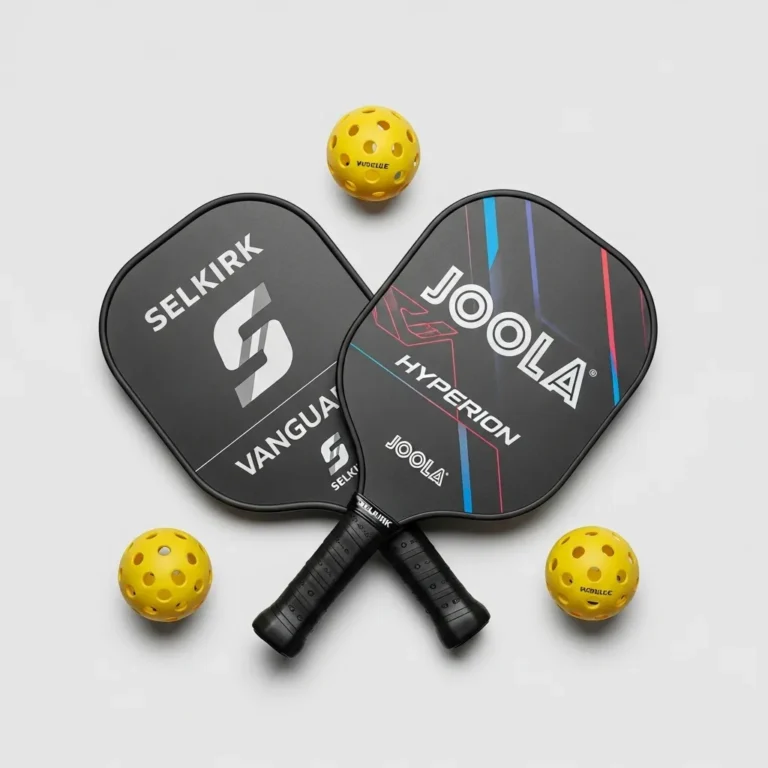
Texture and Spin: Competitors like Joola or Selkirk often use “Carbon Friction” surfaces (peel ply) that feel like rough sandpaper. Head uses a proprietary “Extreme Spin” texture that is adhered to the face. While the Joola might offer slightly more RPMs for pro-level players, Head’s texture is known for being consistent and durable.
Durability and Price: Head wins on value. The Head Extreme Elite pickleball paddle comes in at a price point that is significantly lower than the flagship models of other brands, yet it features superior handle engineering. For players who don’t want to spend $250 on a paddle that might delaminate in six months, Head offers a robust alternative.
Frequently Asked Questions (FAQ)
We scoured forums, Reddit threads, and search engines to find the questions real players are asking—questions that go beyond the spec sheet.
Handle and Ergonomics
How does Head’s “Pallet Handle System” differ from others?
Head uses a rectangular pallet system interchangeable with their tennis racquets. This provides a distinct “flat” side for the thumb, making grip changes intuitive. Most other paddles use a simple octagon shape that can feel bulky.
Which Head paddle has the longest handle?
The Radical series generally offers the best handle length for players who utilize a two-handed backhand, similar to the dimensions found on standard elongated paddles.
Performance and Design
Why does the Head Gravity series have a “flip” design?
The Gravity series features a distinct cosmetic design where the colors are inverted on opposite sides. While primarily aesthetic, it helps players quickly identify which side of the paddle they are holding, which can be a subtle visual cue during play.
Are Head paddles quieter than others?
Yes, generally. The tubular construction and the foamed core options in the Pro series tend to dampen the high-pitched “pop” associated with cheaper Nomex or polymer cores, making them friendlier for communities with noise restrictions.
Durability
How does the texture on Head paddles hold up over time?
The “SpinOn” texture is durable, but like all grit-based surfaces, it will smooth out over months of heavy use. However, Head paddles are structurally very sound and are less prone to the “core crushing” issues seen in some thermoformed competitors.
Conclusion: Final Verdict
Head has successfully bridged the gap between traditional racquet sports and the modern pickleball era. They may not have the aggressive social media presence of some newer brands, but their engineering speaks for itself.
Who should buy Head?
- The Tennis Convert: If you miss the feel of your tennis handle, Head is the only logical choice.
- The Value Seeker: The Head Radical Elite pickleball paddle offers pro-level shape and decent materials for an intermediate price.
- The Control Freak: The Gravity series offers one of the largest sweet spots in the game.
As you refine your game, remember that the paddle is an extension of your arm. Don’t settle for a blocky handle if you don’t have to. Grab a Head paddle, feel the difference in the grip, and dominate the kitchen line.