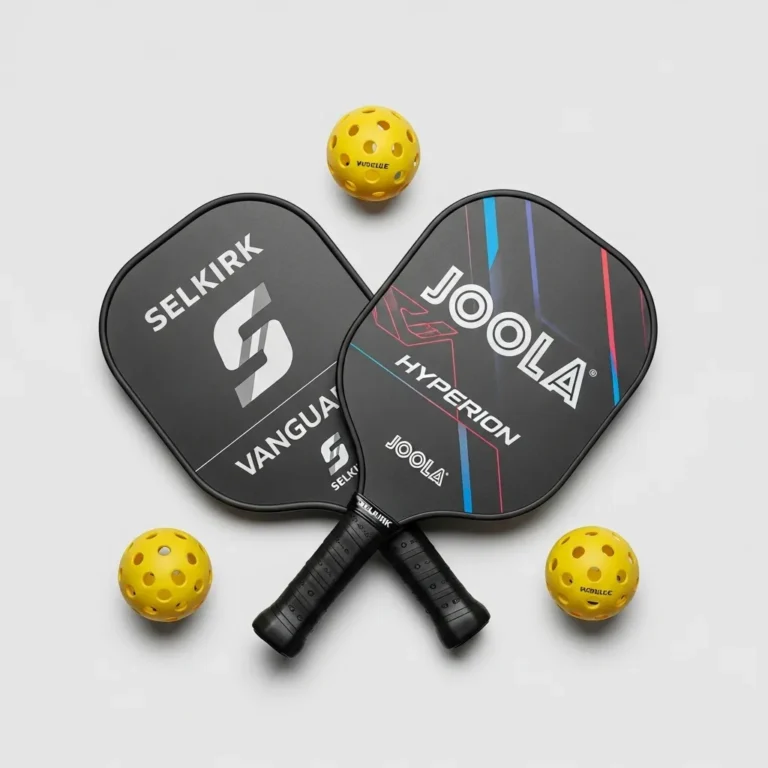
Walk onto any public court today, and you’ll notice a shift in the gear landscape. While the $280 price tag of a Joola Perseus or Selkirk Boomstik once signaled elite status, a new wave of disruptive brands is proving that pro-tier performance doesn’t have to cost a car payment. In the heart of this revolution is the crush pickleball paddle, a line of equipment that has rapidly become the “Goldilocks” choice for players who demand the explosive power of Gen 2 technology without the “big brand” tax.
Based in Scottsdale, Arizona—a literal furnace for testing polymer limits—Crush Sports LLC has engineered a series of paddles like the Crush Freestyle and BLK Pro that specifically target the durability gaps found in more expensive models. However, as the sport pushes toward higher exit velocities, players are facing a new technical nemesis: the core crush pickleball paddle phenomenon. To truly master your game, you need more than just a marketing brochure; you need to understand the material science and diagnostic tests that a standard crush pickleball paddle review often ignores.
The Cultural Dominance of Crush in the U.S. Market
The rise of crush pickleball paddles across the United States is more than a budget trend; it’s a response to the “Gen 2” reliability crisis. In 2024 and 2025, the community was rocked by reports of high-end paddles failing in weeks. Players began looking for a thermoformed pickleball paddle that could actually survive a summer of aggressive 4.5+ play. Crush stepped into this void by offering a unibody frame and raw carbon fiber surfaces at a price point that makes the $300-plus “Pro” labels look like an exploit of high-income rec players.
In hubs like Pickleball in Scottsdale, the brand has achieved a “local hero” status. By focusing on a direct-to-consumer model and a robust 6-month warranty, they’ve created a safety net for “bangers” who hit hard and play often. This balanced profile has led to a state of standardization where showing up with a Crush Freestyle 16mm is now viewed as a sign of a “gear-savvy” player who values ROI as much as RPMs.
Engineering the “Perfect” Pop: Crush Freestyle and BLK Pro Specs
The performance of crush pickleball paddles is rooted in a proprietary injected thermoforming process. Unlike older “Gen 1” cold-pressed paddles, these are baked under intense heat and pressure to create a seamless bond. To ensure they remain on the USA Pickleball approved list, Crush adheres to a strict engineering profile that mimics the “hot” feel of pro gear while reinforcing the internal lattice.
- The Crush Freestyle 16mm: Designed for “Offensive Control,” this model features a 45° angled carbon fiber orientation. This “fancy” description translates to increased dwell time, allowing the ball to sink into the face for superior spin.
- The Crush BLK Pro: An elongated powerhouse built for effortless exit velocity. It comes in both 14mm and 16mm options. Deciding between 14mm vs 16mm thickness here is a choice between raw “pop” and soft-game “forgiveness.”
- Uni-body Construction: By molding the handle and face as one piece, Crush eliminates the “handle snap” issue prevalent in cheaper alternatives.
- Vibration Dampening: The use of an EVA foam injected handle reduces the “zing” felt on off-center hits, a major benefit for players suffering from tennis elbow.
For players curious about how these materials stack up against newer hybrids, our Kevlar vs Carbon comparison provides a deeper dive into the latest surface tech.
The Missing Angle: The Core Crush Pickleball Paddle Crisis
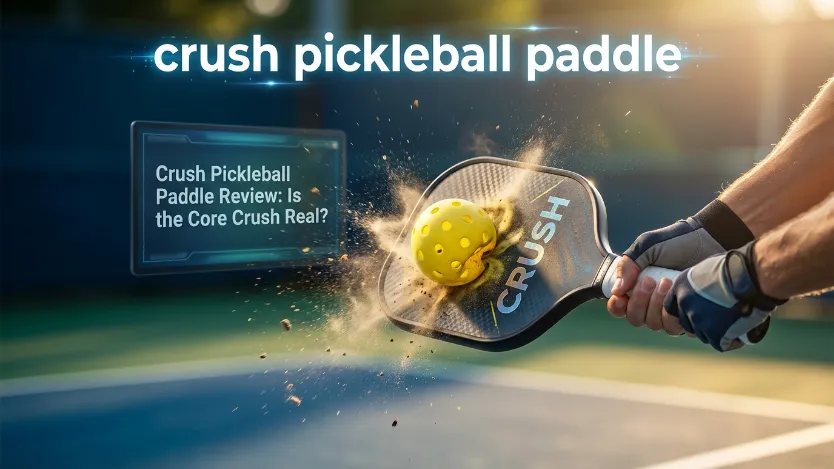
One of the “missing angles” in commercial reviews is the dark side of high-performance cores. Core crushing happens when the internal polypropylene honeycomb cells collapse like crushed soda cans under the stress of 60+ mph ball strikes. While a core crush pickleball paddle might feel like a “rocket launcher” for a few games due to the trampoline effect, it quickly becomes an illegal, inconsistent liability.
1. The “Hot” vs. “Dead” Duality
When a core collapses, the paddle’s Coefficient of Restitution (PBCoR) goes out of spec. Advanced players often notice their drives flying 3 feet long despite using their normal swing. However, as the damage spreads, the paddle develops dead spots. Instead of the ball springing off the face, it simply thuds and drops into the net. This erratic behavior is the primary reason brands like Joola and Proton have faced scrutiny—and why the Crush Freestyle is often praised for its “survive for a year” core durability.
2. The LT Ball and Thermal Stress
High-level players in the United States have discovered that not all balls are created equal. Using harder, denser balls—often called LT balls (Lifetime balls)—can accelerate core crushing. Striking an LT ball feels like hitting a “bowling ball,” and the energy transferred during impact is significantly higher than with a standard Franklin X-40. If you play in cold weather (below 50°F), the honeycomb becomes brittle, making even a crush freestyle pickleball paddle vulnerable to internal fractures.
The “Rice Crispies” Test: How to Tell if Pickleball Paddle is Core Crushed
A critical gap in player education is the ability to diagnose a failed paddle before it ruins a tournament. Because thermoformed pickleball paddles are built like a sandwich, you cannot see the damage from the outside. You must rely on sensory feedback. If you are wondering how to tell if pickleball paddle is core crushed, follow this professional diagnostic checklist:
- The Thumb Press Test: Place your thumbs in the center of the sweet spot and press firmly. A healthy paddle will be rigid. If you hear a “crunching” or “crinkling” sound—often described as Rice Crispies—the cell walls have collapsed.
- The Sound (Tap) Test: Tap the face with a quarter or your knuckle. You are listening for an even, solid “thud.” If the tone changes to a high-pitched “ping” or a hollow “twang” in specific areas, you are likely dealing with disbonding (face separating from core).
- Visual Bubbling: While rare on a crush freestyle pickleball paddle due to the T700 carbon bond, check for any slight “bubbles” or delamination on the surface which indicates a total structural failure.
If your paddle fails these tests, it is technically illegal for competitive play. Check the USA Pickleball Official Website for the latest rules on equipment integrity and “hot” paddle bans.
Head-to-Head: Crush vs. The Brand Name Titans
While Crush is the value leader, 2025 has seen fierce competition from other “Gen 2” and “Gen 3” models. Here is how the Crush Freestyle and BLK Pro stack up against the market leaders:
- Crush vs. Joola Perseus Pro IV: The Joola offers the “KineticFrame” and higher status, but it is notoriously prone to core crushing. Crush provides 90% of the performance at 50% of the price with better long-term durability.
- Crush vs. Boomstik paddle: The Selkirk Labs 008 and Boomstik use “InfiniGrit” which claims to last 3x longer. While the Boomstik has more raw power, the Crush Freestyle offers a more “plush” feel for resets.
- Crush vs. Vatic Pro Prism Flash: The Vatic Prism is the king of the sub-$100 market. However, it is not a “Gen 2” paddle. If you want more “offensive utility” and put-away power, the thermoformed Crush Freestyle is the necessary upgrade.
The “Grip Wear” Angle: What Big Sites Don’t Mention
In any honest crush pickleball paddle review, we have to talk about the “minor quibbles.” While the face and core are “tank-like,” many US players have noted that the factory grip on the Crush Freestyle wears down faster than expected. In some cases, the grip may start tearing near the base within two weeks of heavy play. For the tech-savvy player, the solution is simple: immediately apply a high-quality overgrip to protect the EVA foam handle and ensure a “tacky” feel during sweaty summer matches.
The Tennis Transition: Why the Crush RQT is the Secret Weapon
For former tennis players entering the pickleball world, the “short” handle of most paddles is a major hurdle. The Crush RQT solves this with a 6.75-inch handle—the exact length of a standard tennis racquet grip. This allows for a true two-handed backhand without your fingers spilling over the edge. At 17 inches long, it is an “ultra-elongated” weapon that provides a massive leverage advantage on overheads and serves, making it a favorite for “tennis transfers” in Florida and California clubs.
Maintenance and Paddle Longevity
To prevent a core crush pickleball paddle from ruining your season, maintenance is non-negotiable. Carbon fiber is durable, but the peel-ply grit that generates spin is a consumable. Use a paddle eraser sparingly to remove plastic dust and dirt from the surface, which restores the “bite” on the ball. Most importantly, never leave your paddle in a hot car. Scottsdale’s heat can reach 150°F inside a trunk, which melts the internal adhesives and is the #1 cause of “premature death” for any thermoformed gear.
Frequently Asked Questions (FAQ)
Is the Crush Freestyle better for power or control?
The Crush Freestyle 16mm is considered an “All-Court” paddle. It provides exceptional spin and control for resets at the kitchen line, while the thermoformed core offers enough “pop” for baseline drives. If you want pure power, the 14mm BLK Pro is the better choice.
Can a core crushed paddle be repaired?
No. Once the polymer honeycomb cell walls have collapsed (the “Rice Crispies” sound), the structural integrity is gone. The paddle will play inconsistently and should be replaced. Thankfully, Crush pickleball paddles come with a 6-month warranty against manufacturing defects.
How does Crush compare to other budget brands like 11six24?
Crush and 11six24 both offer incredible value. The 11six24 Monarch is a fantastic “Gen 1.5” control option, but the Crush line often feels more “offensive” due to its advanced thermoforming. Both are superior to the “generic no-name” paddles found on Amazon.
What is the “trampoline effect” everyone talks about?
This occurs when the core or face of a paddle becomes “springy” (often due to disbonding or crushing). The ball stays on the face longer and then rockets off at illegal speeds. While it sounds like an advantage, it makes your shots unpredictable and illegal in sanctioned tournaments.
Conclusion: The Verdict on America’s Disruptor
The crush pickleball paddle line has earned its spot in the American pickleball scene by proving that $150 can buy the same technology that the “Big Three” sell for $300. Whether you are choosing the spin-heavy Crush Freestyle or the elongated RQT, you are getting a professional-grade tool designed for the modern game. However, as with all “Gen 2” gear, vigilance is required. By performing your “Thumb Press” test every few weeks and avoiding the 150°F trunk trap, you can ensure your paddle remains a legal, high-performance extension of your arm.
If you found this crush pickleball paddle review helpful, you might also want to check out our analysis of the thermoformed pickleball paddles market or our guide on the 6.0 Ruby pickleball paddle for another high-durability option.