brighton pickleball club
If you have ever stood near a pickleball court, you know the sound. It’s that distinct, rhythmic pop-pop-pop that somehow signals both intense competition and a whole lot of laughter. It’s the fastest-growing sport in America for a reason—it’s accessible, it’s social, and frankly, it’s addictive. But as any enthusiast will tell you, where you play matters just as much as how you play.
Enter the Brighton Pickleball Club.
This isn’t just a gym floor with some tape thrown down. It’s a destination. Whether you are a seasoned player looking to sharpen your dinking game or someone who has never held a paddle, this club has curated an experience that feels less like a facility and more like a second home.
If you are curious about what makes this place tick, or if you are on the fence about grabbing a paddle, let’s take a walk through everything you need to know. We’re going to cover the courts, the costs, the unwritten rules of the leagues, and even where to grab a cold drink after a sweaty match.
Location Clarification (Avoid Confusion)
Before we dive into the nitty-gritty of court surfaces and membership tiers, we need to address the elephant in the room—or perhaps, the globe.
Are you looking for the Brighton Pickleball Club in Michigan or the UK?
It happens more often than you’d think. You type a name into a search bar, get excited about a venue, and then realize it’s on the other side of the Atlantic Ocean.
To be crystal clear: The Brighton Pickleball Club we are discussing here is the premier, dedicated indoor facility located in Brighton, Michigan (USA). It is a purpose-built space designed specifically for the sport.
However, there is a thriving pickleball community across the pond known as DINK Brighton Pickleball in Brighton & Hove, UK. Unlike the Michigan location, the UK version typically operates out of various leisure centers rather than a single, dedicated private facility. So, before you book a court or sign up for a clinic, just double-check your geography. If you are in Michigan, you are in the right place. If you are in Sussex, you might want to adjust your GPS!
Facilities & Amenities (Specifics)
Now that we know where we are, let’s talk about what you’re walking into. One of the biggest complaints in the pickleball world revolves around “converted” spaces. We’ve all played on basketball courts with confusing lines or tennis courts where the net is just a little too saggy. This club was built to solve those headaches.
Are the courts dedicated for pickleball or are they converted tennis courts?
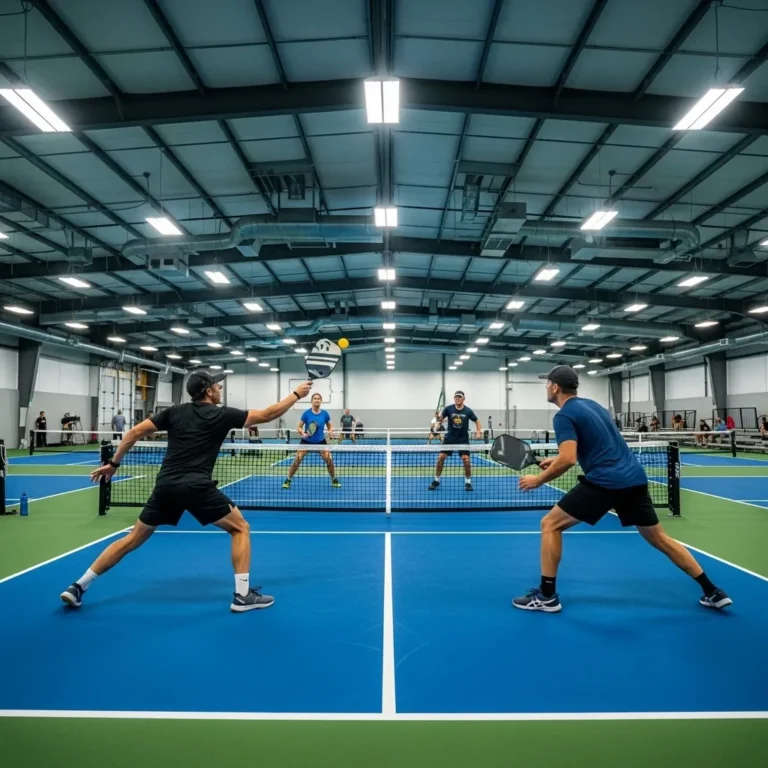
This is the question that usually determines whether a serious player will join a club. You will be happy to know that the facility features 9 permanent, dedicated indoor pickleball courts.
What does “dedicated” actually mean here? It means no temporary tape peeling off the floor. It means no sharing space with volleyball players. These courts have permanent, professional-grade nets.
Perhaps the most underrated feature is the physical separation. In a gymnasium setting, a ball from a neighboring game can roll onto your court mid-point, forcing a replay and risking injury. Here, the courts are separated by individual court barriers, specifically heavy netting. This keeps your ball in your court and, more importantly, keeps everyone else’s balls out of your way. It allows for a continuous, uninterrupted flow of play that makes the game feel professional.
Recommended Reading
Top Pickleball Gifts 2025:From Stocking Stuffers to Pro Gear
Looking for unique pickleball gifts? We break down practical gear, funny apparel, and budget-friendly ideas to help you surprise the player in your life.
How is the lighting different from a standard gym?
Lighting is one of those things you don’t notice until it’s bad. If you have ever looked up to track a lob and been blinded by a high-bay warehouse light, you know the struggle. You lose the ball in the glare, panic, and mishit the return.
Brighton Pickleball Club uses a specialized “Picklelight D/I” system. This stands for Direct/Indirect LED lighting. The technology is designed specifically for court sports. It casts light upwards and downwards to create whole-room illumination. This eliminates those harsh bright spots and dark shadows. The result? You can track a high ball perfectly from the moment it leaves your opponent’s paddle until it lands on the baseline. It’s a subtle detail, but it makes a massive difference in game quality.
Is there a place to socialize or work after playing?
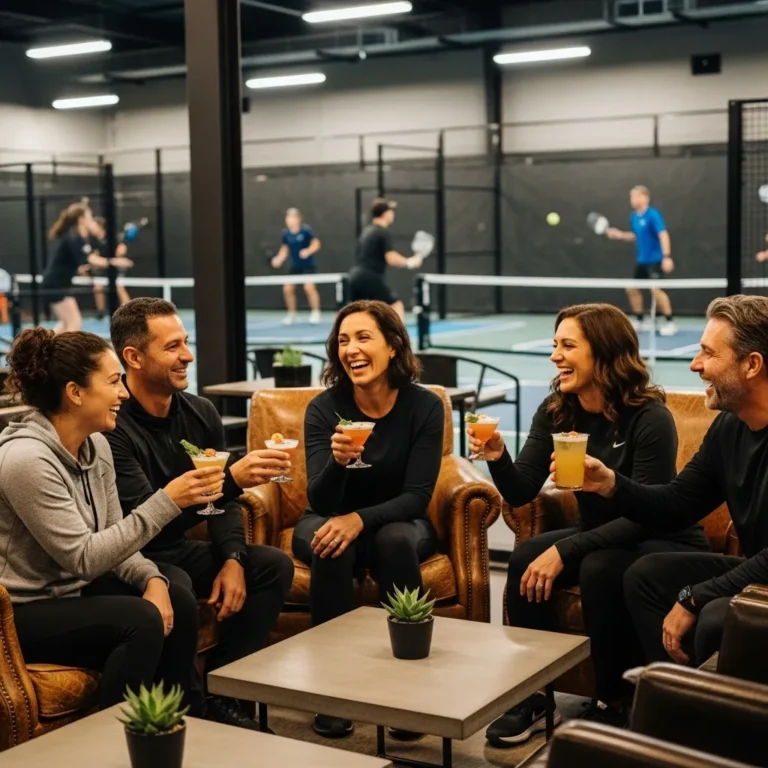
The “apres-pickle” culture is real. One of the main reasons people flock to this sport is the community aspect, and the club’s layout reflects that.
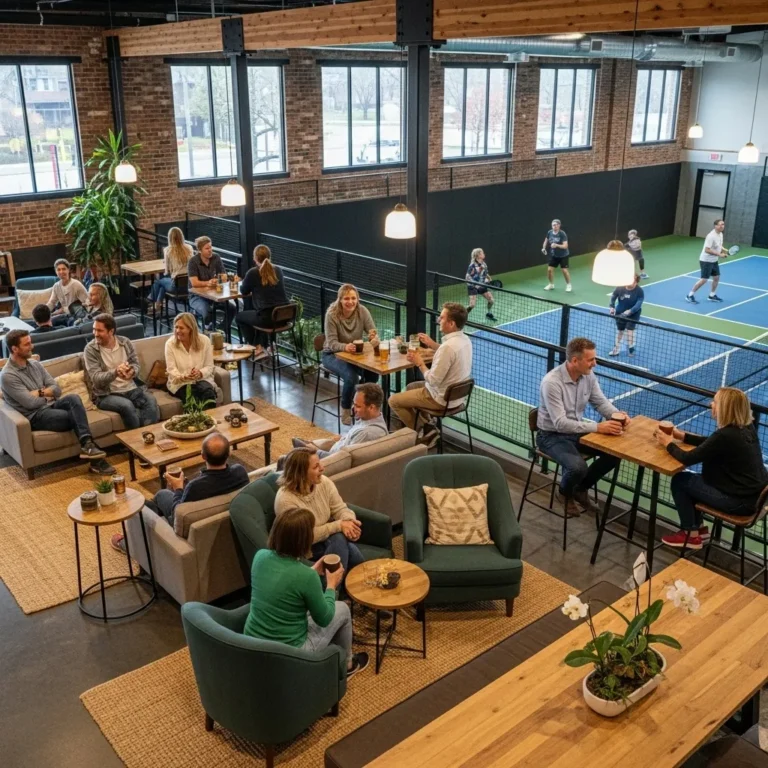
Yes, there is a designated lounge area. It’s designed with seating that faces the courts, plus a mezzanine viewing area that gives you a bird’s-eye view of the action. It’s the perfect spot to cool down, analyze someone else’s backhand, or just catch up with friends.
They have really leaned into the social club vibe by offering refreshments on tap. You can grab a nitro cold brew if you need a morning pick-me-up, or switch to beer and wine if you’re unwinding after an evening league. It transforms the venue from a “place to sweat” into a “third place”—that spot that isn’t work and isn’t home, where you just like to hang out.
Membership & Access (The Essentials)
Okay, let’s talk logistics. You want to play, but you don’t want to break the bank, and you definitely don’t want to get stuck in a bureaucratic loop. Here is how the access works.
Do I need a membership to play at Brighton Pickleball Club, or can I just drop in?
This is the most common question for newcomers. The short answer is: You do not need a membership.
The club is open to the public, categorizing non-members as “Guests.” If you are just passing through town or want to try the facility once to see if it lives up to the hype, you can absolutely do that.
However, there is a financial incentive to join if you catch the pickleball bug. Non-members pay higher drop-in fees—typically around $14 for guests for social play sessions. In contrast, members pay significantly less, usually around $5 for the same session.
The math is pretty simple: If you plan on playing two or three times a week, a brighton pickleball club membership pays for itself very quickly. But if you are a once-a-month casual player, the guest route is perfectly fine.
How much does a membership cost, and what is the difference between “Member” and “Founding Member” rates?
Pricing models can change, but generally, the structure is designed to reward loyalty. Memberships offer the lowest rates on everything—court fees, open play, and programming like clinics or leagues.
You might hear people toss around the term “Founding Member.” In many clubs, this refers to the early adopters who joined before or right when the doors opened. These tiers often come with locked-in lower rates for life as a “thank you” for their early support. Regular “Member” rates are the standard current pricing.
Regardless of the tier, the primary difference between any member and a guest is the “drop-in” rate. Guests always pay the premium price.
Is there a waitlist for membership?
Because the facility is popular and court space is finite, the answer is often yes, membership spots can fill up.
The club manages capacity to ensure that members can actually get court time. If they sold unlimited memberships, nobody would ever be able to book a slot. If the membership cap is reached, you will need to sign up as a “Guest” first. You do this via their app (more on that in a second). Once you are in the system as a guest, you can navigate to the “My Membership” tab and join the waitlist. It’s worth getting on that list sooner rather than later, as turnover can vary.
What app do I need to book courts?
In the modern era of pickleball, calling the front desk to book a court is a thing of the past. The club uses the CourtReserve app for everything.
You will need to download this to your phone. It handles your liability waivers, court bookings, event sign-ups, league registrations, and payments. It gives you a real-time view of what is available. Whether you are a member or a guest, CourtReserve is your digital key to the facility.
Leagues & Competitive Play (Deep/Niche)
For those who want to move beyond casual hitting and get into the competitive spirit, leagues are the heartbeat of the club. However, structured play comes with structured rules, and there are a few things that often trip up new competitors.
How does the “Ladder League” format work?
If you hear people talking about “moving up” or “dropping down,” they are talking about the ladder system. It is arguably the best way to ensure competitive balance.
Here is the concept: You don’t just play random people. You are ranked. Every week, you play games on your assigned court. If you win the majority of your games on that court, you move up a court (and up the rankings) for the next session. If you lose, you move down a court.
This system is brilliant because it naturally corrects itself. If you are having a great month, you’ll keep rising until you hit a wall of better players. If you are struggling, you’ll drop down until you find players of your own skill level again. It ensures that every game is tight, competitive, and fun.
What happens if I miss a league week? Is there a penalty?
This is the most crucial detail that competitors often overlook. Joining a league is a commitment—not just to the club, but to the other players in your group.
If you cannot play on a specific week, it is your responsibility to find a sub. You can’t just no-show. The league relies on groups of four. If one person is missing, the whole court’s dynamic is ruined.
The club usually has a list of subs or a group chat to help you find someone. But here is the kicker: that sub needs to be of a similar skill level. You can’t bring in a pro to play in a beginner league, and vice versa.
If you don’t play and you fail to find a sub, there is usually a penalty. You are typically automatically moved down the rankings (often dropping 2 spots). It’s a harsh rule, but it keeps the league running smoothly and ensures people take their schedule seriously.
Do I need an official rating (DUPR) to join a league?
Pickleball ratings can be confusing, but they are necessary for fair play. For the lower-level social leagues, self-rating is often accepted. However, for higher-level leagues—usually those rated 3.25 and above—the club gets stricter.
For these competitive tiers, a verified DUPR rating (Dynamic Universal Pickleball Rating) or a specific BPC Club Rating (BCR) is mandatory. They do this to protect the integrity of the game. There is nothing worse than signing up for an advanced league and getting stuck with a partner who is just learning the rules. The rating requirement ensures everyone on the court belongs there.
Check out our guide to Why Did My DUPR Pickleball Rating Drop After a Win?Explained
What is the cancellation policy for scheduled sessions?
Flexibility has its limits. The club enforces a strict “Opt-In/Out” window.
Typically, you must opt out at least 24 hours before a scheduled session. If you wake up two hours before your league match and decide you just don’t feel like it, you are going to be locked into the schedule and likely charged or penalized. This policy exists to give the organizers enough time to fill your spot so the court isn’t left empty.
Beginners & Instruction
If reading about “ratings” and “ladders” has your heart rate up, take a deep breath. We all start somewhere. Brighton Pickleball Club is actually a fantastic place to learn the game properly.
I’ve never played before. Which class should I take?
Please, do not just sign up for “Open Play” and hope for the best. You will likely feel overwhelmed.
Absolute beginners should look for classes specifically labeled “Learn to Play” or “Pickleball 101/102.”
These aren’t just dry lectures. They are usually active sessions. The “101” classes are often one-time crash courses designed to get you comfortable with the strange scoring system (1-0-1, anyone?) and the basic mechanics. For those who want a deeper dive, there are often 8-week courses that take you from “holding the paddle wrong” to “game-ready.”
Do I need to bring my own paddle?
One of the barriers to entry for any sport is the gear. “Do I need to drop $200 on a carbon fiber paddle before I even know if I like the sport?”
The answer is no. For beginner lessons and clinics, paddles are often provided by the club. They want you to try it out first.
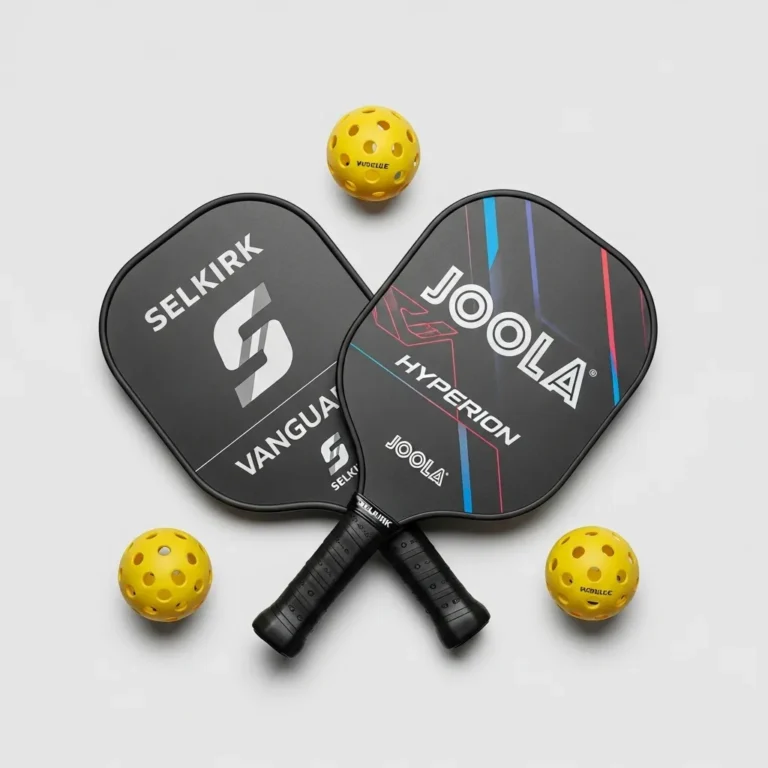
However, once you graduate to open play, leagues, or social mixers, you are generally expected to bring your own equipment. The pro shop at the facility usually has demos available, which is a great way to test different grips and weights before you buy.
Check out our guide to Top Pickleball Paddles 2025: Power, Control, and Value or Top Cute Pickleball Paddles That Actually Play Well
What specific footwear is required?
We need to have a serious chat about shoes. This isn’t about fashion; it’s about safety.
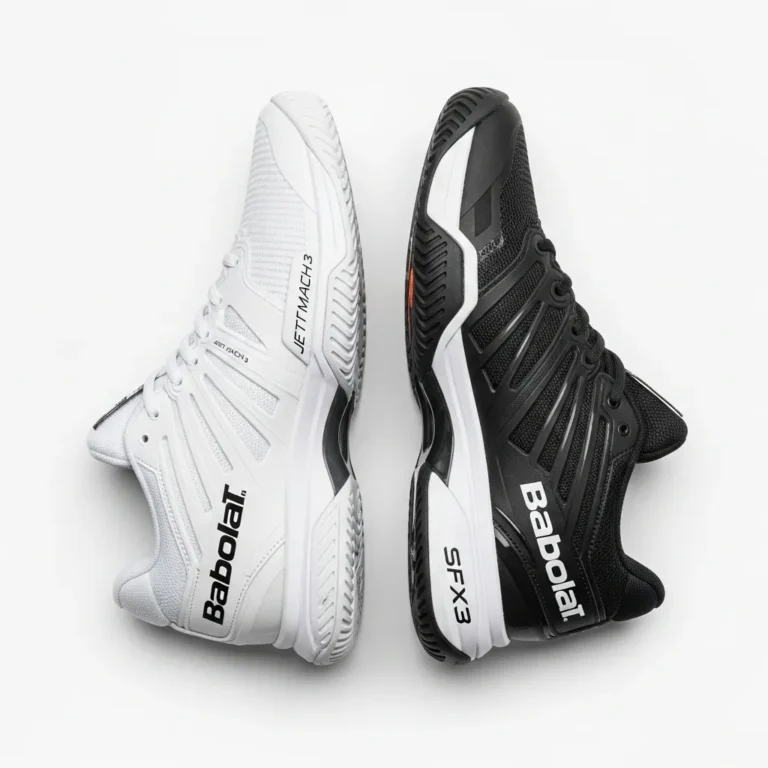
You must wear proper court shoes or tennis shoes.
Many beginners make the mistake of wearing their comfy running shoes. Running shoes are designed for forward motion—heel to toe. They often have thick, squishy soles and breathable mesh uppers. In pickleball, you are moving laterally—side to side—constantly. If you wear running shoes, your foot can slide off the footbed during a hard cut, leading to rolled ankles.
Court shoes are flatter, wider, and stiffer. They are built to grip the court surface and hold your foot in place during those quick lateral jerks. The club discourages running shoes for this exact reason. Investing in the right footwear is the single best thing you can do to prevent injury.
Check out our guide to Why Pros Are Switching to Skechers Pickleball Shoes
brighton pickleball club photos
A Final Thought on the Community
When you look through brighton pickleball club reviews, you’ll notice a pattern. Yes, people mention the great lighting and the clean courts. But mostly, they talk about the people.
Pickleball has a unique way of leveling the playing field. You might find yourself on a court with a retired CEO, a college student, a mechanic, and a teacher, all high-fiving over a great point. It’s a social equalizer.
The Brighton Pickleball Club has managed to bottle that energy. By combining top-tier facilities with a welcoming yet organized structure, they’ve created a space where you can be as intense or as relaxed as you want. Whether you are fighting for the top spot on the ladder or just fighting to keep the ball out of the net during a “Learn to Play” session, there is a spot for you.
So, download the app, grab some court shoes, and head over to Brighton. Just make sure it’s the one in Michigan.
You May Also Like