Urban Pickleball Club
There’s a specific sound that’s taking over our cities. It isn’t the honking of taxis or the rumble of the subway; it’s that distinct, rhythmic pop-pop-thwack of a perforated plastic ball hitting a paddle. If you’ve heard it, you know exactly what I’m talking about. Pickleball has officially migrated from the retirement communities of Florida to the grit and bustle of the concrete jungle.
But here’s the thing: playing in the city is a different beast entirely. You aren’t rolling up to a sprawling country club with acres of green space. You’re likely heading to a repurposed warehouse, a rooftop, or a retrofitted mall. This is the era of the urban pickleball club, and if you’re looking to get into the game—or just find a new place to hang out on a Friday night—you probably have a lot of questions.
I remember the first time I walked into one of these spots. It didn’t feel like a gym. It felt like a night out that just happened to involve cardio. But navigating this new landscape can be tricky. Is it worth the money? Do you need a partner? What if you’ve never held a paddle in your life? Let’s break it all down, strictly between us, so you know exactly what to expect before you lace up your court shoes.
The Concept: What Sets Urban Clubs Apart?
When you hear “club,” you might picture stiff collars, hefty initiation fees, and a quiet, exclusive atmosphere. Shake that image out of your head immediately. The modern urban pickleball club is rewriting the script on what a sports venue looks like.
How does an “Urban Pickleball Club” differ from traditional country clubs or public parks?
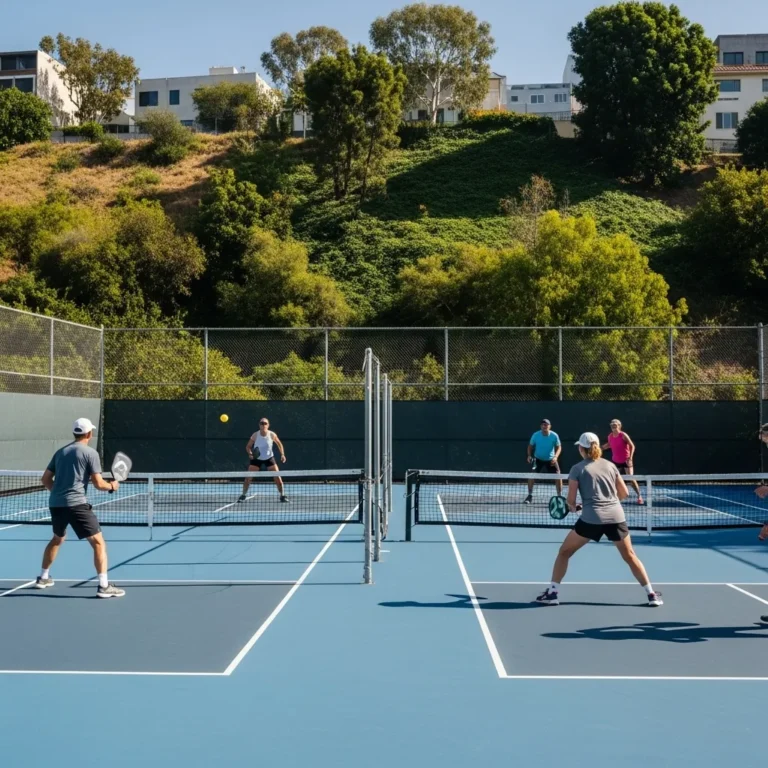
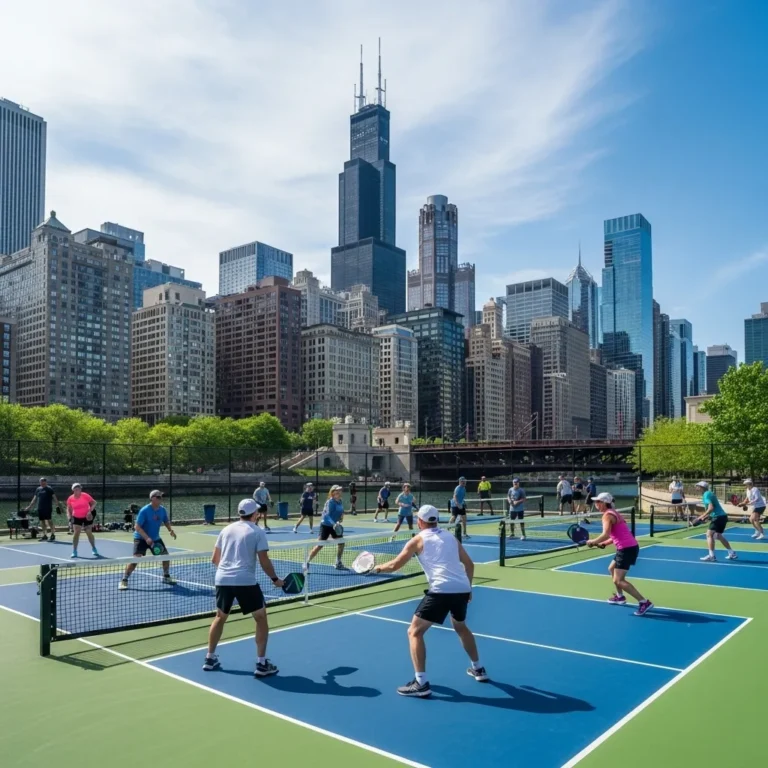
The biggest difference is the energy. Public parks are great—they’re free, open to the air, and accessible. But they also come with cracked asphalt, wind that takes your ball three courts over, and the infamous “paddle saddle” wait times that can last an hour. Country clubs, on the other hand, offer luxury but often lack diversity and vibrancy.
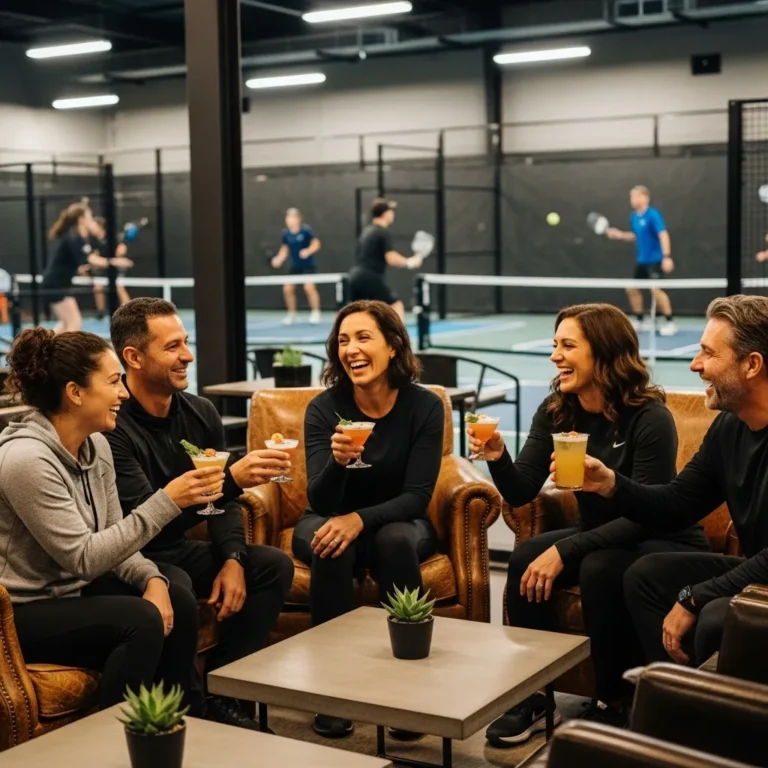
An urban pickleball club sits right in the sweet spot. The demographic skews younger—think young professionals, city dwellers, and active parents—but you’ll still see plenty of retirees who just prefer the faster pace of city life. The vibe is intentionally gritty but polished. You’re playing in the heart of the city, often surrounded by industrial aesthetics, graffiti art, and a playlist that sounds more like a lounge than a tennis court. It’s less about “quiet please” and more about high-fives and music.
Are urban pickleball clubs just gyms, or are they “eatertainment” venues?
This is where the lines get blurry in the best way possible. While some clubs are strictly “come in, sweat, leave,” the trend is heavily shifting toward “eatertainment.” Think of it as the Topgolf model applied to pickleball.
Places like the urban pickleball club Austin scene are pioneering this. You aren’t just paying for court time; you’re paying for the atmosphere. You finish a heated match, wipe off the sweat, and walk ten feet to a bar serving craft cocktails and artisan tacos. It’s a social hub first and a fitness center second for many people. However, for the die-hards, the “gym” aspect is still there—leagues, clinics, and drills are standard—but they happen in an environment where staying for a drink afterward is the norm, not the exception.
Why are so many urban clubs opening in converted warehouses and malls?
If you’ve driven around any major city lately, you’ve seen the empty “Big Box” stores and vacant industrial spaces. Real estate is expensive, and pickleball courts require a lot of square footage. It makes zero financial sense to build a new structure from scratch in a downtown district.
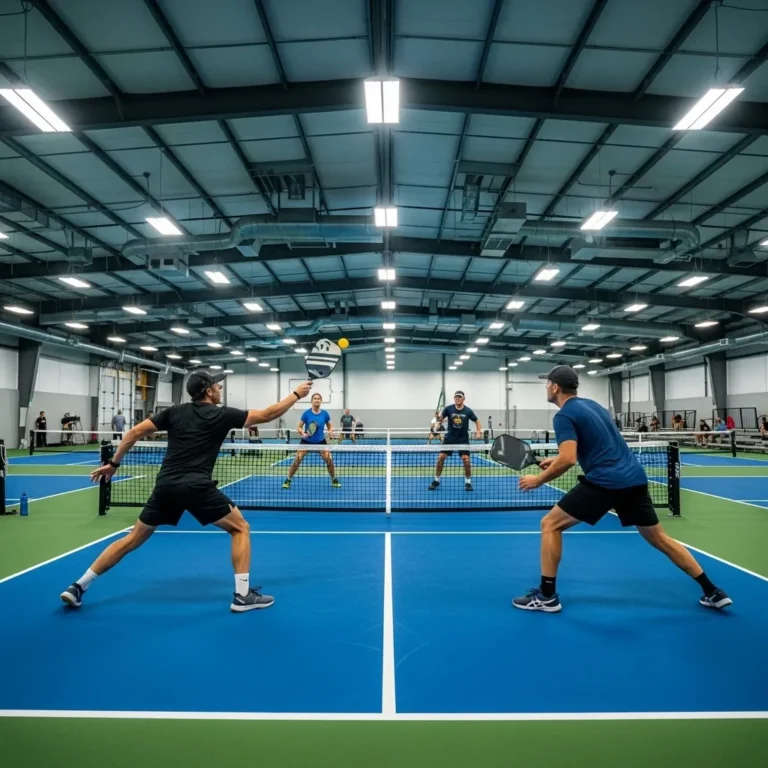
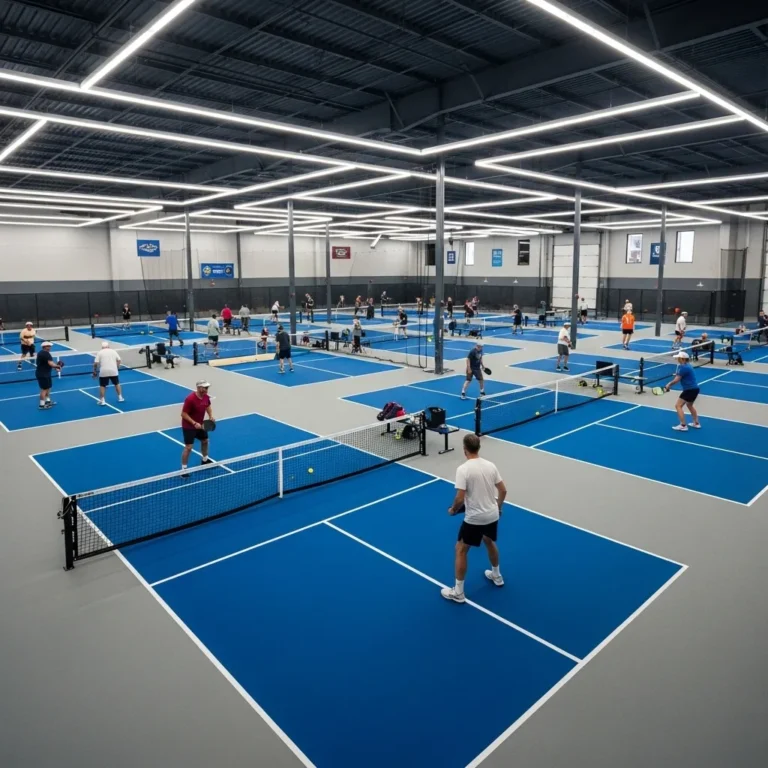
So, developers are getting creative. That old department store in the mall? Perfect—it has high ceilings, climate control, and massive floor space. That abandoned warehouse in the arts district? Even better. It has the industrial-chic look that players love. This adaptive reuse strategy is why you can find a club in the middle of a dense city center. It gives these buildings a second life and gives us a place to play where weather is never a factor.
Facilities & Playing Conditions
This is the stuff that serious players obsess over. If you’re just looking for a drink and a laugh, you might not care about ceiling heights. But if you’re trying to improve your game, these details can make or break your experience. I’ve read through countless urban pickleball club reviews, and these are the facility features that people either rave about or complain about.
How do indoor urban clubs handle ceiling height and lighting in converted spaces?
This is the number one complaint I hear about retrofitted clubs. You’re in the middle of a great point, your opponent lobs the ball high, and… bonk. It hits a rafter or a low-hanging light fixture. Game over.
Good urban clubs know this. When vetting a place, look for ceiling heights of at least 18 to 20 feet. Anything lower, and the lob game is effectively dead. Lighting is the other beast. In old warehouses, lighting can be uneven, creating shadows or blinding glare if you look up. The best clubs install indirect LED lighting that bounces off the ceiling, providing a uniform glow without burning your retinas when you track a high ball. If you walk in and see fluorescent tubes buzzing directly over the net, bring your sunglasses or prepare for a headache.
What type of court surface is used: concrete, wooden gym floors, or specialized pickleball cushioning?
Not all floors are created equal. Because many of these clubs take over old gyms or industrial spaces, you might find yourself playing on a wooden basketball floor. While this is easier on the knees, the ball skids differently—it’s faster and slides more than it bounces.
However, the gold standard—and what you should look for—is a professional acrylic surface over a concrete or asphalt base, often with a cushioning layer. This mimics the outdoor game perfectly but with a slightly softer feel to save your joints from the hard impact. If a club is just polished concrete (like a grocery store floor), be very careful. It’s slick, and if you dive for a ball, you’re going to have a bad time.
How is noise mitigation handled in indoor metal buildings or echo-prone warehouses?
Pickleball is loud. Put eight courts in a metal warehouse, and you have a cacophony that can actually be disorienting. It’s a sensory overload issue that frequently pops up in forums.
The high-end urban clubs invest heavily in acoustic baffles—those foam panels you see hanging from the ceiling or stuck to the walls. They absorb the sharp pop of the ball. If you walk into a club and it sounds like the inside of a jet engine, they probably skipped this step. It makes communication with your partner impossible and leaves you with ringing ears.
Are the court dimensions standard, or are they squeezed to fit tight urban floor plans?
Real estate in the city is pricey per square foot, so there is a temptation for owners to squeeze in “just one more court.” A standard pickleball court is 20 by 44 feet, but you need ample overrun space behind the baselines and on the sides.
In tight urban floor plans, you might find yourself backing up for a deep return and hitting the back wall—or worse, the player on the court behind you. This is a safety hazard. Good clubs prioritize safety over maximum capacity. When you tour a facility, check the space between the courts. If it feels claustrophobic, it’s going to feel even tighter when paddles are swinging.
Logistics: Accessibility & Amenities for the City Player
Let’s get practical. You’re likely squeezing a game in between meetings, after work, or before a dinner reservation. The logistics of an urban club are different from a suburban park where you can just throw your bag in the trunk of your car.
Do urban clubs offer locker rooms and showers for lunch-break or post-work sessions?
This is a dealbreaker for the lunch-break crowd. If you plan to play for an hour at noon and then head back to the office, you need a shower. Most “eatertainment” style venues treat themselves more like bars and might only have basic restrooms. However, the fitness-focused urban clubs (especially those in cities like Austin or New York) usually offer full locker room amenities with showers, towel service, and toiletries. Always check the website beforehand. There is nothing worse than realizing your “cool down” involves sitting in a meeting while drenched in sweat.
Is parking typically included, or should I rely on public transit/rideshare?
If you are looking at the Barton urban pickleball club options or similar spots in dense areas, assume parking is a nightmare until proven otherwise. City real estate rarely includes a massive free parking lot.
Most urban clubs rely on street parking (which you have to pay for), nearby parking garages (which can be expensive), or they validate for a couple of hours. Many city players simply accept that they’ll need to Uber or take the train. If you do drive, factor the parking cost into your budget. That $15 drop-in fee quickly becomes $35 if you park in the wrong garage.
Can I store my gear at the club, or do I need to carry my paddle around the city all day?
Carrying a pickleball paddle isn’t as cumbersome as a tennis racquet, but hauling your court shoes and change of clothes on the subway isn’t ideal. Some membership-based clubs offer rental lockers where you can stash your gear overnight.
If you’re just dropping in, ask about their bag check policy. You don’t want to be the person tripping over your gym bag on the sideline because there’s nowhere to put it.
Membership, Costs & Booking
Money talks. Urban clubs are businesses, and they need to pay that high city rent. This means the pricing structure is more complex than your local rec center.
Is a membership required, or do urban clubs operate on a “pay-to-play” drop-in basis?
Almost all of them operate on a hybrid model. You can usually play without a membership, but you’ll pay a premium drop-in rate. Memberships are designed for the locals who play 2-3 times a week. They usually offer perks like early booking windows (crucial for prime time), discounted court fees, and free open play sessions.
If you’re just visiting or want to try it out, look for “Open Play” slots on their schedule. You pay a flat fee, show up, and rotate in with others. It’s the lowest barrier to entry.
How does the pricing compare to public court reservation fees?
Public courts are often free or very cheap ($5 – $10/hr). Urban clubs are significantly more expensive. You are looking at anywhere from $20 to $60 per hour for a court rental, depending on the city and the time of day.
But remember, you’re paying for climate control (no wind, no rain, no heatstroke), organized play, and amenities. For many, the guarantee that they will actually get to play at 6:00 PM without fighting for a court is worth the extra cash.
Does the membership fee cover court time, or is that an extra hourly charge?
Read the fine print! A common misconception is that paying a $150 monthly membership fee gives you unlimited free court time. Usually, it does not.
Typically, a membership grants you access to book courts, perhaps some free “open play” hours, and a discount on hourly court rentals. So, you might pay your monthly dues plus $10/hour to play, whereas a non-member pays $40/hour.
Do these clubs use dynamic pricing (like Uber) for peak evening hours?
Yes, and it’s becoming the industry standard. Tuesday at 10:00 AM might cost $20/hour. Tuesday at 7:00 PM—when everyone is off work—might jump to $50/hour. If you have a flexible schedule, playing during off-peak hours is the best way to enjoy these luxury facilities without breaking the bank.
Social Dynamics & Solo Play
This is the part that gives people the most anxiety. Walking into a club alone can feel like the first day of high school. But the culture of pickleball is inherently social, and urban clubs capitalize on this.
Can I join an urban club if I don’t have a partner?
Absolutely. In fact, these clubs thrive on solo players. This is where the concept of “Open Play” shines. You sign up individually, show up, and the club organizes the rotation. You’ll be paired with a partner for a game, then swap, then sit out for a few minutes and chat with others.
It is arguably the best way to make friends in a new city. I’ve seen business deals closed and dates arranged in the waiting area of an open play session. You do not need to bring a friend to have a good time.
What is the “skill rating” culture like? Is it beginner-friendly or dominated by competitive leagues?
Urban clubs usually segment their events by skill level using the DUPR system (Dreamland Universal Pickleball Rating) or self-ratings (2.5 for beginners, 3.5 for intermediates, etc.).
If you are a total newbie, do not sign up for a 4.0+ session. You won’t have fun, and the other players won’t either. Look for “Beginner Open Play” or “Learn to Play” clinics. Generally, the culture is very welcoming to beginners as long as you are in the right bracket. The intensity ramps up significantly in the higher brackets, where competitive leagues dominate.
How do clubs manage the “paddle stack” or queuing system digitally versus physically?
The old-school way is the “paddle stack”—you put your physical paddle in a rack to mark your place in line. Many urban clubs still use this because it encourages face-to-face interaction.
However, tech-forward clubs are moving to digital queuing apps. You check in on an iPad or your phone, and a screen on the wall tells you “Court 4: John, Sarah, Mike, and Emily.” This prevents people from cutting in line and removes the confusion of whose paddle is whose. It’s efficient, but some argue it takes away a bit of the organic charm.
Lifestyle & Etiquette
Finally, let’s talk about the unwritten rules. You don’t want to be the person who commits a faux pas on your first visit.
What is the dress code? Is it strict athletic wear, or “athleisure” suitable for the bar afterwards?
Gone are the strict “tennis whites” of the country club. The dress code at an urban pickleball club is distinctly “athleisure.” You want to wear clothes you can move in, but that look good enough to wear while drinking a beer afterward.
Brands like Lululemon, Vuori, and specialized pickleball brands are the uniform of choice. And please, for the love of the game, wear proper court shoes. Running shoes have high heels and thick treads that are a recipe for rolled ankles on a pickleball court.
Are urban clubs family-friendly, or are they strictly 21+ venues in the evenings?
It usually depends on the time of day. Weekends and daytime hours are often full of families and kids learning the game. It’s a wholesome, community vibe.
But as the sun goes down, the vibe shifts. The lights dim, the music gets louder, and the alcohol starts flowing. Many clubs become effectively 21+ after 7:00 or 8:00 PM, not by policy, but by atmosphere. If you’re planning a family outing, Saturday morning is your best bet. If you’re looking for a date night, aim for Friday evening.
Can I bring my own food/drink, or is there a strict policy to purchase on-site?
If the club has a bar or kitchen (which most urban clubs do), outside food and drink are strictly prohibited. Their margins on court fees are slim; they make their money on the $14 cocktail and the artisanal burger you buy afterward. Bringing a water bottle is usually fine (hydration is key!), but don’t show up with a cooler of beer or a sandwich from the deli next door. It’s bad form and often against the rules.
Final Thoughts
The rise of the urban pickleball club is more than just a trend; it’s a shift in how we socialize in cities. It solves the problem of isolation by giving us a place to play, laugh, and connect, all under one roof. Whether you’re checking out the latest urban pickleball club Austin has to offer, or hunting down a hidden gem in a converted warehouse in your own city, the barrier to entry is low.
So, grab a paddle (or rent one there), ignore the nerves, and head to the courts. Just remember to watch out for those low ceilings. See you on the court!