pickleball rules doubles
So, you’ve finally picked up a paddle. Maybe you saw a group of people laughing and shouting at the local park, or perhaps a friend dragged you onto the court promising that it’s “easy to learn but hard to master.” They were right. Pickleball is infectious, social, and incredibly fun. But let’s be honest—the first time you step onto a doubles court, things can feel a little chaotic.
Between figuring out where to stand, remembering not to smash the ball immediately, and deciphering a score that sounds more like a locker combination than a sports tally, it’s normal to feel a bit lost. Don’t worry; we have all been there.
The magic of this game lies in its structure. Once you peel back the layers of pickleball rules doubles, the game transforms from a confusing scramble into a tactical dance. Whether you are a total novice or someone looking to polish your understanding of the nuances, this guide is written just for you. We’re going to walk through the rules of pickleball doubles together, not like a textbook, but like we’re chatting on the sidelines between games.
Let’s dive in and demystify the court so you can focus on what matters: having a blast and winning that next point.
related: pickleball rules singles: Scoring, Serving & Strategy
1. Decoding the Score: The 3-Number System (Highest Priority)
If there is one thing that scares beginners away, it’s the score calling. In tennis, you have “love” and “deuce”; in pickleball, you have three numbers shouted out before every serve. It sounds intimidating, but once it clicks, it’s actually quite brilliant.
How does the three-number scoring system work in doubles? (e.g., 0-0-2)
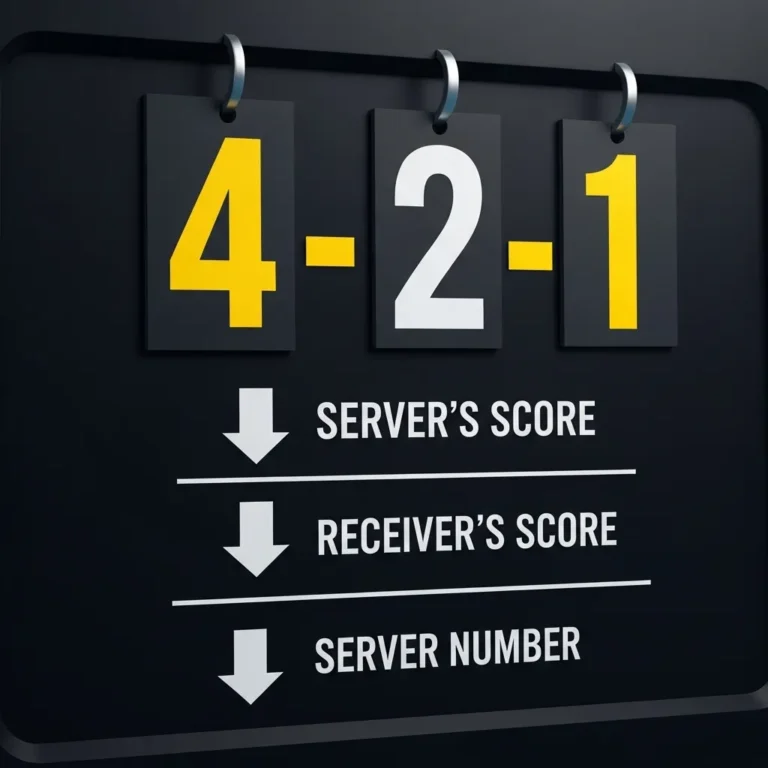
Imagine the score is 4-2-1. In pickleball doubles rules, those three numbers represent three specific pieces of information in this exact order:
- The Serving Team’s Score: (They have 4 points).
- The Receiving Team’s Score: (They have 2 points).
- ** The Server Number:** (Is this the first server or the second server for the team?).
So, if you hear “4-2-1,” it means the serving team is winning 4 to 2, and the first partner is currently serving. If they lose that rally, the ball doesn’t go to the opponents yet. Instead, the score becomes “4-2-2.” The second partner gets to serve.
What does the third number indicate (Server 1 vs. Server 2)?
This is the heartbeat of doubles play. In singles, you lose the serve the moment you make a mistake. In doubles, your team gets two “bites at the apple.”
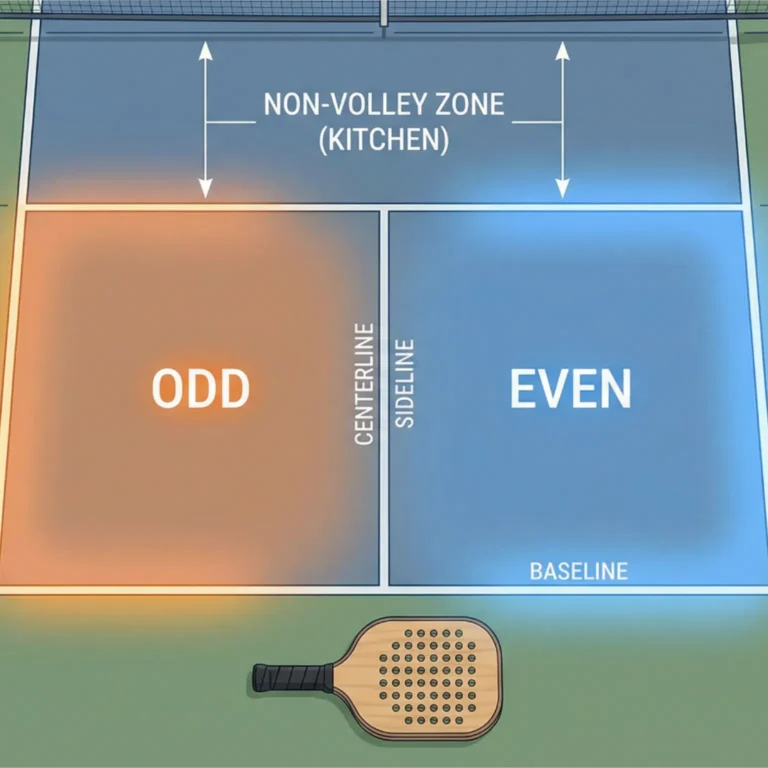
When a team wins the serve (known as a “Side Out”), the player in the right-hand court (the even side) always starts as Server 1. They keep serving as long as they score points. If they lose a rally, the serve passes to their partner, who becomes Server 2.
Only after Server 2 loses a rally does the serve go back to the opponent. This third number is simply a tracker to let everyone know if the serving team is on their first or last life for that rotation.
When do we switch sides of the court? (Clarifying that only the serving team switches sides upon scoring)
This creates confusion for many new players. You might hit a winner and instinctively want to high-five your partner and switch spots. Hold your horses!
In pickleball serving rules doubles, you only switch the left and right sides with your partner when you are the serving team and you score a point.
- If you serve and win the point: You swap sides with your partner.
- If you serve and lose the point: You stay exactly where you are.
- If you are receiving: You never switch sides with your partner, regardless of whether you win or lose the rally. You stay planted in your lane until you get the ball back for your own service turn.
Who serves first at the very beginning of the game? (Explaining the 0-0-2 start / “Side Out” rule)
Here is the quirky exception to the rule. To prevent the team that starts the game from having an unfair advantage, the very first team to serve only gets one server.
When the game begins, the score is “0-0-2.”
Why the “2”? It signals that this serves as the “second” serve of the rotation. If the starting team loses the very first rally, the ball goes immediately to the other team (Side Out). There is no “Server 1” for the opening possession of the game. It’s a way to keep the game balanced right from the opening tap.
2. Serving Sequence and Player Rotation
Now that we have cracked the code on scoring, the next logical question involves positioning. Knowing rules of pickleball doubles regarding where to stand can prevent those awkward collisions with your partner.
What is the correct serving sequence in doubles? (From Server 1 to Server 2, then side-out)
Think of the flow like a relay race.
- New Side Out: The ball comes to your team. The player in the right court is Server 1.
- Server 1 plays: They serve until the team makes a fault.
- Partner takes over: The ball stays with your team, but now the other partner serves. This is Server 2.
- Side Out: If Server 2 loses the point, the serve travels across the net to the opponents.
This cycle repeats endlessly until the game ends (usually to 11 points, win by 2).
Do both players on a team get to serve every time?
Yes, with the exception of that very first service turn of the game (the 0-0-2 start). For the rest of the match, both you and your partner will have an opportunity to serve before giving the ball up. This is great because it takes the pressure off. If you mess up your serve, your partner has your back with a second chance to put points on the board.
Who serves from the right (even) and left (odd) courts?
This connects back to your individual score.
- Even Score (0, 2, 4, 6…): The player who started the game on the right side should be on the right side when the team’s score is even.
- Odd Score (1, 3, 5, 7…): That same player should be on the left side when the team’s score is odd.
However, in casual play, people rarely track who started where. The easier way to remember is simply:
- The first serve of your team’s possession always starts from the Right court.
- If you score, you switch to the Left.
- You keep alternating as long as you keep scoring.
What happens if we serve from the wrong side or out of turn? (Fault rules regarding positioning errors)
It happens to the best of us. You forget to switch, or the wrong person picks up the ball.
If you serve from the wrong position or the wrong person serves, it is a fault. However, the rules have become a bit more forgiving here. Usually, if the mistake is caught before the serve occurs, you just correct it. If the ball is served and the error is called, you lose the rally.
It’s always good practice to ask the opponents, “Am I in the right spot?” before winding up. It keeps the game friendly and fair.
4. The Two-Bounce Rule (Double Bounce Rule)
Note: I’ve placed this section here because logically, after the serve, the return and the third shot happen before most Kitchen play occurs.
This is arguably the most critical tactical rule in doubles pickleball rules. It forces the game to slow down and prevents the serving team from unfairly dominating the net immediately.
What exactly is the “Two-Bounce Rule” in doubles?
The rule is simple but easy to forget in the heat of the moment.
- Bounce One: The serve must bounce on the receiver’s side. (Obviously, otherwise, it’s not a serve).
- Bounce Two: The return of serve must bounce on the serving team’s side before they can hit it.
This means the ball must bounce twice—once on each side of the court—before anyone is allowed to volley (hit the ball out of the air).
Can the serving team volley the return of serve? (Explaining why the third shot is critical)
Absolutely not. This is the most common mistake beginners make. You serve a beauty, the opponent hits a weak floater back to you, and your eyes light up. You run forward to smash it out of the air—and suddenly, everyone yells “Fault!”
Because the serving team must let the return bounce, they are usually stuck back at the baseline while the receiving team rushes to the net. This disadvantage is why the “Third Shot Drop” (a soft shot into the Kitchen) is so famous. The serving team needs time to move forward, and they can’t do that if they are waiting for the ball to bounce.
Does the rule apply throughout the entire point or just the beginning?
It only applies to those first two shots (the serve and the return). Once the serving team has let the return bounce and hit their shot (the 3rd shot), the Two-Bounce rule is over. From the 4th shot onward, anyone can volley the ball (provided they aren’t standing in the Kitchen).
3. The Non-Volley Zone (The Kitchen)
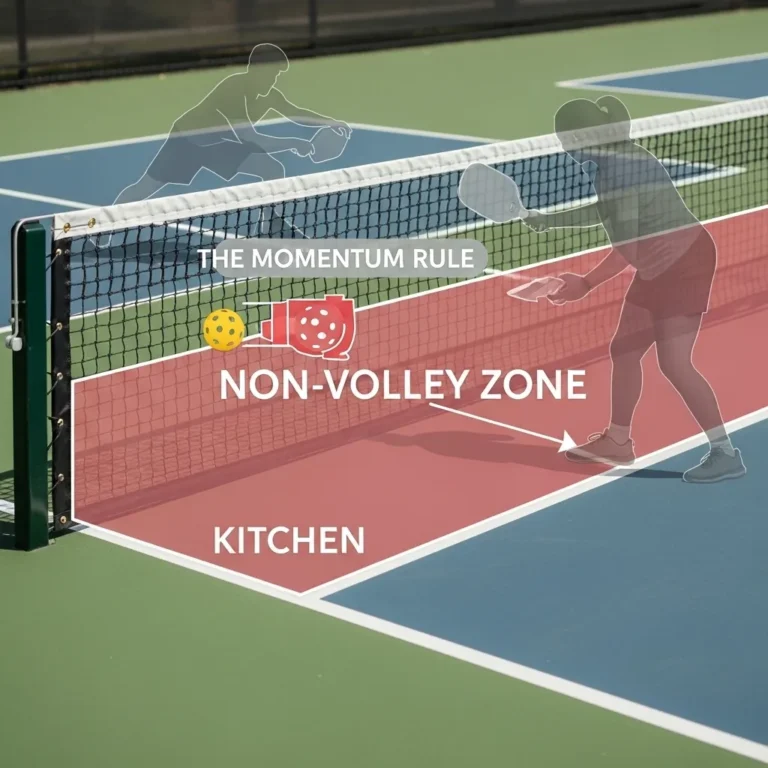
Now we arrive at the most unique and famous aspect of the sport. The Kitchen is that 7-foot zone on either side of the net. It is the source of many laughs and many arguments regarding rules of pickleball doubles.
Can I step into the Kitchen to hit a ball in doubles? (Distinguishing between volleying and hitting off the bounce)
Yes! There is a myth that you can never go into the Kitchen. That’s not true. You can have a picnic in the Kitchen if you want—as long as you don’t volley the ball.
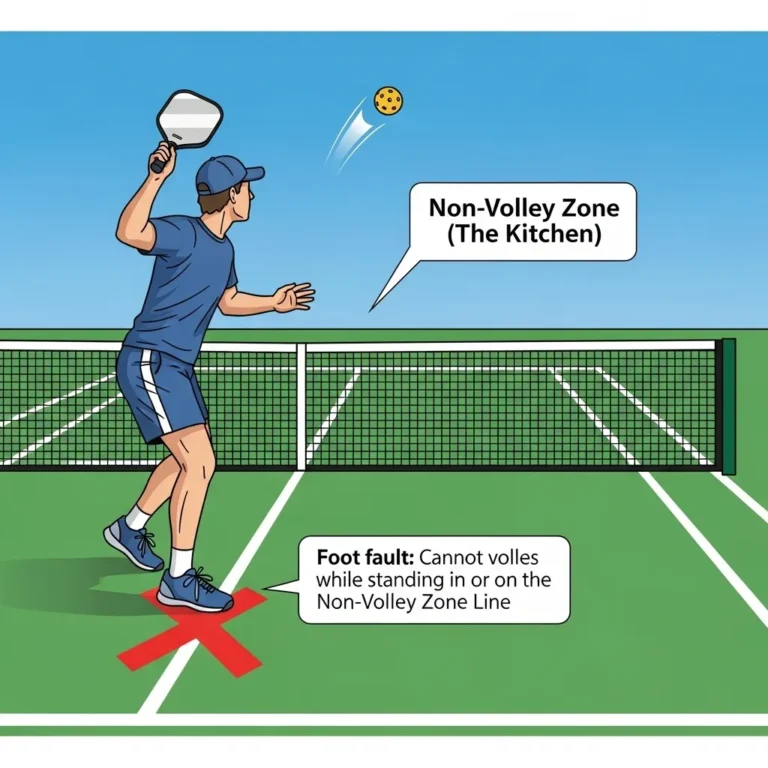
- The Golden Rule: You cannot hit the ball while standing in the Kitchen if the ball has not bounced yet.
- The Exception: If the ball bounces in the Kitchen (a “dink”), you can step in, hit it, and then step out.
What is the “momentum rule” regarding the Kitchen line? (What happens if I volley and fall into the zone afterwards?)
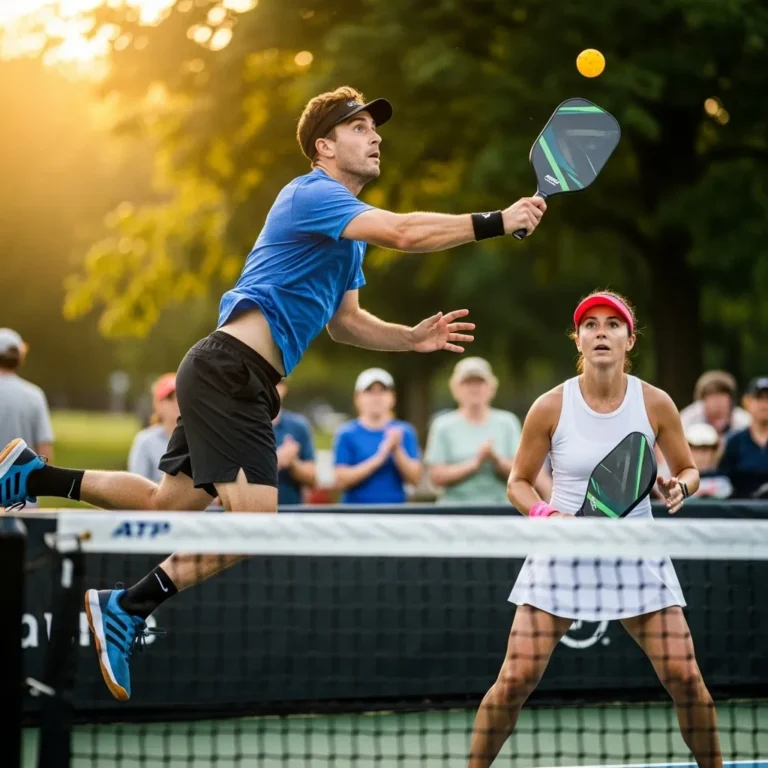
This is where things get tricky. Let’s say you are standing behind the line, you jump up, smash a volley, and your momentum carries you forward so you step into the Kitchen after the ball is already dead. Is it a fault?
Yes, it is. The rule states that your momentum from a volley cannot take you into the Non-Volley Zone, even if the point is technically over. You must be in control of your body. This includes your paddle touching the Kitchen floor or even your glasses falling off into the zone!
Can my partner stand in the Kitchen while I am serving or returning?
Yes. Your partner can stand anywhere they like. However, if they are standing in the Kitchen, they absolutely cannot touch the ball out of the air. If the opposing team hits a ball that is headed for your partner in the Kitchen, your partner must dodge it or let it bounce. If it hits them without bouncing, it’s a fault.
Does the line count as part of the Kitchen?
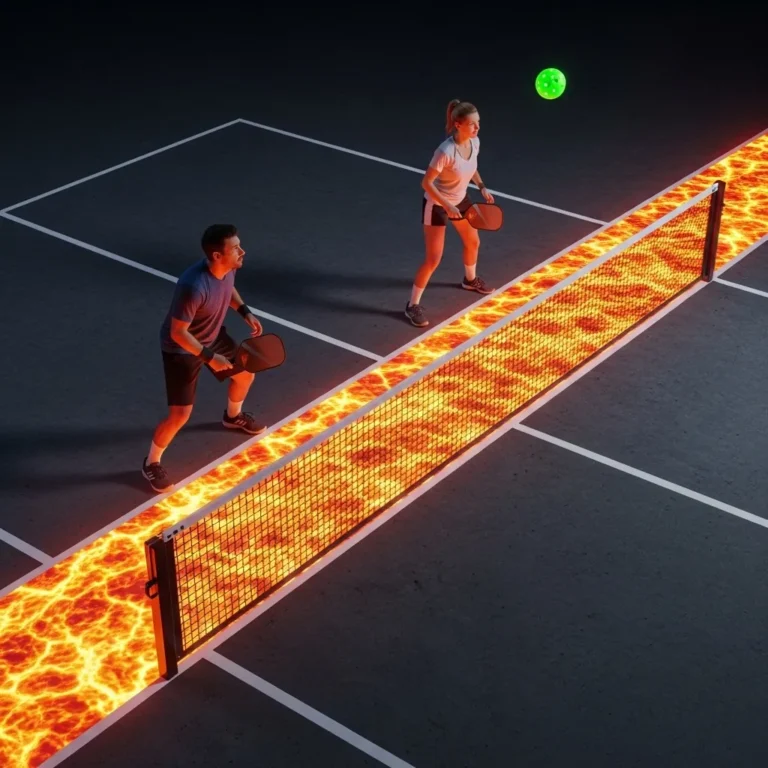
Yes. The line is “lava.” If your toe is even slightly touching the Non-Volley Zone line while you volley, it is a fault. The Kitchen includes the line itself. You must be completely behind it.
5. Serving Mechanics and Faults
We have covered the sequence, but how do you actually hit the ball legally? Pickleball serving rules doubles are specific to ensure the serve is just a way to start the point, not an overpowering weapon.
What are the legal requirements for a serve? (Underhand motion, contact below waist)
The traditional pickleball serve must be an underhand stroke. There are three main criteria you must meet:
- Upward Motion: The arm must be moving in an upward arc.
- Paddle Position: The paddle head must be below your wrist when you make contact.
- Contact Point: You must hit the ball below your waist (specifically, below the navel).
This prevents players from hitting overhand tennis-style serves that would be impossible to return on such a small court.
Is a “Drop Serve” allowed in doubles, and how does it differ from a Volley Serve?
Yes, the Drop Serve is fully legal and increasingly popular.
- Volley Serve: You toss the ball in the air and hit it before it touches the ground. This requires strict adherence to the upward motion/below waist rules.
- Drop Serve: You simply let the ball fall from your hand (gravity only, no throwing it down) and hit it after it bounces. The beauty of the Drop Serve is that the strict mechanical restrictions (paddle below wrist, etc.) are relaxed because the bounce naturally limits how hard you can hit it.
What happens if the ball hits the net cord on a serve? (Clarifying there are no “lets” in standard play anymore)
In the old days, if a serve clipped the net but still landed in the correct box, it was a “Let,” and you replayed the serve.
That rule is gone.
Now, if the ball hits the net cord and trickles over into the correct service box, the ball is live! The receiver must play it. It adds a fun (or frustrating) element of luck to the game.
Where must my feet be positioned when serving?
You must have at least one foot on the ground behind the baseline. You cannot touch the baseline or the imaginary extension of the sidelines or center line until after you have made contact with the ball. Think of the baseline as a cliff edge—don’t fall over it until the ball is gone.
6. Line Calls and Ball Contact
Pickleball is unique because, in most recreational and even tournament settings, there are no referees. We rely on the honor system. This requires knowing the doubles pickleball rules regarding lines and contact.
How do line calls work? Is the line “in” or “out”?
In pickleball, lines are IN.
If even a sliver of the ball compresses onto the painted line, the shot is good.
The only exception is the Kitchen line during a serve—the serve must clear the Kitchen line. If a serve hits the Kitchen line, it is a fault. But for sidelines and baselines, paint is safe.
- Code of Ethics: If you cannot see the space between the ball and the line, you must call it “in.” The benefit of the doubt always goes to the opponent.
What happens if the ball hits a player (Nasty Nelson)?
If the opponent hits the ball and it strikes you or your partner before bouncing, you lose the point. It doesn’t matter if you are standing out of bounds. If the ball hits you, your clothing, or your paddle while you are holding it (and you didn’t swing), it is a fault on you.
This is sometimes called a “Nasty Nelson” if the server intentionally aims for the receiver’s partner standing at the net!
Can I reach over the net to hit the ball? (Rules on breaking the plane of the net)
Generally, no. You cannot cross the plane of the net to hit the ball. You must wait for the ball to cross to your side.
- The Exception: If the ball bounces on your side and has so much backspin that it flies back over the net to the opponent’s side, you are allowed to reach over the net to touch it (without touching the net itself) to win the point.
Is it a fault if the ball hits my paddle hand?
The hand holding the paddle is considered an extension of the paddle strictly below the wrist. If the ball hits your knuckles while you are gripping the paddle, the shot is legal and play continues. If it hits your forearm or wrist watch, it’s a fault.
7. Advanced Positioning Rules
As you get better, you might see teams doing strange things, like standing in the same spots regardless of the score. This is likely “Stacking.”
What is “Stacking” in doubles and is it legal?
Stacking is a strategy used to keep players on their preferred sides of the court (e.g., keeping a lefty on the right side so both forehands are in the middle).
It is 100% legal.
The rulebook says you must serve and receive from the correct boxes based on the score. However, it does not say you have to stay there after the serve is hit.
So, teams will line up in the correct boxes, hit the serve, and immediately slide over to their preferred positions.
How do we keep track of who serves if we are stacking?
This is where headaches happen. When stacking, you must mentally separate your “position” from your “serving turn.”
You always track the score to know who should be serving.
- Pro Tip: If you are stacking, the serving team usually uses hand signals or whispers to ensure the right person takes the ball, then they shift positions immediately after contact. It requires good communication, so maybe master the basic 0-0-2 first before trying this!
Conclusion
Pickleball doubles is a game of layers. On the surface, it’s just hitting a plastic ball over a net. But underneath, the pickleball rules doubles create a fascinating game of patience, positioning, and partnership.
From the quirky “0-0-2” start to the “lava” of the Kitchen line, every rule exists to make the rallies longer and the game more competitive for all ages. Don’t stress if you forget the serving sequence once or twice; even the pros have moments where they ask, “Wait, am I a 1 or a 2?”
The most important rule isn’t written in the handbook: be kind, tap paddles at the end of the game, and enjoy the community. Now that you are armed with the knowledge of the rules of pickleball doubles, get out there and claim the kitchen!
you may like it