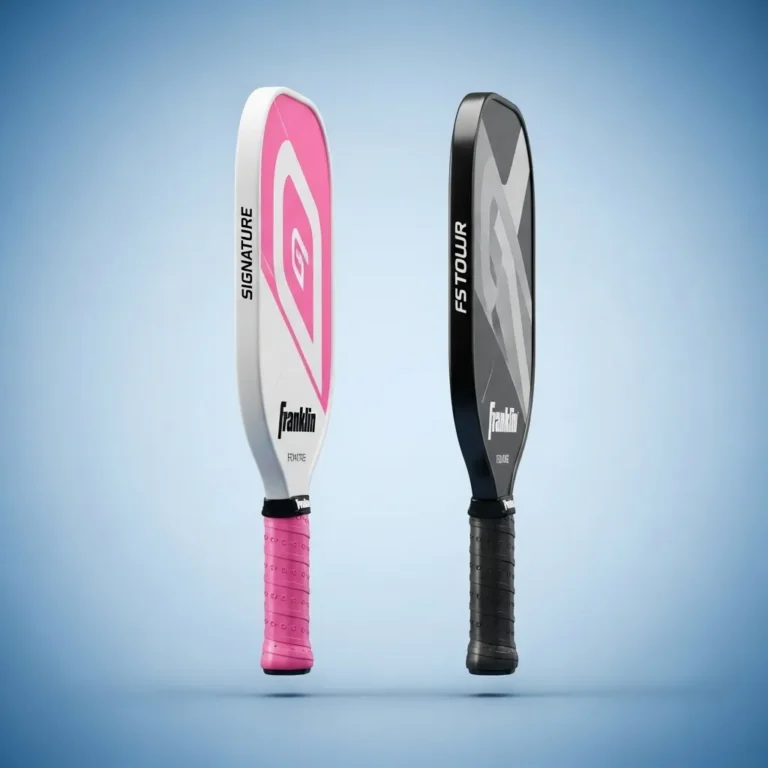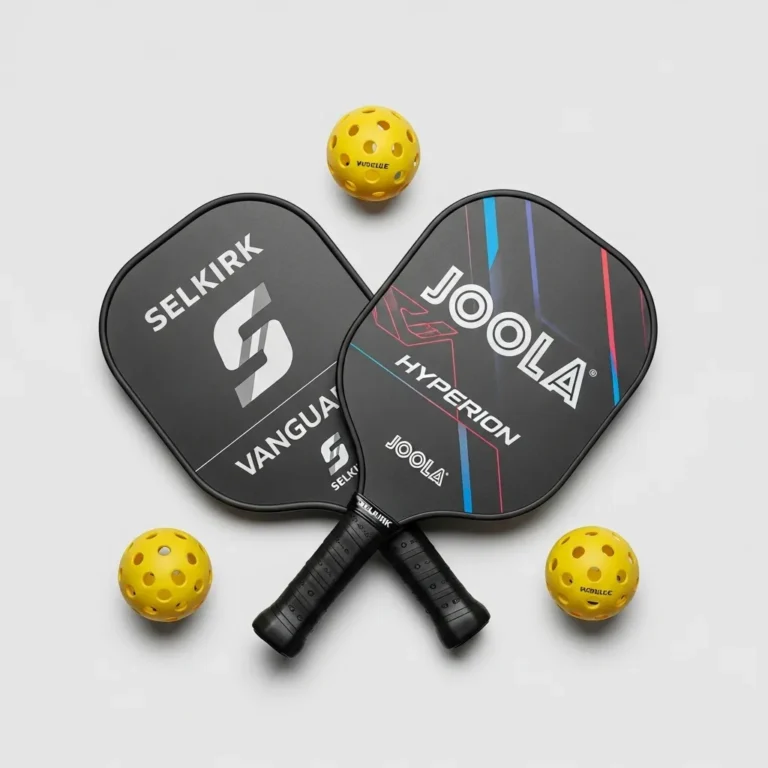
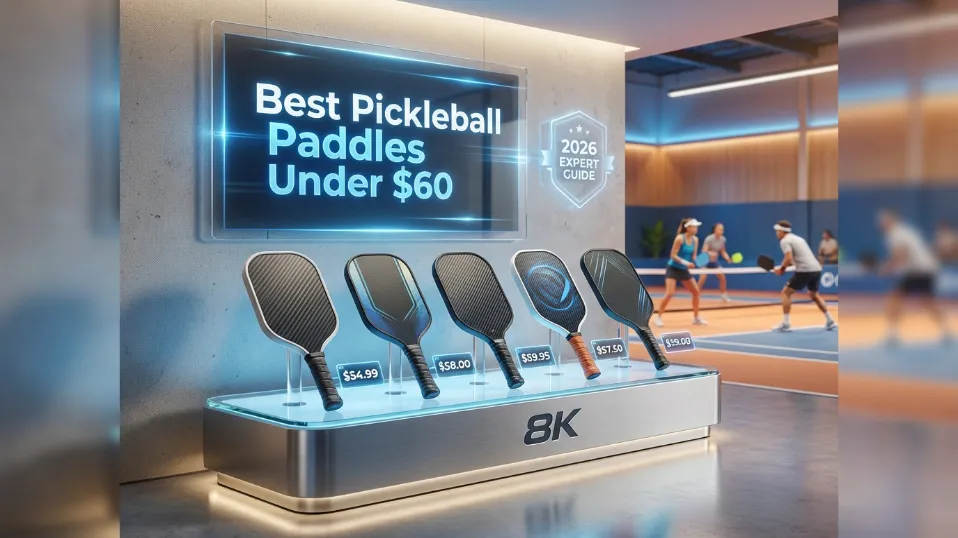
Pickleball is sweeping across the United States at a record pace, turning neighborhood tennis courts into buzzing hubs of social competition. But for many new players, the excitement quickly fades when they realize their $20 “supermarket special” paddle feels like a piece of dead plywood. You don’t need to drop $250 to play like a pro, but you do need to avoid the “Amazon junk” trap. Finding the best pickleball paddles under $60 is about more than just a low price tag; it’s about identifying the specific material science and construction methods that offer a legitimate bridge to intermediate play without breaking the bank.
In this guide, we go beyond surface-level aesthetics. We examine the fiberglass pop, carbon fiber grit, and the mechanical integrity of honeycomb cores. Whether you are a “banger” looking for raw power or a “dinker” looking for finesse, understanding how to pick a pickleball paddle that fits your budget—and your health—is the first real step in your pickleball journey.
Top Picks for 2026: Performance Meets Affordability
The market for best budget pickleball paddle options has shifted. Technology that was once exclusive to elite manufacturers has trickled down, meaning a $60 investment in 2026 buys you significantly more performance than it did just two years ago.
- Best Overall: JOOLA Essentials – Coming from the brand that sponsors the GOAT Ben Johns, this paddle features a balanced 12mm polypropylene core and a fiberglass face. It’s a reliable all-court performer for those who want a trusted name.
- Best for Spin: Friday Original – Technically a bit higher in price for a single unit, but their 2-for-$99 deal brings the cost per paddle to under $50. These are rare thermoformed carbon fiber paddles at this price point, offering elite spin potential.
- Best for Power: HEAD Radical Elite – A staple in the United States market, this paddle uses a composite face to generate massive “pop” from the baseline.
- Best for Control: VINSGUIR Viento X2.0 – One of the few entry-level paddles to feature a 16mm core. It absorbs vibration beautifully, making it an excellent choice for players focused on resets and dinks.
- Best Advanced-Lite: XS XSPAK Carbon Fiber – Often referred to as a “clone” of high-end models, it offers a raw carbon fiber surface for under $60 on many marketplaces.
Material Science: Fiberglass vs. Graphite vs. Carbon Fiber
When searching for the best pickleball paddles under $60, the “face material” is usually the first thing manufacturers brag about. However, each material serves a specific mechanical purpose on the court.
Fiberglass (Composite) Faces
Most budget paddles, like the Niupipo line, use fiberglass. Mechanically, fiberglass is more flexible than carbon fiber. When the ball hits the surface, the fiberglass acts like a trampoline, compressing and then snapping back. This creates power. If you struggle to get the ball to the back of the court, a fiberglass face is your best friend. However, the trade-off is control; the ball stays on the face for less time, making it harder to “aim” delicate shots.
Graphite Faces
Graphite is incredibly thin—often the thickness of a fingernail. It is stiffer than fiberglass but lacks the textured “grit” of carbon fiber. Graphite is prized for its “touch.” It allows the vibrations from the ball to travel more clearly through the honeycomb core into your hand, giving you better feedback. This is ideal for the “soft game” where precision is more important than speed.
Raw Carbon Fiber
The “gold standard” in 2026. For a long time, you couldn’t find a carbon fiber paddle for under $100. Now, brands like Pickle Genius and Friday Pickleball have changed the game. Carbon fiber is stiff and lightweight, but its real secret is grit. The raw texture allows the paddle to “grab” the ball, generating the massive RPMs needed for aggressive topspin serves and dipping drives.
The Health Angle: Why Your Budget Paddle Might Hurt You
One “lost angle” in many reviews is the impact of budget gear on pickleball injuries. Cheap paddles often use very thin polypropylene cores (10mm to 12mm) and high-density glues that don’t absorb shock well. This shock travels directly up the handle and into your tendons, leading to the dreaded “Tennis Elbow.”
If you have a history of joint pain, the most important technical spec to look for is the 14mm vs 16mm core thickness. A 16mm core, found in paddles like the VINSGUIR Viento, provides much better vibration dampening. While it might feel less “powerful” because it absorbs energy, it is significantly safer for your arm during long sessions at the free pickleball courts in your city.
Hidden Gaps: What Experts Don’t Tell You About $60 Paddles
There are three technical failures common in the sub-$60 category that you won’t find in a sales brochure:
- Neck Integrity: High-end paddles are often thermoformed (molded as one piece). Budget paddles are usually “sandwiched” and glued. The neck—where the handle meets the face—is a massive structural weak point. Aggressive overhead smashes can actually snap a cheap paddle at the handle.
- Core Crushing: Over time, the plastic cells in a honeycomb core can collapse. This creates “dead spots” where the ball simply dies on impact. Higher-quality budget brands like JOOLA and HEAD use better-bonded polymers to prevent this.
- Spray-on Grit vs. Real Texture: Many $40 paddles claim to have “high spin,” but they achieve this with a spray-on coating that wears off after 20 hours of play. Look for “Raw Carbon Fiber” or “T700” labels to ensure the texture is part of the material itself.
Expert Buying Hacks: Getting $150 Performance for $60
One of the best ways to secure a professional-grade paddle on a budget is to hunt for “Blemished” (Blem) units. Brands like 11SIX24 or Pickleball Apes often sell paddles with minor cosmetic defects—like a slightly crooked logo or a tiny scratch in the paint—at a 40-60% discount. These “Blem” paddles are structurally identical to their full-price counterparts. This is a “secret” used by 3.5+ level players to keep their gear fresh without spending a fortune.
Additionally, check the USA Pickleball approved paddle list before you buy. Some of the highest-performing cheap paddles on Amazon are illegal for tournament play because their surface grit is too aggressive or they haven’t been safety-tested. Always look for the USA Pickleball seal on the face of the paddle.
USAPA Approval: Why it Matters for U.S. Players
If you plan on moving beyond casual backyard play, your paddle must be sanctioned. The USA Pickleball Equipment Standards ensure that every paddle provides a fair playing field. Many budget manufacturers bypass this testing to save costs. If you show up to a local club or a Midwest Pickleball Club event with an unapproved paddle, you may be asked to switch gear or be disqualified from competitive ladders.
Best Pickleball Paddles Under $60-Frequently Asked Questions
1. How long does a $60 paddle realistically last?
With 2-3 sessions of play per week, a budget honeycomb core paddle usually lasts 6 to 9 months before the core begins to lose its “spring” or dead spots appear. Advanced players may wear them out faster due to higher swing speeds.
2. Is a 16mm core better for beginners than a 13mm core?
Generally, yes. Beginners often struggle with control and pop-ups. A 16mm core (like the one discussed in our 14mm vs 16mm analysis) offers a softer feel, making it easier to learn the delicate “kitchen” game while protecting your elbow from vibration.
3. Can I add weight to a cheap paddle to make it feel “Pro”?
Absolutely. Many players buy a lightweight $40 paddle and add lead tape to the 3 and 9 o’clock positions on the frame. This increases the “twist weight,” which makes the paddle more stable on off-center hits and expands the sweet spot.
4. What is “core crushing” and how do I spot it?
Core crushing occurs when the internal cells collapse. You can spot it by pressing your thumb firmly across the paddle face; if you hear a “crunching” sound or feel a soft, hollow spot, the paddle is structurally compromised and needs replacement.
5. Should I buy a set of two paddles or one better one?
If you are playing with a partner, a pickleball paddle set offers the best value. However, if you are serious about improving, a single $60 paddle (like the JOOLA Essentials) will almost always perform better than a pair of $30 paddles sold in a bundle.
Final Verdict: Value Over Price
The best pickleball paddles under $60 are no longer just “starter toys.” They are legitimate sports equipment. By prioritizing a USA Pickleball approved seal, choosing the right 16mm core for health, and understanding the difference between fiberglass and carbon fiber, you can compete at a high level without a massive financial commitment. Remember, a better paddle won’t fix bad footwork, but a bad paddle can certainly hold back your progress. Choose gear that complements your style, stay safe on the court, and most importantly, have fun as you join the fastest-growing community in the United States.
For more on high-value gear, check out our deep dive into the best budget pickleball paddle options for this season.