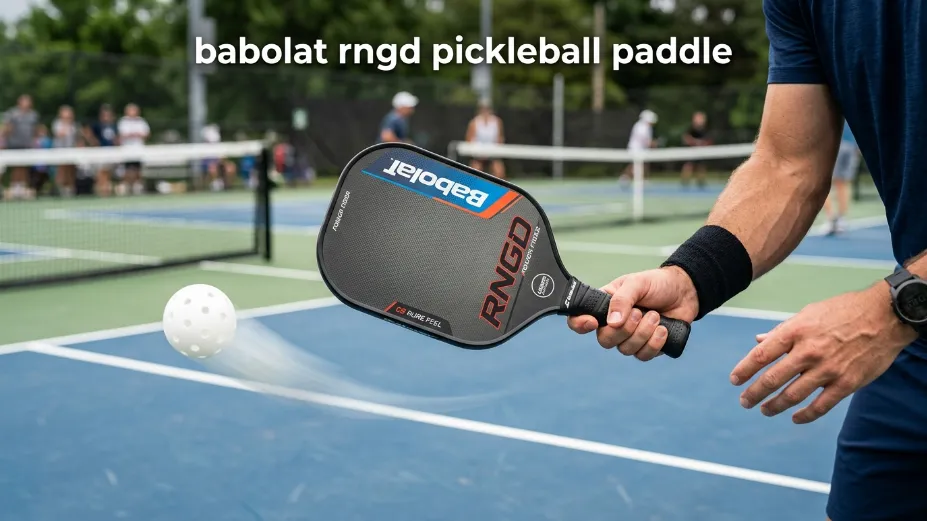
When tennis titan Babolat entered the courts, they didn’t just copy the competition—they engineered a division. Standing at the crossroads of power and precision is the babolat rngd pickleball paddle lineup, a series crafted for players who refuse to compromise their baseline depth for kitchen-line finesse. But marketing fluff doesn’t win points at 11-10 in the third set. Whether you are eyeing the explosive pop of the Power model or the soft, Reset-ready feel of the Touch, choosing the wrong face material or core thickness will ruin your soft game. Let’s bypass the hype and dissect exactly how these paddles weight up, spin, and drive under real-game pressure.
Babolat RNGD pickleball paddles comparison: RNGD Power and RNGD Touch — core material and thickness, face construction, average weight, grip size and length, and primary playstyle
Babolat RNGD — Paddle Comparison
Core · Face · Weight · Grip · Primary Playstyle
For US intermediate players selecting between these legacy designs, the ideal choice hinges directly on your physical comfort limits and baseline power demands. If you prioritize raw plow-through, baseline drive depth, and maximum stability against heavy drives, the Babolat RNGD Power is the superior option despite its heavier swing weight. However, players seeking maximum hand speed at the kitchen or those transitioning from quick racket sports who rely on rapid reaction volleys will find better long-term performance value in the lighter Babolat RNGD Touch.
Babolat RNGD Pickleball Paddle Review: Babolat RNGD Power Pickleball Paddle vs. Babolat RNGD Touch Pickleball Paddle
The engineering core of the babolat rngd pickleball paddle review centers upon its structural and dimensional layout. While legacy tennis brands have occasionally struggled to adapt to the unique weight distributions of pickleball, this specialized lineup represents a focused attempt to balance raw head weight with rapid aerodynamic recovery.
- The Core Matrix: Utilizing high-strength polypropylene (PP) honeycomb cells, the core offers excellent shock absorption. When defending hard drives from the transition zone, the cells absorb the ball’s kinetic energy before transferring a controlled rebound back through the face, helping players execute reliable reset shots.
- The Composite Face: By binding a graphite skin over a composite composite backing, Babolat engineered a highly consistent sweet spot. This multi-layered construction delivers crisp feedback on sweet-spot hits while minimizing the dead, buzzy vibrations typical of low-end wooden or basic aluminum models.
- Aerodynamic Dimensions: Standing at 16.125 in in length and 7.875 in in width, both legacy models adopt a sleek hybrid shape. This narrow silhouette sacrifices a tiny fraction of lateral forgiveness compared to widebody models but grants players a noticeable boost in reach and leverage when driving the ball..
The ergonomic handle features Babolat’s signature tennis-inspired octagonal design. This shape is crucial for players who utilize the continental grip to switch fluidly between forehand dinks and backhand roll volleys. For players looking to understand how face materials influence control and feel, analyzing the differences between composite skins and premium fiberglass pickleball paddles provides essential context before finalizing your setup.
The Unified Evolution: How the Modern Babolat RNGD Merges Touch and Power
Understanding the current US market requires a brief look at how Babolat consolidated its product line. In its latest design cycle, Babolat phased out the dual “Power” and “Touch” designations, merging the best characteristics of both into a singular, highly refined model simply called the babolat rngd.
The Specifications of the Modern Unified Model
The modern, unified paddle shifts from a graphite composite surface to a 100% fiberglass face designed for effortless elasticity. Weighing in at an engineered midpoint of 7.8 oz (220 g ± 5 g) with a 14 mm core, this hybrid model addresses the primary historical complaint from players using the Babolat RNGD Touch pickleball paddle, who often felt it lacked the necessary head mass to finish points from the baseline.
Aerodynamic Leverages and Grip Modifications
By extending the handle length to 5.3 in on the modern unified model, Babolat gave players the leverage required to whip through the ball with high head speed. This structural change effectively compensates for the lighter weight, matching the drive speed of the legacy Babolat RNGD Power pickleball paddle while preserving the quick, responsive maneuverability that defined the original Touch model. It also provides a comfortable physical footprint for players who use a two-handed backhand drive.
The Spin Factor: RPM Grit Technology Under the Microscope
A major missing angle in mainstream commercial review spaces is a realistic assessment of surface texture wear over time. The modern unified model utilizes Babolat’s proprietary RPM Grit technology, a textured paint applied directly over the fiberglass face to maximize surface friction within USA Pickleball limits.
Out of the box, RPM Grit provides superb ball bite. This allows players to drop low, dipping thirds at their opponent’s feet or pull off aggressive, winding slices from the baseline. However, long-term testing reveals that paint-on grit is inherently susceptible to wear. Over several weeks of heavy play, the friction of the hard plastic ball on the painted surface gradually wears the grit down, leading to a progressive drop in maximum spin potential.
In contrast, premium carbon fiber pickleball paddles utilize a raw, textured weave (such as peel-ply raw carbon) where the texture is physically part of the structural fibers. This structural texture resists friction far longer than spray-on paint grit. For competitive players who require consistent, long-term spin profiles across months of tournament play, understanding this manufacturing limitation is critical before choosing a painted fiberglass surface over raw carbon fiber.
Comparative Buying Guide: Babolat RNGD vs. XPLR, RBEL, and MNSTR
Navigating Babolat’s lineup requires a clear understanding of where each model sits in terms of playability, material technology, and cost. If you are trying to find the right tool for your game, learning how to choose a pickleball paddle will help you align these specifications with your personal playing goals.
- RNGD vs. XPLR (The Beginner Baseline): The 99 XPLR is a widebody, highly forgiving beginner paddle with a shorter 5.0 in handle. Upgrading to the 119 RNGD gets you a narrower, longer hybrid shape that increases reach and baseline leverage, making it a much better option for players moving past the beginner phase.
- RNGD vs. RBEL (The Control Pivot): The 169 RBEL pivots directly toward the control-minded player. Featuring a thick 16 mm core and a durable peel-ply raw carbon face, it excels at absorbing pace at the kitchen, whereas the thinner 14 mm RNGD focuses on effortless pop and baseline depth. Knowing the performance differences between a 14mm vs 16mm pickleball paddle is essential here; the RBEL is built to quiet the ball, while the RNGD is built to make it fly.
- RNGD vs. MNSTR (The All-Court Flagship): The 169 MNSTR features a balanced 15 mm core wrapped in an EVA-enclosed polypropylene honeycomb structure to expand the sweet spot. It provides a more refined, professional-grade playing experience with a durable peel-ply face, whereas the RNGD serves as an approachable, highly comfortable intermediate paddle.
The US Market Debate: Raw Carbon Hegemony vs. Legacy Brand Power
In US pickleball forums on Reddit and Quora, a heated debate exists regarding legacy tennis brands entering the pickleball market. Some competitive, high-level players (4.0–4.5 DUPR) argue that tennis brands are ‘behind the curve,’ relying on outdated non-thermoformed, painted-grit composite paddles while smaller, specialized startups offer raw carbon fiber thermoformed paddles at highly competitive prices. Some critics have even referred to composite-face legacy paddles as ‘thin bricks.
However, this perspective overlooks the needs of recreational and developing players. High-end thermoformed carbon fiber paddles are exceptionally stiff and unforgiving. For intermediate players still developing their sweet-spot accuracy, a stiff paddle can lead to arm strain and high error rates. The elastic fiberglass face of the RNGD offers a softer, more forgiving response that helps players build consistent mechanics without requiring a perfect contact point every time.
Furthermore, Babolat’s design principles have proven successful at the highest levels of the sport. Professional singles player Chris Haworth has repeatedly demonstrated that on-court success is driven by mechanical skill rather than gear hype, securing major victories against top-tier players while using Babolat paddles. For players looking to maximize their performance per dollar without spending over $150, the RNGD stands out as one of the best budget pickleball paddles available from a globally trusted manufacturer.
Exposing the Information Gaps: Real-World Durability Under the Microscope
While marketing sheets highlight the effortless power and modern color schemes of the RNGD, real-world playing data from US courts reveals specific structural characteristics that buyers should monitor over time:
- Core Compression: Because the RNGD does not utilize a fully thermoformed, carbon-sealed edge, the polypropylene honeycomb core is susceptible to gradual compression under continuous, high-velocity hits. Over 100–150 hours of play, this can lead to subtle dead spots near the perimeter of the face.
- Edge Guard Adhesion: The 1/5 in overlapping bumper edge guard is exceptionally durable against hard ground scrapes, but continuous contact with the court during low defensive scoops can occasionally weaken the adhesive, leading to minor rattles.
- Handle Structural Integrity: The Perfect Feel (PF) grip is exceptionally secure, but players who apply heavy, moisture-absorbent overgrips should check the base handle regularly to ensure sweat does not degrade the synthetic material beneath.
US Court Performance: Hard Courts, Wind, and Outdoor Ball Dynamics
The playing characteristics of the Babolat RNGD behave differently depending on your court environment. On outdoor US hard courts playing with a heavy, fast outdoor ball like the Franklin X-40, the fiberglass face provides excellent, explosive energy return. This helps players drive the ball deep into the opponent’s court even when fighting against a stiff headwind.
However, during hot US summer months, the plastic of both outdoor balls and the paddle’s internal polymer honeycomb core naturally softens. This temporary drop in core stiffness slightly mutes the paddle’s explosive pop, turning it into a more control-oriented tool. Conversely, during cold winter sessions on outdoor courts, the core stiffens noticeably, increasing baseline power but requiring a delicate touch to keep dinks from popping up too high at the kitchen.
Verdict: Is the Babolat RNGD Worth Your Money?
The final decision on whether to purchase this hybrid paddle depends on your playing level, physical needs, and overall budget:
- Who Should Buy: Transitioning tennis players who love a familiar, octagonal grip; intermediate players who need effortless depth without swinging excessively hard; and budget-conscious competitors who want a high-quality, USA Pickleball-approved paddle under $120.
- Who Should Avoid: High-level tournament players (4.0–4.5 DUPR) who require raw carbon-face dwell time for heavy spin, or players with exceptionally wide hands who find a standard 4.0 in grip circumference too narrow.
Frequently Asked Questions (FAQ)
Is the Babolat RNGD paddle approved for official USA Pickleball tournaments?
Yes. The Babolat RNGD has been fully tested and certified by USA Pickleball. It is fully approved for local, regional, and national sanctioned tournament play.
How can I submit a warranty claim if my paddle’s face or core fails prematurely?
Babolat USA offers a limited warranty against manufacturer defects. To submit a claim, visit their official US portal, click on “Contact our experts,” and submit the warranty form with your proof of purchase. Babolat officially recommends using Google Chrome or Firefox for the best compatibility on their submission site.
Can I use a rubber paddle eraser to clean the RPM Grit surface?
Yes. A rubber paddle eraser is the safest and most effective tool for removing plastic ball residue and outdoor dirt from the face. Avoid using liquid chemical cleaners or abrasive scrubbers, as these will permanently damage the painted RPM Grit texture.