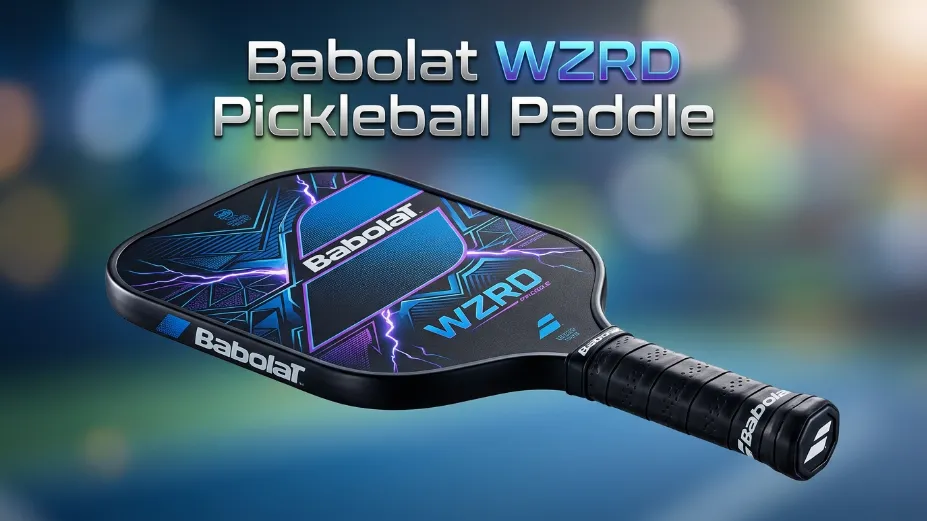
Babolat just shattered the traditional paddle blueprint, and the courts are officially divided. The babolat wzrd pickleball paddle isn’t just another carbon fiber release; it’s a polarizing engineering experiment designed to fundamentally alter your swing weight and ball connection. Before you drop premium cash on a radical design that looks like nothing else at your local club, you need to know exactly how this geometric shift translates to real-world spin, resets, and hand speed. Let’s dissect whether this wizardry is pure marketing illusion or your ultimate competitive edge.
Pickleball paddle specification metrics: material and core type, weight range, dimensions and thickness, and grip specifications
Pickleball Paddle — Specification Metrics
Material · Weight · Dimensions · Grip
Pickleball paddle play style ratings: power rating, control rating, spin potential, and skill level for finesse, resets, and short-game strategy
Finesse, Resets & Short-Game Strategy
Power · Control · Spin Potential · Skill Level
The explosive growth of the US pickleball scene has led to a major shift in what players expect from high-end gear. Simple honeycomb paddles are no longer enough for competitive courts, where high-spin drives and fast kitchen-line exchanges dominate. As advanced engineering enters the sport, understanding the science behind your equipment is key to improving your game and protecting your joints.
Babolat WZRD Pickleball Paddle Review: Technical Anatomy
The mechanical foundation of the babolat wzrd pickleball paddle review centers on its thick-core design and aerospace integration. While standard competitive paddles rely on 14 mm or 16 mm cores to maximize speed, this edgeless widebody model leverages extreme thickness to redefine ball pocketing.
- The 20 mm Polypropylene Core: By utilizing a 0.79-inch thick polymer honeycomb core, the WZRD acts as a natural shock absorber. This deep-set cell matrix dampens the impact of fast-paced shots, allowing you to catch and redirect ball energy with incredible precision during kitchen rallies.
- Aerospace-Grade SWC Pure Feel: Under the outer carbon layer, Babolat integrates a viscoelastic dampening material engineered by the aerospace firm SMAC. This layer filters out harsh, high-frequency vibrations before they can travel up your arm, protecting your elbow and expanding the paddle’s sweet spot.
- MonoMolded DuraTech Engineering: To eliminate structural weak spots, the WZRD is built using a unibody molding process under intense heat and pressure. By fusing the face, core, and handle into a single sealed unit, Babolat prevents edge guard separation and preserves consistent feedback across the face.
The outer face features a strategically woven Biaxial 3K Carbon layout, which balances face flexibility with physical longevity. This provides a uniform response that prevents dead spots from forming over months of heavy use. For players who want to compare this layout with other premium designs, reading our guide on the carbon fiber pickleball paddle provides essential technical context before buying.
Gen 1 vs. Gen 2: Deciding on your Babolat WZRD Carbon Fiber Pickleball Paddle
Navigating the Babolat product family requires understanding the physical differences between its first and second-generation models. Choosing your specific version of the babolat wzrd carbon fiber pickleball paddle dictates your torsional stability, swing weight, and on-court performance.
The Core Dynamics and Added Perimeter Weighting
The first-generation WZRD (SKU 160015) features a balanced Black/Green design with an even weight distribution. While it offers excellent touch, players sometimes noted twisting on off-center hits. To address this, the second-generation WZRD (SKU 160023), recognizable by its aggressive Black/Yellow color scheme, introduced strategic perimeter weighting. By redistributing weight to the lateral 3 and 9 o’clock positions along the paddle edges, Babolat significantly minimized twisting and expanded the lateral sweet spot.
Torsional Stability and Swing Weight Ratings
The structural changes in the Gen 2 model directly improve the paddle’s twist weight, moving its performance metrics closer to custom weighted setups. Because the edgeless widebody shape naturally concentrates mass closer to the hand, the swing weight remains incredibly fast and maneuverable, despite its 8.5-ounce static weight. This design makes it easy to defend against fast drives while maintaining the stability needed to block hard overheads. If you are an advanced competitor looking to pair defensive footwear with this technical paddle, exploring our review of Babolat pickleball shoes will ensure your entire equipment setup is in perfect alignment.
The Critical Fit Guide: Why You Must Understand the Bevels of the PF Handle
A major missing angle across major commercial e-commerce review spaces is the highly specific grip geometry of the WZRD. When choosing the babolat pickleball paddle wzrd, players transitioning from other brands often face an adjustment period due to the handle’s distinct shape.
The paddle is built around the Perfect Feel (PF) Handle, an octagonal design inspired directly by classic tennis rackets. Featuring prominent, hard bevels and a flared butt cap, this handle provides clear physical feedback. This allows players to track their paddle face angle instinctively without having to look at the grip. This is particularly beneficial for players who rely on quick grip changes between points.
However, because the handle is exactly 5.0 inches long, it restricts players who use a two-handed backhand. The vertical grip space is highly compressed, forcing the dominant hand’s palm to sit partially on the paddle’s lower face or overlap with the non-dominant hand. For single-handed players, this compact grip keeps the sweet spot close to the hand, maximizing maneuverability during fast hands battles at the net.
To get the most out of this handle design, understanding grip styles is essential. Players should learn how to utilize a standard continental grip pickleball setup, which naturally matches the octagonal shape of the PF handle, preventing the paddle from slipping or shifting during high-velocity impacts.
Exposing the Information Gaps: Real-World Durability Under the Microscope
While mainstream marketing highlights the premium design of the WZRD, real-world testing across independent US playing groups reveals specific wear patterns and technical dynamics that budget-conscious buyers should consider.
- RPM Max Grit Paint Wear: Unlike raw carbon fiber (RCF) faces that use peel-ply textures pressed into the carbon weave, the WZRD utilizes a textured RPM Max Grit paint coating. Under the high shear stress of aggressive topspin drives, this paint can wear down over time. However, because the 20 mm core allowed the ball to pocket deeper, the impact force is spread across a larger surface area, helping the grit last longer than on thinner painted paddles.
- Exposed Uni-Body Rim Scratches: The edgeless design moves smoothly through the air but leaves the raw carbon edge vulnerable to ground scrapes during low defensive drops. While Babolat applies a protective vinyl tape along the top edge, active players should apply additional edge tape to prevent physical chipping along the perimeter.
- Polypropylene Core Compression: Polypropylene honeycomb cells can experience gradual pack-out after months of intense play. This leads to a slight increase in pop and a reduction in dampening comfort. For heavy players who log multiple sessions per week, keeping track of the core’s response is key to knowing when it is time to refresh your gear.
These structural details are often overlooked in standard reviews, but they are critical for players looking for long-term durability. Understanding how these materials react over time ensures you can maintain your technical performance without unexpected equipment failure.
Performance on US Courts: Wet, Humidity, and Indoor Wooden Floor Dynamics
Evaluating the WZRD’s biaxial carbon face requires analyzing how it performs in different playing environments across the United States. The 20 mm core and textured face behave differently depending on temperature, humidity, and ball type.
On high-humidity outdoor courts in the South, the air density can make the ball feel heavy and sluggish. When playing in these conditions, the WZRD’s dampening core can make it difficult to drive the ball deep to the baseline, requiring a full, fast swing to generate sufficient depth. Conversely, on dry, fast desert courts in the West, the paddle excels. It tames the ball’s natural bounce, allowing you to drop fast-paced drives safely into the kitchen.
For indoor play on wooden gym floors, which typically utilize softer, indoor balls, the WZRD’s soft feel is highly advantageous. The ball sits on the face long enough to execute precise, angled dinks that slide away from opponents. To help you prepare for these different environments, reading our guide on the difference between indoor and outdoor pickleballs ensures you can adjust your strategy and ball choice accordingly.
Head-to-Head: Babolat WZRD Men’s Pickleball Paddle vs. Selkirk LUXX Control Air
For players choosing between the Babolat WZRD and the Selkirk LUXX Control Air, the decision comes down to weight distribution and physical stability. Both models stand out in the premium 20 mm control category, but they approach defensive play from different angles.
The primary performance differences are outlined in the comparison below:
- Stability and Twist Weight: The WZRD (Gen 2) features a heavier static weight of 8.5 ounces combined with built-in perimeter weighting. This gives it a solid, stable feel that resists twisting on off-center hits out of the box. The Selkirk LUXX Control Air is built with a lighter edgeless design that can feel slightly unstable on off-center blocks unless you add weighted tape.
- Comfort and Vibrations: Both paddles excel at protecting your arm. However, the WZRD’s aerospace-grade SMAC dampening material filters out harsh feedback more effectively than standard cores, making it an excellent option for players dealing with tennis elbow.
- Spin Retention and Face Grit: The Selkirk LUXX relies on a spray-on grit finish that can wear down within a few months of intense play. While the WZRD also uses a painted grit, its deeper ball pocketing spreads the shear stress over a larger contact area, helping preserve its texture over a longer period of play.
For a detailed breakdown of how control ratings compare across the wider market, exploring our guide to the best pickleball paddle for control will help you find the perfect match for your defensive game.
Buying Advice in the US: Sourcing Clearance and Liquidation Steals
While the WZRD originally launched at a premium price of $219.00, it is currently available at deep discounts through closeout and liquidation channels in the United States. This price drop creates an exceptional opportunity for intermediate players to upgrade their gear without a major investment.
US closeout retailers like Sierra and Marshalls, along with various eBay sellers, frequently list the WZRD for $69.95 to $99.95, and occasionally as low as $25.00 during clearance events. At under $100, this paddle offers outstanding value, providing a high-performance, unibody carbon fiber face paddle at a price typically reserved for entry-level wooden or basic composite paddles.
When sourcing these closeout deals, it is important to check the product details carefully. To ensure you receive the updated Gen 2 model with added perimeter weighting and a larger sweet spot, look for the yellow and black color scheme (SKU 160023). The older, green-trimmed Gen 1 model (SKU 160015) is still a capable control tool, but it lacks the edge-weighted stability of the updated design. This arbitrage opportunity allows recreational players to elevate their game and reach higher pickleball skill levels at a fraction of the original retail cost.
Verdict: Is the Babolat WZRD Worth Your Money?
The final evaluation of this unique control paddle depends on your playing style, physical comfort needs, and approach to gear maintenance.
- Who Should Buy: Players who prioritize defensive control, dinks, and resets; those recovering from joint pain or tennis elbow who need maximum vibration filtering; and single-handed players who want to buy a premium control paddle at closeout prices.
- Who Should Avoid: Power-focused players who want explosive pop off the face; players who rely on a two-handed backhand; and those who prefer standard raw carbon fiber faces over painted grit finishes.
Frequently Asked Questions (FAQ)
Is the Babolat WZRD manufactured entirely within the United States?
No. While Babolat’s design, research, and product development are handled at their headquarters in France and regional offices in the United States, the physical manufacturing and carbon fiber molding of the WZRD are managed by specialized production partners in China, matching standard industry practices.
Can I use a standard carbon cleaning block to restore the grip on the face?
No, you should avoid using carbon cleaning blocks on the WZRD. While those blocks are highly effective for removing plastic ball debris from raw carbon fiber (RCF) faces, they can damage the WZRD’s painted RPM Max Grit surface, accelerating grit loss. Hand cleaning with a damp microfiber cloth is recommended.
Does the 20 mm core thickness make the WZRD slower in fast hand battles?
The thickness itself does not slow down your hand speed. Because the edgeless widebody shape concentrates mass closer to your hand, the swing weight remains fast and easy to maneuver. This allows you to react quickly during fast net volleys without feeling held back by the paddle’s physical size.