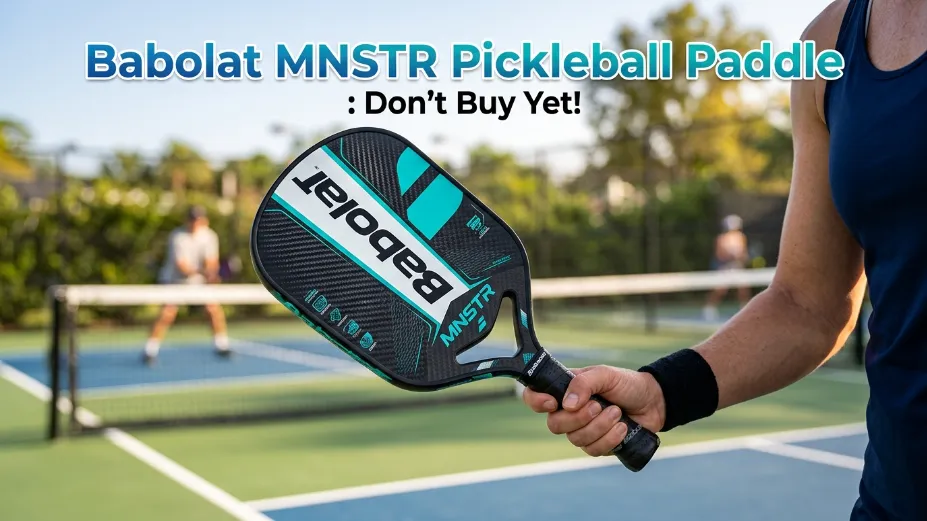
The pickleball court doesn’t care about a tennis brand’s legacy—it only responds to ball crush and kitchen control. When a titan like Babolat steps into the paddle arena with the babolat mnstr pickleball paddle, players naturally wonder if it’s just a tennis frame shrunk down, or a legitimate weapon engineered for the unique geometry of the kitchen line. The reality hidden inside this paddle’s aerospace-grade materials challenges how we define explosive power at the non-volley zone.
Babolat MNSTR Power vs MNSTR Touch pickleball paddle technical specifications: core material, face material, weight, length, width, grip, USAPA approval, and performance focus
Babolat MNSTR Power vs MNSTR Touch
Technical Specifications Comparison
For US club players navigating intensive tournament schedules, the best option depends strictly on your history with joint stress and your typical style of play. If you prioritize maximum shock absorption, baseline drives, and a heavier swing weight to plow through the ball, the flagship Babolat MNSTR Power is the superior choice despite its premium launch price. However, players seeking ultra-lightweight maneuverability for quick hand exchanges at the kitchen line will find the agile Babolat MNSTR Touch to be the more responsive weapon.
The rapid expansion of the competitive scene across the United States has fundamentally altered player expectations regarding specialized gear. Generic fitness trainers or hard-court tennis gear no longer suffice on highly abrasive, specialized acrylic pickleball surfaces. With premium brand names arriving on the market at an unprecedented rate, understanding the engineering beneath your feet and inside your paddle face becomes paramount to maintaining technical execution and avoiding injury.
Comprehensive Babolat MNSTR Pickleball Paddle Review: Technical Anatomy
The engineering core of the babolat mnstr pickleball paddle review centers upon its non-traditional core setup. While legacy paddle manufacturers relied primarily on standard honeycomb polymer sheets, Babolat bridges modern tennis feel with the rigorous vibration constraints required on the court.
- The Core Matrix: Unlike standard designs, the core is not pure polypropylene. Instead, Babolat uses an EVA-enclosed polypropylene honeycomb core. By surrounding the polymer cells with a thin, legal foam border, the paddle dampens deep vibrations without losing its structural rebound.
- The Vibration Barrier: Guided by SWC Pure Feel technology, Babolat integrates SMAC aerospace viscoelastic material directly under the hitting surface. This specialized polymer filters out the harsh feedback from off-center ball contact, expanding the active sweet spot and dramatically reducing wrist and elbow strain.
- Friction Mechanics: The paddle face utilizes a unique blend of 80% carbon fiber and 20% fiberglass. This composite face balances raw responsiveness with controlled dwell time, allowing players to feel the ball sink into the paddle before releasing. This face is topped with a textured paint grit designed for reliable, rules-compliant ball spin.
The upper surface balances ultra-lightweight carbon fibers with a protective 1/5-inch overlapping edge guard bumper. This robust shield prevents immediate cosmetic chipping when scraping the paddle along the ground for low kitchen resets. For players analyzing options across the entire carbon landscape, evaluating the dedicated structural differences outlined in our analytical look at the carbon fiber pickleball paddle provides clear contextual background before buying.
MNSTR Power vs. Touch: Deciding on your Babolat MNSTR Power Pickleball Paddle
Navigating the product family requires a clear understanding of the mechanical differences between the flagship Power layout and its lightweight Touch counterpart. Selecting your specific version of the babolat mnstr power pickleball paddle dictates both your physical recovery cycles and your mechanical velocity on the court.
The Cushioning and Weight Variance
The babolat mnstr power architecture focuses on stability and baseline dominance. Weighing in at a middleweight average of 8.1 ounces, it features a thicker 15mm core. The extra core thickness provides deeper mechanical dampening, absorbing heavy baseline drives and returning them as soft, controlled drops. Conversely, the Touch configuration uses a thinner 13mm core profile and weighs a feather-light 7.2 ounces. This setup offers direct feedback and a crisp, popped feel, giving speed-focused players instantaneous response during close-range exchanges.
Performance and Commercial Discrepancies
The extra density and weight of the MNSTR Power introduce a higher swing weight, which is a major benefit for players executing full baseline swings. This weight variance is highly visible across commercial retail channels. Both paddles originally launched at a premium $169.00 RRP, but competitive players can often source seasonal promotions. The standard babolat mnstr hybrid model balances these two worlds, catering to players who refuse to compromise on either hand speed or baseline drive capacity. According to the official Babolat MNSTR page, these weight structures are carefully distributed to prevent early wrist fatigue.
If you are a high-level competitor seeking to match advanced paddle dynamics with elite-tier court positioning, exploring the definitive rules and strategies detailed in our guide to what is pickleball will ensure your entire tactical mindset functions in perfect alignment.
The Critical Fit Guide: Why Grip Geometry Matters on the Babolat MNSTR
A major missing angle across mainstream e-commerce review spaces is the highly specific volumetric interior geometry of the paddle handle. When choosing a premium tennis-adjacent model, ordering a paddle based on weight alone can lead to structural discomfort and performance limitations during competitive play.
The MNSTR series is built around the Perfect Feel (PF) Handle, an ergonomic shape inspired directly by Babolat’s legendary tennis racquet handle geometry. The handle features a standard 5.0-inch grip length and a thin 4.0-inch grip circumference. While this streamlined profile is designed to offer a connected feel and prevent the paddle from twisting in the hand, it requires careful adaptation for players with larger hands or wide fingers.
Because the viscoelastic SMAC layer extends slightly into the collar, the lower transition zone is exceptionally stable. However, the vertical clearance and thickness of the factory Babolat Syntec Uptake grip are highly compressed. For players transitioning from tennis who are currently learning how to play pickleball, a grip that is too thin can lead to over-squeezing the handle, which quickly causes tennis elbow. To avoid these limitations, players should consider adding a high-quality overgrip to customize the handle thickness to their exact structural preference.
Exposing the Information Gaps: Real-World Durability Under the Microscope
While mainstream marketing materials highlight the premium aesthetic choices of this series, deep analysis across independent playing groups on Reddit and Quora reveals distinct wear patterns and cosmetic limitations under intensive daily play.
- The Face Texture Wear Cycle: The RPM SuperSpin surface uses a specialized paint-grit process. Under the continuous, aggressive impact of hard outdoor balls, this surface grit can experience noticeable smoothing within 4 to 6 months of intense play, slightly reducing maximum spin rates.
- Overlapping Edge Guard Friction: The 1/5-inch overlapping edge guard bumper protects the core beautifully. However, scraping the bumper on rough outdoor concrete courts can cause minor cosmetic separation over time, requiring players to apply edge guard protective tape.
- Syntec Uptake Grip Absorption: The factory grip offers premium cushioning but lacks advanced moisture ventilation. Players operating in high-humidity US summer environments will find the grip gets slick quickly, making a premium dry overgrip essential.
These wear characteristics are common across the industry and shouldn’t deter competitive players. While the functional core matrix remains completely intact and free from catastrophic delamination, keeping an eye on cosmetic wear is important for maintaining optimal secondary market value.
Performance on American Courts: Indoor Wood vs. Outdoor Acrylic
Evaluating the performance of the MNSTR series requires analyzing the highly variable, unpredictable court environments found throughout the United States. The paddle behaves fundamentally differently based on whether you are playing in an indoor dedicated sports complex or an outdoor public park.
On traditional, hard outdoor acrylic courts, the 15mm core of the MNSTR Power works beautifully. It manages ball deflection with high predictability, allowing players to execute slow, methodical kitchen resets even when defending against wind-assisted drives. However, because the paddle surface uses a textured paint grip rather than a raw carbon weave, playing in highly damp or humid outdoor morning sessions can cause moisture to sit on the face, temporarily lowering ball bite.
On indoor gymnasium wood courts or smooth polyurethane indoor surfaces, the lightweight MNSTR Touch shines. The ball tends to play slower on indoor wood, making fast hand speed at the net the ultimate priority. The 7.2-ounce weight profile allows players to transition from a forehand block to a backhand punch volley instantly, keeping opponents on the defensive during rapid-fire kitchen hand battles.
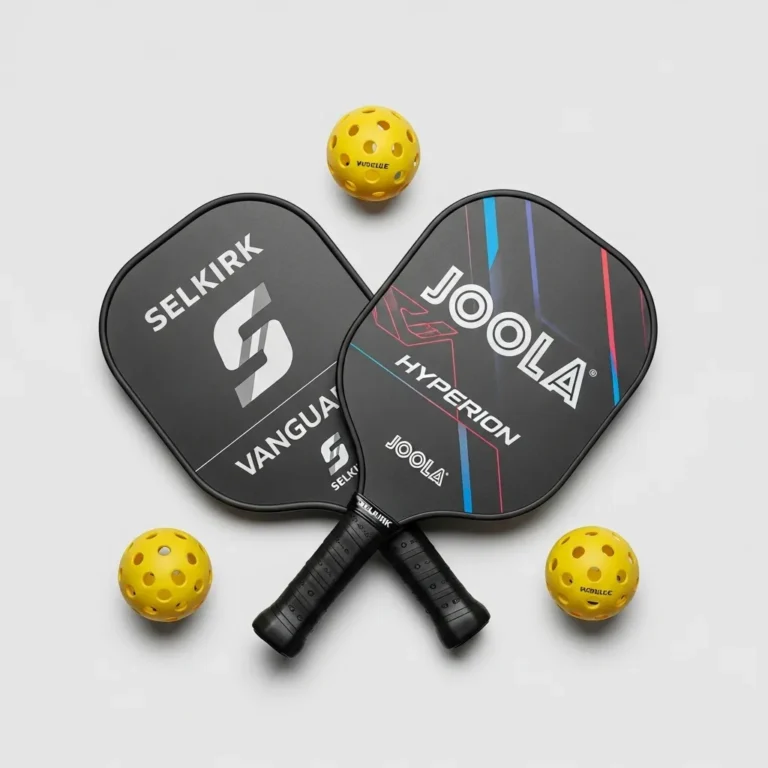
Head-to-Head: Babolat MNSTR Power vs. Joola Ben Johns Hyperion CFS 16mm
For players trying to choose between the premium babolat mnstr power and the classic Joola Ben Johns Hyperion CFS 16mm, the choice comes down to a fundamental split in design philosophy. Both models occupy premium spaces but approach on-court control from different angles.
The primary differences in on-court performance are detailed in the comparison points below:
- Comfort and Arm Protection: Babolat wins decisively on arm comfort. The viscoelastic SMAC dampening material filters out harsh high-frequency vibrations far better than the Hyperion’s standard polymer core, making it the best pickleball paddle for control if you are recovering from joint stress or tennis elbow.
- Maneuverability and Hand Speed: The Babolat MNSTR Power features a highly aerodynamic hybrid shape with a standard 5.0-inch handle, making it feel noticeably faster in the hands than the slightly head-heavy Joola Hyperion 16mm, which can feel sluggish during quick volleys at the kitchen line.
- Power and Power Put-Aways: The Joola Hyperion, with its thermoformed perimeter and thicker 16mm core, offers slightly more raw “pop” on baseline drives. The Babolat MNSTR Power is a true control paddle; it requires you to generate your own swing speed from the shoulder to execute deep baseline drives.
Buying Advice in the US: Prices, Retailers, and Colorways
Tracking down the flagship MNSTR series in the US market involves navigating a mix of traditional tennis retail houses and specialized pickleball specialty operations. The standard baseline retail price hovers consistently around $169.00 RRP, but smart shoppers can regularly find promotional deals online.
Major national distributors like JustPaddles keep steady stock of all variations, including the standard Black/Blue hybrid and the Black/Yellow MNSTR Power. For players seeking specialized retail support, boutique regional pro shops and major online retailers frequently offer demo programs, allowing you to play-test both the Power and Touch models before committing to a final purchase.
The aesthetic design is highly polished, featuring vibrant color schemes that stand out on court. The MNSTR Power is instantly recognizable with its bold yellow and black accents, while the Touch model features a clean white and yellow colorway, both displaying the iconic Babolat branding with pride.
Verdict: Is the Babolat MNSTR Worth Your Money?
The final evaluation of this high-performance paddle depends entirely on your personal playing profile, structural injury history, and financial approach to seasonal gear replacement.
- Who Should Buy: Control-first players who prioritize kitchen precision, dinks, and resets; players recovering from joint pain who need maximum vibration dampening; and competitive players looking for verified tournament compliance.
- Who Should Avoid: Aggressive power players who rely solely on raw “pop” and trampoline speed to win points; and budget-focused players who are looking for a basic wood or generic composite starter set.
Frequently Asked Questions (FAQ)
Are Babolat MNSTR paddles manufactured in the United States?
No. While Babolat’s research, design, and player prototyping are developed at their historic headquarters in Lyon, France, the manufacturing and synthetic assembly of the MNSTR series are handled by primary manufacturing partners in Asia, matching standard practices across the athletic industry.
Does the Babolat MNSTR series have a 100% EVA foam core?
No. A 100% EVA foam core is completely banned by USA Pickleball because of its massive trampoline deflection. Instead, the Babolat MNSTR series utilizes a hybrid, legal core featuring a classic polypropylene honeycomb core enclosed by a thin, specialized EVA foam layer and viscoelastic SMAC face inserts to legally filter vibration.
How does the SMAC technology affect the paddle’s responsiveness on fast net exchanges?
The aerospace-grade SMAC material acts as a viscoelastic dampener, which means it absorbs harsh high-frequency vibrations from hard strikes. While it makes dinks and resets exceptionally plush and controllable, it trades away a tiny fraction of crisp rebound pop compared to raw, ultra-stiff thermoformed power paddles.
Is the Babolat MNSTR paddle fully legal for tournament play under current USAP rules?
Yes. The entire Babolat MNSTR series is fully certified and remains on the active USA Pickleball approved paddle list. Because its vibration dampening is achieved through viscoelastic thermal dispersion rather than mechanical trampoline deflection, it safely satisfies all PBCoR rules.