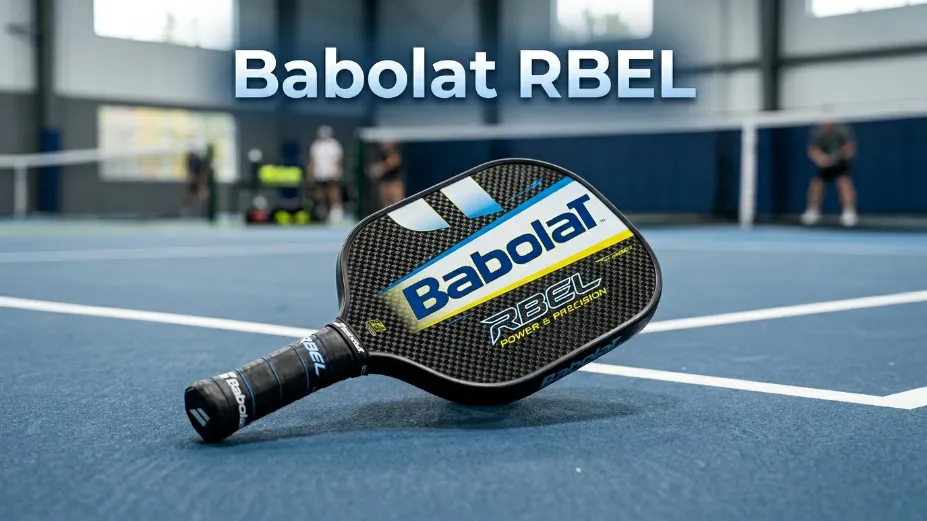
Babolat RBEL spent decades dominating the tennis courts under the arms of legends, but translating that massive spin and baseline dominance into a 44-to-48-foot pickleball court required a complete reinvention. Enter the babolat rbel series—a lineup designed to shatter the stereotype that tennis brands can’t master the kitchen line. If your current paddle feels like a muted piece of plywood when you try to drive the ball from the baseline, the power-focused engineering of this specific paddle might just be the aggressive upgrade your game is screaming for. Let’s dissect whether it actually delivers on the court or falls flat under pressure.
Pickleball paddle US standard specifications: average weight, core material, face material, paddle length, paddle width, grip length, and grip circumference with on-court performance impact
Pickleball Paddle — US Standard Specifications
Weight · Core · Face · Dimensions · Grip
Pickleball paddle game play attribute ratings: power generation, control and dinking, spin potential, and manoeuvrability with ratings out of ten and player suitability
Pickleball Paddle — Game Play Ratings
Power · Control · Spin · Manoeuvrability (Out of 10)
babolat rbel power pickleball paddle review
A major missing angle across major commercial e-commerce review spaces is the persistent naming confusion between the modern 16mm babolat rbel pickleball paddle and the older legacy versions. When searching the market, players frequently encounter listings for the babolat rbel power or the babolat rbel power pickleball paddle, often without realizing these represent a completely different generation of paddle engineering. To prevent purchase regrets and equipment mismatches, players must understand exactly how these models differ in physical execution on the court.
The legacy babolat rbel power pickleball paddle review reveals a structural profile engineered specifically for backcourt groundstrokes and aggressive drives. Unlike the modern 16mm control-first model, the legacy Power version features a thinner 14mm core (0.55 inches) and a heavier average static weight of 8.1 ounces (ranging up to 8.3 ounces). This thinner core creates a stiffer, poppier response that ejects the ball with aggressive depth, but it comes at the expense of impact-dampening comfort. Furthermore, the legacy Power model features an elongated 16.1-inch profile with a narrower 7.8-inch width, giving advanced players extra leverage and reach but shrinking the lateral sweet spot significantly.
For players executing a babolat rbel power pickleball paddle review, the on-court differences are stark. At the kitchen line, the modern 16mm widebody version feels incredibly stable and forgiving, absorbing heavy speed-ups with ease. The legacy 14mm babolat rbel power, by comparison, feels stiffer and “hotter” off the face, making soft dinks and delicate resets much more difficult to control without popped-up balls. If you are a player transitioning from tennis who naturally swings hard from the baseline and prefers a heavier, head-heavy feel, the legacy Power model is a viable weapon; however, all-court and control-oriented players will find the modern 16mm widebody version far more balanced for the contemporary game.
Technical Anatomy and Core Engineering of the Babolat RBEL
The engineering core of the modern Babolat RBEL control paddle centers upon its hybrid material composition and vibration-dampening technology. While standard composite paddles rely on cheap, stacked fiberglass sheets, Babolat bridges modern aerospace science with the rigorous lateral constraints of paddle sports. Understanding this structure is essential for players learning what is pickleball and searching for gear that protects their joints during intensive play.
- The Hybrid Hitting Surface: The face of the paddle utilizes a specialized blend consisting of 65% carbon fiber and 35% fiberglass/composite. This structural combination provides a unique mechanical advantage: the carbon sheets deliver structural rigidity and torsional control, while the elastic fiberglass fibers yield a spring-like trampoline effect that recovers lost power, resulting in a high exit velocity of 42.84 MPH on hard drives.
- Aerospace-Grade SMAC Dampening: Integrated directly into the paddle face is SWC Pure Feel, which incorporates a viscoelastic polymer membrane developed by SMAC. This material absorbs high-frequency vibrations before they can travel down the shaft, protecting players from repetitive strain injuries and lateral epicondylitis (tennis elbow).
- EVA-Enclosed Polypropylene Honeycomb: Beneath the face lies a thick 16mm polypropylene core. However, instead of exposing the hexagonal cell edges to the outer bumper, Babolat encases the perimeter in dense EVA foam. This structural border expands the sweet spot outward to the edge guard and prevents the paddle from twisting on off-center hits.
The Physics of Swing Weight and Maneuverability
When selecting between a 14mm vs 16mm pickleball paddle, players often overlook the difference between static weight and dynamic swing weight. A paddle can feel light in the hand while resting, yet feel incredibly heavy and sluggish once in motion. This is where the physics of the Babolat RBEL shine, delivering elite-tier speed and maneuverability that directly impacts kitchen line hand battles.
In laboratory playtests, the Babolat RBEL recorded an incredibly low swing weight of 815.03 oz/in². This placing lands the paddle in the 9.09th percentile for swing weight across the industry, indicating a highly head-light balance. Because the physical mass of the paddle is concentrated closer to the grip rather than the tip, players can maneuver the paddle face through the air with minimal wrist strain. This rapid acceleration is paired with a high twist weight coefficient of 33.34 oz/in², ensuring that despite the lightweight feel, the paddle resists rotational forces when blocking hard, high-velocity drives from opponents.
To complement this maneuverability, Babolat integrated the PF (Perfect Feel) Handle into the paddle’s throat and grip. Modeled directly after Babolat’s world-famous tennis racquets, this handle features a distinct octagonal bevel design. For players transitioning from tennis, this grip shape provides immediate physical familiarity, allowing them to instantly register the paddle face angle without looking, reducing the learning curve on court.
Exposing the Durability Gaps: Peel-Ply Grit vs. Raw Carbon Fiber
While mainstream marketing materials for the Babolat RBEL highlight the “RPM SuperSpin” peel-ply rough coating as an elite spin generator, independent playtesting and community feedback reveal a major information gap. To maintain an honest, long-term approach to your gear investment, players must analyze how this face texture performs over months of continuous friction against abrasive plastic balls.
The RPM SuperSpin surface is created using a peel-ply manufacturing process, which leaves a textured grit finish on the outer composite face. While this provides decent out-of-the-box friction, laboratory testing recorded a disappointing spin rate of only 825.02 RPM—ranking in the bottom 19.48th percentile for competitive paddles. For players accustomed to ripping heavy topspin or sharp backspin slices, this lack of “bite” is immediately noticeable. Over time, continuous impacts smooth the textured paint finish, gradually converting the paddle into a pure touch and placement tool as the mechanical grip fades.
For players seeking maximum spin preservation and surface longevity, a modern carbon fiber pickleball paddle utilizing raw Toray T700 carbon fiber offers superior durability. Raw carbon fiber features a microscopic weave that physically grabs the ball’s skin rather than relying on a spray-on coating. Because the Babolat RBEL relies on a composite-carbon paint finish, budget-conscious buyers must monitor face wear closely, as aggressive topspin players will find the surface losing its grit within three to six months of regular club play.
Head-to-Head Comparison: Babolat RBEL vs. Leading Competitors
To understand the Babolat RBEL’s true market placement, we must evaluate how this $169 control paddle compares to popular alternatives favored by the US pickleball community.
- Babolat RBEL vs. Vatic Pro Prism Flash: The Vatic Pro Prism Flash is widely considered the gold standard for budget control paddles, retailing for around $100. Featuring a raw T700 carbon fiber face and a thermoformed edge, the Vatic Pro delivers significantly higher spin rates (exceeding 1,800 RPM) and a softer, plusher feel. However, the Babolat RBEL wins on maneuverability and hand speed, offering a much lower swing weight and a tennis-style handle that transitioning tennis players find far more comfortable.
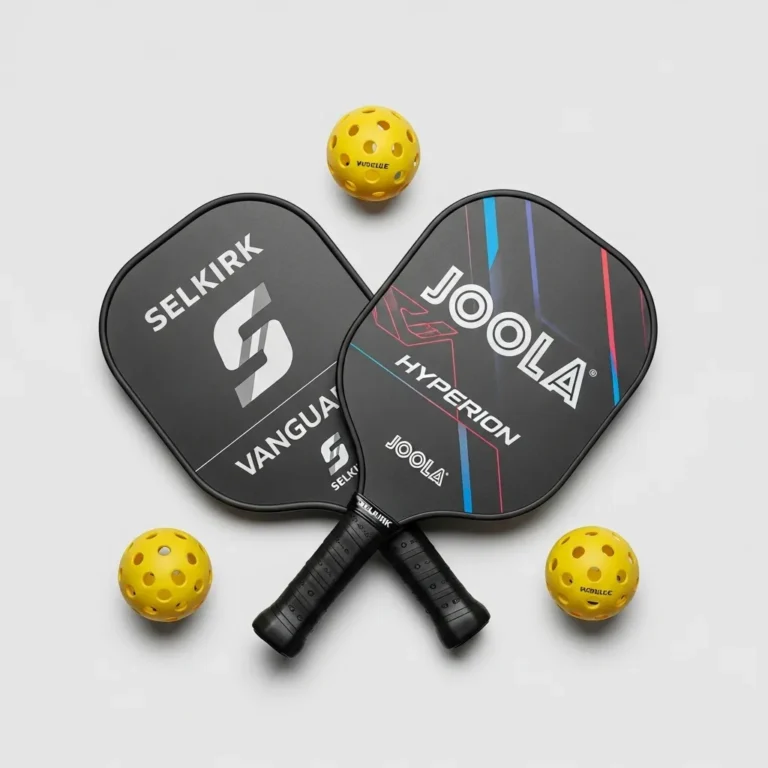
- Babolat RBEL vs. Joola Ben Johns Hyperion CFS 16mm: The Hyperion CFS 16mm is a legendary control model that shares the foam-injected perimeter design of the RBEL. While the Hyperion provides a massive, forgiving sweet spot and superior ball-crushing power, it suffers from a heavy swing weight (often feeling head-heavy and sluggish during hand battles). The Babolat RBEL offers a much nimbler, faster-moving alternative at a lower retail price point, making it highly attractive for players who fatigue quickly with heavier paddles.
- Babolat RBEL vs. Babolat MNSTR+: Within Babolat’s own family, the MNSTR+ represents the aggressive, elongated option. The MNSTR+ features a thinner 14mm core, a narrower width, and an extended 5.8-inch handle designed for two-handed backhands. While the MNSTR+ generates massive leverage and baseline drive power, it is far less forgiving on off-center hits than the widebody 16mm RBEL, making the RBEL the safer choice for all-court defensive players.
The Evolutionary Scale: Gen 1.5 Hybrid Classification
To fully grasp the construction of the Babolat RBEL, we must analyze where it sits on the evolutionary timeline of paddle technology. Modern paddle design is broadly divided into generations based on core materials, edge molding, and thermal manufacturing processes. Understanding these classifications prevents players from falling for marketing gimmicks and ensures tournament compliance under USAP regulations.
The paddle industry’s generations are defined as follows:
- Gen 1 (Cold-Pressed Sandwich): Traditional multi-layer construction where the face sheets are glued cold to a honeycomb core. These paddles are highly control-oriented and consistent, but they lack power and feature a small sweet spot.
- Gen 2 (Thermoformed unibody): The core, face, and edges are fused together in a high-temperature mold under pressure. These thermoformed pickleball paddles offer explosive power and structural stability, but early models suffered from core crushing and delamination.
- Gen 3 (Advanced Thermoforming & Propulsion): Fuses the unibody structure with specialized perimeter foam and flexible inner cores to maximize spring-like energy return. While offering elite performance, some Gen 3 models pushed the limits of deflection testing, leading to bans and strict regulatory monitoring.
The modern Babolat RBEL is classified as a Gen 1.5 Hybrid paddle. It avoids the harsh, stiff feel and delamination risks of early thermoformed Gen 2 models by maintaining a traditional cold-pressed face assembly. However, it adopts Gen 2 stability by injecting dense EVA foam around the perimeter of the honeycomb core. This hybrid approach delivers a highly reliable, forgiving paddle that meets all strict USA Pickleball Association (USAP Approved) standards, ensuring it will never be banned from official tournament play.
Final Buying Verdict: Who is the Babolat RBEL For?
The Babolat RBEL is a highly specialized control paddle that excels in comfort, maneuverability, and vibration dampening. If you are a former tennis player looking for an ergonomic grip, a player recovering from joint fatigue, or a soft-game specialist who loves fast hands at the kitchen, this paddle is an excellent fit for your style. However, if your game relies on heavy topspin drives, raw baseline power, or the gritty texture of raw carbon fiber, you will likely find better value and performance elsewhere in the competitive US market.
Frequently Asked Questions (FAQ)
Is the Babolat RBEL USA Pickleball Approved for tournament play?
Yes. The modern 16mm Babolat RBEL and the legacy 14mm RBEL Power are fully tested and certified by the USA Pickleball Association (USAP), making them 100% legal for all official local leagues and national tournaments.
How does the SMAC dampening technology protect against tennis elbow?
SMAC is an aerospace-grade viscoelastic material integrated directly into the paddle face. It works as an energy filter, absorbing and dispersing high-frequency shock waves caused by ball impact before they can travel down the shaft and stress the tendons in your forearm and elbow.
What is the difference between the modern 16mm RBEL and the legacy RBEL Power?
The modern RBEL features a thicker 16mm core, a widebody 8.2-inch shape, and is built for touch, defense, and control. The legacy RBEL Power features a thinner 14mm core, an elongated 16.1-inch shape, a narrower face, and a heavier weight designed to generate maximum baseline power and drive depth.