Pink Pickleball Paddle
You know that feeling when you walk onto the pickleball court, ready to play, and you look around at the sea of equipment? For the longest time, it felt like we were staring into a void of charcoal, grey, and midnight black. It was all very serious, very industrial, and frankly, a bit monotonous.
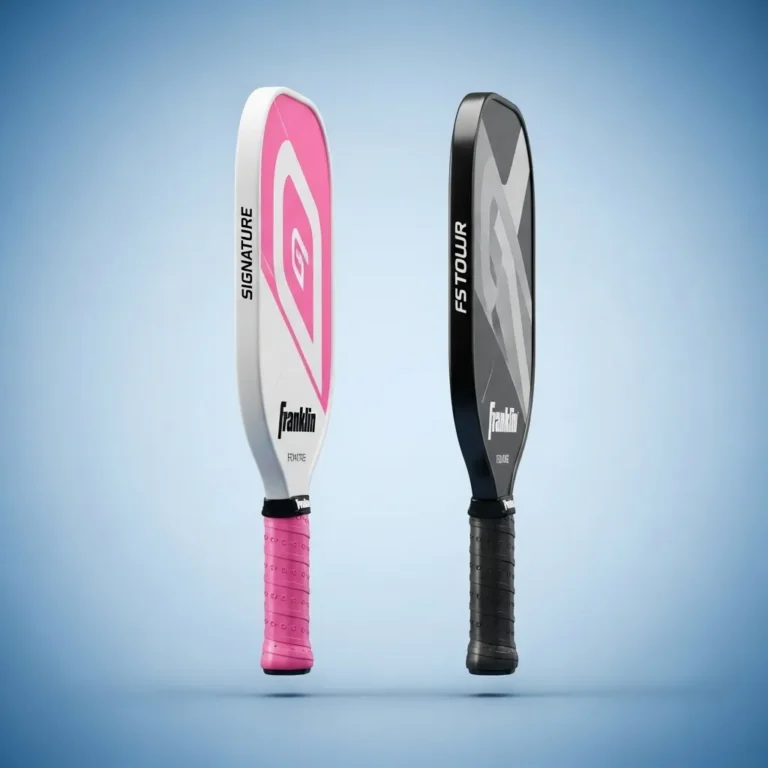
But lately, something has shifted. You’ve probably seen it too—a flash of bright color cutting through the carbon fiber monochrome. The high-performance pink pickleball paddle has arrived.
However, if you are a competitive player, seeing a vibrant colorway on a paddle often triggers a wave of skepticism. We’ve been conditioned to believe that serious gear looks “serious” (read: boring). You hold that vibrant paddle and think, “Is this actually going to help my third-shot drop, or is it just a marketing gimmick?”
It’s the only question that matters when you’re spending your hard-earned money. Whether you are looking for pink pickleball paddles because they stand out or simply because it’s your power color, you shouldn’t have to sacrifice spin rates for aesthetics.
In this guide, we are focusing strictly on performance. We aren’t looking for “toys.” We are going to dig into the engineering behind colored carbon fiber, debunk the myths about paint affecting spin, and help you find tour-grade equipment that happens to be pink.
The Stigma: Does “Pink” Mean Low Quality?
This is the hurdle we have to clear before we go any further. There is a lingering stigma in the racquet sports world that if equipment focuses on aesthetics, it wasn’t designed for high-level play.
Let’s be real: nobody wants to be the player who looks great walking onto the court but loses the hand speed battle because their equipment is unbalanced. The good news? The market has evolved. We are now in the era of “Limited Edition Colorways” rather than cheap “fashion paddles.”
Does the pink coating on a paddle face reduce spin?
This is the primary technical concern. If you play with raw carbon fiber (T700 or similar), you know that the gritty texture is responsible for grabbing the ball and generating topspin. The fear is that to achieve a pink hue, manufacturers must coat that raw fiber with layers of glossy paint, smoothing out the surface and killing your spin game.
Here is the truth: It depends entirely on the manufacturing process.
- The “Cheap” Method: In big-box store paddles, manufacturers often screen-print a design over a smooth surface. These paddles are slick, and the ball will slide right off them. Avoid these if you care about performance.
- The “Pro” Method: Modern high-performance brands use advanced techniques. Some use a dyed “peel ply” texture where the roughness is impressed into the resin itself, or they use a permeable distinct layer that allows the carbon texture to remain aggressive. If you are buying a $160+ thermoformed pink paddle, the technology is often identical to the black version; the fibers are just treated differently without sacrificing the grit.
Durability: Dyed Carbon vs. Surface Graphics
Another common question on the courts is whether the color will chip off after a few weeks of overhead smashes.
If you buy a paddle where the design is just a sticker or a surface spray (common in fiberglass models), it will wear down, leaving a “dead spot” in the center. However, high-end thermoformed paddles are closing this gap. When the pink aesthetic is integrated into the material weave or the resin system, it ages just as gracefully as a standard black paddle. You are looking for “bonded color” rather than “surface application.”
Moving Past “Shrink it and Pink it”
For decades, the “shrink it and pink it” philosophy meant taking a heavy men’s racket, painting it pastel, and selling it to women without adjusting specs.
In the dedicated pickleball market, we are seeing a shift. Most high-end pink pickleball paddles are now unisex in specs. A pink edition of a popular control paddle usually has the same core thickness (16mm), the same swing weight, and the same twist weight as the grey version.
Pro Tip: Always check the static weight. If the pink version is listed at 7.4oz while the standard is 8.0oz, that is a modified “lite” version. If they match, it’s a pro-level cosmetic swap.
USA Pickleball Approval for Colored Paddles
Never assume a paddle is legal just because the black version is. The approval process involves testing for surface roughness and gloss (reflection). Because specific paints can reflect light differently, manufacturers must submit specific colorways for approval.
Always look for the specific pink model on the official USA Pickleball equipment list before using it in a sanctioned tournament.
Selection Guide: High-Performance Pink Editions
We are skipping the entry-level toys. If you want to play at a 3.5, 4.0, or 4.5+ level, here is what you should look for.
Professional-Grade Carbon Fiber Options
If you need power, spin, and a generous sweet spot, look for brands that release “Special Edition” colorways of their flagship paddles.
- Thermoformed Raw Carbon: Look for paddles like the Six Zero Double Black Diamond (Cherry Blossom edition) or similar releases from brands like Vatic Pro. These offer the exact same pop and dwell time as their standard counterparts but feature distinct pink branding or edge walls.
- Kevlar/Carbon Hybrids: Some new paddles, like the Ruby from Six Zero (which is a deep reddish-pink), use 100% Kevlar faces. This isn’t paint; it’s the natural color of the material, offering incredible durability and grit.
Mid-Range Performance (Under $100)
If you aren’t ready to drop $200 but still want a carbon face, look at brands like Friday Pickleball or SLK by Selkirk.
These brands bridge the gap between “starter” and “pro.” They often offer fully colored faces that still provide decent spin ratings (unlike the slick wooden paddles of the past). They are perfect for recreational leagues where you want to look good and play well.
Injury Prevention: Core Thickness Matters
Do not choose a color based on weight alone. If you struggle with tennis elbow, a lightweight pink paddle might actually hurt you more due to shock vibration.
Instead, look for a pink paddle with a 16mm core. The thicker core acts as a shock absorber. A generic 13mm “power” paddle in pink might look great, but it will send vibrations straight up your arm.
Technical Specs: Grip and Handle Geometry
When buying specifically for color, don’t ignore the handle.
Grip Size Misconceptions
Historically, pink paddles were defaulted to small grip sizes (4.0″ or 4.125″). While this is great for wrist action, players with larger hands shouldn’t be discouraged. It is incredibly easy to build up a grip size using overgrips (more on that below), but impossible to shrink one. If you love a paddle that only comes in a small grip, buy it and customize the handle thickness.
The Two-Handed Backhand Requirement
The modern game relies heavily on the two-handed backhand. Standard “women’s” paddles sometimes feature shorter handles (5 inches or less). If you use two hands, ensure your pink paddle is an “Elongated” model with a handle length of at least 5.3 to 5.5 inches. This ensures your non-dominant hand is on the grip, not the paddle face.
Accessorizing: The “Pink Accent” Alternative
What if your favorite paddle—the one that fits your game perfectly—only comes in black? Do not switch to an inferior paddle just for the color. Instead, use accessories to change the aesthetic without altering the core performance.
- Performance Overgrips: This is the easiest fix. Swap your stock grip for a neon pink or patterned overgrip. It adds sweat absorption and changes the look immediately.
- Edge Guard Tape: A strip of hot pink electrical tape or branded edge guard tape around the perimeter of a raw carbon paddle creates a stunning “Tron-like” contrast.
- Note on Physics: Adding tape to the edge increases the Swing Weight and Twist Weight slightly. This actually makes the paddle more stable on blocks, so it’s a performance upgrade, not just a cosmetic one.
(For a deep dive on how to modify your gear, check out our full guide on Personalized Pickleball Paddles).
Maintenance for Light-Colored Gear
Owning a light pink paddle comes with one maintenance reality: it shows ball dust.
Cleaning Carbon Fibers
After a session, your paddle face will likely have yellow or green scuff marks from the ball. This is actually a good sign—it means the grit is grabbing the ball!
To clean it, avoid water or household cleaners. Use a rubber carbon eraser. It lifts the plastic residue out of the weave without smoothing the texture, ensuring your spin rates stay high while keeping the color vibrant.
UV Protection
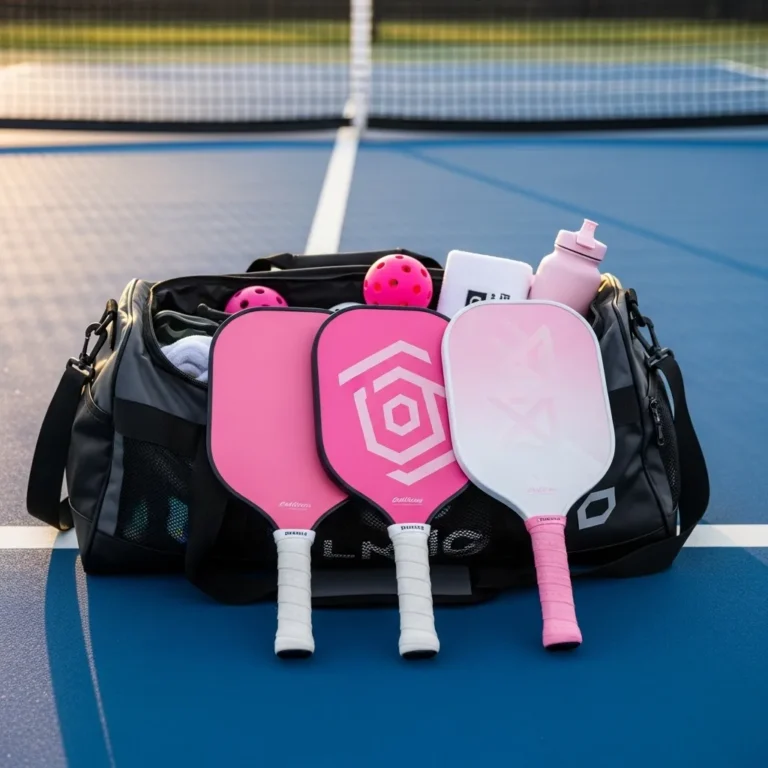
Pink pigments are notoriously susceptible to UV fading. If you leave your paddle in a hot car or in direct sunlight when not playing, that vibrant neon will turn into a chalky salmon color. Treat your gear like a pro: keep it in a bag (preferably a thermal-lined one) to protect both the color and the core integrity.
Conclusion
The era of choosing between “pretty” and “powerful” is over. The rise of the pink pickleball paddle signifies a market that is listening to players who want personality and performance.
Whether you choose a limited edition thermoformed beast or a Kevlar-faced control paddle, the technology now exists to support your game. So, grab that colorful gear, check the specs, and step onto the court with confidence. Because the only thing better than winning is looking good while doing it.