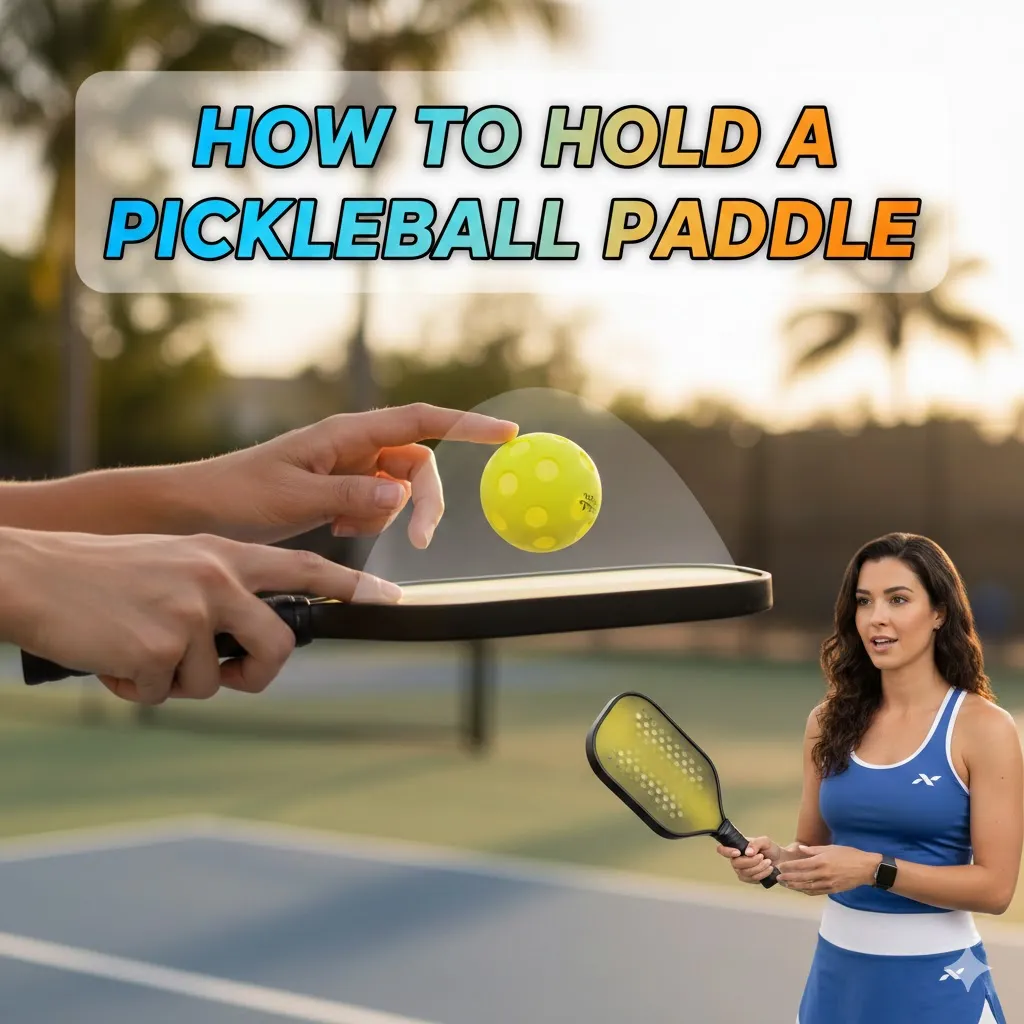
Introduction
Imagine stepping onto the court, your footwork is perfect, your paddle is top-tier, but every time you hit the ball, it pops up into the air or flies out of bounds. The culprit? It almost always comes down to your grip. Learning how to hold a pickleball paddle is the absolute foundation of your entire game. It dictates your power, your control, and your ability to win fast-paced kitchen battles.
Whether you are stepping onto the court for the very first time or you are an intermediate player looking to eliminate errors, understanding how to properly hold a pickleball paddle will instantly elevate your consistency. In this ultimate guide, we will break down the exact hand placements, the secret to perfect grip pressure, and precisely how to adjust your hands when transitioning from the baseline to the non-volley zone.
The Core Grips: How to Hold a Pickleball Paddle for Beginners
When starting out, players often grab the paddle like a baseball bat or a frying pan, which severely limits wrist mobility and shot versatility. If you are wondering how to hold a pickleball paddle for beginners, you need to understand the “V” shape and the base bevels of the paddle handle. The handle has eight sides (bevels), and where you place your base knuckle changes everything. Here is a deep dive into the three main grips:
1. The Continental Grip (The “Handshake” Grip)
The Continental grip is universally considered the gold standard in pickleball. If you only learn one grip, it must be this one. Why? Because it allows you to hit both forehands and backhands without ever having to spin or adjust the paddle in your hand—a crucial advantage in a fast-paced game.
- How to do it: Hold the paddle out in front of you with the edge facing the ground. Reach out and grab the handle as if you are shaking someone’s hand.
- The V-Check: The “V” formed by your thumb and index finger should rest slightly to the left of the top bevel (for right-handed players).
- Best for: Dinks, volleys, blocks, and serving. This is the ultimate neutral grip.
To master this, you can read more about the mechanics of the Continental grip pickleball style.
2. The Eastern Grip
The Eastern grip shifts your hand slightly behind the paddle. This is the powerhouse grip for players who want to drive the ball deep from the baseline.
- How to do it: Start with the Continental handshake, then rotate your hand slightly to the right (clockwise for righties) so your palm is directly behind the paddle face.
- Best for: Hitting powerful forehand drives and adding topspin.
- The Drawback: It makes hitting a backhand very awkward, requiring a grip change or a compromised wrist angle.
3. The Western & Semi-Western Grips
These grips involve rotating your hand even further underneath the handle. While tennis players transitioning to pickleball might love this for heavy topspin, we generally advise beginners to avoid it. It limits your ability to hit low balls and makes backhand volleys nearly impossible without a dramatic shift in your pickleball grips.
The Secret to Touch: Grip Pressure Explained
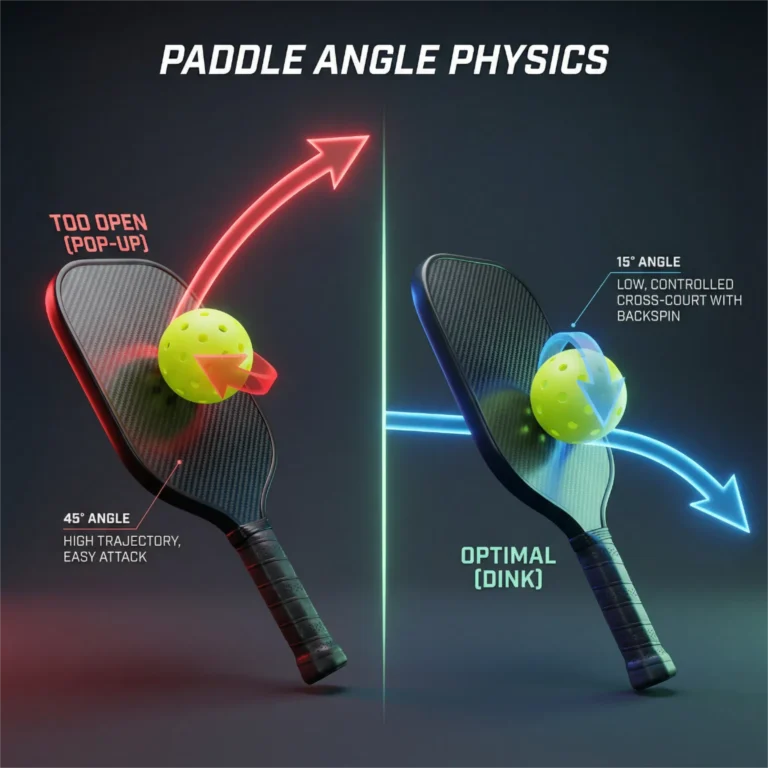
Many players squeeze the life out of their paddle, thinking it gives them more control. In reality, a tight grip is the number one cause of “pop-ups” that allow your opponent to smash the ball.
- The 1-10 Scale: Imagine 1 is the paddle falling out of your hand, and 10 is a death grip. For dinking and resetting, your grip pressure should be a soft 3 or 4. For baseline drives and overhead smashes, increase it to a 7 or 8 so the paddle doesn’t twist upon impact.
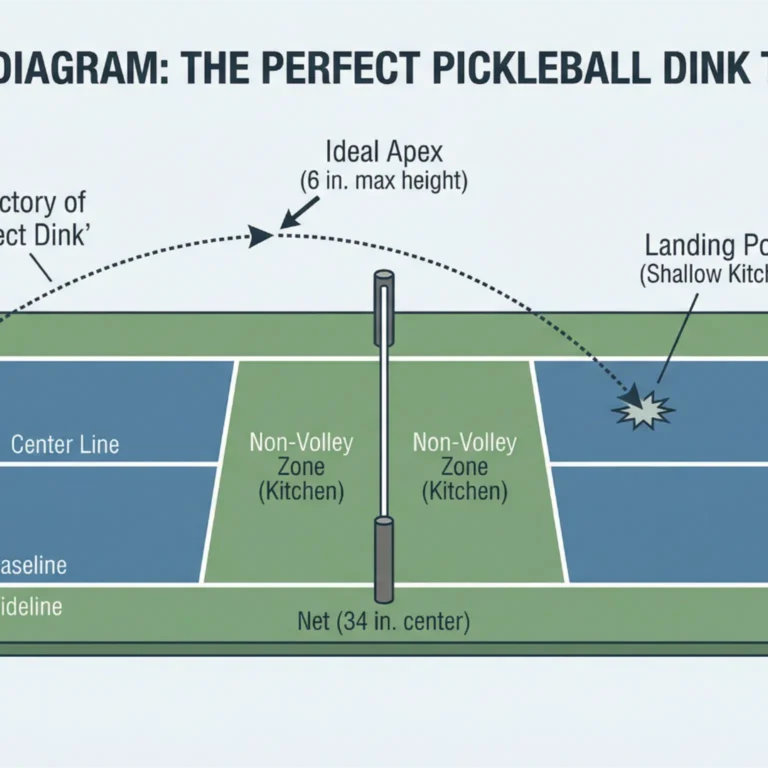
- Soft Hands: A loose grip acts like a shock absorber. When your opponent hits a hard drive at you, a soft grip absorbs the kinetic energy, allowing the ball to drop gently into the kitchen instead of ricocheting high into the air.
How to Hold a Pickleball Paddle When at the Net (The Kitchen)
Playing at the baseline is a completely different game than playing at the Non-Volley Zone line. Knowing exactly how to hold a pickleball paddle when at the net is what separates 3.0 players from 4.0+ players. The net is where the game speeds up, and you do not have the luxury of time.
The “Ready Position” and Backhand Bias
When you arrive at the kitchen line, you must anticipate rapid-fire volleys. Here is exactly how to position your paddle:
- Paddle Height: Keep the paddle up at chest level. Do not let it drop to your waist. Your elbows should be slightly out in front of your body, creating space.
- The 10 O’Clock Angle: Favor your backhand. For right-handed players, point the paddle tip slightly to the left, towards 10 o’clock or 11 o’clock.
- Why a Backhand Bias? Most body shots in a fast-hands battle are easier to defend with a backhand block. Trying to hit a forehand shot when the ball is jammed into your chest is physically awkward. Keeping the paddle in a backhand-dominant Continental grip ensures you can cover your chest, stomach, and left side instantly.
Switching Grips During Firefights
Do I have enough time to switch grips during a fast hands battle at the net? The short answer is: No.
When you are just 14 feet away from your opponent, a ball hit hard will reach you in a fraction of a second. This is precisely why the Continental grip is vital at the net—you use the same grip for both forehand and backhand volleys. To understand where you can and cannot stand during these exchanges, brush up on your pickleball kitchen rules.
Finger Placement: Choking Up vs. Using the Full Handle
Beyond the core grips, minor adjustments to your finger placement can unlock new levels of power or control.
The Ping-Pong Grip (Index Finger on the Paddle Face)
Some players, especially former table tennis players, rest their index finger directly on the back of the paddle face.
Pros: Excellent touch and spatial awareness for dinking.
Cons: Exposes your finger to getting hit by the ball and slightly reduces your reach and power on groundstrokes.
Hanging the Pinky Off the Handle
Is it better to have my pinky finger hanging off the bottom of the paddle handle? For power players, yes. Dropping your pinky off the end cap increases the lever length of the paddle, giving you a wider range of wrist snap and significantly more “whip” and spin on your serves and drives.
Choking Up on the Paddle
Conversely, sliding your hand higher up the handle (choking up) brings the sweet spot closer to your hand. This reduces power but maximizes control, making it a viable micro-adjustment for delicate net play.
Advanced Tactics and Rules
As you progress, you will encounter unique situations that require special grip knowledge.
- The Two-Handed Backhand: To properly execute this, keep your dominant hand at the bottom in a Continental grip, and place your non-dominant hand directly above it in an Eastern forehand grip. This creates stability for aggressive topspin rolls.
- Holding the Throat: Is it legal to hold the pickleball paddle by the throat instead of the handle? Yes! The USA Pickleball rulebook does not restrict where you hold the paddle. However, holding the throat limits your reach.
- Switching Hands Mid-Rally: Ambidextrous players absolutely can switch the paddle from right to left hand mid-rally. While legal, it is generally slower than simply hitting a backhand.
- Handle Size and Overgrips: Your grip mechanics change if your handle is too thick or too thin. Adding an overgrip can absorb sweat, thicken the handle, and prevent the paddle from twisting. If you are struggling with this, it might be time to learn how to pick a pickleball paddle that fits your hand perfectly.
Frequently Asked Questions (FAQs)
Q: How to hold a pickleball paddle right for maximum versatility?
A: The “right” way for maximum versatility is the Continental (handshake) grip. It allows you to transition smoothly between dinks, volleys, drives, and blocks without wasting precious milliseconds rotating the paddle in your hand.
Q: Should I change my grip for my serve?
A: Many players shift from a Continental grip to an Eastern grip specifically for the serve. The Eastern grip naturally closes the paddle face slightly, making it much easier to brush up on the back of the ball to create topspin.
Q: What should I do if my hand gets sweaty and the paddle slips?
A: Do not squeeze harder! Instead, apply a tacky overgrip to your handle or use a pickleball glove. Squeezing harder to compensate for sweat will ruin your soft game at the kitchen line.
Conclusion
Mastering your paddle grip is a game-changer. By adopting the Continental grip as your baseline, maintaining a soft 3-out-of-10 grip pressure for dinks, and keeping your paddle up with a backhand bias at the kitchen line, you will drastically reduce errors and improve your reaction time. Remember, there is a learning curve to adjusting your hands, so be patient.
What is your go-to grip on the court? Do you drop your pinky off the handle for extra power, or do you choke up for control? Grab your paddle, test out these positions, and let us know which one feels most natural to you!