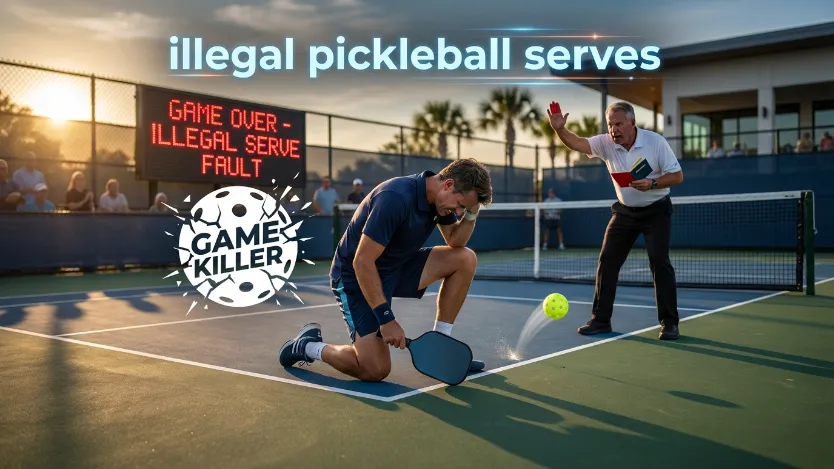
Imagine a high-stakes duel where the first shot isn’t just a way to start the rally, but a psychological weapon designed to dismantle the opponent’s rhythm before they even touch the ball. In the rapidly evolving landscape of American courts, the serve has transformed from a gentle underhand lob into a sophisticated, high-velocity strike that often skirts the very edge of the law.
For the competitive player, understanding illegal pickleball serves is no longer just about avoiding a fault; it is about mastering the boundaries of the 2025 rulebook to maintain a strategic edge. No longer can you rely on “old school” interpretations; the modern game demands a clinical understanding of mechanics, from the precise arc of your arm to the exact millimeter your foot occupies behind the baseline.
The Evolution of a Service Masterpiece: Decoding Illegal Pickleball Serves in 2025
In this comprehensive guide, we dive into why service legality has become the most debated topic at clubs from Florida to California. The 2025 updates to the USA Pickleball Official Rules are not merely bureaucratic tweaks; they represent a fundamental shift to protect the “soul” of the sport from becoming a service-dominant game like tennis. To stay ahead, you must understand the intricate pickleball serve requirements that differentiate a legal weapon from a point-losing fault.
For those looking to dominate the court with a heavy, consistent start, avoiding an illegal pickleball serve is the first step toward a higher DUPR rating. It rewards the player who can generate massive topspin while keeping their paddle head below their wrist—a physical feat that many struggle to replicate under pressure. But before you step onto the court for your next tournament, it is vital to understand the “Triple Threat” of mechanics that referees are now instructed to monitor with unprecedented scrutiny.
Technical Breakdown: The Volley Serve Triple Threat
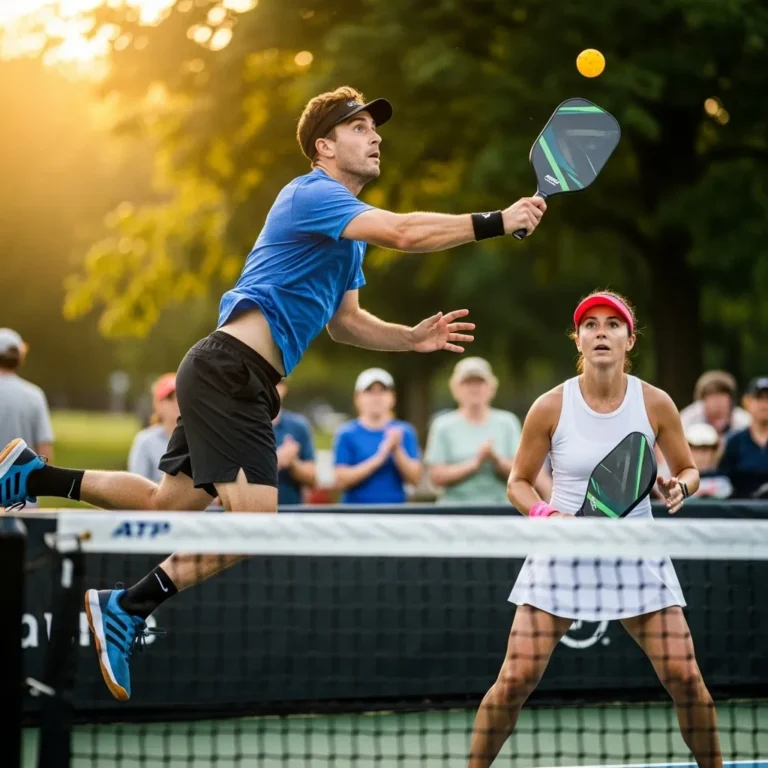
The heart of a legal volley serve—hitting the ball before it touches the ground—lies in three non-negotiable physical constraints. Unlike the drop serve, which offers more mechanical freedom, the volley serve is a high-risk, high-reward maneuver that must be executed with “millimetric” precision. Here are the key technical highlights you must master to avoid illegal serves in pickleball:
- The Upward Arc: Per Rule 4.A.7.a, your arm must be moving in a clear upward arc at the moment of contact. Sidearm “flicks” or downward “chopping” motions are immediate faults.
- Navel-Level Contact: The ball must be struck below the waist, which is officially defined as the navel (belly button). Contact even an inch above this anatomical marker makes the serve illegal.
- Paddle Head Below Wrist: At the point of impact, the highest part of the paddle head must be lower than the highest part of the wrist (where the joint bends). This prevents “tennis-style” overhead power.
- Visibility Mandate: The entire release of the ball must be visible to the receiver and the official. Hiding the ball behind your hip or paddle to mask spin is a violation of 2025 standards.
- One Bare Hand: For volley serves, the ball must be released from a bare hand (no glove) to ensure no artificial friction is used to generate illegal spin.
The pickleball illegal serve is often called not because of malicious intent, but because of “creeping mechanics” where a player’s contact point slowly rises during a heated match. For more technical drills to keep your motion legal, check our latest Pickleball serve tips.
The Drop Serve Revolution: Flexibility vs. Propulsion
The drop serve has become a favorite among strategic players because it bypasses the “Triple Threat” restrictions of the volley serve. However, it introduces its own set of “traps” that can lead to an illegal serve in pickleball. The beauty of the drop serve is that once the ball bounces, you can hit it with a sidearm motion, above the waist, or with the paddle head high.
However, the illegal pickleball serve occurs during the “release” phase. The 2025 rules are crystal clear: you must not propel the ball. This means you cannot throw it up for a higher bounce or slam it down like a basketball. It must be a “gravity-only” release. Interestingly, the ball can now bounce any number of times and anywhere on the playing surface before you strike it, provided your feet remain in a legal position. This flexibility allows you to wait for the perfect moment to strike, but if a referee detects even a hint of a “downward push” during the drop, the serve is dead.
The Chainsaw Ban: Why Pre-Spin is a Ghost of the Past
A common question in the American pickleball community is the volley serve vs. drop serve debate regarding spin. While you can put as much spin on the ball as you want during the strike, all “pre-spin” is strictly prohibited. The infamous “Chainsaw Serve,” where players used the paddle face or fingers to spin the ball before hitting it, is now a relic of the past.
In contrast, the 2025 update now allows for a paddle-release. You can let the ball roll off your paddle face to begin the serve, but it must roll off by gravity alone. Any “flick” of the wrist during this release constitutes an illegal pickleball serves violation. To maximize your legal spin, you should focus on the “brushing” motion of the paddle at the moment of impact. Investing in the best pickleball paddle for spin can help you achieve these wicked angles without relying on illegal hand-generated rotation.
The Missing Angles: What Other Guides Won’t Tell You
Most commercial resources ignore the reality of “Social Court Law” and the nuances of non-officiated play in the United States. Here are the “missing angles” regarding illegal pickleball serves that cause the most friction in Saturday morning open plays:
1. The “Server’s Authority” in Rec Play
In unofficiated matches, an opponent cannot unilaterally call your serve illegal for being “too high” or “sidearm.” Per the 2025 pickleball rules, the server has the primary authority over their own service motion’s legality. If a dispute arises, the only legal recourse is to call for a replay or ask a third party (like a tournament director) to observe. This “Server’s Law” exists to prevent opponents from calling faults just because they can’t return a fast, legal serve.
2. The “Nasty Nelson” and Hitting Opponents
Is it an illegal pickleball serve if you intentionally hit the receiver’s partner standing at the kitchen line? Remarkably, the answer is No. If the ball strikes the opponent or their clothing before it hits the ground, the server wins the point. While often viewed as poor sportsmanship, it is 100% legal. Conversely, if the ball hits your own partner, it is a fault and you lose the serve.
3. Net Cord vs. Net Post Realities
Many players are confused by what happens when a serve clips the net. In 2025, there are no “Lets.” If the ball hits the net cord and lands in the correct service box (clearing the kitchen), it is a live ball. However, if the ball hits the net post, it is a dead ball and a service fault. The net post is considered a permanent object and is “out of bounds” for the purposes of the serve.
Footwork and the “Invisible Box” Faults
During our research into tournament disputes, we found that foot faults are the most commonly overlooked illegal pickleball serves. The “invisible box” extends from the sideline and centerline all the way to the back fence. You must stay within these imaginary lines at the moment of contact.
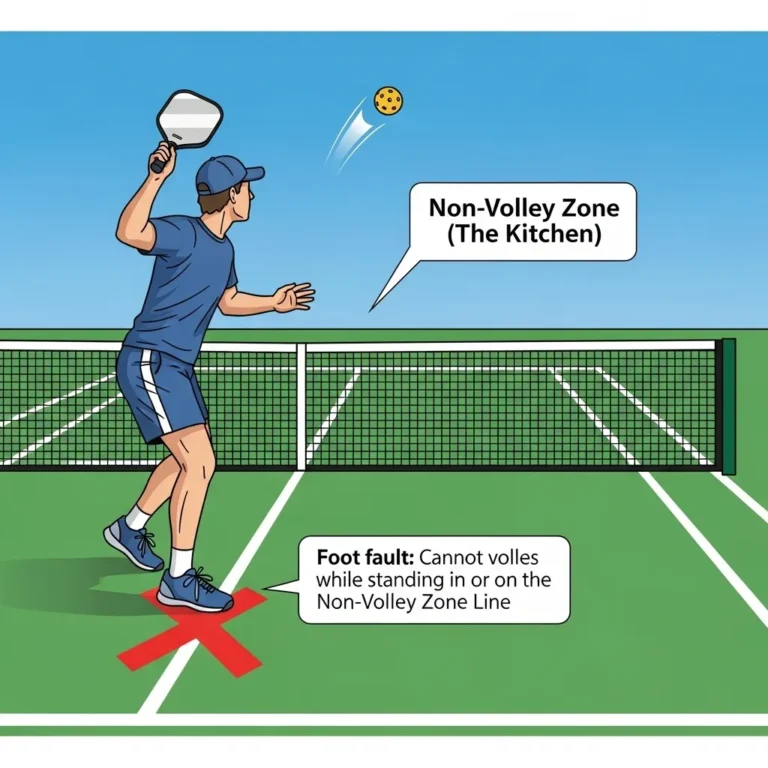
At least one foot must be “grounded” on the playing surface behind the baseline. This means the Jumping Serve is strictly illegal. If both feet leave the ground before you strike the ball, you have committed a fault. Additionally, “creeping” is a major issue; many advanced players accidentally let their toe touch the white baseline during a powerful follow-through. To avoid this, we recommend standing at least 6 inches behind the line to create a “safety buffer.” Understanding these spatial requirements is as crucial as knowing the Pickleball kitchen rules during a fast-paced dink rally.
Frequently Asked Questions (US Audience)
Q: Is the two-handed backhand serve legal in 2025?
A: Yes. You can use two hands for a backhand volley serve as long as both wrists remain above the highest point of the paddle head and the contact is below your navel. It is rare but perfectly legal.
Q: Can I use the paddle to “toss” the ball upward for a volley serve?
A: No. While the 2025 rules allow you to release the ball from the paddle, you cannot “flick” it upward. It must roll off the paddle via gravity or be dropped/tossed by hand for a volley serve.
Q: What happens if the ball hits the kitchen line on a serve?
A: That is an illegal pickleball serve. Unlike the baseline or sidelines, the kitchen (NVZ) line is considered “out” for the serve. The ball must clear the line entirely to be legal.
Q: Can I stand several feet behind the baseline to serve?
A: Absolutely. There is no “back limit” to where you can stand, as long as you are within the imaginary extensions of the sideline and centerline. Standing further back can actually help you generate more topspin.
Final Verdict: Mastering the Legal Edge
The illegal pickleball serves of 2025 are designed to keep the game balanced, but they also provide a roadmap for those who want to push the limits of power and spin. Whether you choose the traditional volley serve or the mechanically forgiving drop serve, your success depends on your ability to groove a motion that is both lethal and compliant. The “Chainsaw” may be dead, but the era of the “Legal Power Serve” is just beginning.
By recording your sessions and checking your contact height against your navel, you can eliminate the “grey area” that leads to court-side arguments. In the end, the most dangerous server isn’t the one who cheats the rules, but the one who knows them so well they can play right on the edge without ever crossing the line. For the 2025 season, consistency and “clean” mechanics remain the gold standard on every American court.