A Brief Overview of the HEAD Radical Elite Pickleball Paddle
Let’s be honest: when you walk onto a pickleball court these days, you’re bombarded with brand names you’ve probably never heard of before. It seems like a new company pops up every week promising the “ultimate spin” or “revolutionary power.” But amidst the sea of newcomers, there are a few giants that have stood the test of time, and HEAD is undeniably one of them.
If you have a background in skiing or tennis, the name HEAD immediately conjures up a specific vibe: Austrian engineering, precision, and a legacy of equipping some of the world’s best athletes. We aren’t just talking about a marketing company that slapped a logo on a piece of plastic. HEAD has been manipulating materials like graphite and carbon fiber for decades to handle the extreme forces of alpine skiing and the high-speed impact of professional tennis.
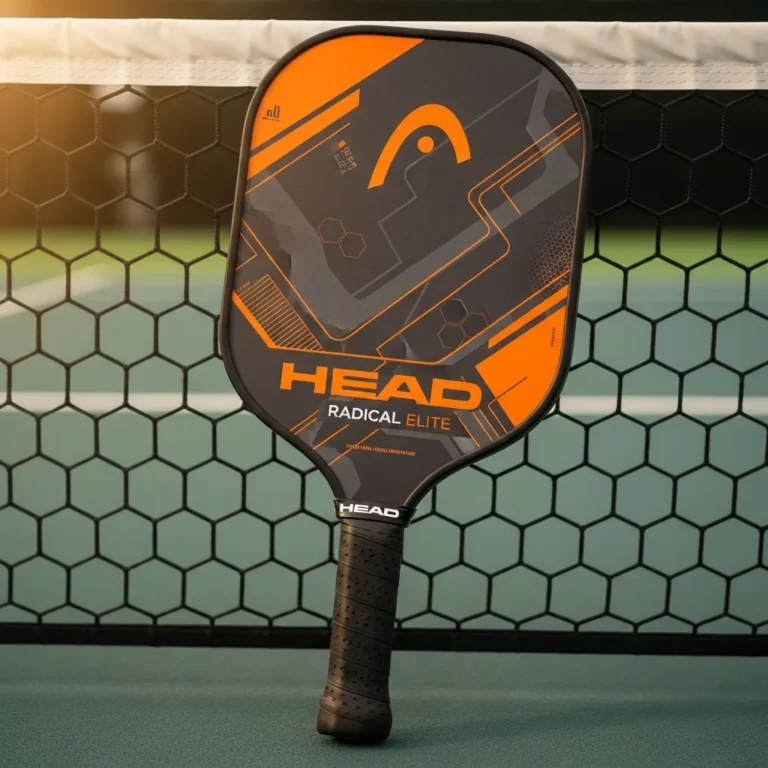
When they entered the pickleball market, they didn’t just shrink a tennis racquet. They brought that serious R&D mentality with them. They understand how a handle connects to a face, how vibration travels through materials, and how to balance weight so it doesn’t wreck your arm. The head radical elite pickleball paddle represents their entry-level to mid-range offering, designed specifically to bridge the gap for players who might be picking up a paddle for the first time—especially those crossing over from the tennis court. It’s a paddle that carries a lot of heritage in its DNA, offering a sense of reliability that’s hard to find in generic starter sets.
Performance & “Feel” (The Tennis Player Transition)
When we talk about performance, we have to talk about “feel.” It’s that elusive quality that makes you either trust your equipment or fight against it. If you are reading a head radical elite pickleball paddle review, chances are you might be looking for something that feels familiar, perhaps reminding you of your days on the clay or hard courts of tennis.
This paddle has a very specific target audience. It is a siren song for the tennis player who is finally giving in to their friends’ constant requests to play pickleball. The transition from tennis to pickleball is usually smooth, but equipment can be a stumbling block. HEAD has tackled this head-on (pun intended).
Does the HEAD Radical Elite handle shape feel like a tennis racquet?
This is the question I get asked most often by converts, and the answer is a resounding yes. In fact, this is arguably the single biggest unique selling point of this paddle.
If you pick up a standard pickleball paddle, you’ll notice the handle is often round or oval. It feels a bit like holding a broomstick or a hammer. For a tennis player, this is a nightmare because we rely on “face awareness.” We need to know exactly where the paddle face is pointing without looking at it, purely by how the grip sits in our palm.
The Radical Elite uses HEAD’s “Ergo Grip.” It features a pallet shape that is slightly rectangular, mimicking the geometry of a tennis racquet handle. It’s subtle, but the moment you wrap your hand around it, your muscle memory kicks in. It makes finding an Eastern or Continental grip incredibly intuitive. You don’t have to fumble around to find the bevels; they are right there. This allows for easier adjustments when switching from a forehand drive to a backhand dink, giving you a sense of confidence that round-handled paddles simply can’t match.
Is the fiberglass face “too slick” for spinning the ball?
We need to manage expectations here. If you spend your time watching YouTube highlights of pros hitting wicked topspin dips that dive at the last second, you might be wondering if this paddle can do that.
For advanced spin players, the honest answer is that the fiberglass face might feel a bit slick. The head radical elite 2024 pickleball paddle (and previous iterations) uses a smooth fiberglass composite surface. It does not have that gritty, sandpaper-like texture found on modern “raw carbon fiber” paddles. As a result, it generates significantly less RPM (revolutions per minute) on the ball.
However, let’s look at this through the lens of a beginner or intermediate player. Do you really need tour-level spin right now? Probably not. For the vast majority of players, the Radical Elite provides adequate “passive” spin. The fiberglass has a bit of flex, allowing the ball to dwell on the face just long enough to control it. But, if your game relies heavily on heavy topspin drives from the baseline or aggressive slice returns, you might find that the surface limits your ability to really shape the ball’s trajectory compared to the HEAD Radical Tour or raw carbon alternatives. It’s a trade-off: you get great “pop” and power from the fiberglass, but you sacrifice some of that grab.
Is the “Dynamic Power Shape” just marketing, or does it actually change the sweet spot?
It is easy to be cynical about fancy terms like “Dynamic Power Shape,” but in this case, it is functional engineering. If you look at the silhouette of the paddle, it isn’t a perfect square. It has a tapered, “teardrop” shape.
This geometry does something very specific: it shifts the sweet spot slightly higher up the face compared to square (quad) paddles. Why does this matter? Think about a serve or an overhead smash. You usually make contact higher up in the air, utilizing the full length of your reach. By moving the sweet spot up, HEAD gives you more leverage and power on those aggressive shots.
The flip side, however, is the short game. Because the weight and the sweet spot are pulled upward, the paddle may feel slightly less forgiving on low dinks near the handle until you adjust your contact point. It takes a session or two to dial in, but once you do, that extra leverage on serves feels fantastic.
Recommended Reading
Top Pickleball Gifts 2025:From Stocking Stuffers to Pro Gear
Looking for unique pickleball gifts? We break down practical gear, funny apparel, and budget-friendly ideas to help you surprise the player in your life.
Durability & Common Issues
When you are spending your hard-earned money, you want to know that your gear is going to last. No one wants to fall in love with a paddle only to have it fall apart three months later. In digging through head radical elite pickleball paddle reviews, there are a few consistent themes regarding durability that you should be aware of. It’s better to know these “red flags” upfront so you aren’t surprised later.
My edge guard is making a buzzing noise—is the paddle broken?
Imagine this: You are in the middle of a heated game, you go for a block, and suddenly your paddle sounds like a maraca. It’s buzzing or vibrating on every hit. Your heart sinks. Is it broken?
The good news is: not necessarily. This is a common reported issue with the Radical Elite (and frankly, many mid-range paddles) after months of play. It is usually the edge guard adhesive failing. The plastic guard that protects the rim can separate slightly from the paddle face, causing a vibrating or buzzing sound on impact.
It is annoying, yes, but it is often purely cosmetic. It doesn’t mean the core is shattered. Many handy players fix this in five minutes with a small amount of superglue (cyanoacrylate). You just carefully apply a tiny drop where the gap is and clamp it down. However, there is a distinction to make: if the core sounds “crunchy,” like you are shaking a bag of loose gravel, that is a different story. That usually means the internal honeycomb structure has been crushed, which is a warranty issue and means the paddle is retired.
Will the paddle develop “dead spots” quickly?
All pickleball paddles have a lifespan. They are consumable goods, much like tennis strings or running shoes. The Radical Elite utilizes a polymer honeycomb core, which is the industry standard for a mix of touch and power.
Generally, this core is durable. However, heavy hitters—those ex-tennis players who love to smash the ball—may notice a “deadening” in the upper corners after 6 to 9 months of aggressive play. If the center of the paddle starts to feel mushy, or if the ball just dies off the face without that satisfying “pop,” the core has likely fatigued.
It’s important to note that this is standard for mid-range fiberglass paddles. It isn’t a defect of the head radical elite pickleball paddle specifically; it’s just physics. You can prolong the life of your paddle significantly by treating it with care. The biggest killer of paddle cores? Heat. If you leave your paddle in a hot car during the summer, that heat softens the materials and adhesives, accelerating the breakdown. Treat it like a pet—don’t leave it in the car!
Does the surface graphic peel or fade?
We all want our gear to look good, right? The graphic on the Radical Elite is screen-printed onto the fiberglass face. Over time, you will see battle scars. It will accumulate ball dust (that yellow or neon green residue) and scuff marks very quickly.
To some, this looks “dirty,” but I like to think of it as character. It shows you’ve been playing hard. As for the actual material, peeling of the face is rare. Unless you have scraped the paddle against the court surface (the dreaded “courtrash”) and compromised the edge guard, the fiberglass skin usually stays intact. The fading is purely aesthetic and won’t affect how the ball flies off the face.
Modifications & Customization
One of the most fun aspects of pickleball is the “tinkering” culture. Players love to modify their equipment to suit their specific playstyle. Because the Radical Elite is a reasonably priced, well-balanced paddle, it serves as an excellent chassis for customization. It’s like buying a solid car and then deciding to upgrade the tires and suspension.
If you are looking at head radical elite 2024 pickleball paddle reviews, you might see advanced players discussing lead tape and overgrips. Don’t be intimidated—these are simple changes that can make a huge difference.
Can I add lead tape to the Radical Elite, and where should it go?
Absolutely. In fact, this paddle takes customization incredibly well. Out of the box, the Radical Elite is naturally balanced—it doesn’t feel like a sledgehammer (too head-heavy) or a feather (too light).
For intermediate players, the most common complaint is that the paddle twists in their hand when they block a hard drive from an opponent. This is called “instability.” To fix this, you can add weighted lead tape.
The golden rule for this paddle is the “3 and 9 o’clock” position. Imagine the paddle face is a clock. Placing about 3 grams of lead tape on the right edge (3 o’clock) and 3 grams on the left edge (9 o’clock) widens the sweet spot. It acts like stabilizers on a boat. When the ball hits off-center, that extra weight on the perimeter prevents the paddle from twisting. It makes the paddle feel solid and dependable without making it so heavy that you can’t move your hands quickly at the net.
Is the stock grip size accurate, or does it run small?
Grip size is personal, but there is a general consensus here. HEAD grips tend to run true-to-size or perhaps slightly on the smaller/thinner side compared to brands like Selkirk or Joola.
Because the handle is rectangular (remember that tennis shape?), it may feel “smaller” in the hand than a round handle of the same circumference. It lacks the bulk of a chunky oval grip.
For many players, the stock grip is just the starting point. I almost always recommend adding a standard overgrip immediately. An overgrip is a thin layer of tape (usually about 1/16″ thick) that you wrap over the existing grip. Not only does this slightly increase the thickness for a more comfortable hold, but it also improves sweat absorption. If you find the stock grip slippery or too thin, don’t return the paddle—spend $5 on an overgrip. It changes everything.
Check out our guide to Personalized Pickleball Paddles
Comparisons & Upgrades
Choosing a paddle is rarely done in a vacuum. You are probably comparing the Radical Elite against other options on the shelf or online. It helps to contextualize where this paddle sits in the ecosystem. It isn’t a $250 pro-tour paddle, but it also isn’t a $20 wooden toy. It sits in that sweet spot of value and performance.
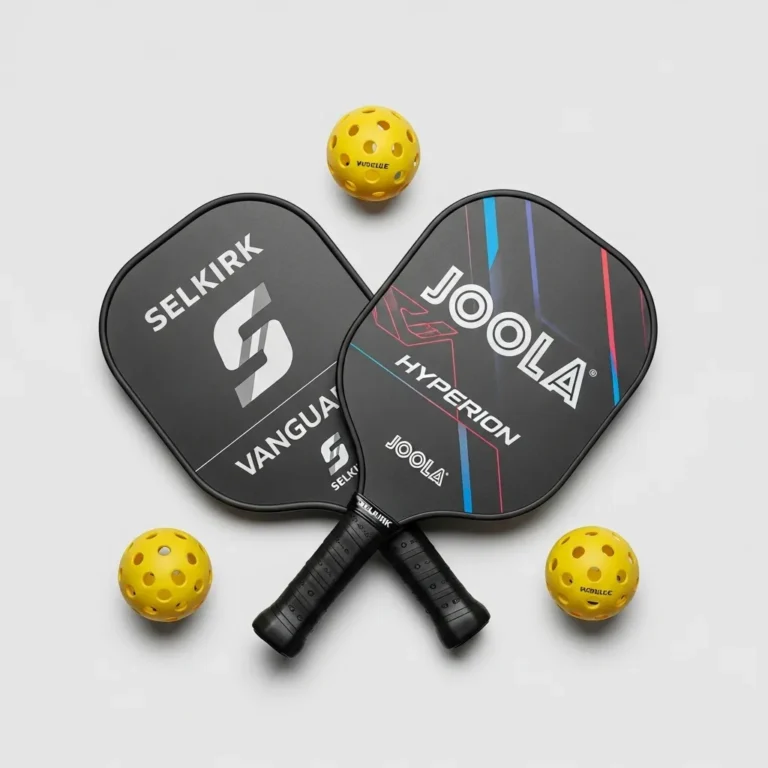
HEAD Radical Elite vs. Joola Essentials: Which is better for a first paddle?
This is the heavyweight bout of entry-level paddles. If you walk into a sporting goods store, you will likely see the HEAD Radical Elite hanging right next to the Joola Essentials. Which one should you grab?
The decision comes down to your playstyle and physical strength. The HEAD Radical Elite is generally considered “heavier and more stable” (usually weighing in around 8.1 oz). It feels substantial. If you struggle with blocking hard shots or if you have a slower swing speed and need the paddle to help generate power, the HEAD offers more “plow-through.” It pushes the ball back with authority.
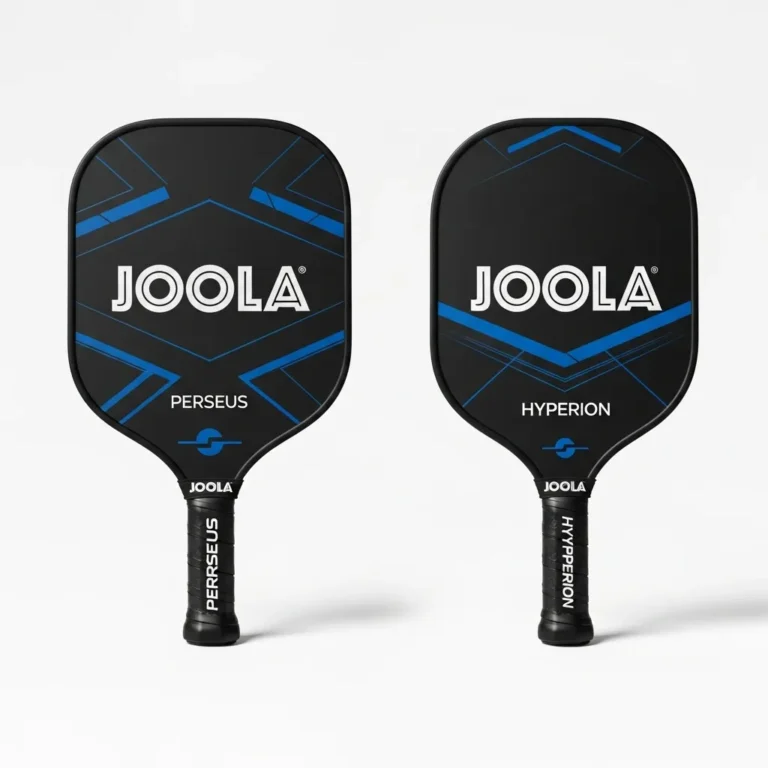
On the other hand, the Joola Essentials often feels lighter and “whippier.” If you prefer a fast game at the kitchen line and prioritize hand speed over stability, the Joola might be the pick. However, remember the handle factor: The HEAD has that tennis-style grip. For a tennis player, the HEAD will feel like home, whereas the Joola might feel generic.
Should I upgrade to the Radical Pro or switch to a Raw Carbon paddle?
Let’s fast forward six months. You’ve been playing with your Radical Elite, you’re addicted to the sport, and you’re itching for an upgrade. Where do you go from here?
This depends entirely on what you feel is missing from your game. If you love the feel of the Radical Elite but just want more of it—more power, more stability, a stiffer feel—then the logical next step is the HEAD Radical Pro. It keeps the same shape and handle geometry but uses superior materials for a punchier response.
However, if you are upgrading because you are frustrated with a lack of spin—if you are trying to hit those dipping drives and the ball is sailing long—do not simply move up the Radical line. In that case, you need to switch technology entirely. You should look for a “Raw Carbon Fiber” (T700) paddle. The Radical Elite’s fiberglass face, no matter how good, will never generate top-tier spin regardless of your technique. Recognizing when you have outgrown the materials is a key part of your pickleball journey.
Is this paddle quiet enough for “Green Zone” (noise-restricted) communities?
Finally, a practical consideration that is becoming increasingly important. As pickleball explodes in popularity, so do noise complaints. Many Homeowners Associations (HOAs) and community centers have “Green Zone” lists—lists of approved quiet paddles.
The Radical Elite performs very well here. The combination of the thick polymer core and the fiberglass face produces a lower-pitched “thud” rather than the high-pitched, piercing “crack” or “pop” associated with thinner Nomex or graphite paddles. It is a neighbor-friendly paddle. While no pickleball paddle is silent, this one is widely accepted in noise-restricted communities. You can play your morning game without feeling like you are waking up the entire neighborhood.
Final Thoughts
The head radical elite pickleball paddle is a workhorse. It doesn’t rely on flashy gimmicks or unproven technology. It takes the established engineering wisdom of a sporting giant and applies it to the specific needs of the developing pickleball player.
Is it the paddle you will use when you turn pro? Probably not. But is it the perfect companion for that crucial phase where you are transitioning from “just hitting the ball” to actually “playing the game”? Absolutely. It offers a blend of power, comfort, and tennis-familiar ergonomics that makes the learning curve feel a little less steep.
Whether you are looking for your first serious paddle or a reliable backup for your bag, the Radical Elite earns its place on the court. It invites you to play, forgives your early mistakes, and has enough pop to keep your opponents on their toes. And really, what more could you ask for from a trusty piece of equipment?
If you’re interested, check out the Top Pickleball Paddles 2025: power, control, and value.
you may like it