continental grip pickleball
If you watch professional pickleball players at the net, you’ll notice something distinct about their hands. They aren’t frantically flipping their paddles between forehands and backhands during fast exchanges. Their hands are calm, yet their reaction time is lightning fast.
Their secret? The Continental grip.
Often called the “Hammer” grip, this technique is the hallmark of an advanced player. While beginners often gravitate toward the Eastern grip because it feels natural for forehand drives, the Continental grip pickleball strategy is what unlocks the full potential of your net game.
If you want to level up from intermediate to advanced, you must master this grip. It might feel awkward or “open” at first, but it is the key to dominating the kitchen line.
The Anatomy of the Grip
Before we dive into strategy, let’s get technical. If you are holding your paddle correctly, you shouldn’t have to look at it to know you are in a Continental grip.
How to Find the Continental Grip
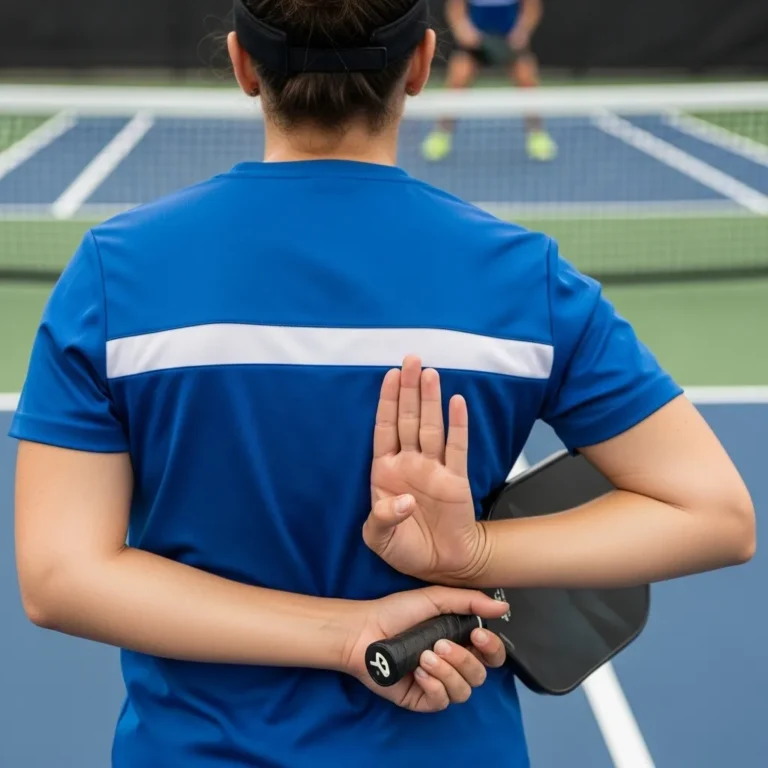
Many players ask, “How exactly do I find the Continental grip without looking?” The easiest way to visualize this is the “Handshake” or “Hammer” method:
- Hold the paddle out in front of you with your non-dominant hand, edge facing down (perpendicular to the ground).
- Reach out with your playing hand as if you are going to shake hands with the handle.
- Wrap your fingers around the grip.
For the technical purists asking, “Which bevel should my index knuckle rest on?”, here is the precise placement:
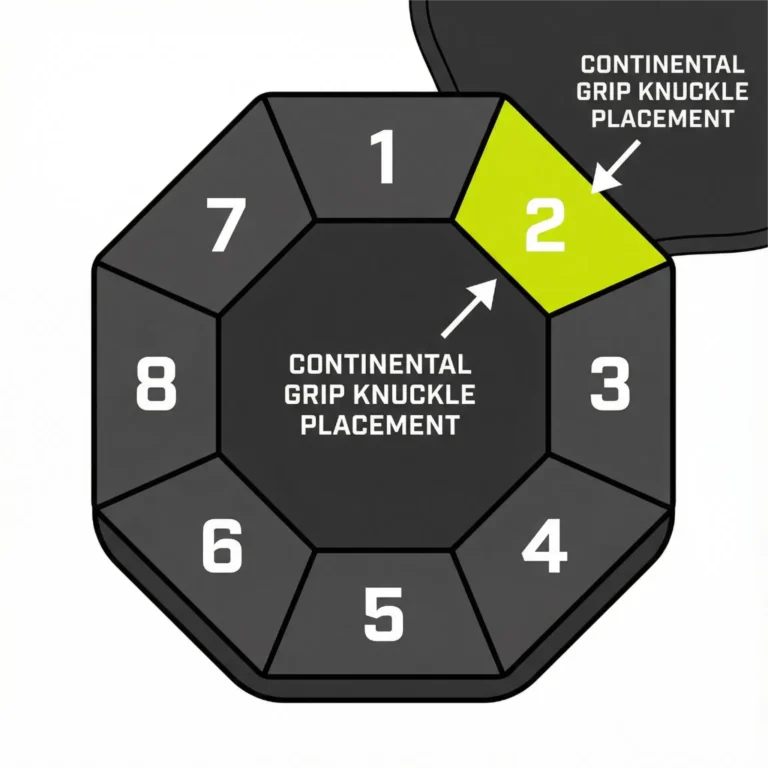
- Bevel #2: If you look at the butt cap of your paddle, you’ll see an octagon. Bevel 1 is the very top flat bevel. For a right-handed player, rotate clockwise one notch to Bevel #2. Your index knuckle and the heel pad of your hand should rest here.
Grip Pressure: The Toothpaste Test
A common mistake is death-gripping the paddle. Players often ask, “How tight should I squeeze?”
The answer is: Loose. Think of holding a tube of toothpaste with the cap off. You want to hold it firmly enough that it doesn’t fall, but loose enough that you don’t squeeze any toothpaste out. This relaxed tension is vital for mastering pickleball grips, as it allows for the wrist manipulation required for soft dinks and snap overheads.
Why the Continental Grip is King at the Kitchen
The transition zone and the kitchen line are where the Continental grip truly shines.
Speed and Reaction Time
The most significant advantage is speed. You might wonder, “Why is the Continental grip faster for blocking speed-ups?”
In a fast hands battle, you do not have time to switch from a forehand grip to a backhand grip. The Continental is a neutral grip. It allows you to hit a forehand volley and a backhand volley without changing the position of your hand. When a ball is blasted at your chest, this split-second saved is the difference between a block and an error.
The “Pop-Up” Problem
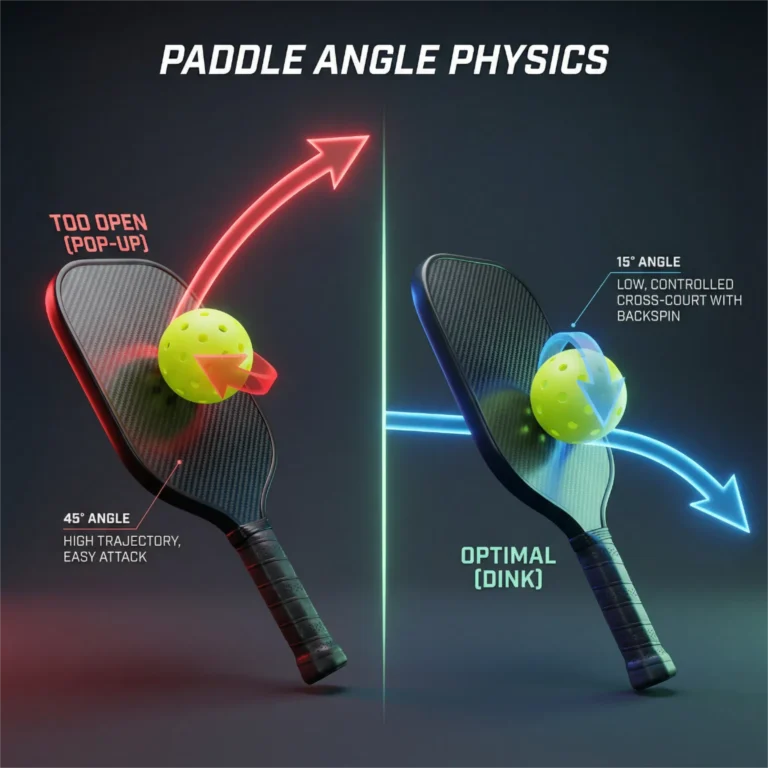
A frequent frustration for players learning this grip is dinking. They ask, “Why do my balls pop up high when dinking with a Continental grip?”
Because the Continental grip naturally opens the paddle face, a flat swing will send the ball skyward. To fix this, you must adjust your wrist angle to slightly close the face or “hood” the ball, especially on the forehand side.
Soft Game Strategy
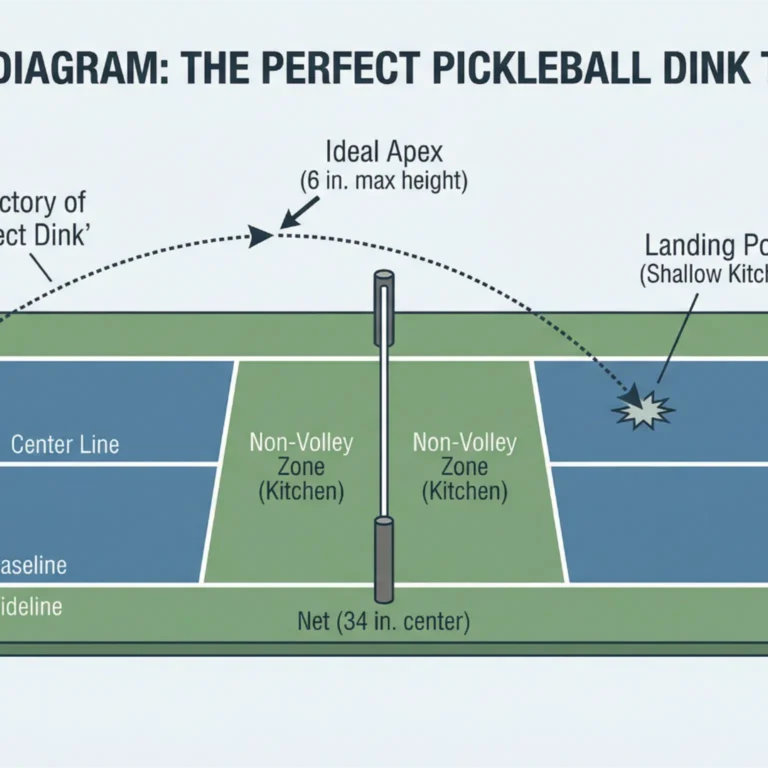
When considering Continental vs. Eastern Grip: Which is better for the soft game?, the Continental generally wins. It offers superior touch for backhand dinks and makes resetting the ball into the kitchen easier on defensive shots. For more on improving your dink and soft game strategy, focus on softening your hands rather than chopping at the ball.
Serves, Overheads, and Spin
The Continental grip isn’t just for defense; it is a powerhouse for overheads and serves.
The Standard for Power
“Why is the Continental grip considered the standard for serving?”
It allows for pronation. Just like throwing a baseball or swinging a hammer, the power comes from the wrist snapping forward and down. An Eastern grip locks the wrist, limiting this snap.
Generating Spin
A common myth is that you can only hit flat shots with this grip. Players often ask, “How do I generate top spin with a Continental grip if the face is naturally open?”
You generate topspin through the brushing motion of the swing and wrist pronation, not just the static angle of the paddle. By dropping the paddle head below the ball and brushing up and over (pronating), you can hit aggressive topspin serves and drives.
The Great Debate: Continental vs. Eastern
Should you use the Continental grip for everything? Not necessarily.
The Baseline Dilemma
Here is the honest truth answering the question: “Does using a Continental grip sacrifice power on forehand drives?”
Yes, it usually does. The Eastern grip places the palm behind the handle, providing more natural support for heavy, driving forehands from the baseline. The Continental grip can feel weak on groundstrokes because the palm is on top of the handle rather than behind it.
The Hybrid Approach
Because of this, many pros use a “Hybrid” strategy. They use an Eastern grip for the serve and baseline drives, then switch to Continental as they transition to the net.
However, you can play a two-handed backhand effectively using the Continental grip. In fact, having your dominant hand in Continental is ideal for the two-handed backhand, as it allows your non-dominant hand to drive through the ball.
For those coming from a tennis background, understanding the nuances of differences between tennis and pickleball mechanics is crucial, as the shorter paddle changes the leverage points compared to a tennis racquet.
Troubleshooting Common Issues (Niche Tips)
Transitioning to a new grip can be physically demanding.
Wrist Pain
If you find yourself asking, “My wrist hurts—am I doing it wrong?”, you likely are. Pain often comes from rigidly locking the wrist to force the paddle face flat. The wrist should be fluid. If you experience persistent pain, check your technique to ensure you are avoiding wrist strain and not over-stressing the tendons.
The Tennis Comparison
“I’m coming from tennis: Is this identical to the Tennis Continental serve grip?”
Technically, yes, the knuckle placement on Bevel 2 is the same. However, the lack of strings and the shorter handle in pickleball mean the ball dwells on the paddle for less time. You have to rely more on the wrist snap and less on the “plow through” effect you get from a heavy tennis racquet.
Drills to Master the Grip
You cannot master this grip during a tournament; you must drill it.
The Wall Drill
“How do I practice switching from Eastern to Continental?”
The best way is to use a wall. Start close to the wall and volley rapidly using only the Continental grip. Do not let yourself switch.
Once comfortable, back up. Hit a groundstroke (Eastern), catch the rebound, switch to Continental, and simulate a volley. This repetition builds muscle memory. Consistent practice is the core of effective pickleball drills.
Recommended Reading
Top Pickleball Gifts 2025:From Stocking Stuffers to Pro Gear
Looking for unique pickleball gifts? We break down practical gear, funny apparel, and budget-friendly ideas to help you surprise the player in your life.
Conclusion
Switching to a Continental grip pickleball style is an investment. For the first two weeks, you will likely play worse. You will pop balls up, and your forehand will feel weak.
But do not give up.
Once that muscle memory locks in, you will find yourself blocking faster, smashing harder, and dinking with more precision than ever before. It is the single most important technical adjustment for players aiming to master the sport.
For official rules regarding equipment and play, always refer to USA Pickleball.
you may like it