The Heart of the Game: Finding Your Perfect Match with Engage
If you have spent any time on a pickleball court recently, you’ve heard it. That distinct, rhythmic pop-pop-pop that echoes across the park. It’s the soundtrack of the fastest-growing sport in America, a game that brings together retired tennis pros, college athletes, and families just looking for a fun Saturday morning. But once you get past the initial learning curve—once you stop whiffing on the plastic ball and start actually dinking at the kitchen line—you realize something crucial: your equipment matters.
Specifically, your paddle matters.
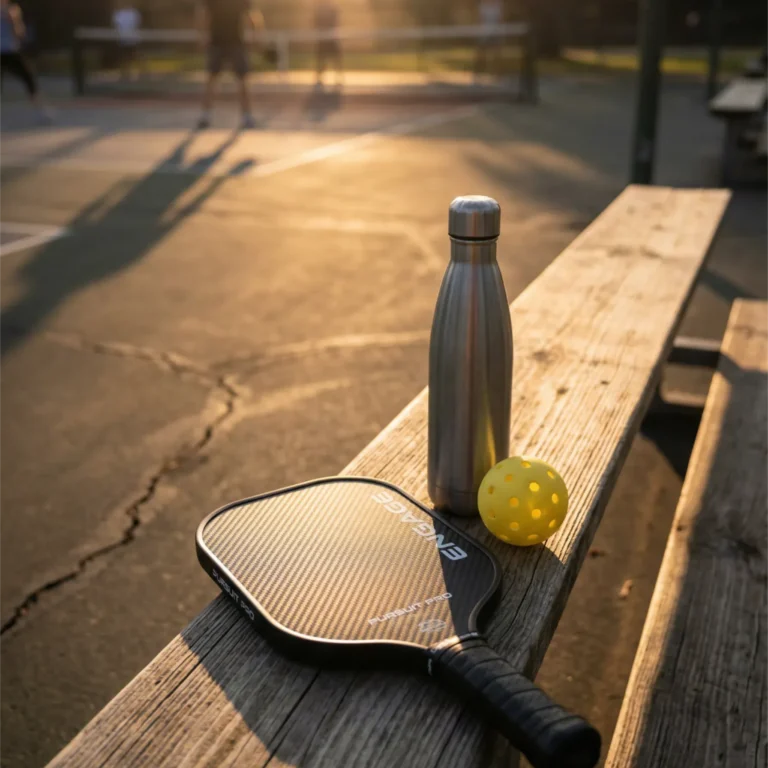
For many of us, the search for the “perfect” paddle feels a bit like Goldilocks testing porridge. Some are too heavy, some are too light, and some feel like you’re hitting a rock with a frying pan. This is where engage pickleball paddles tend to enter the conversation. If you ask a local 4.0 player what they are swinging, there is a very good chance they will point to that familiar “E” logo.
Engage isn’t just another factory pumping out gear; they are a brand that seems to obsess over the “feel” of the ball just as much as we do. Whether you are a banger who loves to drive the ball from the baseline or a touch player who lives for the soft drop shot, navigating their lineup can feel a little overwhelming at first. There are letters, numbers, and series names that sound like sports cars.
Let’s sit down and break this all down, friend-to-friend, so you can figure out exactly what you need without getting a headache from the technical jargon.
Top Pickleball Gifts 2025:From Stocking Stuffers to Pro Gear
Looking for unique pickleball gifts? We break down practical gear, funny apparel, and budget-friendly ideas to help you surprise the player in your life.
Understanding the Model Names & Specs
When you first look at the Engage catalog, it can look like a bowl of alphabet soup. You see EX, MX, 6.0, Evolution, Pursuit… it’s a lot. But once you crack the code, it’s actually a very logical system designed to tell you exactly how the paddle will behave in your hand.
What do “EX” and “MX” stand for in Engage paddle names?
This is the most common question I hear on the courts. You’re looking at two paddles that look identical in color and design, but one says EX and the other MX. Here is the scoop: it’s all about the shape and the handle length.
Think of the EX as the “industry standard.” It is the shape most of us learned on. It generally features a standard 16-inch length by 8-inch width profile. The EX shape provides a beautiful balance. It offers a generous surface area, meaning the sweet spot (that magical place where the ball flies off perfectly) is nice and wide. If you are a defensive player who needs to block hard drives, or if you just want a reliable, familiar feel, the EX is usually the way to go.
The MX, on the other hand, stands for “Max” or essentially, elongated. These paddles are longer and narrower. Why would you want a narrower paddle? Reach and leverage. The MX shape extends the paddle length (usually to about 16.5 inches) and shortens the handle slightly or keeps it standard, pushing the weight further away from your hand. In physics terms, this creates a longer lever. In pickleball terms, it means more power on your serves and overheads, and a little extra reach when you’re scrambling to get a ball that dipped into the kitchen. The trade-off is a slightly smaller sweet spot laterally, but for precision players, the MX is often a game-changer.
What is the difference between the 13mm core and the “6.0” (16mm) core?
Okay, let’s talk about thickness. You will often see a standard paddle (often called the “standard core” or roughly 13mm) and then the “6.0” version. Don’t let the decimal fool you; the 6.0 generally refers to a thicker, 16mm core.
Imagine hitting a ball against a brick wall versus hitting it against a taut trampoline. A 13mm core is thinner and harder. When the ball hits it, it rebounds instantly. This creates “pop.” If you struggle to get power on your put-away shots, or if you like a paddle that gives you immediate feedback, the thinner core is your friend. It’s fast and aggressive.
The 6.0 (16mm) core, however, is the darling of the modern “control game.” Because the paddle is thicker, it absorbs more of the impact energy. When the ball hits a 6.0 core, it stays on the face of the paddle for a fraction of a second longer—we call this “dwell time.” That extra split second allows you to manipulate the ball, adding spin and placing it precisely where you want it. It feels softer, more plush. If you want to master the soft dink game, you’ll likely fall in love with the 6.0.
How do the “Standard,” “Widebody,” and “Elongated” shapes compare?
We touched on this with the EX/MX debate, but it goes a bit deeper when you look across different brands and the full Engage history.
- Standard (EX): This is your jack-of-all-trades. It balances power at the net with control at the baseline. It rarely feels “head heavy,” so your hands remain quick during fast volley exchanges.
- Elongated (MX): As mentioned, this is for power and reach. However, because the weight is further from your wrist, these can sometimes feel heavier to swing, even if the static weight is the same as a standard paddle. It takes a little more wrist strength to maneuver quickly, but the payoff on drives is massive.
- Widebody: You don’t see this term as often in the new “Pro” lines, but historically (and in some other brands), widebody paddles sacrifice length for width. Engage’s “Blade” style used to fit this niche. These are for players who never want to miss a block. It’s like playing with a shield.
Product Lines & Performance
Now that we speak the language of shapes and sizes, let’s look at the actual families of paddles Engage produces. They have distinct personalities, and choosing the right one is like choosing between a muscle car, a luxury sedan, or a sports coupe.
What are the differences between the Pursuit, Encore, and Evolution series?
This is where the rubber meets the road.
The Pursuit Series: Currently, this is the flagship line for Engage. If you see the pros playing, they are likely wielding a Pursuit. These paddles use a proprietary Raw Toray T700 Carbon Fiber skin. What does that mean in English? It means the surface is gritty and stiff. The Pursuit line is all about the relationship between the core and the skin to generate maximum spin and power. It feels crisp. When you hit the ball, you know exactly where it’s going.
The Encore Series: This is the line that put Engage on the map. The engage encore pro pickleball paddle is legendary for a reason. The Encore line uses a specialized “ControlPro” core and a FiberTEK skin. The result is a paddle that feels significantly softer than the Pursuit. It has a massive “trampoline effect.” The ball seems to launch off the face with effortless power, but without the harsh vibration of a stiff paddle. It’s a favorite among players who want help generating speed on the ball without swinging out of their shoes.
The Evolution Series: Think of this as the bridge. It was designed to offer more touch and control, specifically for players dealing with tennis elbow or those who prefer a very soft feel. The face material is designed to hold the ball, providing ultimate control. It’s a quieter, gentler experience compared to the raw power of the Pursuit.
How does the new “Pursuit Pro1” improve upon the original Pursuit and Ultra models?
Technology moves fast. Just when we got used to the original Pursuit, Engage dropped the Pro1. The engage pursuit pro1 6.0 pickleball paddle is widely considered a significant upgrade.
The main difference lies in the integration of the skin and the core. In the original Pursuit, the carbon fiber was excellent, but the Pro1 bonds the skin directly to the core in a way that creates a “unified” feel. This eliminates dead spots almost entirely. Furthermore, the texture on the Pro1 is more aggressive and longer-lasting. We all know that tragic feeling when a paddle loses its grit after three months; the Pro1 addresses this durability issue.
The “Ultra” models were a stepping stone, focusing on a thinner frame for aerodynamics, but the Pro1 brings back the stability. It feels solid. If you hit a ball off-center with the Pro1, it doesn’t twist in your hand nearly as much as the older models did.
Which Engage paddle is best for power vs. control?
If Power is your addiction: You want the Pursuit Pro EX (or MX if you can handle the weight) with the standard (thin) core. Or, look at the classic Encore line with the thinner core. These paddles act like rocket launchers. The ball spends very little time on the face; it just explodes outward.
If Control is your aim: You want the engage pursuit pro1 6.0 pickleball paddle. The 16mm core absorbs the pace of your opponent’s hard drive, allowing you to reset the point with a soft drop into the kitchen. The Evolution series is also a top-tier contender for pure control, offering a buttery-soft feel that makes dinking feel therapeutic.
Which model generates the most spin?
Hands down, the Pursuit Pro1 series wins this contest. The Raw Toray T700 Carbon Fiber surface acts almost like sandpaper (within legal limits, of course). When you brush up on the ball for a topspin drive or slice underneath for a backspin return, that gritty texture grabs the plastic of the ball and rips it.
If you are a player who relies on heavy topspin to keep your drives in bounds, the Pursuit Pro1, specifically the 6.0 version (because the dwell time allows you to “catch” the ball longer), is the spin monster you are looking for.
Manufacturing & Technology
In a world where so much sporting goods manufacturing is outsourced overseas, Engage takes a different path. This affects the quality, the price, and the soul of the paddle.
Are Engage paddles made in the USA?
Yes, and this is a massive point of pride for the company and its fans. Engage manufacturers their paddles in the United States—specifically in Florida.
Why does this matter to you? It’s not just about patriotism; it’s about quality control. Because the engineers and the factory floor are in the same location, they can tweak designs and catch errors instantly. They aren’t waiting for a shipping container to arrive from across the ocean to realize a batch is slightly off. This vertical integration allows Engage to innovate faster than almost anyone else in the market. When you buy an engage pickleball paddle, you are supporting US manufacturing, but you are also getting a product that hasn’t spent three months baking in a shipping container.
What is the “Control Pro II” core technology?
You’ll see this term printed on the packaging, but what is it? The core of a pickleball paddle is usually a honeycomb structure made of polymer (plastic). However, not all honeycombs are created equal.
The “Control Pro II” core is Engage’s proprietary chemistry. They don’t just buy standard polymer sheets; they engineer the chemical makeup of the core to maximize consistency. The goal of this technology is to ensure that the ball bounces the same way whether you hit the dead center or two inches near the edge. It controls the vibration frequencies to create a solid, consistent feel. It’s the secret sauce that makes an Engage paddle feel distinct from a generic knock-off.
How does Engage address vibration dampening for player comfort?
This is a big one. Pickleball is fun, but “pickleball elbow” is a real drag. The repetitive shock of a hard ball hitting a hard paddle travels right up your arm.
Engage addresses this through the chemical bonding of the skin to the core. In their 6.0 (16mm) lines, and specifically in the Evolution and Encore series, the core is designed to disperse energy outwards rather than shooting it up the handle.
While we have to be careful not to give medical advice—and certainly, a paddle can’t “cure” an injury—many players report that switching to a thick-core Engage paddle (like the 6.0 models) significantly reduces the strain on their tendons. The paddle does the heavy lifting of absorbing the shock, so your elbow doesn’t have to. If you play several times a week, that vibration dampening is essentially an investment in your longevity on the court.
Purchase & Warranty
So, you’ve read the specs, you’re intrigued by the Made-in-USA story, and you’re ready to buy. But a high-end paddle is an investment, usually costing upwards of $200. You need to know you’re covered.
What is Engage’s warranty policy and the “5-year no dead spot” guarantee?
This is where Engage really flexes its muscles. Most paddle companies offer a 6-month or perhaps a 1-year warranty against defects. Engage offers a limited lifetime warranty against manufacturer defects, but the real headline is their policy regarding “dead spots.”
Engage has offered a “5-year no dead spot” guarantee on many of their premium paddles (check the specific model details when buying, as policies can evolve). This is practically unheard of. A dead spot happens when the core breaks down inside, causing the ball to just die off the face in certain areas. By guaranteeing against this for five years, Engage is essentially betting on their own quality control. It gives you incredible peace of mind that this paddle will last you through thousands of games.
However, keep in mind this covers the core. It doesn’t cover normal wear and tear on the surface grit or edge guard scrapes—that’s just part of the game!
Is the Encore line suitable for beginners?
Absolutely. In fact, I often argue that the Encore line is the best place for a dedicated beginner to start.
When you are just starting, you don’t always hit the center of the paddle. You need forgiveness. You need a paddle that helps you get the ball over the net even if your swing isn’t perfect. The engage encore pro pickleball paddle (and the standard Encore EX) offers a huge sweet spot and that “trampoline” pop. It gives you easy power.
Starting with a high-quality paddle like an Encore prevents you from developing bad habits. Cheap wooden or basic composite paddles force you to swing too hard to get the ball moving, which leads to poor form and potential injury. The Encore rewards smooth swings, helping you learn the right way from day one.
A Final Note on Community
One of the things that makes Engage feel like more than just a corporation is how they interact with the pickleball community. They are everywhere. If you follow them on social media or subscribe to their newsletters, you might stumble upon fun events like an engage pickleball 50 paddle giveaway.
While you can’t plan your purchase around winning a contest, these types of giveaways highlight how aggressive they are about getting paddles into players’ hands. They know that if they can just get you to try one—just for one game—you’ll probably be hooked.
Wrapping It Up
Choosing a paddle is personal. It’s an extension of your arm and, in many ways, an extension of your personality on the court.
Are you the precision surgeon with the engage pursuit pro1 6.0 pickleball paddle, dissecting your opponents with spin and soft drops? Or are you the power player with the Encore, blasting winners from the baseline?
Engage has managed to build a lineup that caters to both, all while keeping the manufacturing right here in the USA. Whether you are looking for that competitive edge or just want to play without your arm hurting the next day, there is likely an Engage paddle with your name on it.
So, do your research, demo a few if you can, and I’ll see you on the courts. Just be ready—once you hear that perfect pop off an Engage core, it’s hard to go back to anything else.