pickleball tips
So, you’ve caught the bug. It usually starts the same way for everyone: a friend invites you to the local park, hands you a paddle that looks like an oversized ping-pong bat, and tells you to “stay out of the kitchen.” An hour later, you’re sweating, laughing, and absolutely hooked.
But once the initial excitement settles, you realize there is a lot more to this sport than just whacking a plastic ball over a net. You want to get better. You want to win more points, hold your own against the “regulars,” and stop making those silly unforced errors.
Whether you are a complete novice or an intermediate player looking to refine your strategy, this guide is for you. We are going to walk through the court together, from the baseline to the non-volley line, covering the essential tips for pickleball that will transform your game. Let’s dive in.
1. The Serve: Starting the Point with an Advantage
The serve is the only shot in the game where you have complete control. You aren’t reacting to an opponent; you are setting the stage. While it’s tempting to try and ace your opponent every time, consistency is your best friend here. Let’s look at some crucial pickleball serve tips.
What are the most important rules for a legal pickleball serve?
If you come from tennis, you have to unlearn a few things. In pickleball, the serve must be an underhand motion. Specifically, your paddle must make contact with the ball below your waist (navel level), and the head of the paddle needs to be below your wrist at the moment of impact. Also, you have to serve diagonally across the court, and your feet must stay behind the baseline until you’ve hit the ball. It sounds like a lot, but it basically means: keep it low, keep it underhand, and don’t cross the line.
related: pickleball rules singles: Scoring, Serving & Strategy
How can I stop hitting my serves into the net or out of bounds?
This is usually a result of trying to do too much, too soon. If you are hitting the net, you are likely aiming too low or flicking your wrist too much. Aim higher—imagine there is a window about two feet above the net that you are trying to hit through. If you are hitting it long, you might be swinging too hard. Slow down your swing and focus on a smooth, pendulum-like motion from your shoulder rather than a jerky wrist snap.
Should I focus on power or placement when serving?
If you ask any pro for pickleball serving tips, they will almost always tell you: placement over power. A super-fast serve that lands in the middle of the service box is easy to return. A moderately paced serve that lands deep in the corner, targeting your opponent’s backhand, is a nightmare. Focus on depth first. Once you can hit the back three feet of the court consistently, then you can worry about adding speed.
What is the difference between a volley serve and a drop serve, and which is better for beginners?
A volley serve is when you toss the ball in the air and hit it before it touches the ground. A drop serve is when you let the ball fall from your hand, let it bounce on the ground, and then hit it.
For beginners, the drop serve is often a game-changer. Why? Because gravity is reliable. When you drop the ball, it bounces to the same height every time. A toss in the air can be erratic—sometimes too high, sometimes too far forward. The drop serve removes that variable, making it easier to make clean contact.
How do I add spin (topspin or slice) to my serve without faulting?
Spin is fun, but it requires finesse. For topspin (which makes the ball dive down quickly), you want to brush up on the back of the ball as you hit it. Think “low to high.” For a slice (which keeps the ball low), you chop slightly under the ball. The key to doing this legally is ensuring you don’t violate the “paddle below the wrist” rule. Keep the motion smooth and don’t exaggerate the twist of your wrist.
Where is the best spot to aim my serve to put my opponent on defense?
Generally, you want to aim for their weak side. For 90% of players, that is their backhand. If you can consistently serve deep to their backhand corner, you will force them to return a weaker shot, setting you up for an easy third shot. Alternatively, aiming right at their body (the “jam” serve) can be very effective because they have to decide quickly whether to move left or right.
Why is serving deep to the baseline considered a crucial strategy?
A deep serve keeps your opponent pinned back. If you serve short, they can step in, hit a strong return, and rush to the kitchen line immediately. By serving deep, you force them to hit the ball from further away, giving you more time to react to their return and keeping them away from the net for just a second longer.
2. The Return of Serve: Setting Up the Point
Receiving the serve is arguably harder than serving because you have to react to spin and speed. However, a good return can neutralize the serving team’s advantage immediately.
What is the “return and run” strategy, and why is it important?
This is the golden rule of the return. As soon as you hit your return of serve, your momentum should carry you forward. You want to sprint to the Non-Volley Zone (NVZ) line immediately. The team that controls the net usually controls the point. If you hit the ball and stand still to watch where it goes, you’ll get caught in “no man’s land” (the middle of the court) and likely lose the point.
Where should I stand when receiving a serve?
Don’t stand right on the baseline. If the server hits it deep, the ball will land at your feet, and you’ll be jammed. Stand about a foot or two behind the baseline. This gives you room to step forward into the ball. It’s always easier to move forward to a short serve than it is to stumble backward for a deep one.
Why is hitting the return deep to the opponent’s baseline effective?
Just like serving deep, returning deep is vital. It forces the serving team to stay back. Remember, the serving team has to let the ball bounce before they can hit it (the “two-bounce rule”). If you hit a deep return, they have to wait for it near the baseline, which gives you plenty of time to run up to the kitchen line and take control of the net.
How do I handle a serve that has a lot of spin or speed?
Watch the ball all the way to your paddle. If a serve is coming in hot with lots of spin, don’t try to swing hard. Shorten your backswing. Think of your paddle as a wall; you just want to block the ball back deep. If you take a big swing at a spinning ball, you increase the margin for error. Keep it simple and compact.
Should I drive the return or hit a lofty, slow shot?
For beginners and intermediates, a lofty, slower shot deep to the middle is often better than a hard drive. A hard drive travels fast, which means it comes back fast—giving you less time to run to the kitchen. A slower, high-arcing return gives you precious extra seconds to get into position at the net before the opponents hit their third shot.
3. Mastering the Non-Volley Zone (The Kitchen)
The kitchen is what makes pickleball unique. It turns a game of power into a game of chess.
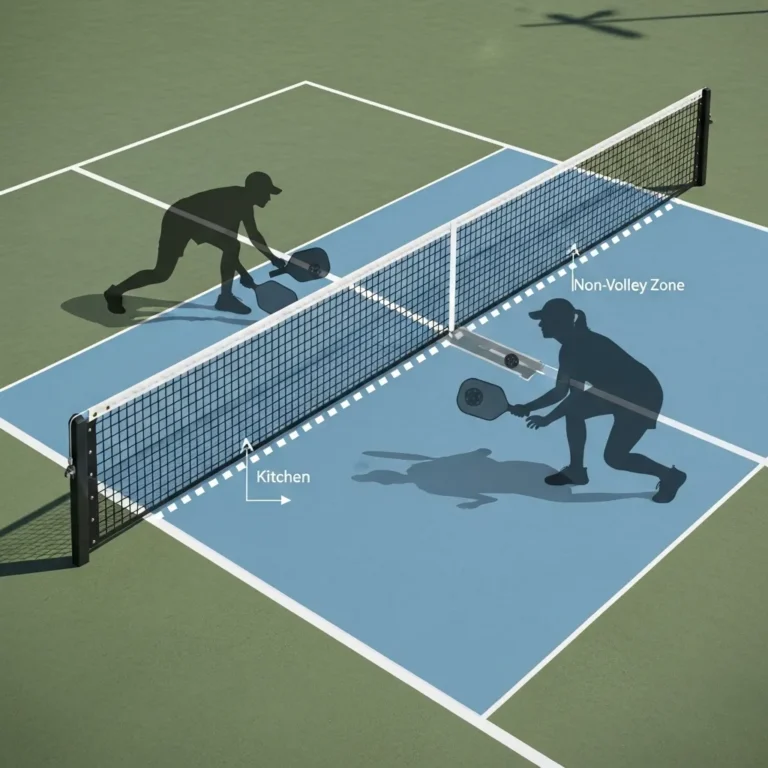
What exactly is the “kitchen,” and why can’t I volley while standing in it?
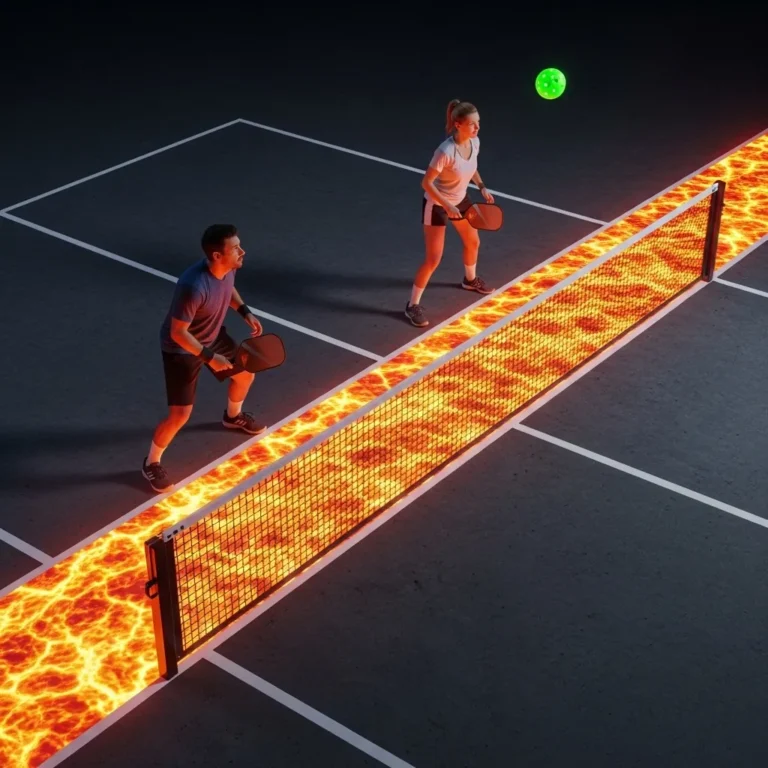
The kitchen is the 7-foot zone on either side of the net. The rule is simple: you cannot hit the ball out of the air (a volley) while standing in this zone, or while touching the line. This rule exists to prevent players from standing right on top of the net and smashing everything down. It forces players to back up slightly and use strategy rather than just height and power.
How do I stop myself from accidentally stepping into the kitchen during a volley (momentum rules)?
The rule states that if your momentum carries you into the kitchen after you volley, it’s a fault—even if the ball is already dead. Imagine the kitchen is filled with lava. You have to be balanced. A good tip is to plant your feet and hit, rather than running and hitting. If you do have to lunge forward to volley, try to jump backward immediately, though it’s safer just not to volley if you are that close.
What is “dinking,” and why is it more effective than hitting hard from the net?
Dinking is hitting a soft shot that barely clears the net and lands in your opponent’s kitchen. It’s effective because it’s unattackable. If the ball lands low at your opponent’s feet, they can’t smash it; they have to hit it up. This allows you to wait for a mistake. Hitting hard from the net often leads to the ball going out or hitting the net.
How can I improve my patience during a long dinking rally?
This is the mental battle. Beginners often get bored after three dinks and try to speed up the ball, usually leading to a mistake. Tell yourself, “I will not give them a free point.” Treat a dinking rally like a staring contest. Breathe, relax your grip, and wait for them to mess up.
When is the right time to speed up a dink and attack?
You attack when your opponent makes a mistake. If they hit a dink a little too high (getting “popped up”), that’s your green light. If the ball is below the net, dink it. If the ball is above the net, you can flick it or drive it. Be opportunistic, not aggressive.
Check out our guide to Stop Popping Up: The Pickleball Dink Mechanic Fix
How do I aim my dinks to pressure my opponent’s backhand or feet?
Don’t just hit the ball over; aim with purpose. Cross-court dinks are safer because the net is lower in the middle. Aim for their backhand foot. If you make them shuffle their feet or hit off their weak side, they are more likely to pop the ball up for you to smash.
Can I step into the kitchen to hit the ball if it bounces first?
Yes! The kitchen is only a “no-volley” zone. If the ball bounces in the kitchen, you can step in, hit it, and even stay there as long as you want—just remember to get out before you try to hit the next ball out of the air!
4. Essential Strategy & Shot Selection
Now that we have the mechanics, let’s talk about the brain game.
What is the “Third Shot Drop,” and why is it called the most important shot in pickleball?
Here is the scenario: You served (shot 1), they returned it deep (shot 2). Now you are at the baseline, and they are at the net. If you hit it hard, they will just block it back. You need to get to the net to neutralize their advantage. The “Third Shot Drop” is a soft, arcing shot that lands in their kitchen. It forces them to let it bounce, giving you time to run up to the net safely. It is the great equalizer.
When should I choose to drive the ball versus dropping it into the kitchen?
Drive the ball (hit it hard) if the return is short or high, or if you catch your opponent moving. A drive can catch them off guard. However, if the return is deep and they are set at the net, a drop is almost always the smarter play.
What does “resetting the point” mean, and how do I do it when under pressure?
Sometimes chaos breaks out. The ball is flying fast, and you are scrambling. “Resetting” means hitting a soft shot into the kitchen to slow everything down. It takes the power away from your opponents and turns a firefight back into a dinking game. To do this, loosen your grip and just block the ball softly.
How can I stop popping the ball up high for my opponents to smash?
This usually happens because your paddle face is too open (tilted back) or you are swinging too much. Keep your paddle angle neutral. Also, bend your knees! If you are standing straight up, you’ll tend to scoop the ball up. Get low and push the ball forward, not up.
What is the “middle strategy,” and why should partners communicate about who takes the middle shots?
The middle of the court is the point of confusion. We often call it the “divorce line” because married couples fight over it! The strategy is to hit down the middle to cause confusion. To defend it, decide beforehand: usually, the player with their forehand in the middle takes those shots. Talk to each other! Say “Mine!” or “Yours!”
How do I defend against a “banger” (someone who hits the ball hard every time)?
Bangers love pace. If you hit it hard back to them, they love it. To beat a banger, you have to do what they hate: play soft. Block their hard shots into the kitchen. Make them run forward. They usually have great power but poor soft games. Also, let the ball go! Bangers often hit the ball long. If it looks shoulder-high, let it fly—it’s probably going out.
When is it a good idea to use a lob shot?
A lob (hitting high over their heads) is great when your opponents are leaning right over the kitchen line, expecting a dink. It forces them to scramble backward. However, use it sparingly. If you don’t hit it deep enough, it’s an easy smash for them.
5. Court Positioning & Movement
You can have great strokes, but if you aren’t in the right place, you can’t use them.
Where should I stand on the court when my partner is serving versus receiving?
When your partner is serving, stand just behind the baseline with them or slightly inside. When your partner is receiving, you should be standing at the kitchen line, ready to intervene if the return is weak. However, keep your eye on the returner—if they pop it up, you might be in the line of fire!
How do I move effectively with my partner to avoid leaving open gaps?
Imagine there is a six-foot rope tying your waists together. If your partner moves left to get a ball, you slide left. If they move back for a lob, you retreat to cover the middle. You should move as a unit, like a windshield wiper. This prevents huge gaps from opening up in the middle or down the lines.
Why is it important to get to the non-volley line (kitchen line) as quickly as possible?
The net is the offensive position. Being at the line cuts down your opponent’s angles and allows you to hit downward (smashes). If you stay back, you are always hitting upward, which is defensive. The goal of every point is to get to that line.
How do I recover position after being pulled out wide?
If you have to run way off the court to hit a ball, hit a high, slow shot back to the middle of the court. This “air time” buys you seconds to shuffle back into position. Don’t try a dazzling winner from off the court; just survive and recover.
6. Equipment & Gear Tips
You don’t need to spend a fortune, but the right gear helps.
How do I choose the right paddle for my playstyle (power vs. control)?
Paddles generally vary by thickness and surface material. Thicker cores (16mm) usually offer more control and a softer feel—great for dinking and resets. Thinner cores (13mm) offer more “pop” and power. If you are a beginner, lean toward a control paddle with a large “sweet spot.” It’s more forgiving.
What is the difference between indoor and outdoor pickleballs?
Outdoor balls have smaller holes and more of them (usually 40). They are harder and heavier to withstand wind and rough surfaces. Indoor balls have fewer, larger holes (usually 26) and are softer. Using an indoor ball outside feels like hitting a marshmallow; using an outdoor ball inside on a wood floor skips too fast. Use the right ball for the environment.
What type of shoes are best for preventing injuries on the court?
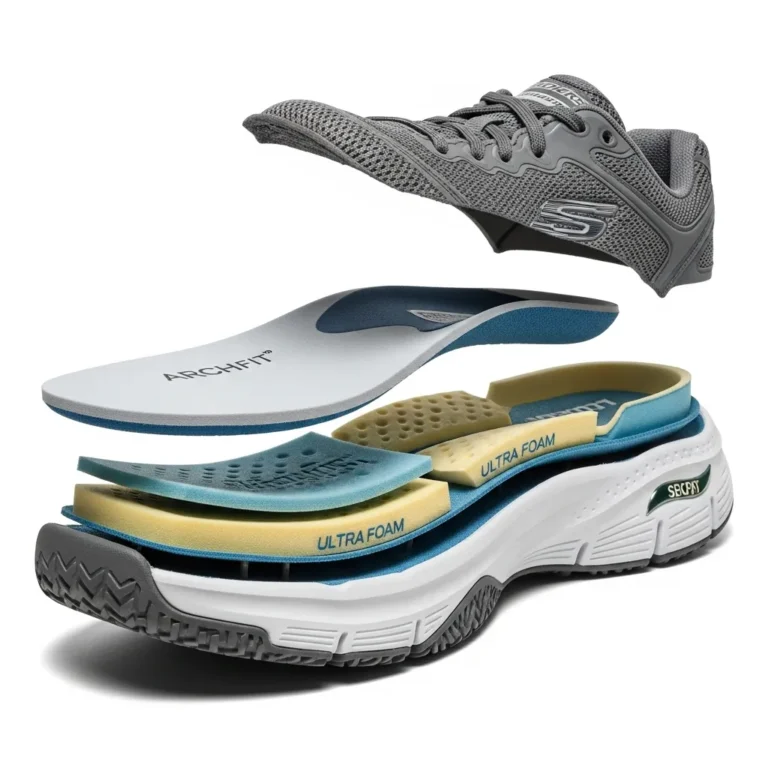
Please, do not wear running shoes! Running shoes are designed for forward motion and have thick heels that can cause you to roll your ankle during lateral (side-to-side) movements. You need “court shoes” (tennis or volleyball shoes) that have a flat, stable sole and good lateral support. This is the single best safety tip for pickleball.
How often should I replace my paddle?
Paddles have a lifespan. Over time, the surface grit wears down (reducing spin) and the core can get “dead spots.” If you play a few times a week, a paddle might last 6 to 12 months. If you notice you have to swing harder to get the same power, or the sound of the ball changes, it might be time for an upgrade.
Do I need any accessories for outdoor play?
Absolutely. If you are playing outside, the sun can be a major enemy, especially when tracking high lobs. A good pickleball hat is essential not just for shading your eyes from glare, but also for keeping sweat from dripping down your face during intense rallies.
7. Common Mistakes & Mental Game
Finally, let’s talk about what happens between your ears.
What are the most common unforced errors beginners make?
The biggest one is “creeping.” This is slowly walking forward while your opponent is about to hit the ball. If they hit it at your feet while you are moving, you will error. When your opponent is about to hit, do a “split step”—stop moving and balance on both feet. Also, trying to hit winners from the baseline is a classic error. Be patient.
How do I stay mentally focused during a close game?
Focus on one point at a time. Don’t think about the score. If you make a mistake, tap paddles with your partner, say “next one,” and forget it. Anger only tightens your muscles, making you play worse. Smile—it actually helps relax your body!
How should I handle playing against a left-handed opponent?
Lefties put a different spin on the ball, and their “forehand middle” is on the opposite side. It can be confusing. Early in the game, identify if someone is left-handed. Remind yourself constantly. Adjust your serve and dinks to target their backhand, which is on the right side now!
What is the best way to warm up before a match to avoid injury?
Don’t just walk on and start smashing. Do some light jogging or jumping jacks to get the blood flowing. Do some dynamic stretches like arm circles and leg swings. Then, start “dinking” close to the net to wake up your hand-eye coordination before backing up to hit hard drives. Your knees and shoulders will thank you.
Pickleball is a journey. You will have days where you feel like a pro, and days where you can’t hit a ball over the net. That is part of the fun. By applying these strategies, working on your positioning, and keeping a positive attitude, you will see your game improve rapidly. Now, grab your paddle and go own that court!
you may like it