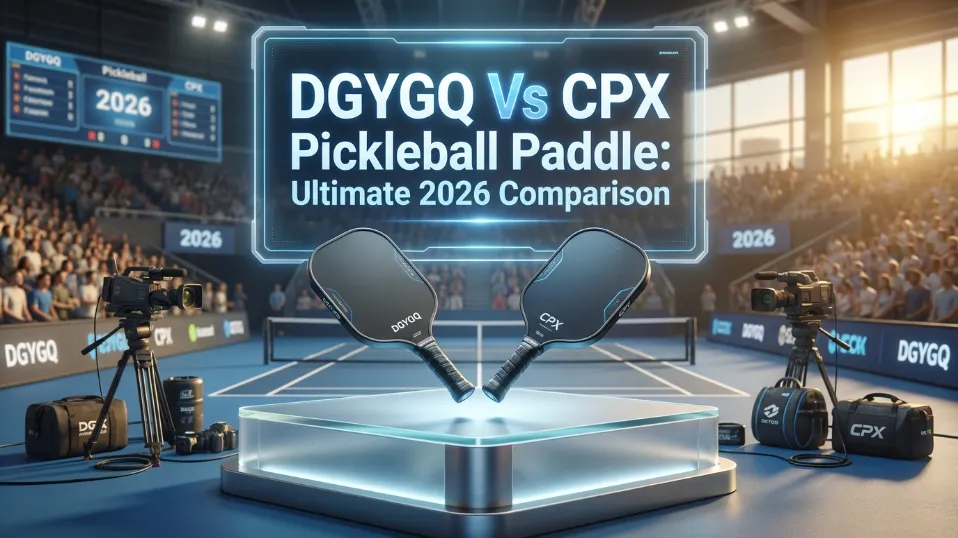
Finding a high-performance paddle shouldn’t feel like a gamble, yet the marketplace is flooded with budget options that look identical on paper. If you have narrowed your search down to the DGYGQ Vs CPX Pickleball Paddle, you are likely chasing that perfect balance between “entry-level price” and “pro-level grit.” While one promises a hidden-gem experience, the other claims to be the ultimate bargain—but only one actually holds up under the pressure of a fast-paced kitchen rally. We put these two contenders head-to-head to see which one genuinely enhances your game and which one is just another generic piece of honeycomb composite.
| Feature | DGYGQ PKB-EL01 | CPX Pro Series | Winner / Edge |
|---|---|---|---|
| Weight | 7.7 – 8.2 oz | 8.2 oz | DGYGQ (Lighter/Speed) |
| Surface Material | Raw T700SC Carbon Fiber | Raw 3K Carbon Fiber | DGYGQ (Elite Grit) |
| Core Type | 13mm Honeycomb | 19mm Honeycomb | CPX (Soft Control) |
| Handle Length | 5.9 inches (Extended) | 4.84 inches (Standard) | DGYGQ (Tennis Players) |
| Price Range | $65 – $130 | $99 – $160 (BOGO Deals) | Tied (High Value) |
| Final Rating | 4.5 / 5 | 4.2 / 5 | DGYGQ |
DGYGQ Vs CPX: Power and Control
In the debate of DGYGQ Vs CPX Pickleball Paddle, the fundamental difference lies in core thickness and engineering. The DGYGQ PKB-EL01 is a power paddle designed with a 13mm polypropylene honeycomb core . This thinner core allows for a higher exit velocity, meaning the ball rebounds faster with less energy absorption, providing the “pop” required for aggressive drives . If you want a deep dive into the specific features of this paddle, check out our comprehensive DGYGQ pickleball paddle review.
Conversely, the CPX Pro Series shifts the focus entirely toward the “soft game.” It features a massive 19mm core, which is significantly thicker than the 16mm industry standard . This extra thickness acts as a shock absorber, muting the ball’s energy to provide elite control on dinks and resets. Before making a final choice, you might want to see why some players have mixed feelings in our in-depth CPX pickleball paddle review.
For those looking at beginner pickleball paddles DGYGQ vs CPX, the choice depends on your physical strength. If you find it hard to generate power, the DGYGQ pickleball paddle specs—especially its 8.0 oz weight and thin core—will give you a natural boost . If you are already a “hard hitter” from other sports, the CPX’s 19mm core will help keep your shots inside the baseline.
Spin Potential: Which Paddle Wins?
Spin is the primary weapon for advanced players in the United States, and both brands utilize high-end carbon fiber to achieve competitive RPM rates. The DGYGQ uses Raw T700SC Carbon Fiber, which is the same “Toray” material found in paddles costing double the price . In independent testing, raw carbon fiber paddles typically hit the 2000+ RPM mark, placing them in the high-spin category .
CPX uses Raw 3K Carbon Fiber that undergoes a sandblasting process to enhance surface friction . While users report excellent spin initially, there are community concerns regarding “grit wear” over time, a common issue with sandblasted surfaces compared to the woven texture of T700 . If spin is your absolute priority, we recommend exploring the best pickleball paddle for spin to see how these stack up against elite friction technology.
- DGYGQ Edge: Better dwell time due to the raw T700SC texture .
- CPX Edge: High initial grit, though longevity is debated by 4.5+ rated players .
Durability and Build Quality
One “missing gap” often ignored in best budget pickleball paddle comparison reviews is how these paddles are manufactured. DGYGQ utilizes a one-piece heat press construction (Thermoformed). This eliminates the traditional weak point at the neck, preventing the handle from snapping or becoming unstable during high-intensity hand battles.
CPX also uses thermoforming but adds foam-injected walls along the perimeter to expand the sweet spot . However, some Reddit users have flagged potential dead zones—areas near the edges where the ball doesn’t bounce consistently .
Pro Tip: Many players fix these dead spots by applying weighted lead tape to the paddle’s perimeter, which increases the twist weight and stabilizes the face.
When searching for CPX pickleball paddle alternatives, brands like Vatic Pro or 11SIX24 are often cited for their superior quality control . However, CPX counters this with their popular BOGO (Buy One Get One) offers, making them an unbeatable value for couples or friends starting together.
The Final Verdict: Which One Should You Buy?
The decision between a DGYGQ or CPX paddle boils down to your background and play style. The DGYGQ PKB-EL01 is arguably the best transition tool for former tennis stars. Its extended 5.9-inch handle is a rare find in the budget segment, providing the necessary room for a two-handed backhand. It is also fully USAPA approved, ensuring you won’t be disqualified from local tournaments. You can verify the latest legality on the official USA Pickleball Approved Paddle List.
If you prefer a defensive, control-oriented game and love a good bargain, CPX is your brand. Their Pro Series is exceptionally soft and forgiving, making it one of the best pickleball paddles under $100 when caught on sale.
For players who want the “Joola feel” without the $280 price tag, the DGYGQ’s raw carbon fiber surface is a massive win . If you’re comparing other options, we suggest checking out the Adidas pickleball paddle or even the high-tech Joola Blue Lightning for a broader view of the 2026 market.
DGYGQ Vs CPX Pickleball Paddle-Frequently Asked Questions (FAQ)
Are DGYGQ and CPX paddles tournament legal in the US?
Yes, both DGYGQ and CPX have multiple models that are USA Pickleball Approved. Always check for the “USAPA Approved” seal on the paddle face before buying for competitive play.
Which paddle is better for tennis players?
The DGYGQ is superior for tennis players due to its 5.9-inch extended handle, which allows for more leverage and a comfortable two-handed backhand grip.
How long do these budget carbon fiber paddles last?
Typically, a raw carbon fiber paddle used 3-4 times a week will last 6 to 12 months before the grit degrades significantly . DGYGQ offers a 1-year warranty, while CPX offers a 90-day money-back guarantee .
What are the best alternatives to CPX?
Top alternatives include the Vatic Pro Prism Flash, 11SIX24 Monarch, and the Friday Pickleball Paddle, all of which offer high-performance carbon fiber at the $100 price point .