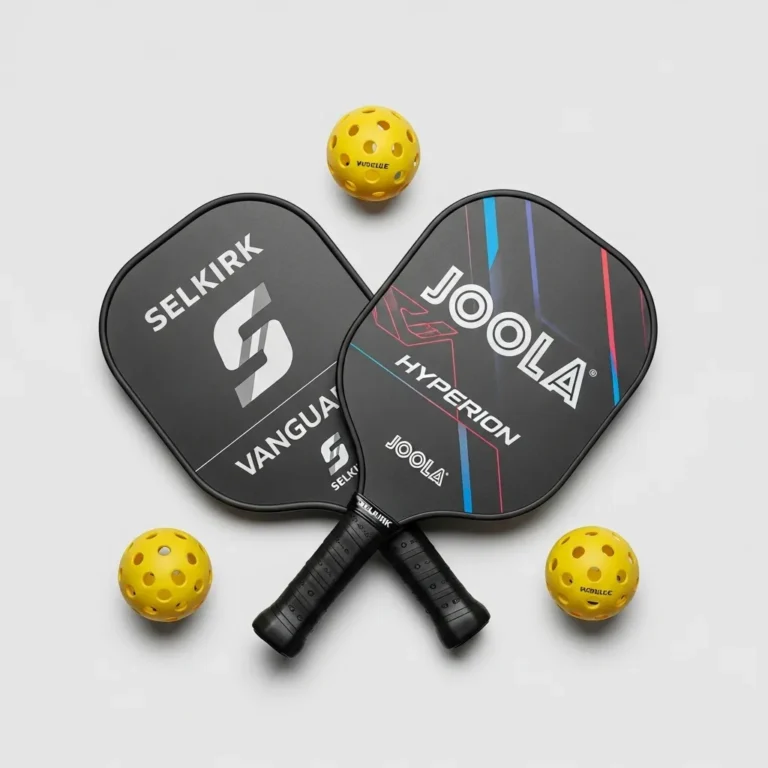

joola pickleball paddle
If you have spent any time on the courts lately, you know that the sound of the game has changed. It’s not just the familiar pop-pop-pop of the plastic ball anymore; it’s the buzz of conversation about gear. Pickleball has exploded from a casual driveway pastime into a high-tech arms race, and sitting right at the center of that storm are the joola pickleball paddles.
For a while, showing up to the court with a Joola—especially the signature models used by pros like Ben Johns—was like pulling up in a Ferrari. It signaled that you meant business. But recently, things got complicated. Between the massive popularity of their “Gen 3” line and the sudden, confusing regulatory ban that followed, players have been left scratching their heads.
I’ve had so many friends ask me, “Is my paddle legal?” or “Is it worth dropping $250 on this thing?” It’s a lot to navigate. Whether you are a seasoned 4.5 player trying to keep your edge or a newcomer just looking for a reliable piece of equipment, the landscape of Joola paddles requires a bit of a roadmap right now.
We are going to walk through everything together—from the drama of the “Gen 3 ban” to the nitty-gritty of choosing between a Perseus and a Hyperion. Think of this as a courtside chat where we clear the air, so you can get back to focusing on your dink game.
Trending & Controversy (The Gen 3 Ban)
It is impossible to talk about Joola right now without addressing the elephant in the room. If you are plugged into the pickleball world, you likely heard the collective gasp when Joola’s flagship paddles were suddenly pulled from sanctioned play. It was a chaotic few months, and there is still a lot of misinformation floating around. Let’s break down exactly what happened so you know where you stand.
Why were Joola Gen 3 paddles banned by USA Pickleball?
This was the question that set forums and group chats on fire. To put it simply, the technology moved a little too fast for the regulations. The Joola Gen 3 paddles were removed from the approved list because USA Pickleball (USAP) determined they did not meet specific performance standards.
The main culprit was the “propulsion core.” Imagine a trampoline effect; the core was designed to give players incredible exit velocity. However, USAP testing found that it allegedly exceeded limits on ball deflection (basically, how hot the ball comes off the face) and surface texture. They argued that the paddles were hitting too hard and spinning too much, potentially altering the safety and integrity of the game. It wasn’t just a paperwork error; it was a fundamental disagreement about how much power a paddle should be allowed to generate.
Which specific Joola paddle models are affected by the ban?
If you bought a paddle in the spring of 2024, you might be holding a collector’s item—or a paperweight, depending on how you look at it. The ban primarily affects the “Gen 3” line released in early 2024.
This covers the heavy hitters: the Perseus, Hyperion, Magnus, and Scorpeus series. Specifically, if your paddle features that “Propulsion Core” technology, it is on the list. These were the paddles that promised to change the game with effortless power, and ironically, they did—just not in the way Joola hoped. If you are playing in a casual rec game at the local park, your friends probably won’t care, but if you step into a sanctioned tournament with one of these, you will likely be disqualified.
Can I get a refund for my banned Joola Gen 3 paddle?
This is where things get tricky, and unfortunately, timing is everything. The short answer is yes, but it is time-sensitive. Joola offered a full refund for Gen 3 paddles, but the window was tight.
You generally needed to have purchased the paddle between April 16, 2024, and June 15, 2024. To process this, you must have proof of purchase. It’s a standard procedure, but it caught a lot of cash-buyers off guard. If you bought from a big-box store or a local pro shop (a third-party retailer), you should contact them directly as many are processing these returns themselves. If you missed the window, you are somewhat at the mercy of Joola’s customer service, but the official broad refund program has specific cutoff dates.
What is the difference between Gen 3 and the new “Gen 3S” or “Pro IV” models?
So, where do we go from here? Joola didn’t just pack up and leave; they went back to the lab. The Gen 3S (and the subsequent Pro IV) models are the re-engineered versions designed to fully comply with UPA-A and USAP standards.
Visually, they look almost identical. They retain the shape and some of the premium materials of the Gen 3. However, under the hood, they have modified cores. The goal was to ensure they pass strict deflection testing while keeping as much of that “Joola feel” as possible. Essentially, the Gen 3S is the “street legal” version of the race car. It might not have the raw, illegal horsepower of the banned original, but it’s legal for tournament play and still offers high-end performance.
Buying Guide (Choosing the Right Paddle)
Okay, let’s move past the controversy. You want a paddle that helps you win. Joola offers a dizzying array of shapes and sizes, and picking the wrong one can feel like trying to run a marathon in hiking boots. Let’s figure out which Joola pickleball paddle actually fits your playstyle.
Joola Perseus vs. Hyperion: What is the main difference?
This is the most common showdown I see in pro shops. You pick up one, then the other, and they both feel expensive. But they are built for different animals.
The Joola Ben Johns Perseus Pro IV pickleball paddle is the paddle you see Ben Johns using. It has a rectangular, flat-top shape. This design is engineered for power, reach, and a larger sweet spot that sits higher up on the face. It is favored by aggressive players who like to drive the ball and need that extra leverage on overhead slams.
On the other hand, the Joola Ben Johns Hyperion pickleball paddle features a curved “aero” head shape. That curvature isn’t just for looks; it offers lower air resistance. This translates to faster hand speed at the kitchen line. It generally has a more balanced feel and is often preferred for control, dinking, and resetting hard shots. If you are a player who wins by out-patience-ing your opponent rather than overpowering them, the Hyperion is usually the better friend.
Should I choose a 14mm or 16mm Joola paddle?
Once you pick a shape, you have to pick a thickness. It sounds like a small detail—2 millimeters—but it changes the physics of the paddle entirely.
Here is the rule of thumb: Choose 16mm if you want more control. A thicker core acts like a shock absorber. When the ball hits it, the paddle absorbs more energy, giving you a softer feel and better blocking ability. It is ideal for resetting hard shots and dropping the ball softly into the kitchen.
Choose 14mm if you prefer more “pop,” power, and hand speed. Because the core is thinner, it is stiffer. It transfers energy back to the ball more quickly rather than absorbing it. The ball spends less time on the face of the paddle. If you have “slow hands” and struggle to put away winners, the 14mm can give you that extra punch, but be warned: your blocks need to be more precise, or the ball will fly long.
Which Joola paddle is best for beginners?
If you are just starting, dropping $200+ on a paddle is a tough pill to swallow. The Joola Essentials line is the standard recommendation for beginners due to its lower price point. It’s a great paddle to learn the mechanics without breaking the bank.
However, there is a caveat. If you are an athletic beginner who knows you are going to be obsessed with this sport, “buy nice or buy twice” applies here. A 16mm Hyperion or Solaire is often recommended for ambitious beginners. Why? because the thicker core provides more forgiveness and stability. Beginners often miss the perfect center of the paddle. A high-end 16mm paddle will keep the ball in play even on off-center hits better than a thin, cheap paddle will.
What is the “Charged Carbon Surface” and does it wear out?
You’ll see this marketing term plastered all over the packaging. The “Charged Carbon Surface” is Joola’s proprietary carbon fiber face technology designed to maximize spin. It feels gritty to the touch, almost like very fine sandpaper.
Does it wear out? Absolutely. This is the heartbreaking reality of modern pickleball. Like all raw carbon fiber paddles, the grit will smooth out over time with heavy use. It’s just friction. Every time you slice a return, you are sanding down the surface slightly. Most competitive players notice a decrease in spin potential after 4-6 months of frequent play. The paddle is still usable, but that wicked curve you used to put on your serves might start to straighten out.
Authenticity & Warranty
Because Joola paddles have become a status symbol with a high price tag, they have unfortunately attracted scammers. Nothing is worse than thinking you got a deal, only to realize you’re playing with a piece of painted plywood. Protecting your investment is a major concern.
How do I spot a fake Joola paddle?
The counterfeiters are getting better, but they aren’t perfect. If you are buying secondhand or from a non-authorized site, you need to be a detective.
First, check the NFC Chip. Real high-end Joola paddles have a Near Field Communication chip embedded in the handle. If tapping your phone to the handle doesn’t launch the Joola site or app, it is likely fake.
Second, look at the Price. If a new Gen 3 or Perseus paddle is listed for under $100 on sites like AliExpress, eBay, or a sketchy Instagram ad, it is almost certainly counterfeit. There is no such thing as a brand-new $250 paddle selling for $80 legally.
Finally, inspect for Visual Defects. Joola’s quality control is generally high. Look for incorrect font spacing, wrong edge guard colors (e.g., a dull grey where it should be shiny), or missing holographic stickers. If the printing looks slightly blurry, walk away.
How do I use the NFC chip to register my paddle?
This is a cool feature that Joola pioneered to combat those fakes we just talked about. It’s surprisingly easy to use.
First, download the “Joola Infinity” app on your smartphone. Once you have an account, open the “Product Registration” section. Then, simply tap the top of your paddle handle with your phone. For iPhones, the scanner is usually at the top back of the phone; for Androids, it varies.
This action communicates with the chip inside the handle. It will verify authenticity and automatically register the serial number to your account. It’s a digital handshake that proves you own the real deal.
What is the Joola warranty policy?
Nobody plans on breaking their paddle, but it happens. The standard warranty is 6 months against manufacturing defects. This covers things like the handle snapping or the face delaminating (peeling apart).
However, here is a pro tip: Register your paddle. If you register your paddle via the NFC chip within 14 days of purchase, Joola extends the warranty to 12 months. That is a huge difference.
Keep in mind, though, that the warranty covers structural failures. It does not cover normal wear and tear. If you scrape the edge guard on the ground trying to dig out a low ball, or if the grit smooths out after six months of play, that is on you. That’s just part of the game.
Durability & Maintenance
We have talked about buying and verifying; now let’s talk about living with your paddle. These things are tools, and tools need care.
What is “Core Crush” and how do I know if my paddle has it?
This is a term that strikes fear into the hearts of power players. “Core crush” is when the honeycomb interior of the paddle collapses. It usually happens from hitting the ball too hard repeatedly—think overhead smashes or driving the ball constantly.
How do you diagnose it? You can identify it by pressing your thumbs firmly into the paddle face in the center. If it feels “mushy,” soft, or makes a crunching sound (like stepping on dry leaves), the core is likely compromised. In gameplay, this often results in the ball flying unpredictably “hot” off the face. You might think you have suddenly become stronger, but really, your paddle has lost its structural integrity and is acting like a slingshot.
How should I clean my Joola carbon fiber paddle?
If you play on outdoor courts, your paddle is going to accumulate plastic dust from the balls, dirt, and sweat. This debris fills in the tiny gaps in the carbon fiber texture, reducing your spin.
To clean it, use a carbon fiber rubber eraser. These are specifically made for pickleball paddles and look like a big block of rubber. You simply rub it up and down the face of the paddle, and it pulls the plastic residue right out. It’s oddly satisfying to watch the white dust disappear.
Crucially, avoid using water or household cleaners on the raw carbon face. Water can seep into the honeycomb core if the seal isn’t perfect, and chemicals can clog the texture or degrade the resin. For the edge guard and the handle grip, a damp cloth is fine to wipe away sweat, but keep the face dry.
How long does a Joola paddle typically last?
This is the question everyone asks, and the answer depends entirely on how much you love the game.
For a recreational player (playing 1-2 times a week), a Joola paddle can easily last 12+ months with decent performance. You’ll get your money’s worth.
However, for competitive players (playing 4-5 times a week), the timeline is shorter. The surface grit usually degrades significantly after 4-6 months. Furthermore, the core may soften—often called “breaking in”—which adds power but reduces control. Eventually, the core may crush after 6-9 months of heavy hitting. If you are playing tournaments, expect to replace your paddle at least once or twice a year to maintain peak performance.
If you bought a JOOLA paddle, you’ll need a sturdy bag to protect it. Read our review on JOOLA bags here.
you may like it