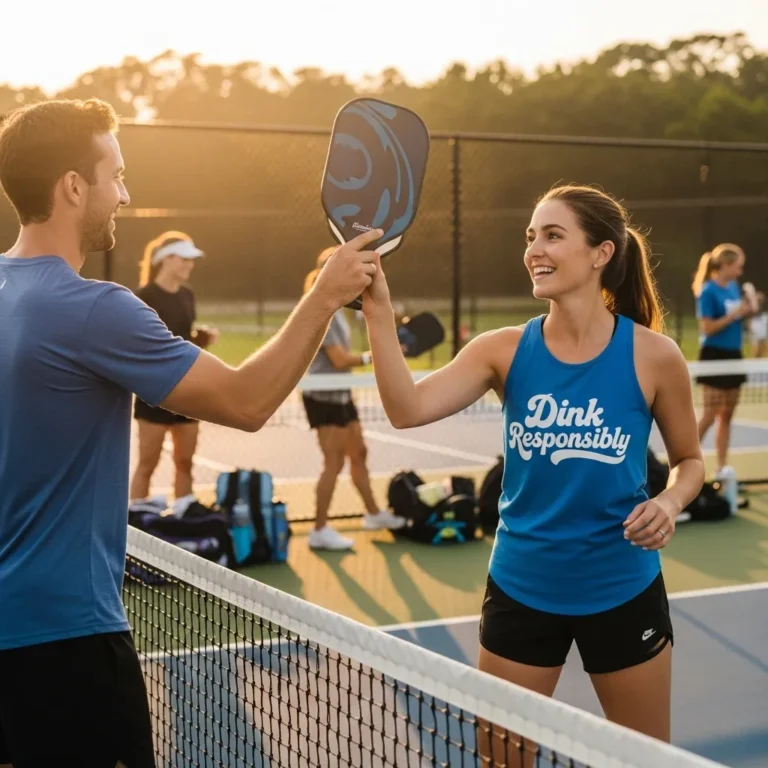
pickleball shirts
There is a specific sound that echoes across parks and recreation centers on Saturday mornings—that distinct pop-pop-pop of a perforated plastic ball hitting a paddle. If you’re reading this, chances are you’ve already fallen in love with that sound. You know the joy of a perfectly executed dink and the adrenaline of a fast hands battle at the kitchen line. But let’s be honest: while we obsess over the weight of our paddles and the grip of our shoes, we often overlook the one piece of gear that touches our skin the entire match.
I’m talking about pickleball shirts.
It might sound trivial at first. After all, isn’t it just a shirt? But think back to that time you wore an old heavy cotton tee on a humid July morning. By the second game, it felt like you were wearing a wet towel, weighing you down and sticking to your back every time you reached for an overhead smash. It’s distracting, uncomfortable, and frankly, it takes your head out of the game.
Choosing the right apparel is about more than just looking good (though, let’s admit it, looking sharp on the court is part of the fun). It is about respecting your body’s need to cool down, protecting your skin from the sun, and ensuring your clothes move with you, not against you. Whether you are a weekend warrior playing for laughs or a tournament grinder looking for an edge, what you wear matters.
Let’s dive deep into everything you need to know about finding the perfect shirt for your game, breaking it down just like we would if we were chatting on the sidelines between matches.
Fabric & Performance (The Essentials)
When you strip away the logos and the colors, the soul of any piece of athletic wear is the fabric. This is where science meets sweat. If you get this part right, you won’t even notice you’re wearing a shirt. If you get it wrong, you’ll be counting the minutes until you can peel it off.
1. What is the best fabric for pickleball shirts?
If there is one golden rule in athletic apparel, it’s this: embrace synthetics. When you are browsing the racks or scrolling online, you want to look for performance blends. We are talking about polyester, spandex, nylon, or proprietary blends often marketed as “tech” fabrics.
Why are these the “gold standard”? Imagine your shirt needs to act like a funnel. You want it to take the moisture from your skin and move it to the outside world as fast as possible. Synthetic fibers are engineered to do exactly that. They are hydrophobic, meaning they don’t like holding onto water. Instead of absorbing your sweat, they push it to the surface where it can evaporate.
But let’s not ignore the luxury option. If you want to treat yourself, look into Merino wool. I know, “wool” sounds like a scratchy sweater you’d wear in winter, but modern performance Merino is incredibly thin, soft, and miraculous. It is naturally anti-bacterial (so it doesn’t stink after a long session) and it regulates your body temperature better than almost anything else. It keeps you cool when it’s hot and warm when it’s chilly. It’s a bit pricier, but for many players, it’s a game-changer.
2. Should I wear cotton shirts for pickleball?
I’m going to give you some tough love here: generally, no. Put the vintage concert tee back in the drawer.
We all love cotton. It’s soft, it’s natural, and it feels great when you’re sitting on the couch watching a movie. But on the pickleball court? It’s arguably your worst enemy. The saying among hikers and serious runners is “cotton kills,” and while it won’t kill you on the court, it will certainly kill your vibe.
Cotton is highly absorbent. It loves water. It can hold up to 25 times its weight in moisture. When you sweat in a cotton shirt, that moisture gets trapped right against your skin. The fabric becomes heavy, it loses its shape, and it starts to cling. This leads to that dreaded clammy feeling. Worse yet, wet cotton causes friction. If you’ve ever experienced chafing under your arms or on your chest after a long day of play, your cotton shirt is likely the culprit. Do yourself a favor and switch to “Dri-fit” or technical fabrics. You will feel lighter, drier, and much more comfortable.
3. What does “moisture-wicking” mean, and why do I need it?
You see this buzzword on every tag, but let’s demystify it. “Moisture-wicking” isn’t just marketing fluff; it’s a mechanical process known as capillary action. Think of the wick in a candle. The wick pulls the wax up to the flame to be burned.
In your pickleball shirts, the fabric pulls sweat away from your skin (the source) and moves it to the exterior of the fabric. Because the sweat is spread out over a larger surface area on the outside of the shirt, it dries incredibly fast.
Why do you need it? Because pickleball is deceptively intense. It’s a stop-and-start sport with bursts of high aerobic activity. You generate a lot of heat. If that heat (in the form of sweat) stays trapped on your skin, your body temperature rises, leading to fatigue. Moisture-wicking gear acts like a personal air-conditioning system, helping your body’s natural cooling mechanism work more efficiently. Plus, it prevents that gross sensation of the shirt sticking to your back when you try to twist for a backhand.
4. Do I need a shirt with sun protection (UPF)?
If you play outdoors, the answer is an emphatic yes. We often assume that just because we are wearing clothes, we are protected from the sun. Unfortunately, a standard white cotton t-shirt only has a UPF (Ultraviolet Protection Factor) of about 5. That means UV rays are passing right through the weave and hitting your skin.
Pickleball is often played during the peak sun hours of the day. You’re out there for two, maybe three hours. That is a lot of exposure. Look for shirts labeled UPF 30 or, ideally, UPF 50+. This rating means the fabric blocks 98% of the sun’s rays. It’s like wearing armor against sunburn.
The best part? It’s hassle-free. We all know the struggle of trying to apply sunscreen to our own backs or shoulders—you always miss a spot. With a UPF shirt (especially a long-sleeved one, which many players wear even in summer because the wicking technology is so good), you are protected the moment you get dressed. It’s peace of mind, allowing you to focus on the score, not on whether your shoulders are turning lobster-red.
Rules & Etiquette (What to Wear)
Now that we’ve covered comfort, let’s talk about the culture. Pickleball is famous for being friendly and accessible, but as the sport grows, so do the norms and rules. You don’t want to be the person who gets a side-eye for wearing the wrong thing.
5. Is there a strict dress code for pickleball shirts?
One of the beautiful things about pickleball is its lack of pretension. If you are heading to the local public park or the YMCA, the dress code is essentially “wear clothes.” Athletic wear is the norm—shorts, leggings, t-shirts, tank tops. As long as you are covered and comfortable, you are good to go.
However, the landscape changes if you are playing at a private tennis club or a country club that has converted courts for pickleball. These venues often hold onto tradition. They might require men to wear collared shirts (polos) and women to adhere to specific hemlines or styles. I’ve seen players turned away from private courts for wearing sleeveless shirts or graphic tees. The rule of thumb? If you are visiting a new venue, check their website or ask a member beforehand. It’s better to be over-dressed in a sharp polo than to be told you can’t play.
6. What shirt colors are prohibited in pickleball tournaments?
This is a rule that catches a lot of first-time tournament players off guard. Imagine you are standing at the kitchen line, waiting for a fast volley. Your opponent hits the ball—a bright neon yellow ball. But wait, your opponent is also wearing a bright neon yellow shirt. For a split second, the ball disappears into their chest. You react late, and you lose the point.
To prevent this visual confusion, sanctioned tournaments (and even polite recreational play) discourage or prohibit wearing shirts that match the color of the ball. Since the standard outdoor ball is usually a vibrant yellow or lime green (like the Franklin X-40 or Dura Fast 40), you should avoid high-vis yellow or green shirts.
In serious tournaments, a referee can actually make you change your shirt if they deem it a distraction. So, save the neon gear for your night runs and stick to blues, reds, blacks, or whites when you’re on the tournament court. It’s just good sportsmanship.
7. T-shirts vs. Polos: Which is better for pickleball?
This really comes down to your personal vibe and where you are playing.
Polos bring a touch of class. They nod to the heritage of tennis and golf. If you like looking a bit more “put together,” or if you’re grabbing lunch immediately after your match, a performance polo is a great choice. Modern athletic polos aren’t the stiff cotton mesh of the 1990s; they are made of the same stretchy, sweat-wicking materials as gym shirts.
However, for pure performance and range of motion, the crew-neck T-shirt (or a tank top) usually wins. Collars can sometimes feel fussy or flop around when you’re sweating. T-shirts offer a relaxed feel and zero restriction. If you are playing hard, diving for balls, and sweating buckets, a simple athletic tee is usually the way to go. It says, “I’m here to play.”
Fit, Features & Style
You’ve got the right fabric and you know the rules. Now, let’s find the shirt that feels like it was made just for you.
8. How should a pickleball shirt fit?
Getting the fit right is a balancing act. You are looking for that “Goldilocks” zone—the athletic fit.
If the shirt is too tight, it’s going to restrict your swing. Pickleball requires a lot of reaching—reaching up for lobs, reaching forward for drop shots, reaching across your body. If your sleeves pinch your biceps or the fabric pulls tight across your back, it limits your mobility.
On the flip side, if the shirt is too baggy, it becomes a nuisance. Excess fabric adds weight. It can flap around in the wind. In extreme cases, I’ve actually seen players hit the fabric of their own oversized shirt with their paddle during a close-to-the-body shot!
Look for a shirt with “4-way stretch.” This means the fabric expands in all directions. It moves as you move, then snaps back to its original shape. When you try a shirt on, do a mock serve. Swing your arms. If the shirt stays put and doesn’t ride up your belly or pinch your armpits, you’ve found a winner.
9. Are there specific pickleball shirts with pockets?
This is a question that comes up often, usually from people transitioning from tennis. In tennis, you keep a second ball in your pocket. In pickleball, you usually hold the ball or your partner holds it, but having a place to stash a spare is handy.
Generally, pickleball shirts do not have pockets. It’s just not a standard feature for tops. The weight of a ball in a shirt pocket (especially a chest pocket) would bounce around and be incredibly annoying while you move.
However, there are some niche brands experimenting with small back pockets on shirts (think cycling jerseys but smaller) designed to hold one pickleball. But for 99% of players, the storage solution lies in the shorts or skirts. Look for bottoms with deep pockets or specifically designed ball-pockets. Let your shirt do the cooling; let your shorts do the carrying.
10. What are the popular trends for funny pickleball shirts?
If tennis is the serious older sibling, pickleball is the fun, slightly rebellious younger child. The culture of pickleball is inherently social and self-deprecating, and this shows up in the apparel.
Walk onto any court and you will likely see shirts with slogans like “Dink Responsibly,” “Zero Zero Two,” “Big Dill,” or “Stay Out of the Kitchen.” It’s a great way to break the ice. Wearing a funny shirt signals to others that you’re there to have a good time. It makes finding a partner for open play easier because you look approachable.
Just a word of caution: make sure the “funny” shirt is still a good shirt. A lot of novelty tees are printed on cheap, heavy cotton. If you plan on playing for three hours in the sun, that “Dink” pun won’t be so funny when you’re overheating. Look for brands that print their clever designs on quality performance blends.
Looking for some humor on the court? Check out our guide to funny pickleball shirts.
11. Is there a difference between tennis and pickleball shirts?
Functionally? Not really. A high-quality tennis shirt is designed for overhead motion, lateral movement, and sweating—exactly what you need for pickleball. If you have a closet full of tennis gear, you are 100% ready for the pickleball court.
The difference lies mostly in the branding and the aesthetic. Tennis apparel tends to be more traditional, cleaner, and perhaps a bit more “serious” in its design language—lots of solids, whites, and subtle branding. Pickleball-specific brands are currently carving out a niche that is a bit louder, more colorful, and more relaxed. They focus on the “lifestyle” aspect of the sport. But when it comes to the physics of the fabric, a forehand drive in tennis and a forehand drive in pickleball demand the same things from a shirt.
Care & Maintenance
You’ve invested in some nice UPF 50+, moisture-wicking gear. Now, how do you make sure it lasts longer than a few months?
12. How do I wash my performance pickleball shirts to keep them smelling fresh?
We’ve all had that one gym shirt that, no matter how many times you wash it, still has a faint, lingering “locker room” smell as soon as it warms up. That happens because bacteria gets trapped in the synthetic fibers.
To keep your pickleball shirts fresh and performing well, follow these rules:
- Cold Water is Key: Hot water can break down the elasticity in spandex and nylon. Wash in cold water to keep the fit snappy.
- Skip the Fabric Softener: This is the most important rule! Fabric softeners work by coating fibers with a waxy substance to make them feel smooth. That wax clogs the tiny pores in the fabric that are responsible for wicking sweat. If you use softener, you effectively turn your high-tech performance shirt into a plastic bag that traps moisture.
- Use Sport Detergent: If you play a lot, consider a detergent specifically designed for athletic wear. They are formulated to break down the enzymes in sweat better than standard detergents.
- Look for Anti-Odor Tech: When buying new shirts, check the label for antimicrobial treatments (often silver-based). These prevent odor-causing bacteria from growing in the first place, meaning your shirt stays fresher for longer, even if you forget it in your gym bag for a few hours.
Conclusion
At the end of the day, the best pickleball shirts are the ones you don’t think about while you’re playing. They are the silent partners in your game—keeping you cool when the match heats up, protecting you from the harsh sun, and moving freely as you stretch for that game-winning shot.
Whether you prefer the sharp look of a polo, the freedom of a tank, or a tee with a terrible pun on it, prioritizing the right fabric and fit will genuinely improve your experience on the court. So, ditch the heavy cotton, grab some moisture-wicking tech, and go enjoy the game. See you at the kitchen line!
you may like it