pickleball terms
Pickleball has a way of pulling people in—fast. Maybe it’s the cheerful “pop” of the paddle, the friendly vibe on the courts, or just how easy it is to learn the basics. But once you start getting into real games, you quickly notice something: pickleball has its own language. Players toss around words like “dink,” “Erne,” and “Nasty Nelson” as if they’re everyday vocabulary. For newcomers, it can feel like learning a dialect spoken only on the court.
This guide is here to clear up the confusion. Whether you’re new or looking to strengthen your understanding of the sport, this breakdown of pickleball terms will help you feel more confident, more prepared, and far more comfortable out there. We’ll walk through court zones, essential shots, advanced techniques, rules, equipment, and even the fun slang that gives pickleball its personality.
Think of this as sitting down with an experienced player who’s happy to explain everything in plain, friendly language.
The Court & Zones (The most confusing aspect for beginners)
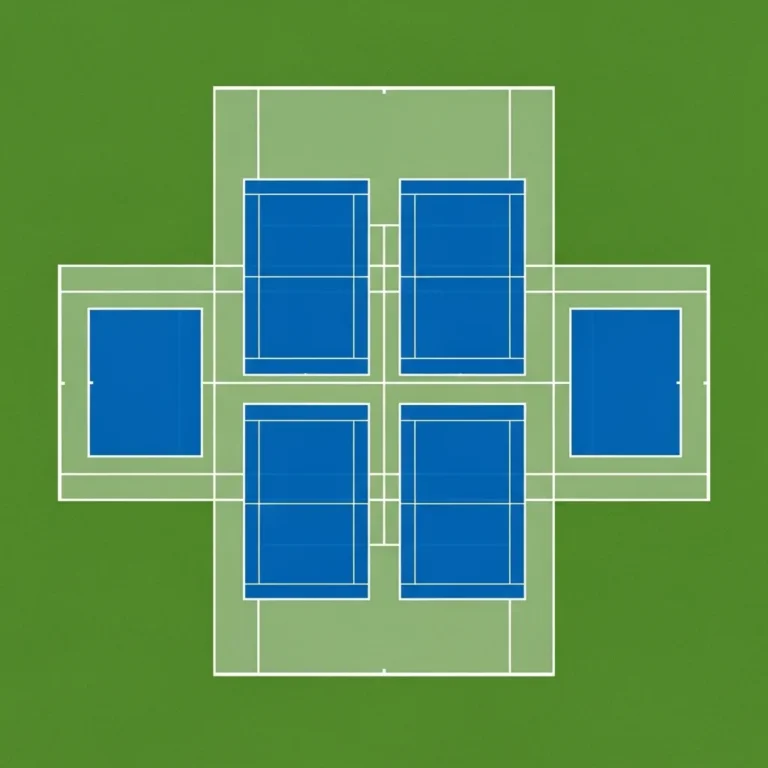
The court looks like a miniature tennis court, but the lines govern a very different style of play. Understanding where you can stand and where you can’t is the first hurdle every new player faces.
What is the “Kitchen” (or Non-Volley Zone)?
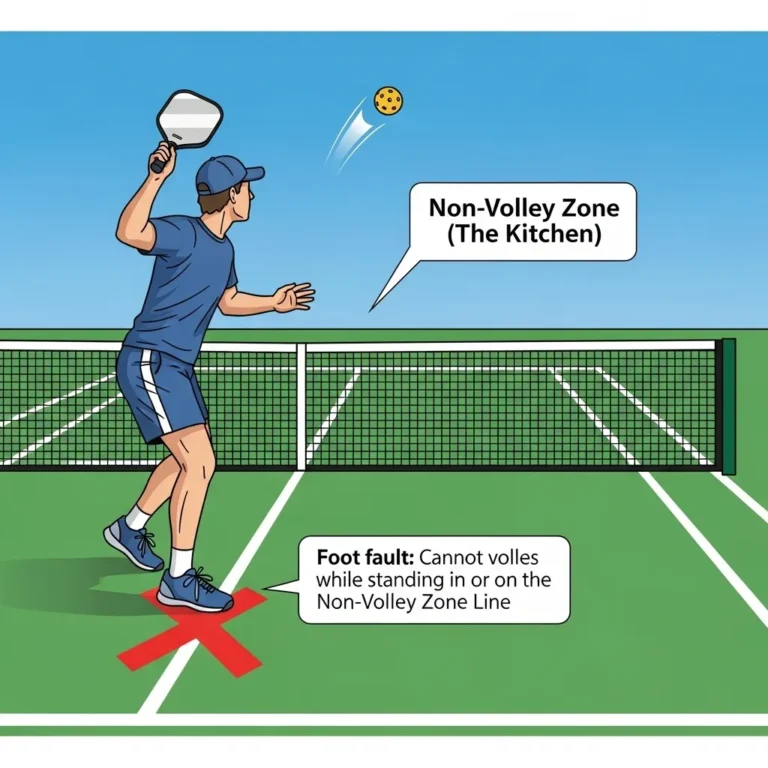
If there is one term you will hear more than any other, it is “The Kitchen.” Officially known as the Non-Volley Zone (NVZ), this is the 7-foot section of the court on both sides of the net.
Why does it exist? Imagine if a tall player could just stand right at the net and smash every ball down at your feet. The game would be over in seconds, and it wouldn’t be very fun. The Kitchen forces players back, extending rallies and encouraging strategy over brute force. While you can enter the Kitchen to hit a ball that has already bounced, you absolutely cannot hit the ball out of the air (a volley) while standing inside this zone. It is the sacred ground of pickleball.
What constitutes a “Kitchen Violation” or “Foot Fault”?
This is where things get tricky and arguments often start in recreational play. A Kitchen violation occurs when you step on the Kitchen line or inside the zone while hitting a volley. But it is stricter than you might think.
It is not just about where your feet are when you make contact. If your momentum carries you into the Kitchen after you hit a volley, that is a fault. Even if you make an amazing shot and stumble in three seconds later because you lost your balance? Fault.
Furthermore, if you drop your hat, your sunglasses, or your paddle into the Kitchen while volleying, that counts as a fault too. Essentially, if you are hitting the ball out of the air, the Kitchen is hot lava. Stay out!
What is “No Man’s Land” (or the Transition Zone)?
Between the baseline (the back of the court) and the Kitchen line lies a rectangluar area often called “No Man’s Land.” Technically, this is the transition zone.
Why the ominous nickname? Because it is usually the worst place to be standing when your opponent is hitting the ball. If you get caught here, the ball is often aimed at your feet, making it nearly impossible to return. Beginners often get stuck here, watching the ball sail past them or awkwardly trying to scoop it up. The goal is to move through No Man’s Land quickly—either getting all the way up to the Kitchen line or staying back at the baseline. Don’t set up camp here!
Essential Shots & Mechanics
Once you know where to stand, you need to know how to hit. Pickleball isn’t just about power; it’s about touch, patience, and placement.
What is a “Dink”?
This is the heartbeat of high-level pickleball. A “dink” is a soft, controlled shot hit from the Kitchen line that arcs just over the net and lands in your opponent’s Kitchen.
To the untrained eye, it looks like the players are just gently tapping the ball back and forth. But there is a war going on. The goal of the dink is to keep the ball low so your opponent cannot smash it. You are waiting for them to make a mistake and pop the ball up high. It requires patience and soft hands. When you hear players say, “dink responsibly,” they mean keep it low and keep it unattackable.
What is the difference between a “Volley” and a “Groundstroke”?
These are the two fundamental ways to strike the ball.
A Groundstroke is hitting the ball after it has bounced on the court. This is typical for your serve, your return of serve, and drives from the baseline. It feels very similar to a tennis forehand or backhand.
A Volley is hitting the ball out of the air before it touches the ground. This usually happens when you are up at the net. Volleys are faster and give your opponent less time to react. However, remember the golden rule: you cannot volley if you are standing in the Kitchen!
What is the “Third Shot Drop” and why is it important?
If you want to move from a beginner to an intermediate player, this is the shot you must master. In a doubles match, the serving team usually hits the ball three times to get to the net:
- The Serve.
- The Return (by the opponent).
- The Third Shot.
The “Third Shot Drop” is a soft, arcing shot that lands in the opponent’s Kitchen. Why do this instead of smashing it? Because the receiving team is already at the net. If you drive the ball hard, they will just block it back. By “dropping” the ball softly into the Kitchen, you force them to hit up, which gives you and your partner time to run up to the net safely. It neutralizes their advantage.
What is a “Lob” vs. an “Overhead Smash”?
These two shots are the yin and yang of vertical play.
A Lob is a high, arching shot aimed deep into the opponent’s backcourt. You usually use this when your opponents are crowding the net, forcing them to turn around and scramble backward. It is a great defensive tool that can reset the point.
An Overhead Smash is the response to a bad lob. If the lob is too short, the opponent will reach up and slam the ball downward with power. This is the “put-away” shot that usually ends the rally.
Advanced & Special Shots (Slang/Technical)
As you get deeper into the culture, you’ll hear terms that sound like people’s names or acrobatic moves. These are the flashy plays that end up on highlight reels.
What is an “Erne”?
Named after a player named Erne Perry who popularized it, this is one of the most exciting moves in the game.
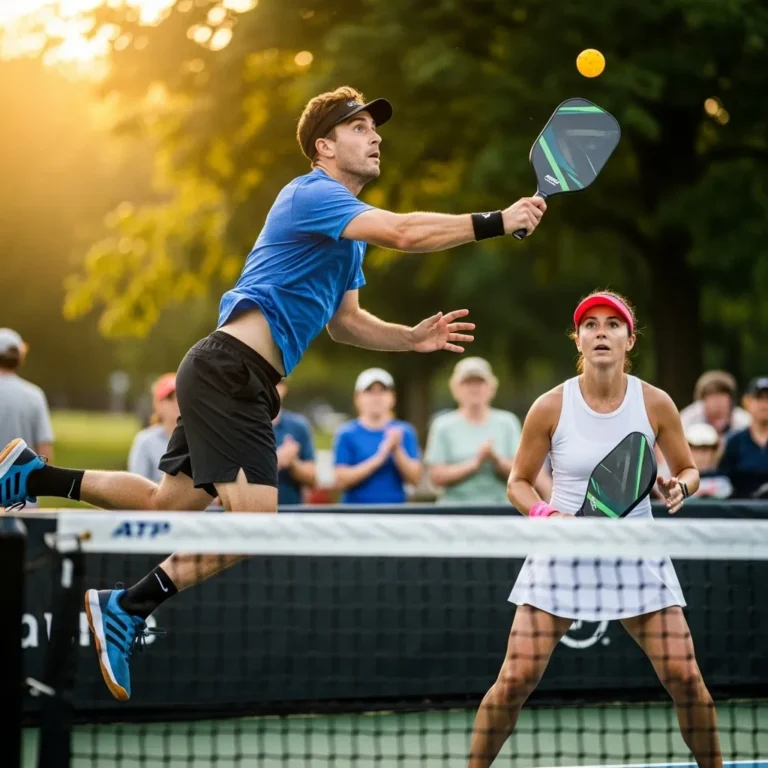
Remember how we said you can’t volley in the Kitchen? Well, the “Erne” is a loophole. A player jumps over the corner of the Kitchen, landing out of bounds on the side of the court, and hits the ball out of the air while in mid-jump or after landing out of bounds. Because they never touched the Kitchen zone, it is legal. It allows players to smash a ball that hasn’t even crossed the sideline yet. It catches opponents completely off guard.
What is an “ATP” (Around the Post)?
This is the shot that makes crowds go wild. Usually, you have to hit the ball over the net. However, if your opponent hits a sharp angle that sends the ball wide off the court, you are allowed to chase it down and hit it around the net post.
The ball stays low, never goes over the net height, and sneaks back into the court. It is incredibly difficult to defend because it comes from such a low, wide angle. Successfully hitting an ATP is a badge of honor for any player.
What is a “Bert”?
If an Erne is jumping over the Kitchen on your own side, a “Bert” is doing it on your partner’s side.
Imagine you are playing on the left side, and you see a ball coming toward the right sideline. You run in front of your partner, jump over the Kitchen corner on their side, and smash the ball. It is a very aggressive “poaching” move. It’s called a Bert because it’s the chaotic sibling to the Erne (think Sesame Street).
What is a “Nasty Nelson”?
This term is as mischievous as it sounds. A “Nasty Nelson” occurs during a serve. Instead of serving to the proper receiver, the server intentionally aims the ball to hit the other opponent (the partner of the receiver) who is standing up at the net.
If the ball hits that player, the serving team wins the point. It is technically legal, but it’s considered a bit rude in casual play—hence the “Nasty.” It’s a way to punish players who aren’t paying attention.
Scoring & Rules Terminology
Scoring in pickleball is unique and often confuses people because of the three-number system. Let’s break down the rule-based pickleball terms.
What is the “Two-Bounce Rule”?
This rule is the great equalizer. It prevents the serving team from rushing the net and dominating immediately.
Here is how it works:
- The ball is served. (Bounce 1)
- The receiving team must let it bounce before returning it.
- The serving team also must let the return bounce before hitting it. (Bounce 2)
Only after these two bounces have occurred can players start volleying (hitting the ball out of the air). This rule ensures that the serving team has to stay back for at least one shot, giving the receiving team a fair chance to gain ground.
What does “Side Out” mean?
In traditional scoring, you only win points when you are serving. If you are serving and you lose the rally, you don’t lose a point; you just lose the right to serve.
A “Side Out” happens when the serving team has exhausted their turns to serve (both partners have served and lost), and the ball goes over to the other team. The referee or players will call “Side Out,” signaling the change of possession.
What does it mean to be “Pickled”?
This is the one term you do not want to apply to you. If you lose a game and your score is zero (e.g., 11-0), you have been “Pickled.”
It is the equivalent of a “bagel” in tennis or a shutout in other sports. It’s a humbling experience, but it happens to the best of us! If you get pickled, just laugh it off and tap paddles.
What is the “Server Number” (in the 3-number score)?
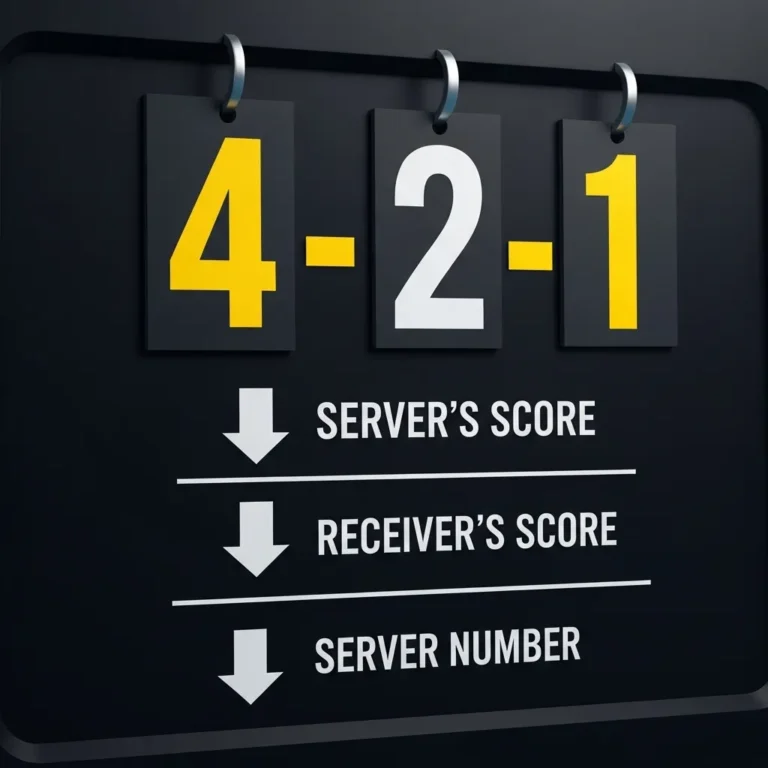
When you announce the score, you say three numbers: “5 – 3 – 2.”
- The first number (5) is the serving team’s score.
- The second number (3) is the receiving team’s score.
- The third number (2) is the Server Number.
In doubles, each partner gets a chance to serve before a Side Out (except for the very first serve of the game). The number “1” means you are the first partner serving in this rotation. The number “2” means you are the second partner. If the “2” server loses the point, the ball goes to the other team (Side Out).
Equipment & Fun Slang
Finally, let’s talk about the gear and the funny words players(pickleball terms funny) use to describe it.
What is a “Delaminated” paddle?
As paddle technology advances, this term has become controversial. A paddle is made of layers. “Delamination” happens when the outer surface separates from the inner core, usually due to wear and tear or manufacturing defects.
Why does it matter? It creates a trampoline effect. The ball bounces off the paddle much faster than allowed, giving the player an unfair power advantage. In tournaments, referees test for this. In rec play, if your opponent’s paddle sounds hollow and they are hitting rockets, it might be delaminated.
What is a “Falafel” or “Dead Paddle”?
On the opposite end of the spectrum, we have the “Falafel.” This describes a shot that has absolutely no power. You swing, you make contact, but the ball just dies on the paddle face and flops short of the net.
It can happen because you didn’t hit the “sweet spot” (the center of the paddle) or because you held the paddle too loosely. It’s a “mushy” hit—hence the food reference.
What is the difference between “Indoor” and “Outdoor” balls?
Not all pickleballs are created equal. If you take an indoor ball outside, you are going to have a bad time.
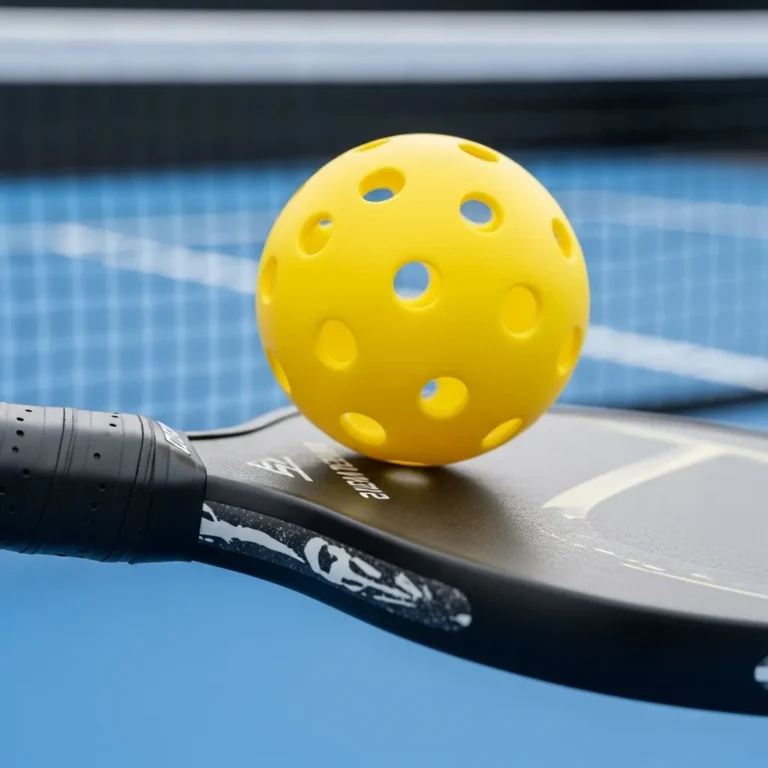
Outdoor Balls: These are made of harder, more durable plastic. They have 40 smaller holes. They are designed to cut through the wind and withstand the rough surface of outdoor courts. They tend to be faster and louder.
Indoor Balls: These are softer and lighter with 26 larger holes. They are designed for gym floors where there is no wind. They are easier to control but can feel a bit “draggy” if you are used to the outdoor game.
By now, you should feel a little more fluent in the language of pickleball. It’s a sport that doesn’t take itself too seriously, and the vocabulary reflects that. From “Kitchens” to “Nasty Nelsons,” these pickleball terms add flavor to a game that brings people together. So grab your paddle, head to the court, stay out of the Kitchen, and try not to get pickled!
I hope I have succeeded in explaining pickleball terms and definitions.
you may like it