The rhythmic 1,600 Hz acoustic pop of a plastic ball striking a rigid surface isn’t just the sound of America’s fastest-growing sport; it is the physical signature of energy transfer that defines every point at the non-volley zone. For players aiming to breach the 4.5 DUPR threshold, the limitation isn’t usually athletic ability, but the sheer lack of high-quality repetitions.
A dedicated Pickleball Practice Board transforms a static garage wall into a sophisticated feedback loop, allowing for the precise calibration of muscle memory through engineered rebound dynamics. By understanding the physics of surface density and the geometry of tilt angles, you can move beyond random “wall-banging” and into a realm of structured, professional-grade drilling that replicates the relentless pressure of a live opponent.
Best pickleball practice board systems: brand, construction material, surface dimensions, primary benefit, and price range — verified 2026 market analysis
Best Pickleball Practice Board Systems
Verified 2026 Market Analysis
The Physics of the “True Rebound”: Material Science in Practice Boards
When selecting or building a pickleball board practice system, the choice of material determines whether your training translates to the court or reinforces bad habits. The objective is to achieve a coefficient of restitution (e) that closely mimics the response of an acrylic-coated concrete court. Standard 1/2-inch plywood often falls short, absorbing too much kinetic energy and creating “dead spots” that force players to over-swing.
In contrast, 3/4-inch Medium Density Fiberboard (MDF) provides a uniform, high-density surface that offers a 70% to 80% energy return, which is the gold standard for home rebounders. However, MDF is sensitive to humidity; for outdoor setups or non-climate-controlled US garages, sanded birch plywood sealed with a high-grade polyurethane is a more durable alternative. Before committing to a specific material, it is vital to understand how to pick a pickleball paddle that complements your board’s rebound speed, as power-oriented paddles on a high-rebound MDF surface can make reaction training excessively difficult for intermediate players.
The Spin Reversal Phenomenon: A Hidden Training Trap
One of the most significant information gaps in solo training is “Spin Reversal.” When you strike a ball with topspin against a solid Pickleball Practice Board, the friction of the impact actually converts that topspin into backspin upon return. This is the opposite of what happens when a human opponent returns your shot. Elite players compensate for this by intentionally varying their distance from the board and focusing on the “angle of incidence” rather than the literal spin, ensuring that their wrist mechanics remain calibrated for the real-world trajectories found in pickleball rules-compliant tournament play.
Engineering Realism: Why the 15-Degree Tilt is Mandatory
The biggest flaw in practicing against a vertical garage wall is the return trajectory. A ball hit flat against a 90-degree wall returns flat, which encourages a horizontal swing path that is disastrous for dinking. To simulate a realistic dink or a third-shot drop, the best pickleball practice board designs incorporate a tilt angle between 15 and 30 degrees.
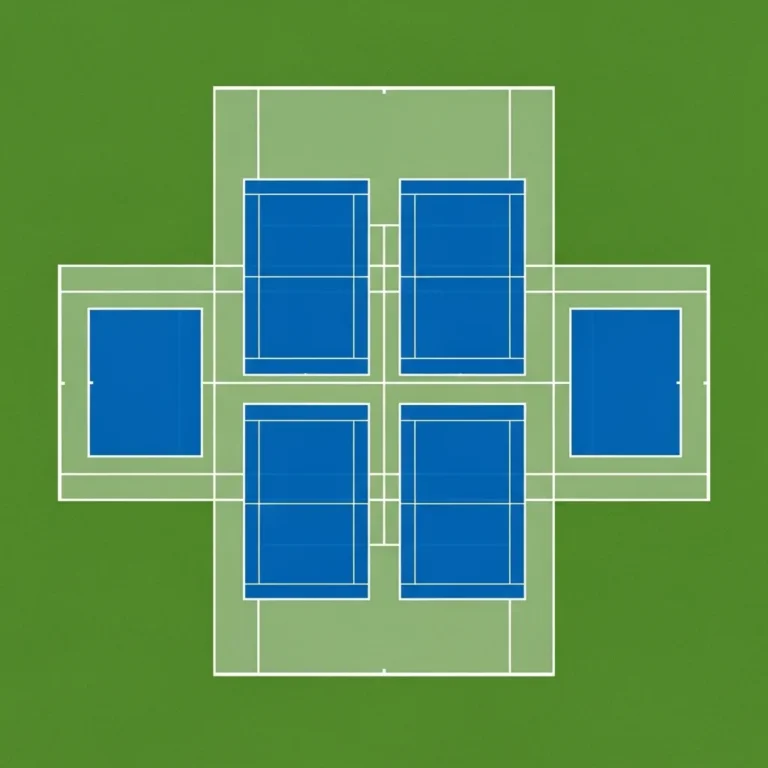
This rearward inclination allows the ball to pop upward slightly upon impact, mimicking the natural arc of a ball clearing a 34-inch net. Without this angle, you are forced to hit the ball harder than you would in a game just to get it to return to your paddle, which destroys your “touch” and fine motor control. When setting up your training space, ensure you have accurately mapped the pickleball court dimensions, specifically marking a 7-foot “Kitchen” line from the base of your board to ensure you are standing at the correct tactical distance.
Acoustic Engineering: Solving the 1,600 Hz HOA Problem
The “pop” of a pickleball impact typically resonates at 1,600 Hz, a frequency that carries exceptionally well through suburban air and into neighbors’ living rooms. This has led to numerous HOA disputes across the United States. To solve this, technical-minded players are turning to structural decoupling.
Mass Loaded Vinyl (MLV):
-
- Applying a layer of 1lb or 2lb MLV to the back of a
diy pickleball practice board
-
- can reduce noise by up to 25 decibels by increasing the mass and damping structural resonance.
Neoprene Isolators:
-
- When mounting a board to garage wall studs, use
-
- to prevent the impact energy from traveling through the home’s timber frame.
Silent Ball Options:
- For apartment dwellers, foam-based “silent” balls like the Gamma Librarian offer a way to practice volleys without the acoustic footprint, though they do sacrifice some rebound realism.
Head-to-Head: Solid Rebound Boards vs. Rebound Nets
In the debate over the best pickleball practice board, players must choose between the “Solid Board” and the “Tensioned Net.” Each serves a distinct physiological purpose in a player’s development.
Solid boards, like a diy pickleball practice board built from MDF, are superior for accuracy and dink-mechanics. The hard surface provides instant feedback; if your paddle angle is off by even 2 degrees, the ball will reflect wildly, forcing you to own your technical flaws. Rebound nets (like the Tourna Rally Pro), however, excel at “Hands Battles” and neural reaction speed. Because the netting absorbs some energy, it allows you to hit harder drives while keeping the ball in a small radius, making it the perfect tool for building forearm endurance and fast-twitch muscle response.
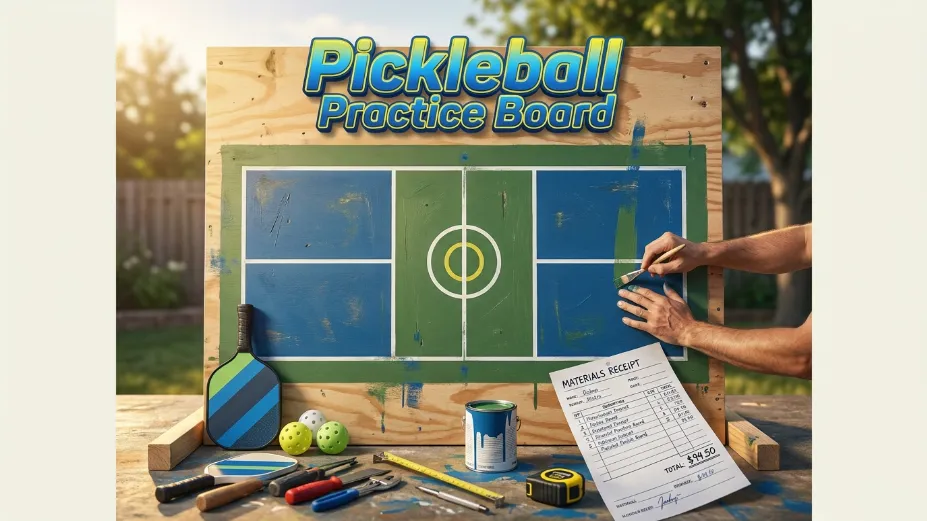
The 2026 Blueprint: How to Build a Pickleball Practice Board
Building a pro-spec system is the most cost-effective way to get a regulation-size hitting surface. To learn how to build a pickleball practice board that survives years of heavy use, follow this US-spec engineering guide:
Step 1: The Materials List
Surface:
-
- One 4′ x 8′ sheet of 3/4″ Sanded Plywood or MDF.
Framing:
-
- Three 8-foot 2×4 pressure-treated studs for the rear A-frame.
Hardware:
-
- 3-inch lag screws for structural joints and heavy-duty locking hinges if you require a folding design.
Coating:
- Acrylic sports coating (e.g., Plexipave or similar) to provide the correct surface friction for spin response.
Step 2: Assembly and Precision Marking
Construct the A-frame to support the board at a 15-degree angle. Once the surface is mounted, you must draw a bold horizontal line exactly 34 inches from the ground at the center to simulate the pickleball net height. For advanced accuracy drills, use painter’s tape to create 12-inch target squares in the lower corners (the “Dink Zones”) and the upper center (the “Reset Zone”). Mastering how to play pickleball at a high level requires the ability to hit these targets 9 out of 10 times during a solo session.
Elite Drill Programming: Transitioning from 3.0 to 5.0
A pickleball board practice session is only as good as the intent behind it. Simply hitting the ball is not drilling. To maximize your time, structure your 30-minute sessions using the “Triangle Theory” of geometry.
The Reset Sequence (Intermediate):
-
- Stand 10 feet back and hit a hard drive against the board. As it returns fast, move forward and attempt to “soften” the impact, dropping the ball into the 7-foot kitchen zone. This is the single most important skill for defensive play.
The Hands Battle (Advanced):
-
- Stand 5 feet from the board (inside the kitchen). Volley the ball back and forth as fast as possible without letting it bounce. Focus on keeping your paddle “zeroed” in the center of your chest between shots.
Cross-Court Simulation:
-
- Angle your board 30 degrees to the left or right. This allows you to practice cross-court dinking angles while standing in a stationary position, which is essential for developing
- that actually transfer to game play.
Maintenance and Longevity of Home Rebounders
Even the best pickleball practice board will degrade if neglected. For wooden boards kept in garages, check for warping every six months. If the wood begins to curve, it will create “ghost bounces” that behave unpredictably. Applying a fresh coat of acrylic paint every year not only maintains the aesthetics but also preserves the grit required for practicing topspin and slice returns. Furthermore, check the tension of your lag screws regularly; vibration from thousands of impacts can loosen hardware, leading to a “rattling” sound that increases noise pollution and decreases rebound consistency.
Pickleball Practice Board: Frequently Asked Questions
1. Can I use a regular garage door as a practice board?
While possible, it is not recommended. Most US garage doors are hollow-core aluminum or thin steel, which creates a “tinny” rebound and significant noise. Over time, the repeated impact can also lead to denting or tracking misalignment of the door mechanism.
2. Does hitting against a wall damage my pickleball paddle?
No, provided the surface is smooth. Hitting against raw concrete or brick can abrade the paddle’s edge guard or face grit. A pickleball board practice surface coated in acrylic or smooth polyurethane is perfectly safe for high-end carbon fiber paddles.
3. How much space do I need for a home practice board?
Ideally, you need at least 15 feet of depth (7 feet for the Kitchen plus 8 feet of movement space) and 10 feet of width to allow for lateral footwork and angled dinks.
4. Is it better to buy the Dink Master Pro or build a DIY version?
If you value portability and need a system that folds flat and has wheels, the Dink Master Pro is the better investment. If you have a dedicated space in your garage and want the largest possible hitting surface ($4′ \times 8’$), building a diy pickleball practice board from MDF is more effective and costs 75% less.
5. Why does the ball feel “dead” when hitting against my plywood board?
This is usually due to the thickness of the wood. 1/2-inch plywood is too thin and flexes upon impact, absorbing energy. Upgrading to 3/4-inch material or adding 2×4 structural bracing to the back of the board will significantly increase the rebound velocity.
Conclusion: The Path to 5.0 Begins at Home
The journey to elite-level pickleball is paved with thousands of intentional repetitions. By integrating material science, acoustic damping, and geometric realism into your Pickleball Practice Board setup, you transform your home into a high-performance training lab. Whether you choose to follow a blueprint for a diy pickleball practice board or invest in a premium commercial system, the key is consistency. A focused 20-minute daily session on the wall will develop a level of “neural comfort” with the ball that no amount of recreational play can match. Stop waiting for an open court and start engineering your way to a higher DUPR today.