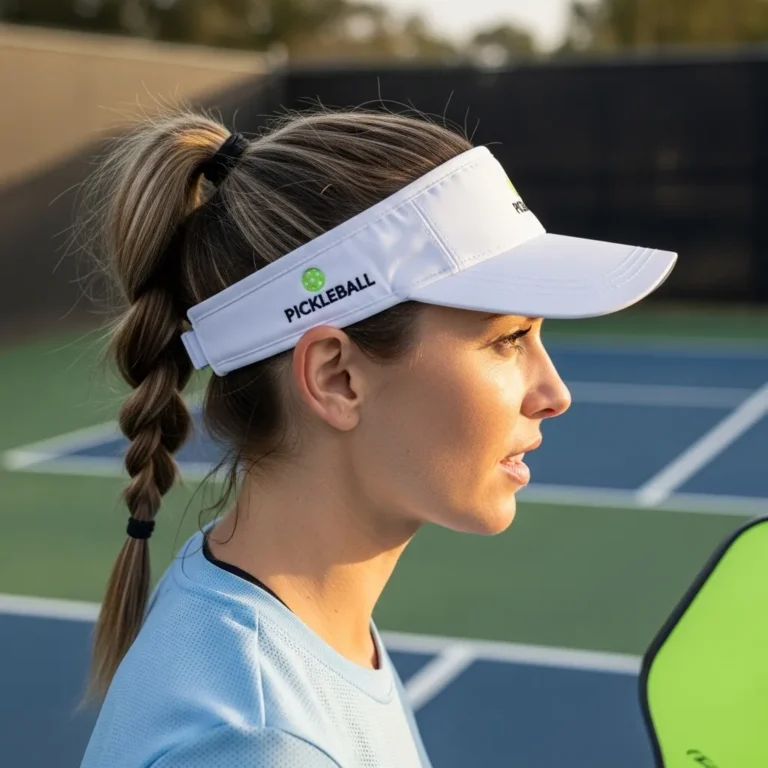
pickleball hats
The sound of the ball popping off the paddle, the scramble at the kitchen line, and the friendly banter between points—there is nothing quite like a day spent on the pickleball court. But if there is one thing that can ruin a great game faster than a stiff wind, it’s the sun blinding you right as you go for an overhead smash, or sweat dripping into your eyes during a crucial dink rally.
We often spend hours researching the perfect paddle or finding the right court shoes, but we tend to overlook the unsung hero of our gear bag: pickleball hats.
It might seem like a simple accessory, just something to keep the sun off your face, but for anyone who plays regularly, you know it’s so much more than that. A good hat is a piece of performance equipment. It manages moisture, improves your vision, and keeps you comfortable enough to play that “one last game” three or four times in a row. Whether you are looking for pickleball hats for men with a larger fit or a stylish pickleball hat for women with a ponytail opening, the details matter.
Let’s dive into the nitty-gritty of what makes a hat truly court-ready. We aren’t just talking about logos and colors here; we are talking about the features that actually impact your game.
Performance & On-Court Vision
When you are in the heat of a match, your eyes are your most valuable asset. If you can’t see the spin on the ball or track a deep lob because of glare, you are playing at a disadvantage. This is where the engineering of your pickleball hat comes into play. It’s not just about shade; it’s about optical clarity.
Does the color of the under-brim actually affect my tracking of the ball?
This is one of those details that separates a standard baseball cap from a high-performance sports hat, and frankly, it is something many players never think about until someone points it out.
Have you ever noticed that pro athletes, like baseball or football players, wear black grease under their eyes? The concept here is exactly the same. Light doesn’t just come from the sun above; it reflects off the court surface—especially on hard courts which can be quite bright—and bounces back up into your face.
If the underside of your hat’s brim is white or a light color, it acts like a reflector board. It bounces that glare right into your pupils, causing you to squint. That split-second of eye strain can make the bright yellow pickleball wash out against the sky or the background.
On the other hand, a dark grey or black under-brim absorbs that light. It creates a “visual quiet zone” for your eyes. By reducing the glare bouncing around near your face, you increase the contrast. Suddenly, the ball pops more visually. So, when you are shopping for pickleball hats, flip them over. If it’s dark underneath, you know the designer was thinking about your game, not just the fashion.
Recommended Reading
Top Pickleball Gifts 2025:From Stocking Stuffers to Pro Gear
Looking for unique pickleball gifts? We break down practical gear, funny apparel, and budget-friendly ideas to help you surprise the player in your life.
Hat vs. Visor: Which is better for tracking high lobs in Pickleball?
This is a classic debate, and the answer usually comes down to what you prioritize: heat release or eye protection.
A pickleball hat (full coverage) offers a distinct advantage when you are staring directly into the sun. When an opponent throws up a high lob and you have to tilt your head back, a full hat covers your forehead and the top of your head, providing a complete shield. However, the brim itself can sometimes get in the way. If you have a hat with a very long or curved brim, you might find yourself having to tilt your head back aggressively to see the ball at its apex, which can throw off your balance.
Visors, on the other hand, are fantastic for vertical visibility. Because they sit differently and often have slightly shorter or angled brims, many players feel they have a better field of view for overhead shots. Plus, the open top allows for maximum heat venting, which is a lifesaver in humid climates.
However, there is a catch. With a visor, your scalp is exposed to the sun. If you have thinning hair or just burn easily, a visor might leave you with a painful sunburn after a long tournament. For pure tracking of lobs, a visor often edges out a hat because it feels less obstructive, but a lightweight, full-coverage hat is usually the safer bet for overall health and sun protection.
Do I really need a hat for indoor Pickleball courts?
It seems counterintuitive, doesn’t it? Why wear a shade when there is no sun? But if you walk into any busy indoor facility, you will see plenty of players wearing pickleball hats.
The enemy indoors isn’t the sun; it’s the artificial lighting. Many gyms and dedicated pickleball facilities use high-intensity LED lights. While these are great for visibility, they can be incredibly harsh if you look directly into them. If a ball goes up into the lights (the “light blindness” zone), you can lose it completely for a second. A hat brim acts as a shield against that direct glare, allowing you to track the ball without being blinded by a warehouse light fixture.
However, you have to be careful with the style. Indoors, you generally don’t need a massive, wide brim. In fact, a shorter brim is often better indoors because it blocks the lights without cutting off your peripheral vision in a lower-light environment. So, yes, keeping a dedicated, lighter-weight hat for indoor play is a smart move—just make sure it’s not so dark or heavy that it makes you feel like you’re playing in a cave.
Sweat Management & Comfort
If you have ever had sweat sting your eyes right in the middle of a tie-breaker, you know that moisture management is a serious issue. It’s the number one complaint in gear forums. A soggy, heavy hat feels gross, but a hat that channels sweat into your eyes is a liability.
Is a “moisture-wicking” hat enough, or do I need a separate sweatband underneath?
We see the term “moisture-wicking” on almost every piece of athletic gear now. It usually means the fabric is polyester or a blend designed to pull moisture away from the skin to the exterior of the fabric where it can evaporate. For the casual player or someone playing in mild weather, a high-quality moisture-wicking pickleball hat is usually sufficient.
But let’s be real—some of us are “heavy sweaters.” If you are playing in 90-degree heat or high humidity, even the best wicking fabric has a saturation point. Once the material is soaked, gravity takes over, and the sweat has nowhere to go but down your face.
If you fall into this category, the hat alone isn’t enough. Many experienced players double up. They wear a thin, low-profile sweatband or a silicone sweat gutter headband underneath their hat. Another option is to look for hats specifically designed with a “Terry cloth” inner band. This material acts like a towel against your forehead. It holds significantly more moisture than standard polyester. So, if you find yourself constantly wiping your brow, don’t blame the hat—just add a layer of defense underneath it.
Why do some pickleball hats give me a headache after one match? (Pressure Points)
There is nothing worse than the “vice grip” headache. You finish playing, take off your hat, and feel a ring of relief around your skull. This usually comes down to the closure system and where the pressure lands on your head.
In pickleball, you are moving abruptly—stopping, starting, and lunging. To keep a hat on, we often tighten it more than we would for a casual walk. If the hat uses a hard plastic snapback, those little plastic knobs can dig into the back of your scalp. If it uses a metal buckle, it can press against the bone behind your ear.
The most common culprit, however, is simply a lack of stretch. A rigid hat forces your head to conform to it. The best pickleball hats for men and women feature a closure system that includes a little bit of elastic or Velcro (hook-and-loop) that has some “give.” This allows the hat to expand slightly when your blood is pumping and your veins dilate during exercise, preventing that throbbing headache. If you are prone to headaches, look for “stretch-fit” styles or continuous loop straps rather than rigid plastic snaps.
Are “Unstructured” hats better for pickleball than stiff “Trucker” hats?
Style matters, and trucker hats are popular right now. They have that tall, foam front and mesh back. But are they good for play?
Generally speaking, “unstructured” hats (the floppy kind that hug the shape of your head) are superior for active sports like pickleball. Here is why:
- Weight: Unstructured hats are usually lighter.
- Packability: You can shove them in your bag, and they won’t lose their shape.
- Aerodynamics: It sounds silly, but a tall, stiff trucker hat can actually catch the wind if you are playing outdoors.
- Washability: Stiff hats often have cardboard or rigid plastic inserts in the front panel to keep them standing up. These can get ruined in the wash. Unstructured hats are almost all fabric, making them much easier to clean.
Trucker hats do have one advantage: the mesh back is very breathable. However, the stiffness of the front panel can sometimes feel awkward against the forehead when you are sweating. For pure performance, the soft, moldable fit of an unstructured hat tends to disappear on your head, letting you focus on the game, whereas a trucker hat always feels present.
Fit & Specific Needs
One size fits most is one of the biggest lies in the clothing industry. Heads come in all shapes and sizes, and pickleball players are a diverse group. Finding a pickleball hat that actually fits your specific anatomy is key to avoiding constant adjustments during play.
What are the best pickleball hat options for players with large heads (Size 7 5/8+)?
If you have a larger head, the standard “OSFM” (One Size Fits Most) hat probably sits comically high on your crown, looking like a yamaka, or it leaves a massive red mark on your forehead. This is a huge frustration for many men searching for pickleball hats for men.
The industry is slowly catching up, but you need to know what to look for. Avoid “shallow profile” or “low crown” hats. These are designed to sit high. You want to search for keywords like “High Crown,” “Deep Fit,” or specifically “L/XL” sizing.
Some brands are now releasing specific lines for larger heads (often size 7 1/2 to 8). These hats have a deeper bucket, meaning the fabric comes further down to your ears, ensuring the hat feels secure without needing to be strangled tight. Also, look for adjustable straps that are extra long. There is nothing more annoying than only having two millimeters of Velcro left to hold the hat together. A proper fit means the brim sits just above the brow line, not inches above it.
Can wearing a tight hat cause hair breakage specifically for players with ponytails?
For players with long hair, the interaction between the hat and the hair tie is a constant battle. This is a major consideration when shopping for a pickleball hat for women.
The traditional “keyhole” opening in the back of a baseball cap is often too small or placed too low. If you like to wear a high ponytail or a messy bun to keep hair off your neck (which is ideal for cooling), a standard hat forces you to wear your hair low, which can feel hot and sweaty on the neck.
Furthermore, if the opening is small and rigid, it rubs against the hair shaft every time you run or jump. Over time, this friction causes breakage right at the band line.
The solution is to look for hats specifically designed with “hair compatibility” in mind. Some modern pickleball hats for women feature crisscross backing or completely open back sections that allow you to position your ponytail at any height—low, medium, or high. These designs usually use softer elastics around the opening to prevent snagging. If you notice a “halo” of broken hairs around your ponytail holder, it’s time to switch to a hat that accommodates your hairstyle, rather than fighting against it.
Glasses Compatibility: How to stop my hat from pushing down on my sunglasses?
This is a subtle torture. You put on your sunglasses, then you put on your hat. The brim of the hat pushes down on the top of the frames, causing the nose pads to dig into your nose. Or, the sides of the hat squeeze the arms of the glasses into your temples.
This happens because many hats are cut straight across the side. To fix this, you need to look for a specific design feature: a “curved brim over the ear” or a “notch” cut.
Take a look at the side profile of the hat. Does the fabric go straight back from the temple to the ear? Or does it curve upward slightly before reaching the ear? You want that upward curve. It creates clearance for the arms of your sunglasses to sit naturally without being pressed against your skull.
Additionally, check the curvature of the front brim. A very curved “baseball” style brim often interferes with large, wrap-around sports sunglasses. A slightly flatter brim (not totally flat, but relaxed) usually offers better clearance for eyewear.
Maintenance & Longevity
You have found the perfect hat. It fits, it blocks the glare, and it handles the sweat. Now, how do you keep it from turning into a gross, misshapen mess after three weeks? The salt and oils from our skin are destructive, and proper care is essential to make your investment last.
How can I wash my pickleball hat without ruining the brim’s shape? (Dishwasher vs. Shower method)
This is the ultimate “life hack” territory. We have all thrown a hat in the washing machine only to have it come out with a crumpled brim and a weird shape that never fits right again.
The Dishwasher Method is a popular legend, and it actually works—with caveats. You place the hat on the top rack (use a plastic hat cage if you have one). The water spray is gentler than a washing machine agitator, and the heat helps sanitize. However, be very careful with detergent. Dishwasher detergent often has bleaching agents that can ruin the color of your hat. Only use this method if you can use a very mild, non-bleach cleaner.
A safer, albeit funnier, method is the Shower Method. Yes, take a shower with your pickleball hat. Rinse it thoroughly with warm water while it is on your head (or just holding it). You can use a little bit of shampoo (which is designed to remove body oils) to gently scrub the sweatband. The benefit here is that the hat stays in its natural shape while it gets wet. Once you are done, do not wring it out! Place it over a melon, a coffee can, or just a towel bundled up into a ball shape to air dry. This ensures it dries in the shape of a head, not flat and wrinkled.
How do I remove stubborn white salt stains from dark pickleball hats?
If you wear a black or navy hat, you know the “salt rings.” As sweat evaporates, it leaves behind minerals that look like white topographic maps on your hat. Regular soap often fails to remove these because the salt crystallizes deep in the fabric fibers.
The secret weapon here is distinct from standard laundry: distilled white vinegar.
Create a mixture of one part white vinegar to three parts cool water. Dip a soft toothbrush or a cloth into the mixture and gently scrub the salt lines. The acidity of the vinegar breaks down the mineral bonds of the salt that soap can’t touch.
For really stubborn stains on a favorite pickleball hat, you can soak the whole hat in a bucket of this mixture for about 20 to 30 minutes. After the vinegar treatment, rinse it thoroughly with cold water to get rid of the smell, and air dry it. This not only removes the stains but also kills bacteria that cause that funky “gym bag” odor.
Final Thoughts
It is easy to dismiss a hat as just a way to cover a bad hair day, but on the pickleball court, it is a tool. From the dark under-brim helping you track a fast-moving ball to the breathable fabric keeping you from overheating, the right choice makes a tangible difference in how you play and how you feel.
Whether you are looking for pickleball hats for men that accommodate a larger size or a pickleball hat for women that works with your ponytail, taking the time to check the specs—like closure type, brim structure, and fabric technology—is worth it.
So next time you pack your bag, give your hat a little appreciation. It’s working just as hard as you are out there. Stay cool, keep your eye on the ball, and see you on the courts!
you may like it