
Picture this: You arrive at the courts, excited for a match. You try to open the gate with one hand while balancing your paddle under your arm, clutching a water bottle with two fingers, and keeping your keys from falling into the grass. Inevitably, something drops. We have all been there. This is the moment most players realize that throwing their expensive gear into a generic gym sack or the passenger seat of their car just isn’t cutting it anymore.
Whether you are a recreational player hitting the local park or a tournament competitor, the right pickleball bag is not just an accessory; it is a necessity for protecting your investment and maintaining your sanity. But with the market flooded with options from giants like Selkirk, JOOLA, and Franklin, how do you choose?
In this comprehensive guide, we will answer the questions real players are asking—from the “Sling vs. Backpack” debate to the hidden features you didn’t know you needed.
1. The Fundamentals: Do You Really Need One?
The most common question beginners ask is: “Can’t I just use my old tennis bag or a regular backpack?”
The short answer is yes, you can, but you probably shouldn’t if you want to protect your gear. Pickleball gear has a unique form factor. Tennis bags are designed for long-handled racquets, meaning a pickleball paddle gets lost in the deep pockets, often sliding around and scratching against zippers or other gear.
A specialized pickleball bag is designed with shorter, wider compartments specifically sized for the paddle face. Brands like Franklin and CRBN have engineered their bags to hold the paddle snugly to prevent movement. Furthermore, regular backpacks lack the specific “wet/dry” separation needed for court shoes and sweaty towels.
The Investment Logic
If you have spent upwards of $150 on one of the top pickleball paddles, risking surface damage or core delamination (due to heat) in an uninsulated bag is a costly mistake. A proper bag is an insurance policy for your equipment.
2. Choosing the Right Style: Ergonomics & Lifestyle
Once you decide to buy, the next hurdle is the style. A quick look at Reddit forums reveals the ongoing “Sling vs. Backpack vs. Duffel” debate. The right choice depends entirely on your lifestyle and back health.
The Sling Bag: For the “Light and Fast” Player
Sling bags, like the popular JOOLA Vision Sling, are teardrop-shaped bags that go over one shoulder.
- Pros: They are lightweight, stylish, and easy to swing around to access your paddle without taking the bag off. Perfect for the player who carries 1-2 paddles, a water bottle, and a phone.
- Cons: Ergonomically, they put all the weight on one shoulder. If you carry heavy gear or bike to the courts, this can cause strain over time.
The Backpack: For the Commuter and Competitor
This is the gold standard for ergonomics. Bags like the Selkirk Team Backpack distribute weight evenly across both shoulders. If you bike to the courts or have a long walk from the parking lot, a backpack is superior. They typically offer more capacity than slings, allowing for extra clothes, shoes, and snacks.
The Tote/Duffel: Style Meets Function
This category has exploded recently, especially regarding pickleball bags for women. Players often want a bag that transitions seamlessly from the court to a coffee shop or workplace without screaming “gym bag.”
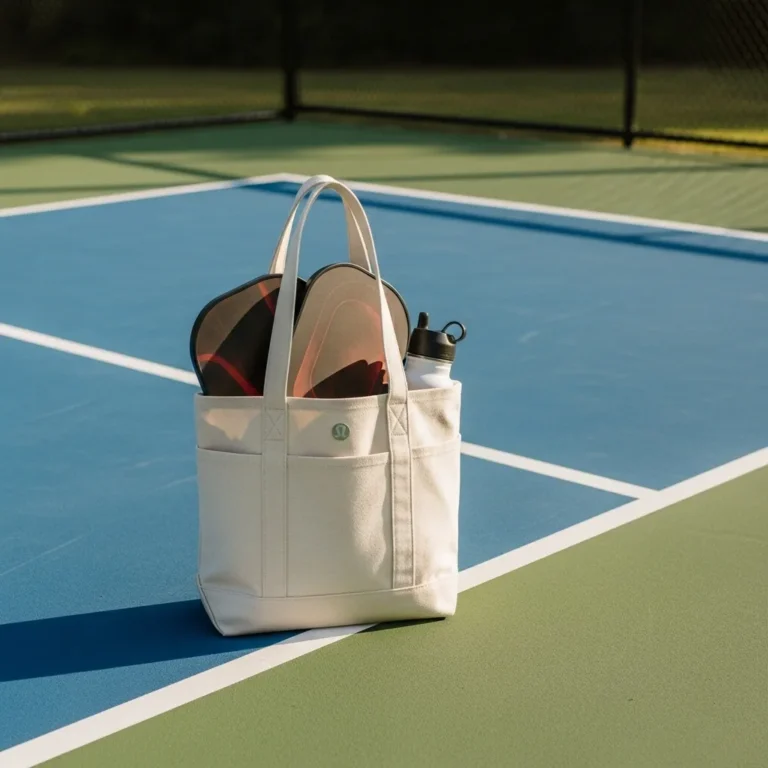
High-end brands have entered this space aggressively. For instance, the lululemon pickleball bag (often found in their tennis/active lines) is a prime example of fashion meeting function. These bags often feature sleeker materials, hidden paddle compartments, and a tote-style carry handle that looks just as good in an office as it does on the court.
3. Advanced Features: The “Competitor Gap” Questions
Beyond style, what actually makes a bag “good”? We dug deep into player forums to find the features that seasoned players swear by—features that generic bags often miss.
The Fence Hook: The Unsung Hero
If you play outdoors, you know that court surfaces can be gritty, wet, or just plain dirty. A fence hook is a sturdy metal or plastic hook usually hidden near the top handle. It allows you to hang your bag on the chain-link fence, keeping it off the ground and keeping your gear at eye level. Brands like Gearbox and Onix often include robust fence hooks in their pro-line bags.
Thermal Lining: Does it Really Matter?
You might see terms like “Thermoguard” or “Climate Protection” on bags from Babolat or Head. Is this just marketing fluff? Absolutely not.
Pickleball paddles, especially those with honeycomb polymer cores, are sensitive to extreme heat. Leaving your paddle in a hot car or a hot bag can cause the face to delaminate (separate from the core), effectively ruining the paddle. A thermal-lined compartment acts as a cooler, regulating the temperature and protecting the adhesives in your paddle.
The Shoe Compartment (Ventilated!)
Nobody wants their clean t-shirt smelling like their court shoes. The best pickleball bags feature a separate shoe tunnel accessed from the bottom or side.
Crucial Tip: Look for ventilated shoe compartments. Without air vents, moisture gets trapped, breeding bacteria and odor. If you wear high-performance footwear like Nike pickleball shoes, you want to keep them in good condition (and keep the rest of your bag smelling fresh).
Modern Compatibility: The Size Issue
The sport is evolving. Players are moving toward elongated paddles (longer reach) or thicker 16mm cores for control. Many older or cheaper bags were designed for standard wide-body paddles. Before buying, ensure the paddle sleeve is deep enough to accommodate an elongated handle without the zipper stressing the grip.
4. Organization & Storage: Beyond the Paddle
A bag is only as good as its organization. The “black hole” effect—where you dump everything in one main pocket and can never find your keys—is a major frustration.
Dedicated Storage Spots
- Ball Storage: Unlike tennis balls, pickleball balls are hard plastic and bulky. You need a dedicated mesh pocket or external pouch that can hold at least 3-4 pickleball balls.
- Hydration: Look for external mesh pockets with elastic tops. Many pickleball players use large 32oz or 40oz insulated flasks (like Hydro Flasks). Ensure the side pocket is tall enough so your heavy water bottle doesn’t flip out when you swing the bag over your shoulder.
- The “Valuables” Pocket: A small, felt-lined zipper pocket is essential for your phone and sunglasses to prevent scratching.
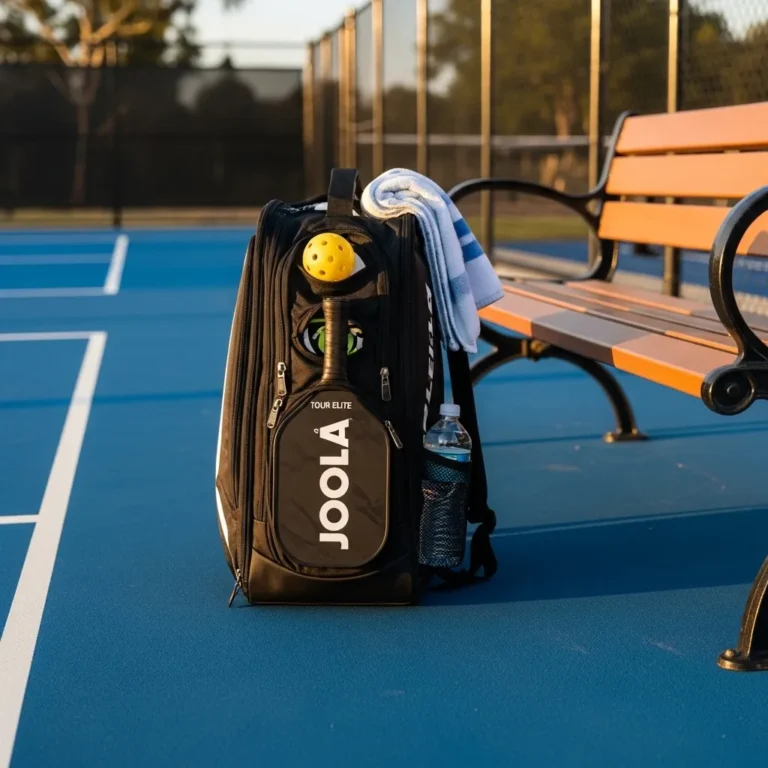
If organization is your top priority, you might want to check out the JOOLA pickleball bag series (specifically the Tour Elite), which is famous for having a place for absolutely everything, from your car keys to your cooling towel.
5. Durability & Quality Check
Pickleball bags take a beating. They are thrown on concrete, hung on rusty fences, and exposed to UV rays. How do you spot a quality bag?
Material Matters
- Polyester (600D or higher): The industry standard. It’s durable and decent at resisting water.
- Nylon: Lighter than polyester but can be prone to tearing if thin.
- Synthetic Leather/Canvas: Common in high-end lifestyle bags. Durable and easy to wipe down.
The Zipper Test
The first thing to fail on 90% of bags is the zipper. Dust from the court gets into the teeth, causing them to jam. When shopping, look for brands that use YKK zippers. They are the gold standard for durability. If the zipper feels flimsy in the store, it won’t last a month on the court.
Maintenance Tips
To extend the life of your bag, empty it out once a month and shake out the “court grit” (the sand and plastic dust). Wipe down the interior with a damp cloth. Never put a structured bag in the washing machine unless the tag explicitly says so, as it can ruin the foam padding protecting your paddles.
6. Conclusion: Which Bag is Right for You?
Choosing the right equipment is about honesty regarding your needs. Are you a casual social player, or are you drilling four times a week?
The Buyer’s Checklist:
- For the Casual Player: A lightweight sling bag (check out Franklin or Athletico) is affordable and sufficient.
- For the Serious Competitor: A large backpack with thermal lining, shoe storage, and a fence hook is non-negotiable (look at Selkirk or JOOLA).
- For the Style-Conscious: A tote or premium backpack (like the lululemon pickleball bag) offers functionality without compromising on aesthetics.
Ultimately, a high-quality bag makes a fantastic present for yourself or a partner. If you are looking for ideas for birthdays or holidays, upgrading a bag is one of the best pickleball gifts you can give.
Ready to upgrade? Don’t let your gear rattle around unprotected. Grab a bag that fits your game, hang it on the fence, and focus on what matters most: staying out of the kitchen!
For more information on equipment standards and official rules, you can always visit USA Pickleball.