
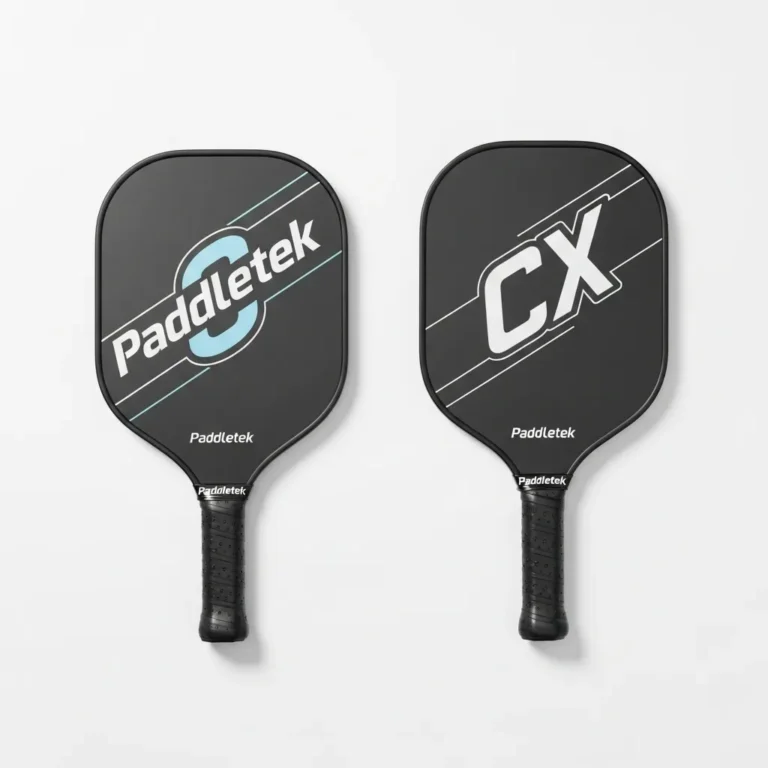
paddletek pickleball paddles
If you’ve spent any amount of time hanging around local courts, listening to the distinct pop-pop-pop of a Saturday morning open play, you’ve almost certainly seen a paddletek pickleball paddle in action. They don’t always have the flashiest marketing campaigns or the neon-colored edge guards that scream for attention, but they have something else: a reputation.
For a lot of us, pickleball started as a casual hobby and quickly morphed into a mild obsession. We start researching gear at 2:00 AM, wondering if a different core thickness or a slightly longer handle will finally fix that third-shot drop. If you are currently in that rabbit hole, looking at Paddletek, you are looking at one of the OGs of the sport.
But let’s be honest—navigating their lineup can feel a bit like trying to order off a secret menu. You see letters like “C,” “CX,” “ESQ,” and “SRT” thrown around, and it’s not always clear what actually matters for your game. I wrote this guide to cut through the noise. We aren’t just going to look at specs; we are going to look at how these paddles actually feel in your hand, how they age, and whether they live up to the hype.
introduction to the company’s history
To really understand why people are so loyal to this brand, you have to look at where they came from. Long before pickleball was the fastest-growing sport in America, appearing on major TV networks and attracting celebrity investors, Paddletek was already in the lab—literally.
The company started around 2010, which, in pickleball years, is basically the Stone Age. While many modern brands are essentially marketing firms that order generic paddles from overseas factories and slap a logo on them, Paddletek took a different route. They are a U.S.-based manufacturer, operating out of Niles, Michigan. That “Made in the USA” stamp isn’t just a sticker; it’s a core part of their identity.
They were the pioneers who introduced the polymer honeycomb core to the market. If you play with almost any paddle today, regardless of the brand, you largely have Paddletek to thank for the technology inside it. Before them, the game was dominated by heavy composite and Nomex cores that were loud and unforgiving. Paddletek changed the physics of the sport, allowing for the “soft game” to truly evolve.
Over the years, they’ve powered some of the best players in the world, including the legendary Anna Leigh Waters (before her switch) and Catherine Parenteau. They have a legacy of performance. But legacy doesn’t always mean clarity, so let’s get into the nitty-gritty of their current lineup and figure out which one fits your style.
Critical Model Comparisons & Performance
When you start browsing the online store, you’re going to hit a wall of acronyms. It’s not just you; even seasoned players get tripped up here. The descriptions often sound identical, but the on-court reality is drastically different. Let’s break down the questions that actually matter when you’re deciding where to spend your money.
What is the practical difference between Paddletek’s “C” and “CX” model variations (e.g., Bantam TKO-C vs. TKO-CX)?
This is probably the number one question I hear. You’re looking at two paddles that look almost exactly the same, but the “X” makes a world of difference.
Think of the “C” models as the compact, traditional maneuverability kings. The “C” usually stands for a standard handle length, often around 5.25 inches. These paddles feel incredibly fast at the kitchen line. If you are a player who relies on quick hands battles—think bullet-speed volleys where reaction time is everything—the “C” models (like the standard Bantam TKO-C) are balanced to feel lighter in the head. They are an extension of your palm.
The “CX,” on the other hand, is the extended version. That “X” usually denotes a handle that stretches to 5.75 inches or longer. Why does this matter? Leverage and the two-handed backhand.
If you grab a “CX” model, the balance point shifts. The paddle becomes more “head-heavy.” It’s simple physics: a longer lever arm creates more whip. When you drive the ball from the baseline, the TKO-CX is going to give you more plow-through and power than the C, even if the core materials are identical. However, you pay a “tax” for that power: the paddle will feel slightly slower to maneuver during those panic moments at the net.
So, the practical difference? If you play with a two-handed backhand, you almost need the CX for the extra room. If you are a “finger-up” ping-pong style player or just want maximum hand speed, stick with the C.
you may like it
Top Pickleball Gifts 2025:From Stocking Stuffers to Pro Gear
Looking for unique pickleball gifts? We break down practical gear, funny apparel, and budget-friendly ideas to help you surprise the player in your life.
How does the Bantam ESQ-C’s “sweet spot” compare to the TKO series?
This is where things get interesting for the niche players. The Bantam ESQ-C is a unique beast. It has a squarer, wider shape compared to the elongated TKO series.
In theory, a wider paddle should have a massive sweet spot. And for the most part, the ESQ-C is very forgiving laterally (side-to-side). If you block a ball slightly off-center toward the side edge, the ESQ-C usually saves you.
However, there is a distinct difference in “feel” compared to the TKO line. The TKO series (especially the newer raw carbon models) offers a very uniform response from top to bottom. The ESQ-C, according to many long-term users, has a more concentrated sweet spot. Some players describe the area near the very top of the ESQ-C as a “dead spot,” meaning the ball dies off the face faster than expected if you don’t hit the center.
The TKO series feels more modern in this regard. The sweet spot feels stretched vertically. If you mishit a ball near the throat or the tip on a TKO, you still get decent pop. On the ESQ-C, you really need to be precise with your depth perception. It’s a paddle for players who prioritize blocking width over vertical reach.
Does the “Smart Response Technology” (SRT) actually improve the soft game, or is it just marketing?
We all get skeptical about trademarked tech names. “Smart Response Technology” sounds like something from a sci-fi movie, but in the context of a paddletek tempest wave pro pickleball paddle, it actually describes a physical characteristic of the core.
Most paddles have a solid, uniform honeycomb core. SRT implies a variable response. The idea is that the core is tuned to react differently depending on how hard you swing.
Is it magic? No. But does it work? Surprisingly, yes. Here is the sensation: When you are dinking softly (low impact), the paddle feels plush and absorbent. The ball doesn’t trampoline off the face; it stays on the paddle a fraction longer, giving you control. This is why the Tempest Wave Pro is often cited as a top-tier control paddle.
However, when you take a full swing (high impact), the core stiffens up to provide energy return. It’s not “smart” in the electronic sense, but the material physics allow for a nonlinear response. If you are coming from a standard, cheap polymer paddle, you will notice that your drops don’t pop up as high, yet your drives still have some zip. It genuinely helps the soft game, acting almost like a shock absorber that firms up when you need power.
For tennis converts, is the Tempest Reign or the Bantam Sabre better for a two-handed backhand?
If you are coming from tennis, you are used to a long handle and a head-heavy balance. You are also used to generating your own power.
Between the Tempest Reign and the Bantam Sabre, the Tempest Reign is generally the safer, more comfortable recommendation for the majority of tennis converts. It has an elongated shape and a handle that accommodates two hands reasonably well. More importantly, the Tempest line focuses on control and spin (the “Wave” surface). Tennis players already have big swings; they need a paddle that keeps the ball in the court.
The Bantam Sabre, however, is a very specific tool. It has an incredibly long handle (resembling a ping pong paddle handle length in some iterations) and a smaller head. It is a “sword.” If your hand-eye coordination is elite and you want pure head speed, the Sabre is fun. But for a two-handed backhand drive, the head size of the Sabre can feel unforgiving.
For the transitioning tennis player, I’d actually point you toward the “CX” variations mentioned earlier or the Tempest Reign. The Sabre is often too niche for someone just trying to translate their topspin drive to the pickleball court.
Technical Specs & Customization
Now, let’s talk about the stuff gear junkies love. Customizing your paddle is like tuning a car—you can change the performance completely with a few strips of lead tape.
Can the Bantam series handle lead tape customization without becoming too head-heavy?
The Bantam series, specifically the paddletek bantam ex l pickleball paddle, is famous for its “pop.” It’s a power paddle. Out of the box, Paddletek paddles tend to run slightly lighter than some of the thick-core behemoths from other brands (often sitting in the 7.8 to 8.2 oz range).
Because they aren’t starting at a super heavy static weight, the Bantam series is actually an excellent platform for customization. You can add lead tape to the throat (the V-shape near the handle) to increase stability without ruining the swing weight.
However, a word of caution: The Bantam cores (especially the thinner ones) generate power through core stiffness. If you add too much weight to the top of the paddle (12 o’clock position), it can become an uncontrollable rocket launcher. The Bantam already wants to hit the ball hard. If you make it too head-heavy, you might find your resets sailing long. Stick to weighting the throat or the sides (3 and 9 o’clock) to expand the sweet spot, and it handles the extra weight beautifully.
How does the 12.7mm core thickness in the Bantam line actually feel compared to the industry standard 14mm or 16mm?
This is a massive differentiator. The industry has largely moved toward 16mm cores for control and 14mm for all-court play. Paddletek’s 12.7mm (found in many Bantam models) is thin by modern standards.
Here is the feeling: Feedback.
With a 16mm paddle, it feels like hitting a ball with a pillow. It’s muted. With the 12.7mm Bantam, you feel exactly where the ball hit. The ball gets in and out of the paddle face very quickly. This provides “pop.”
If you have “lazy” hands, the 12.7mm core will punish you because the ball rebounds so fast. But if you have disciplined blocks, it’s a weapon. You don’t have to swing hard to get the ball deep.
However, if you feel that 12.7mm is too wild, Paddletek does offer thicker options, like the paddletek bantam 14 3mm pickleball paddle (often rounded to 14mm or specific thick-core versions). The 14.3mm is the “Goldilocks” zone. It retains some of that signature Bantam pop but eats up a bit more vibration, making it friendlier for resets. If you are afraid of the ball flying on you, opt for the 14.3mm over the 12.7mm.
Does the “vibration dampening” in the Tempest Wave v3 work for players with tennis elbow, or should I look at the Pro line?
I want to be clear: no paddle cures tennis elbow. If you are hurting, you need rest and physical therapy. However, equipment choices can aggravate or alleviate the stress on your arm.
The Tempest Wave v3 is significantly softer than the Bantam line. The carbon fiber face and the polymer core are designed to dampen shock. Between the v3 and the Pro line, the v3 generally feels slightly softer and more plush. The paddletek tempest wave pro pickleball paddle is stiffer to allow for more competitive power.
If your arm is sensitive, the standard Tempest Wave v3 is one of the friendlier paddles on the market. It doesn’t have the harsh feedback of the 12.7mm Bantam. The vibration dampening is real in the sense that less high-frequency shock travels up the handle. If comfort is your #1 priority, look at the Tempest line, specifically the non-Pro versions or the 14.3mm variants, as thicker cores generally absorb more shock.
Durability, Wear & Quality Control
This is the section most reviewers skip because they only play with the paddle for a week. But you want to know what this thing looks like after six months of grinding.
Is it normal for the grit/spin texture on the TKO-CX to significantly degrade after 30 days of daily use?
Let’s have a heart-to-heart about “Raw Carbon Fiber” and peel ply textures. Across the entire pickleball industry, grit wears out. It is a consumable resource, like tires on a race car.
However, there has been specific chatter about the TKO-CX losing its “bite” faster than some competitors. In the first week, the spin is wicked—balls dip aggressively. By day 30 of daily heavy use, it is normal to see a smoothing of the sweet spot. You aren’t losing the carbon fiber, but you are smoothing out the resin texture that sits on top.
Is it “normal”? Unfortunately, yes. While Paddletek uses high-quality materials, the aggressive grit on the TKO line does settle. You will still get spin from the friction of the carbon cloth itself, but that sandpaper-like grab diminishes. To maintain it, you need to keep it clean. A rubber eraser bar is mandatory. If you let plastic dust clog the weave, the paddle will feel smooth much faster than it actually is.
Are there known quality control inconsistencies with Paddletek wooden handles?
This is a quirk of the brand. Paddletek is one of the few major manufacturers that still uses wooden handles on many models (or wood inserts). Most modern “tech” paddles use a molded handle that is part of the core.
The benefit of wood is the feel. It feels organic, like a tennis racquet. The downside? Wood is a natural material, and natural materials vary.
Advanced users have absolutely reported inconsistencies. You might buy two Bantam EX-L paddles, and one handle feels slightly thicker or more oval, while the other feels flatter. Sometimes the wood inserts (if used to shape the handle) can feel slightly uneven under the grip tape.
It’s rarely a structural failure, but if you are extremely particular about your grip dimensions (down to the millimeter), this can be frustrating. It’s the trade-off for that classic, analog feel versus the sterile, perfect consistency of a molded plastic handle.
Do Paddletek paddles tend to develop “dead spots” near the top edge faster than other raw carbon fiber brands?
There is some validity to this concern, particularly with the thinner core Bantam models. Because the core is 12.7mm, there is less material to distribute the shock of a mishit.
If you are a “banger” who constantly smashes the ball near the top edge of the paddle (the furthest point from your hand), you are crushing the honeycomb cells. Over time, this creates a dead zone where the cells have collapsed. Because Paddletek paddles are often performance-tuned (meaning they prioritize playability over tank-like durability), heavy hitters might notice the top edge softening up faster than with a thick, 16mm “tank” paddle from a brand that uses a denser, cheaper core.
It’s not a defect so much as a consequence of the design. High-performance, thin-core paddles are like race cars; they perform beautifully but can be fragile if you abuse the redline.
Warranty & Customer Service Reality
Finally, what happens when things go wrong? You spend $150 to $250 on a paddle; you want to know if the company has your back.
Does Paddletek’s “Limited Lifetime Warranty” cover edge guard separation if it happens within 6 months?
The “Limited Lifetime Warranty” is a phrase that confuses everyone. In the pickleball world, “Lifetime” usually means the lifetime of the paddle’s natural durability, not your lifetime.
Edge guard separation is the most common issue with all honeycomb paddles. If the edge guard starts flapping loose within 6 months, Paddletek is generally very good about classifying this as a manufacturing defect (adhesive failure). They will usually fix or replace it.
However, if your edge guard is scraped up, scratched, and looks like you’ve been using it to shovel gravel, they will classify it as “normal wear and tear.” They can tell the difference between a glue failure and a paddle that has been scraped against the court surface repeatedly. If you are a player who scrapes the ground on every low dink, use edge tape. The warranty protects against bad glue, not bad habits.
How responsive is Paddletek customer support regarding handle breakage compared to bigger brands like Joola or Selkirk?
Here is where the “Made in USA” / Family Business aspect shines.
If you deal with massive global brands, you are often dealing with a call center and a rigid script. Users frequently report that Paddletek feels more human. There are numerous stories on forums of players snapping a handle (a rare but possible occurrence, especially with powerful overheads) and getting a personalized response from Paddletek support very quickly.
They are known to be reasonable. If a handle snaps at the neck and the paddle looks relatively new, they typically replace it without a fight. Their reputation for standing behind structural failures is quite high. They might be slower to replace a paddle for cosmetic issues (like a graphic peeling), but for game-ending breaks, they are widely considered one of the more responsive and fair companies in the industry.
Final Thoughts
Choosing a paddle is personal. It’s about finding the tool that feels like an extension of your arm. Paddletek offers a unique blend of old-school feel (wood handles, U.S. assembly) and modern tech (SRT cores, raw carbon surfaces).
Whether you go for the pop of the paddletek bantam ex l pickleball paddle, the control of the Tempest, or the leverage of a TKO-CX, you are buying into a lineage of performance. Just remember to be honest with yourself about your game. Don’t buy the pro-level power paddle if you need help keeping the ball in the court. Respect the specs, understand the wear and tear, and I’ll see you at the courts.
you may like it




Very nice post. I simply stumbled upon your weblog and wanted to say that I have truly enjoyed browsing your blog posts. After all I’ll be subscribing on your rss feed and I’m hoping you write again soon!
I know this web site offers quality depending articles or reviews and extra material, is there any other website which gives these kinds of stuff in quality?
I’m curious to find out what blog platform you are utilizing? I’m experiencing some small security problems with my latest blog and I’d like to find something more secure. Do you have any recommendations?