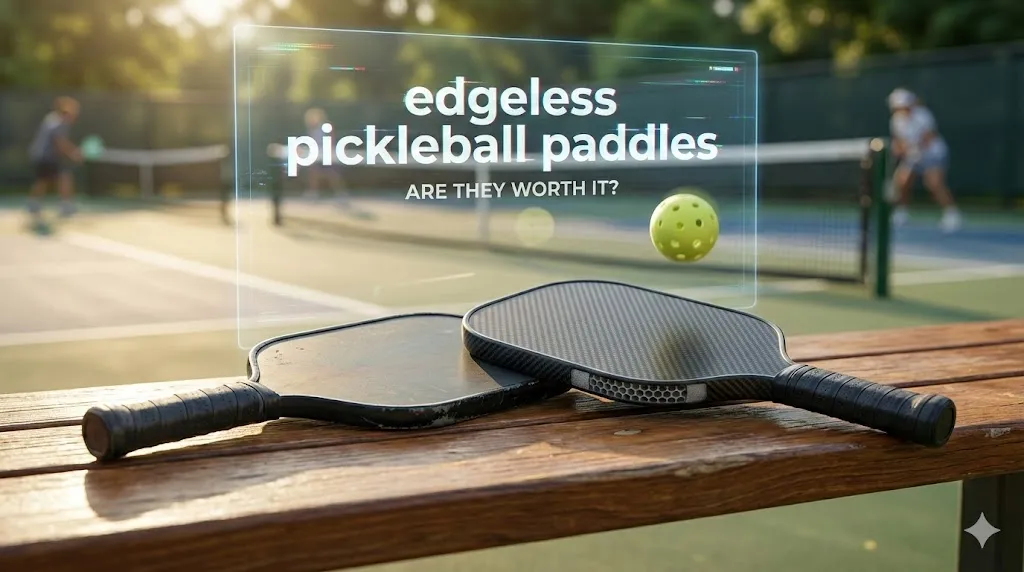
Picture this: You are locked in a fast-paced volley battle at the kitchen line. Your reflexes are sharp, your positioning is perfect, but then—clack. The ball hits the plastic rim of your paddle and dies instantly at your feet. That dreaded “edge guard mishit” has cost countless players crucial points, and it is the primary reason why edgeless pickleball paddles are becoming the weapon of choice for pros and amateurs alike in 2026.
By removing the traditional bumper guard, manufacturers aren’t just changing the look of the game; they are fundamentally altering the physics of how a paddle moves through the air. But is this sleek design purely a performance upgrade, or does it come with hidden risks? In this comprehensive guide, we will dissect the technology, analyze the best edgeless pickleball paddle options on the market, and help you decide if you are ready to ditch the edge.
The Aerodynamic Advantage: Why Go Edgeless?
To understand the hype, you must understand the drag. A traditional edge guard acts like a parachute, creating wind resistance as you swing. When you switch to a pickleball paddle edgeless design, that resistance vanishes.
- Faster Hand Speed: In the modern game, where hand battles are faster than ever, milliseconds matter. An edgeless profile allows for quicker maneuvering at the net.
- Expanded Surface Area: Without a plastic lip, the “usable” hitting surface extends further to the perimeter. While physics dictates the sweet spot is still central, a mishit near the edge of an edgeless paddle is less likely to careen wildly off course compared to hitting a plastic ridge.
- Sleek Aesthetics: There is no denying the visual appeal. Paddles like the Selkirk Luxx paddle offer a futuristic, unibody look that stands out on the court.
The Search for the Best Edgeless Pickleball Paddle: A Deep Dive
Finding the best edgeless pickleball paddles requires looking beyond the marketing fluff. We need to analyze three critical pillars: Performance (Power/Spin), Durability (Construction), and Price.
Based on professional reviews and court testing, here are the heavyweights dominating the category:
1. The Durability King: Gearbox Pro Series
If your main fear about going edgeless is fragility, Gearbox is the answer. Unlike other brands that expose a honeycomb core, Gearbox uses a patented SST (Solid Span Technology). This means the paddle is made of carbon fiber chambers, not a honeycomb.
- Why it wins: It is virtually indestructible. You can scrape it on the court without fear of delamination.
- Performance: Known for incredible power and spin, though it can feel stiff to some.
- Verdict: The Gearbox Pickleball lineup is arguably the best edgeless pickleball paddle for players who destroy equipment and want longevity.
2. The Aerodynamic Speedster: Selkirk Vanguard Power Air
Selkirk revolutionized the edgeless game with the Power Air. Recognizable by the “hole” (Air Dynamic Throat) near the handle, this paddle is engineered for maximum swing speed.
- Why it wins: It cuts through the air faster than almost anything else. The “Pro-Spin+ NextGen” texture generates massive spin.
- Trade-off: It has a smaller sweet spot and feels stiffer/poppier. It is a weapon for advanced players, not beginners.
- Comparison: See how it stacks up against other top-tier options in our Joola Perseus vs Selkirk Luxx comparison.
3. The Control Specialist: Selkirk Luxx Control Air
For players who loved the speed of the Power Air but hated the stiffness, Selkirk released the Luxx. It features a thicker 20mm core (Thikset Honeycomb).
- Why it wins: It offers the plush, soft feel of a control paddle with the aerodynamic benefits of an edgeless frame.
- Best For: Players suffering from tennis elbow or those who prioritize resets and dinks over raw power.
4. The High-Tech Contender: Proton Series
Proton has entered the chat with aerospace-grade materials. Their paddles, often featuring Kevlar or specialized carbon weaves, are challenging the status quo.
- Highlight: The Proton Pickleball Paddle series is gaining traction for offering a unique “nanotechnology” surface that maintains grit longer than competitors.
Summary on Pricing: Expect to pay a premium. The engineering required to seal the edges of a honeycomb core (Thermoforming) or build a unibody frame (Gearbox) costs money. Prices for the best edgeless pickleball paddles typically range from $200 to $275.
The “Chip” Factor: Durability vs. Performance
Let’s address the elephant in the room: Are edgeless paddles fragile?
The short answer is: They require more care. If you are a “scrapper” who regularly digs balls off the asphalt, you will scratch the edge. On a cheap paddle, this exposes the core and ruins the paddle. On high-end models (like the ones mentioned above), the carbon wrapping is robust, but cosmetic damage is inevitable.
The Solution? Protective Tape.
Most pros who use edgeless paddles apply specialized edge tape (or electrical tape) immediately. This adds a negligible amount of weight but provides a sacrificial layer against the court surface. If you are investing $250 in a paddle, a $5 roll of tape is a no-brainer.
If you are unsure if an edgeless paddle suits your physical needs, check our guide on how to pick a pickleball paddle to match your style.
Frequently Asked Questions (FAQ)
Does removing the edge guard actually increase the sweet spot size?
Technically, the sweet spot is determined by the core physics, not the edge. However, an edgeless pickleball paddle removes the “dead zone” of the plastic rim. This means while the sweet spot itself might not be larger, the “mishit tolerance” is better because hitting near the edge won’t result in a chaotic ricochet off a plastic bumper.
How does the lack of an edge guard affect the paddle’s “Twist Weight”?
This is a crucial technical detail. Edge guards add perimeter weighting, which increases stability (Twist Weight). Removing them can make a paddle prone to twisting in your hand on off-center hits. To counter this, the best edgeless pickleball paddle manufacturers inject foam into the perimeter or use weighted carbon walls to restore stability.
Are edgeless paddles significantly more aerodynamic?
Yes. Wind tunnel testing confirms that removing the lip reduces drag. While a beginner might not feel it, an advanced player engaging in rapid-fire volleys at the kitchen line will notice the paddle moves faster through the air.
Do edgeless paddles vibrate more than edged paddles?
The plastic guard on traditional paddles acts as a dampener. Without it, vibrations can travel more directly to the handle. If you suffer from elbow issues, look for thicker cores (like the Selkirk Luxx) or read our guide on pickleball injuries to find arm-friendly options.
Can I apply lead or tungsten tape to an edgeless paddle effectively?
Yes, and many pros do. However, because edgeless paddles often have a thinner or rounded profile, getting the tape to stick can be tricky. Ensure you clean the surface thoroughly before applying tape to customize your swing weight.
Edgeless vs. Traditional: The Verdict
Still undecided? Here is a quick breakdown to help you choose:
- Choose an Edgeless Paddle if: You value hand speed above all else, you want a modern look, and you are willing to apply protective tape to keep it safe. Check out our top pickleball paddles list for more recommendations.
- Stick to Traditional Edged Paddles if: You play on rough courts, you are on a budget, or you prefer the “head-heavy” feel that an edge guard often provides.
Final Thoughts
The era of the pickleball paddle edgeless revolution is here to stay. Brands like Gearbox and Selkirk have proven that you don’t need a plastic bumper to build a world-class paddle. While they demand a higher price tag and a bit more care, the performance benefits in speed and aerodynamics are undeniable for the serious player.
Before you buy, always ensure your choice is tournament-legal by checking the USA Pickleball Approved Paddle List. Whether you choose the indestructible power of Gearbox or the refined control of the Luxx, going edgeless might just be the edge you need to win your next match.
Ready to play? Check the latest rules and regulations on the official USA Pickleball website.