
double black diamond pickleball paddle
If you’ve spent any time at your local courts lately, you’ve probably noticed a shift. For a long time, the big legacy brands dominated the scene. But recently, there’s been a whisper—growing into a roar—about a boutique Australian company called Six Zero. And at the center of that storm is the double black diamond pickleball paddle.
It’s the paddle everyone seems to be asking to “try out for just one point” during rec play, only to reluctantly hand it back five games later. If you are reading this, you are likely standing on the precipice of a decision: is this hype real, or is it just another piece of carbon fiber marketing?
I’ve been tracking the evolution of paddle technology for a while, and it is rare to see a piece of equipment universally praised by 3.0 beginners and 5.0 tournament grinders alike. But that’s the unique position this paddle holds. It isn’t just a tool; for many, it feels like an upgrade to their actual hands.
In this deep dive, we are going to strip away the marketing fluff. We’ll look at the engineering, the feel, and the nitty-gritty details to help you figure out if the Double Black Diamond (often affectionately called the DBD) belongs in your bag. So, grab a coffee (or an electrolyte drink), and let’s talk about what makes this paddle tick.
related:
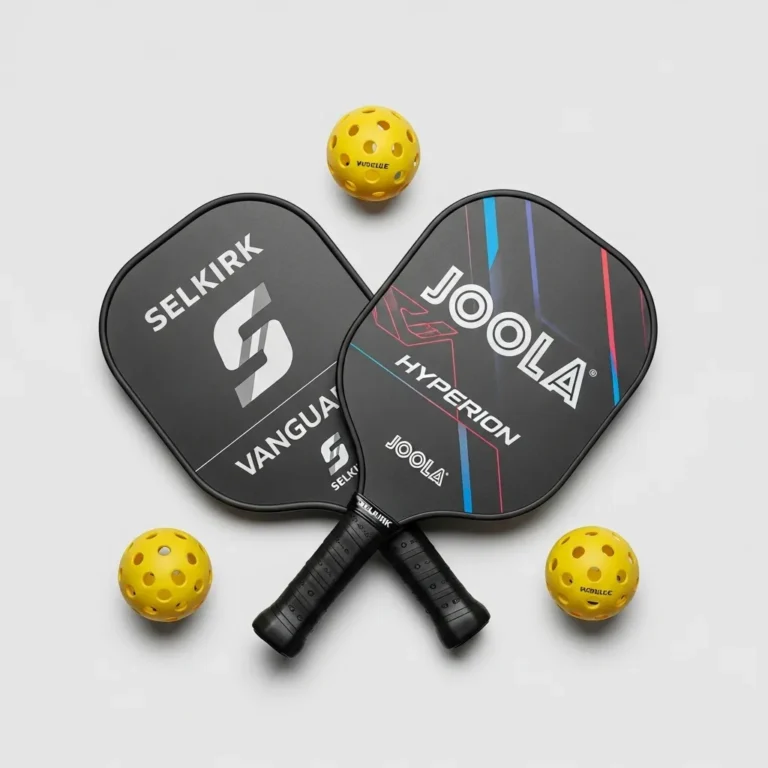
The Honest Truth: Selkirk Vanguard vs Joola Hyperion
DGYGQ Pickleball Paddle Review: The Hidden Gem
Performance & Playability
When you strip away the graphics and the price tag, all that really matters is what happens when the ball meets the face of the paddle. Does it do what you tell it to do? The Six Zero engineering philosophy seems to be built around the idea that you shouldn’t have to sacrifice power to get control, or vice versa.
Is the Double Black Diamond considered a power or control paddle?
This is the million-dollar question, isn’t it? We have been conditioned to believe that paddles sit on a binary scale: you either buy a thick, soft “control” paddle that feels like a pillow, or you buy a thin, hard “power” paddle that feels like a rocket launcher.
The double black diamond pickleball paddle breaks that scale. It is widely categorized as an “all-court” paddle. If you had to pin it down, you might say it leans slightly toward control, but that description doesn’t do justice to the pop it provides.
Think of it like a high-performance sports sedan. It has the suspension and handling to drive smoothly through the neighborhood (dinking and resetting), but when you step on the gas (drives and overheads), the engine roars to life. The thermoformed construction—a process where heat and pressure bond the paddle layers together—gives it a stiffness that translates to immediate power. However, because of the carbon fiber face and the core matrix, it doesn’t feel uncontrollable. You can drop a third shot into the kitchen with finesse, yet still have enough firepower to put away a high ball without swinging out of your shoes.
How forgiving is the sweet spot on the Double Black Diamond?
We all have days where our hand-eye coordination feels slightly off. Maybe you’re tired, or maybe the wind is swirling. On those days, a small sweet spot is punishing. Hitting near the edge usually results in a dead “thud” and a ball that dies into the net.
The DBD is famous for its “edge-to-edge” foam injection. Six Zero injects a specialized foam around the perimeter of the paddle, inside the edge guard. This does two things: it adds stability (so the paddle doesn’t twist in your hand on off-center hits), and it expands the sweet spot significantly.
When you play with the Double Black Diamond, you’ll notice that mishits don’t feel like mishits. A ball struck near the heel or the toe still travels with decent pace and direction. It’s incredibly forgiving. It inspires confidence because you know that even if your mechanics aren’t 100% perfect on a scramble point, the paddle has your back. It minimizes the “dead zones” that plague cheaper or older-generation paddles.
What is the spin potential of the raw carbon fiber face?
If you want to play modern pickleball, spin isn’t optional—it’s essential. You need top spin to keep your drives inside the baseline and backspin (slice) to keep your dinks unattackable.
The face of the double black diamond pickleball paddle is made from T700 Raw Carbon Fiber. If you run your fingers over it, it feels gritty, almost like a fine fabric texture. This isn’t a spray-on grit that wears off after a month; it is the actual texture of the carbon material used in the ply.
The spin generation here is top-tier. Because the carbon fibers bite into the ball, you can generate massive RPMs (rotations per minute). This allows for those dipping drives that look like they are going long before dropping sharply at the baseline. It also helps with “shaping” the ball during dinking rallies, allowing you to manipulate the bounce and make life difficult for your opponent. If you are coming from a smooth-faced paddle, the amount of grab you get with the DBD might actually take a session or two to adjust to—it’s that pronounced.
How does the paddle handle hand speed and maneuverability at the kitchen line?
The kitchen line is where the game turns into a western shootout. You need fast hands. If your paddle is too head-heavy, you’ll be late on volleys. If it’s too light, the paddle will get pushed around by heavy drives.
The DBD features a hybrid shape. It has the curved top of an aerodynamic paddle (which cuts through the air easier) but retains enough width to block effectively. Most players find the swing weight to be in the “Goldilocks” zone—not too heavy, not too light.
It feels snappy. When you are engaged in a rapid-fire hands battle, the paddle moves with you seamlessly. It doesn’t feel like you are dragging a frying pan through the air. This maneuverability is crucial for those split-second decisions where you have to switch from a backhand block to a forehand punch. While there are lighter, “edgeless” paddles on the market that might technically be faster, the DBD offers an excellent balance where you don’t feel sluggish, yet you still have enough mass behind the ball to block a hard drive without the paddle wobbling.
Specifications & Variants (Selection Decisions)
Once you’ve decided that the Six Zero ecosystem is where you want to be, you are faced with a few specific choices. It can be a bit overwhelming looking at the acronyms and numbers, so let’s simplify it.
What is the difference between the Double Black Diamond (DBD) and the standard Black Diamond (BD)?
This is the most common point of confusion. They look almost identical, save for a subtle difference in the graphic color or text, but they play like distant cousins rather than siblings.
The Double Black Diamond (DBD) is the paddle we have been discussing: it features a raw carbon fiber face. It is the “control” sibling (though as we discussed, it has power). It feels softer, grabs the ball better for spin, and is generally easier to control.
The Black Diamond (BD)—no “Double”—is the power sibling. It features a fiberglass composite face. Fiberglass is stiffer and “poppier” than carbon fiber. The ball jumps off the face of the BD with incredible velocity. It is a rocket. However, that power comes at a cost: it has less spin potential and is harder to control in the soft game (dinking/resetting).
If you are a banger who loves to drive the ball and overwhelm opponents with pace, the BD might be your jam. But for 90% of players who want a balanced, all-court game, the double black diamond pickleball paddle (DBD) is the safer and more versatile choice.
Should I choose the 14mm or the 16mm core thickness?
The DBD comes in two core thicknesses, and your choice depends entirely on your playstyle.
The 16mm Core: This is the most popular option. A thicker core absorbs more energy from the ball. This gives you a “plush” feel, longer dwell time (the ball stays on the face a fraction longer), and makes blocking and resetting easier. If you want maximum control and forgiveness, go with the 16mm.
The 14mm Core: A thinner core is stiffer. It returns more energy to the ball immediately. This results in more “pop” and usually a slightly lighter paddle that swings faster. However, the sweet spot can feel a tiny bit smaller, and the feel is crisper. If you have slow hands and need help with swing speed, or if you feel you lack put-away power, the 14mm is a great option.
For the vast majority of players, specifically those transitioning from beginner gear, the 16mm is the recommendation. It provides that extra layer of stability that helps reduce unforced errors.
Does the paddle feel “plush” or “stiff” upon impact?
This is about “feedback”—what your hand feels when you hit the ball. Because the double black diamond pickleball paddle is thermoformed (which seals the edges and creates a unibody structure), it is naturally stiffer than the old-school distinct-component paddles.
However, Six Zero has done a remarkable job with their core layering to mitigate harshness. It is often described as “crisp but plush.” When you hit the sweet spot, it feels solid and satisfying—not tinny or hollow.
It doesn’t feel like hitting a brick wall (stiff), nor does it feel like hitting a marshmallow (mushy). It sits comfortably in the middle. You get enough feedback to know exactly where the ball hit the face, which allows your brain to make micro-adjustments for the next shot. While we won’t make medical claims here, players who dislike the jarring vibration of cheap paddles often find the solid feel of the DBD to be much more comfortable for long sessions.
Comparisons (Market Positioning)
The pickleball market is flooded right now. It helps to see how the DBD stacks up against its direct rivals. These are the conversations happening in Reddit threads and discord servers every day.
How does the Double Black Diamond compare to the Six Zero Ruby?
The Ruby is the flashy new sibling in the Six Zero lineup. The main difference is the face material. While the DBD uses Raw Carbon Fiber, the Ruby uses 100% Kevlar (Aramid fiber).
The visual difference is obvious—the Ruby has a stunning red/pink weave. But performance-wise, the Ruby is generally considered to have even more grit and grab than the DBD. Kevlar is an abrasive material, and players report insane spin rates with the Ruby.
In terms of feel, the Ruby is often described as slightly softer and more “muted” than the DBD. The DBD has a bit more “pop” and crispness. If you are a spin junkie who prioritizes a soft feel above all else, the Ruby is enticing. However, the double black diamond pickleball paddle remains the slightly more aggressive, all-arounder option. The DBD is also slightly lighter on average, as Kevlar is a heavier material.
Is the DBD similar to the Vatic Pro Prism Flash or CRBN 1X?
These three paddles often form the “Holy Trinity” of recommendations for intermediate-to-advanced players, but they serve different needs.
Vatic Pro Prism Flash: This is a “Gen 1.5” paddle, meaning it is not thermoformed in the same way (it uses cold molding or low-temp bonding). It is significantly softer and less powerful than the DBD. It is a pure control paddle. If the DBD feels like it has too much “pop” for you and your balls are flying long, the Prism Flash is the step down in power.
CRBN 1X: This is a direct competitor in the thermoformed power space. The CRBN 1X is generally considered to be stiffer and more powerful than the DBD. It hits harder. However, many players find the DBD to be more forgiving with a larger sweet spot. The CRBN 1X is a weapon for advanced players with precise mechanics, whereas the DBD is friendlier to a wider range of skill levels.
The double black diamond pickleball paddle sits perfectly in the middle: more power than the Prism Flash, but more control/forgiveness than the CRBN 1X.
Durability & Quality Assurance (Long-term Value)
A paddle is an investment. If you are dropping upwards of $180, you want to know it will last longer than a carton of milk. Six Zero is a newer company, and with that comes scrutiny regarding their manufacturing quality.
Has Six Zero fixed the early delamination issues with the Double Black Diamond?
When thermoformed paddles first hit the market (across all brands, not just Six Zero), there was a widespread issue called “delamination” or “core crushing.” This happened when the bond between the face and the honeycomb core failed, or the core itself collapsed, leading to dead spots or, conversely, illegal “trampoline” hot spots.
To be transparent: early batches of the DBD did face some of these challenges. However, Six Zero was incredibly proactive. They paused production, re-engineered their bonding process, and improved their quality control checks.
The current generations of the double black diamond pickleball paddle (often referred to as Gen 2 or later batches) are rock solid. The delamination issues have been largely eradicated. Six Zero has built a reputation for excellent customer service, so in the rare event a defect slips through, they are known to honor their warranties swiftly. You can buy a new DBD today with confidence that the “growing pains” of the technology have been resolved.
How durable is the edge guard and the raw carbon surface over time?
Pickleball is rough on gear. We scrape paddles on the court digging out low balls, and we smash them together in celebration.
The edge guard on the DBD is robust. Because of the thermoforming process, the edge guard isn’t just glued on loosely; it’s bonded tightly to the frame. It handles court scrapes well.
Regarding the face: all raw carbon fiber paddles will eventually show “smoothing” where the grit wears down in the center. This is inevitable physics—ball hits paddle, friction occurs, texture wears. However, the T700 carbon used on the DBD is high quality. Users report that the spin potential remains high for months, even with heavy play. To maintain it, it’s highly recommended to use a carbon rubber eraser (available for a few dollars) to clean the dust and ball residue out of the carbon weave. This keeps the grit exposed and the spin high.
Is the Double Black Diamond USAPA approved for tournament play?
Yes. This is a non-negotiable for anyone who plans to play in a league or tournament.
The double black diamond pickleball paddle is fully listed on the USA Pickleball Approved Paddle list. You can walk onto the court at Nationals or your local round-robin without fear of a referee disqualifying your gear. Six Zero ensures their paddles meet the surface roughness and deflection limits set by the governing body.
Final Thoughts: Is It For You?
Choosing a paddle is personal. What works for a 6-foot-4 tennis convert might not work for a finesse player who lives at the kitchen line. But the double black diamond pickleball paddle has achieved something rare: universality.
It bridges the gap between the soft touch needed for the dinking game and the aggressive power needed for the modern “fast game.” It feels premium in the hand, looks sleek, and is backed by a company that actually listens to player feedback.
If you are looking to upgrade from a cheap Amazon starter set, this paddle will feel like a revelation. If you are looking to switch from another carbon paddle, you might just find that the DBD gives you that extra 10% of forgiveness and pop you’ve been missing.
Ultimately, equipment can’t replace practice. But the right equipment removes barriers. The Double Black Diamond gets out of your way and lets you play your game—only better. And really, isn’t that exactly what we want from the sport we love? See you on the courts.
you may like it