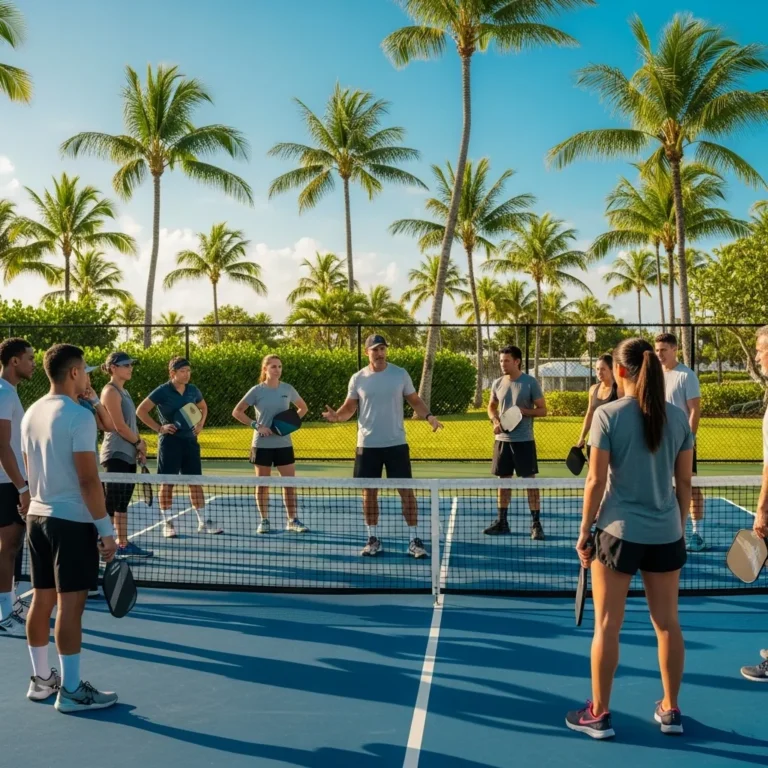
Are You Ready to Break Through Your Ceiling?
You know the feeling. You play three times a week at your local courts. You have a great time, you win some games, and you lose some. But lately, you feel stuck. That 3.0 rating feels like a permanent residence, and you watch the 4.0 players on the next court wondering, “How did they get that good, that fast?”
The answer isn’t just “more play.” It’s “better practice.” This is where a camp pickleball experience changes everything.
Unlike weekly recreational play where bad habits can become ingrained, a dedicated pickleball camp offers immersive, corrected repetition under the guidance of experienced coaches. Whether you are looking for a tropical vacation with some paddle time or a structured training regimen, attending a camp is widely considered one of the most effective ways to refine your skills.
In this comprehensive guide, we will walk you through exactly how to choose the right camp, how to evaluate value for money (like checking instructor ratios), and how to pack smartly for 6 hours of play a day.
Is a Pickleball Camp Right for You? (The Decision Phase)
Before you book a flight, it is crucial to understand if your goals align with what camps offer. Not all pickleball camps are created equal, and knowing your own “why” is the first step.
Assessing Your Goals: Vacation vs. Vocabulary
Are you looking to relax by the pool after a light morning hit? Or do you want to leave with improved mechanics and a new topspin serve?
- The Social Retreat: Focuses on open play, mixers, and social events. Instruction is typically lighter.
- The Technical Clinic: often marketed as level up pickleball camps, these focus heavily on mechanics, drills, and strategy analysis.
Do I Need to Be “Good” to Go?
One of the most common fears is: “Am I good enough?” The short answer is yes. However, having a grasp of the basic pickleball rules and scoring before attending is highly recommended. Most camps divide players by skill level to ensure balanced gameplay. If you are unsure of your level, check a guide on pickleball ratings before signing up.
Solo Travelers: Will I Be Alone?
Absolutely not. Pickleball is inherently social. Approximately 40-50% of camp attendees travel solo. Camps are designed to rotate partners constantly, so you do not need to bring a partner to have a full experience.
How to Choose the Best Camp (Evaluating Quality)
With the growth of the sport, clinics are popping up everywhere. To ensure you get a quality experience, consider these key factors.
1. The “Celebrity” Factor
Just because a camp features a famous pro’s name doesn’t always mean they will be your personal instructor.
Tip: Check if the Pro will be on the court providing feedback, or primarily hosting demos. For technical improvement, hands-on correction is key.
2. The Student-to-Pro Ratio
This is a critical metric for learning. A widely accepted standard for a high-quality experience is a maximum of 8 students to 1 instructor (two courts per pro).
Ratios higher than 8:1 often result in less individual feedback, resembling supervised open play rather than intensive coaching. It is wise to verify this before booking.
3. The Rain Policy (Outdoor Camps)
Weather can be unpredictable.
Critical Question: “Do you have indoor backup courts?”
If the answer is no, ask about their cancellation or credit policy. Understanding these terms beforehand helps manage expectations if the weather doesn’t cooperate.
What Happens at Camp? The Curriculum
So, what does a typical day look like at a top-tier levelup pickleball camps experience? It is usually a mix of mental focus and physical activity.
Sample Itinerary
- 08:30 AM: Warm-up and Dynamic Movement.
- 09:00 AM: Dinking Drills (Focus: Patience and soft touch).
- 10:30 AM: Third Shot Drop mechanics.
- 12:00 PM: Lunch (Rest and Hydration).
- 01:30 PM: Transition Zone Strategy (Resetting the ball).
- 03:00 PM: Guided Gameplay (Instructors pause play to discuss scenarios).
Drills vs. Live Play
Expect to spend a significant portion of your time doing drills. Pickleball drills are essential for improvement. Repetition builds the muscle memory that helps automatic reactions during open play.
Video Analysis
Premium camps often offer video analysis. Seeing your stroke on camera can be an eye-opening experience, allowing you to visually understand the adjustments coaches are suggesting.
Frequently Asked Questions
Here are answers to common questions players ask when considering a camp.
How do camps handle mixed skill levels? Will I be stuck with beginners?
Reputable camps usually send out a survey beforehand or do an on-court assessment on Day 1. They generally group courts by rating (e.g., a 3.0 court and a 4.0 court) to keep the challenge appropriate.
Is the instruction based on “ball feeding” or strategy?
A balanced approach is ideal. Ball feeding helps mechanics, while “Live Ball” drills teach you when to hit the shot. Most comprehensive camps utilize both methods.
How physically demanding is the schedule?
It can be quite active. You may hit more balls in 3 days than you typically would in a month, so preparing your body is beneficial.
Preparation: Gear, Body, and Mind
You booked the camp. Now, how do you prepare? “Camp fatigue” is common by the second day, but preparation can help.
Physical Conditioning
Hydration is key. Start hydrating well before you arrive. It is also helpful to be familiar with pickleball injuries awareness, focusing on calves and Achilles, which undergo significant stress during multi-day play.
The “Pro” Packing List
To stay comfortable, consider adding these items to your bag:
- Socks: Bring extra pairs. Changing into fresh pickleball socks during the lunch break is a great way to keep your feet comfortable.
- Shoes: Ensure your shoes are broken in. Wearing brand new shoes to a camp can lead to discomfort. If you need an upgrade, check out K-Swiss pickleball shoes or Skechers pickleball shoes for durable options.
- Paddle: Bring your trusty paddle, but also be open to demoing. Many camps have the latest Selkirk Vanguard vs Joola Hyperion paddles available to try.
- Electrolytes: Water alone may not be enough. Consider packing electrolytes rich in magnesium and potassium. Many players find they help support muscle function during long sessions.
Paddle Maintenance
Before you go, check your equipment. Is your grip worn out? A fresh tack is helpful for drilling. Read up on pickleball grips to ensure you have the right setup for active days.
Conclusion
Attending a camp pickleball event is an investment in your enjoyment of the sport. It connects you with a community of like-minded players and gives you the tools to improve your game. Whether you choose a destination resort or a local intensive, the key is to arrive with an open mind and a willingness to learn.
Ready to find your camp? Resources like the USA Pickleball website can help you verify sanctioned events. Pack your bag, and get ready to level up!